Featured Post

SalaamOne NetWork

SalaamOne سلام   is   a nonprofit e-Forum to promote peace among humanity, through understanding and tolerance of religions, cul...

Showing posts with label Sectarianism. Show all posts

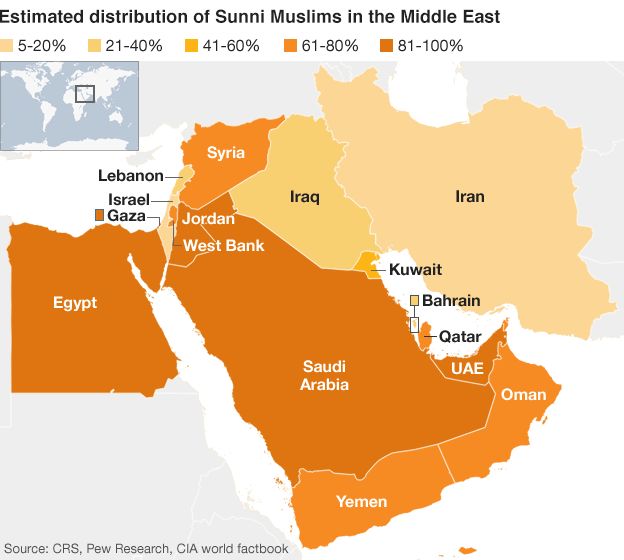
Iran linked to every Middle East war


Iran frequently accuses other nations of being behind tensions and terrorism in the Middle East. This is part of its classic strategy to divert attention from actual issues and to buttress its four-decade-old argument that it has enemies. Maintaining these enemies help Iranian leaders survive politically and advance their regional hegemonic ambitions. If we examine every conflict, war or terrorist act in the region, Iran is either directly or indirectly a contributor.


Image result for middle east war iran

If it was not for its support of the Alawite-dominated state of Bashar Assad, the Syrian government would have likely been altered a few months after the uprising began in 2011.
Hundreds of thousands of lives would have been saved. More than a thousand militia groups would not have emerged in Syria. Groups such as Daesh would not have found a safe haven to expand and recruit. And the Shiite-Sunni sectarian war would not have escalated.
Iran deployed its Revolutionary Guard Corps (IRGC) and Quds Force (the IRGC’s elite branch that operates in foreign countries) to assist Assad’s forces. It also provides significant financial, intelligence and advisory assistance to Assad’s apparatuses.

Tehran has long used proxies to influence Lebanese affairs and advance its revolutionary, religious and geopolitical interests. Iran created Hezbollah, and continues to train, arm and finance it and other Shiite fighters in Lebanon. To help Iran achieve its regional ambitions, these fighters are being deployed in conflicts and wars in foreign nations such as Syria.
Tehran has deeply infiltrated Iraq’s political and security infrastructures. Not only is Iran intervening directly via the IRGC and Quds Force, it is also employing proxies and militia groups, some of them designated as terrorist organizations, to influence and dominate Iraq.
We cannot resolve crises and conflicts in the region by targeting the symptoms; the disease should be tackled. Tehran is part of the problem, not the solution.

Iran is intervening in Yemen by delivering weapons to the Houthis and providing advisory and financial assistance. Tehran has also escalated sending arms to militias and terrorists in Bahrain. In last month’s sanctions announcement, the US State Department said Iran has undoubtedly “provided weapons, funding and training” to Bahraini militants.
As former British Prime Minister Tony Blair said at the American Israel Public Affairs Committee (AIPAC) annual conference in March, “if you had a benign regime in Iran, all of the problems in the Middle East would be resolvable.”

We cannot resolve Middle East crises and conflicts by targeting the symptoms; the disease should be tackled. Almost every ongoing war, conflict and crisis in the region is traceable to Tehran. It is part of the problem, not the solution.

Dr. Majid Rafizadeh is a Harvard-educated, Iranian-American political scientist. He is a leading expert on Iran and US foreign policy, a businessman and president of the International American Council. He serves on the boards of the Harvard International Review, the Harvard International Relations Council and the US-Middle East Chamber for Commerce and Business. He can be reached on Twitter @Dr_Rafizadeh.

Dark Age of Muslim World

Image result for dark ages


The "Dark Ages" is a historical periodization traditionally referring to the Middle Ages. It emphasizes the demographic, cultural and economic deterioration that supposedly occurred in Western Europe following the decline of the Roman Empire, and the relative scarcity of written records from the period.

IN the 14th and 15th centuries, Christian Europe was divided by the rivalries of the kingdoms of Spain, France and England, the Holy Roman Empire and the squabbling papal and city states of Italy. They were unable to unite in halting the advance of the ascendant Ottomans who reached the gates of Vienna and were stopped there more by Sultan Suleiman’s demise rather than credible Christian resistance.

Today, the roles are reversed. It is the Muslim world which is unable to unite to fend off the domination of the West. The crisis between Qatar and its GCC partners is reminiscent of the rivalries of Italy’s papal states and role of external powers in determining the destiny of its weak rulers.
Image result for dark ages
The Islamic world, wracked by multiple conflicts and crises, is traversing a period akin to Europe’s Dark Ages.

Today’s vulnerable Muslim world is wide open to the influence and domination of external powers.

First, in many Muslim countries, there is crisis of political legitimacy. Governance structures, mostly bequeathed by departing Western colonists, have corroded. The authoritarian regimes in the GCC and Iran were untouched by the Arab Spring; but most are vulnerable domestically to both democratic and ideological challenge.

Egypt has reverted to military rule. Turkey’s populist leader battles internal and external opposition. External intervention in Libya has yielded a civil war and the emergence of the militant Islamic State group and other terrorist groups. Similarly, Syria has been destroyed by external intervention and a brutal sectarian and ethnic civil war. The fiction of Iraq’s unity is preserved by the presence of Iranian militias, US military support and the war against IS. The US-installed Afghan regime is weak, corrupt, divided, and militarily beleaguered. Ironically, among OIC members, Pakistan is one of the few which, despite corruption scandals, retains a modicum of democratic legitimacy.

Second, violence is spreading across the Muslim world. Global terrorist groups — IS, Al Qaeda, Boko Haram, Al Shabab, etc — are now active participants in civil and cross-border conflicts and pose a threat to global stability.

Muslim nations are not the main sponsors of global terrorism; they are its principal victims. Some major powers have fought terrorists selectively and at times used them for partisan purposes. No effort has been made to stop state terrorism or to differentiate between terrorists and insurgencies which, like the Afghan Taliban, have local, negotiable goals. Most important, no concerted effort has been made to address terrorism’s ‘root causes’: persistent injustices against Muslim peoples eg in Palestine and Kashmir, or poverty, ignorance and social alienation which create recruits for terrorism, including over the internet.

Third, the crises within the Islamic world have been exacerbated by ideological and doctrinal differences. The most vital schism is between Sunni and Shia power. This schism was dormant until Iran’s 1979 ‘Islamic Revolution’. It rose to the fore in the Iraq-Iran war. It was manifest in the Afghan civil war between the Afghan Taliban and the Northern Alliance. It was, however, the US invasion of Iraq, its dismantling of the Sunni-dominated Baath party and army and the organisation of one-man one-vote elections that enabled the Iran-sponsored Shia parties to gain central power in Iraq and extend Iranian influence across the Levant and beyond.

Iran’s rise is anathema to its Sunni rivals: Saudi Arabia, the GCC and Egypt. Turkey has also been uncomfortable; although it has been obliged recently to moderate its rivalry and secure Tehran’s cooperation to forestall Kurdish separatism. Pakistan’s once close ties with Iran also deteriorated over time due to multiple reasons: Islamabad’s termination of peaceful nuclear cooperation, competition for influence in post-Soviet Afghanistan, Iranian ‘interference’ with Pakistan’s Shia community, cross-border events in Iranian and Pakistani Balochistan and Iran’s sudden reversal of support on Kashmir in response to Indian ‘incentives’.

But the sectarian divide is not the sole ideological rift within the Muslim world today. The Muslim Brotherhood and its populist ideology have become abhorrent to Saudi Arabia, Egypt and the UAE. Hamas, the Palestinian affiliate of the Brotherhood, has suffered collateral damage. On the other hand, Qatar and Turkey have espoused the Brotherhood and Hamas, offered refuge to their adherents and support to them in the Libyan civil war. Such Qatari divergence was evidently the main reason for the Saudi-UAE break with Doha.

Last, but not least, today’s weak, vulnerable Islamic world is wide open to the influence and domination of major external powers. The recent Arab Islamic American Summit in Riyadh was, more than anything, an illustration of the susceptibility of most of the assembled Muslim nations to US domination. Russia also enjoys critical influence with several Muslim countries, including Iran and Turkey, due to its military power and growing role in Syria and the region. So far, China has remained aloof from inter-Islamic differences. Its desire seems to be to use its economic and financial power as a force for greater cohesion with Muslim countries.

What seems most dangerous for the immediate future is the hard-line positions being adopted by the Trump administration on most international disputes and crises, including North Korea, South China Sea, Syria and Iran. If implemented, these positions, particularly the formation of an alliance against Iran, are likely to lead to the intensification of the conflicts affecting the Muslim world.

Pakistan’s main preoccupations are: TTP and IS terrorism, Afghanistan and India. It appears that Pakistan will face challenges in addressing these issues. President Ghani’s recent atrocious accusations against Pakistan obviously had clearance from his US patrons. Trump’s refusal to meet Prime Minister Nawaz Sharif in Riyadh was no accident. The Pentagon’s pre-emptive identification last week of Pakistan as host of a Chinese military base is another negative signal.

While addressing its own priorities, Pakistan cannot ‘play possum’ on issues involving the Islamic world. Such abstention does not behove the Muslim world’s second largest nation, its largest military power and its only nuclear weapon state. Pakistan has consistently concluded that its national and security interests can be best advanced by promoting unity and cooperation among Muslim countries. Today, more than ever, Pakistan is obliged to play an active role to develop viable avenues for conflict resolution and cooperation among the Islamic nations and, hopefully, lead the way to a new age of enlightenment in the Muslim world.
Munir Akram : The writer is a former Pakistan ambassador to the UN.
https://www.dawn.com/news/1338770/a-dark-age
https://en.wikipedia.org/wiki/Dark_Ages_(historiography)

~ ~ ~ ~ ~ ~ ~
Islamic Revival Messages رساله تجديد الاسلام ‏

An in-depth study of the Qur’an and Islamic religious history reveals startling facts. “Risala-e-Tajdeed-ul-Islam” is a message to develop positive change in the thought and practices of Muslims.
قرآن اور اسلام کے گہرے مطالعه سےحیران کن حقائق کا انکشاف ہوا، "رساله تجديد الاسلام" مسلمانوں کے انداز فکروعمل میں مثبت تبدیلی کا پیغام ہے:

Exporting Iranian revolution to Arabs


After the Iranian Revolution the foreign policy of Iran changed dramatically. In many cases diplomatically inimical Arab nations became more cooperative with Iran, while some formerly supportive nations decreased their support.
Ruhollah Khomeini, leader of the revolution and founder of the Islamic Republic of Iran and its first Supreme Leader declared that, "The concept of monarchy totally contradicts Islam." Therefore, Arab leaders developed a hostile attitude towards the Islamic Republic of Iran. Khomeini's idea of supporting the mustazafeen (those who are wronged or oppressed) as opposed to the mustakbareen (those who are arrogant) led to many problems with neighboring countries due to some Arab regimes being judged by Iranian jurists to be among the mustakbareen. Ayatollah Khomeini was open about his intention to export the revolution to other parts of the Muslim world. Thus, during the early 1980s, Iran was isolated regionally and internationally. This diplomatic and economic isolation intensified during the Iran–Iraq War in which almost all neighboring Arab states, except Syria, supported Iraq logistically and economically. According to some observers,Saddam Hussein fought on behalf of other Arab states that viewed Iran as a potential threat to their stability.
In the late 1980s and early 1990s, the revolutionary zeal cooled and a degree of pragmatism was adopted by Iranian policy makers. During the presidency of Akbar Hashemi and Mohammad Khatami, Iranian foreign policy switched to reducing international tensions and Iran tried to normalize its relations with its Arab neighbors. When the United States attacked Iraq in the early 1990s, it promoted Iran's political influence in the Middle East.
Since 2000 the situation changed completely. The most significant factor was Bush administration's decision to attack Iraq in 2003 which led to the fall of Saddam, a ba'athist leader with pan-Arab sympathies who was determined to balance Shi'a Iran's regional influence. With the deposition of Saddam, Iran found a major obstacle to its expansion removed. This gave Iran a good chance to emerge as a major player in the Middle East. As Richard Haass quoted Iran will be one of the two most powerful states in the region...The influence of Iran and groups associated with it has been reinforced. Iran could find allies in Arab world comprising Syria, Lebanon, Kuwait and Iraq. On the other hand, Saudi ArabiaJordan and United Arab Emirates united against Iran, with support from the United States. Other Arab countries continued to have normal relations with Iran.
Another aspect of tension between Iran and Arab countries has been sectarianism. During the early days of the Iranian Revolution, Ayatollah Khomeini endeavored to bridge the gap between Shias and Sunnis by forbidding criticizing the Caliphs who preceded Ali. He also declared it permissible for Shiites to pray behind Sunni imams. However, the influence of Iran on Shiite communities outside its borders and the territorial disputes with Arab neighbors among other issues remain sources of tension in Arab-Iranian relations.[citation needed]
Diplomatic cables leaked in 2010 revealed Arab leaders singled out Iran as the greatest threat to regional stability, yet refuse to speak publicly, telling US diplomats in private, they'd face domestic troubles if they were seen as siding with the West against a Muslim country. The cables showed that Saudi Arabia and Bahrain supported a military attack against Iran aimed to stop the Iranian nuclear program.
On January 4, 2016, Saudi Arabia and Bahrain severed diplomatic ties with Iran. Saudi Arabia cited attacks on the Saudi embassy in Tehran following predominantly Sunni Saudi Arabia's execution of a Shiite cleric. Bahrain cited Iran's "blatant and dangerous interference" in Bahrain and other Arab countries. Read full article at Wikipedia >>>
Read English translation below.....
ایران سے عرب ممالک میں 'انقلاب کی برآمد'
لبنان - حسن فحص
انیس سو پچاسی کے اوخر میں ایرانی قیادت نے پاسداران اسلامی انقلاب کے زیرانتظام "ورلڈ لبریشن موومنٹس بیورو – دفتر سازمانهائے أزادى بخش" کو بند کرکے ان تحریکوں کے ساتھ رابطے کی ذمہ داری وزارت خارجہ کے حوالے کردی۔ اس وقت علی ولایتی وزیر خارجہ، میر حسین موسوی وزیراعظم اور علی خامنہ ای ایران کے صدر تھے۔
اس فیصلے کے بعد تہران میں لبریشن موومنٹس کے دفاتر پر پابندیوں کے حوالے سے اقدامات کا آغاز ہوا جن کا نتیجہ بالآخر ایران سے ان تحریکوں کے نکل جانے پر ہوا۔ تاہم عراقی اور افغان تحریکوں کو مستقبل میں ان کے خصوصی کردار کی وجہ سے باقی رکھا گیا۔ بعد ازاں یہ کردار 1988 اور 2003 میں عراقیوں اور 2001 میں افغانوں کے ساتھ واضح ہوگیا۔ اس کے علاوہ فلسطینی سفارت خانے کو بھی برقرار رکھا گیا تاکہ ایران کی نگرانی میں پروان چڑھنے والی تنظیموں کے مفاد میں فلسطین کے ساتھ تعلق استوار کیا جائے۔
بعض میدانوں کی خصوصیت
یہ بات بالکل واضح ہے کہ شروع سے ہی لبنان کے ساتھ خصوصی تعلق رکھا گیا۔ لبنانی بحران میں فوجی پاسداران کے ادارے کی جلد اور براہ راست مداخلت کا ایرانی حکمت عملی سے گہرا تعلق تھا کیوں کہ وہ لبریشن موومنٹس کے لیے بہترین میدان تھا۔ بالخصوص 1982 میں اسرائیلی حملے اور اس کے بعد ایرانی فورس کے لبنان بھیجے جانے کے بعد۔ تاہم اس منصوبے کی راہ میں بھی دو بنیادی رکاوٹیں تھیں :
پہلی : خمینی نے "سب سے پہلے ایران" کے نعرے کے تحت ایرانی فوجیوں کی بڑی تعداد کو نہ بھیجنے کا فیصلہ کیا کیوں کہ ایران کو عراق میں صدام حسین کی حکومت کے ساتھ جنگ کا سامنا تھا۔
دوسری : اس وقت کے شامی صدر حافظ الاسد نے دمشق پہنچنے والے ایرانی فوج کے ہراول دستے کے تقریبا 4 ہزار اہل کاروں کو لبنان کی سرحد تک پہنچنے سے روک دیا تھا۔
اس کے مقابل تہران میں ان تحریکوں کے نمائندوں کا نظر آنا ختم ہوگیا جو جزیرہ عرب میں انقلاب لانے کی کوششیں کررہی تھیں جن میں بحرین، کویت اور دیگر عرب ممالک شامل ہیں۔
اس کے علاوہ دیگر تحریکوں مثلا جنوبی امریکا کے انقلابی، پولیساریو تحریک، الجزائر کے انقلابی، مصری انقلابی، یورپی بائیں بازو کی جماعتیں اور اسپین میں باسک تنظیم وغیرہ کے نمائندے بھی ایران سے کوچ کرگئے۔
آزادی کی عالمی تحریکوں کے ساتھ تعلق محدود کرنے کے ایرانی فیصلے سے تین میدانوں کو مستثنی رکھا گیا جو ایرانی قیادت کے لیے تزویراتی گہرائی کی حیثیت رکھتے تھے۔ ان میں ایک میدان تو افغانستان تھا جہاں شمالی اتحاد سے تعلق استوار کیا گیا۔
دوسرا میدان عراق تھا جہاں سپریم کونسل برائے اسلامی انقلاب تشکیل دی گئی۔ آغاز میں اس کونسل میں ایران میں موجود تمام اسلامی گروپ شامل تھے۔ تاہم بعد میں ان گروپوں کے اندر بعض اختلافات بھی سامنے آئے اور پھر محمد باقر الحکیم نے اس سپریم کونسل کی قیادت سنبھال لی۔ اس دوران پاسداران انقلاب کے خصوصی حلقوں نے عراق میں کرد جماعتوں کے ساتھ بھی سیکورٹی، عسکری اور سیاسی تعلقات قائم کیے۔ افغانی اور عراقی پتوں کو بچا کر رکھنے کی براہ راست اہمیت 11 ستمبر کے واقعات کے بعد 2001 میں افغانستان میں اور اپریل 2003 میں عراق میں بین الاقوامی مداخلت کے بعد پوری طرح واضح ہوگئی۔
تشکیل اور تربیب
مستثنی رکھا جانے والا تیسرا میدان لبنان تھا.. جہاں ایران کی جانب سے تشکیل دی گئی تنظیم "امت حزب الله" کو امل موومنٹ کے سامنے حقیقی حریف کی شکل میں بدل دیا۔
انیس سو بیاسی میں خمینی کے فیصلے اور شام اور لبنان میں ایرانی توسیع سے متعلق حافظ الاسد کے اندیشوں کے باوجود پاسداران انقلاب کے تقریبا 4 ہزار اہل کار دمشق پہنچ کر سیدہ زینب کے علاقے میں ٹھہر گئے۔ شامی حکومت نے ان اہل کاروں کو الزبدانی کے علاقے میں منتقل کر کے ان کے لیے ایک خاص کیمپ قائم کردیا تاکہ وہ مقامی باشندوں اور ایران کے حامی لبنانی فریقوں تک نہ پہنچ سکیں۔
بعد ازاں شامی حکومت اور ایرانی سفارت خانے کے درمیان ایک معاہدے کے تحت ان ایرانی اہل کاروں کی مقررہ تعداد کو لبنان کے مشرقی میں البقاع کے علاقے بعلبک میں تربیتی کیمپ قائم کرنے کی اجازت دی گئی.. تاکہ اسرائیلی قابض فوجوں کا مقابلہ کرنے والے گروپوں کو تربیت دی جاسکے۔
یہ منتقلی تہران میں وزارت دفاع، پاسداران انقلاب کی قیادت، وزارت خارجہ، خمینی کے انقلاب کے بیورو کے سربراہ اور باسیج فورس کے سربراہ کے درمیان کئی ملاقاتوں کے بعد عمل میں آئی۔ بعد ازاں تہران میں امل موومنٹ کے نمائندے کو بھی شریک کیا گیا جس نے لبنان میں شیعہ فرقے کے اندر امل موومنٹ کے خلاف اور متوازی ایران کے زیرانتظام ایک خصوصی تنظیم قائم کرنے پر آمادگی کا اظہار کیا۔ اس طرح "امت حزب اللہ" کے نام سے یہ تنظیم وجود میں آئی۔
کردار کی بنیاد
پچاسی میں لبنان سے اسرائیل کے جزوی انخلاء نے ایران کو یہ موقع فراہم کردیا کہ وہ "امت حزب اللہ - اسلامی مزاحمت" تشکیل دے کر لبنان میں اپنے رسوخ اور کنٹرول کو مضبوط بنائے۔ یہ نئی جماعت اپنی پیچیدہ سیکورٹی، سماجی، سیاسی اور عسکری کارروائیوں کے ذریعے بائیں بازو کی قومی جماعتوں کو مزاحمت کے عمل سے دور کرنے میں کامیاب ہوگئی۔
اس سلسلے میں شام کی ایران کے ساتھ یہ مفاہمت طے پائی کہ لبنان کے میدان کو دو شیعہ فریقوں کے درمیان تقسیم کردیا جائے۔ ان میں ایک تو امل موومنٹ میں شام سے وابستگی رکھنے والا گروپ تھا جو نبیہ بری کی قیادت میں سیاسی سرگرمیوں کا ذمہ دار تھا.. جب کہ دوسرا گروپ ایران سے وابستگی رکھنے والے عناصر پر مشتمل تھا جن کے ذمے سرحدی پٹی پر اسرائیلی وجود کے خلاف عسکری کارروائیاں سرانجام دینا تھا۔
1993 میں "حزب الله" (جس نے اپنے نام سے امت کا لفظ ہٹا دیا تھا) کی جانب سے ادا کیے جانے والے کردار کی اہمیت اس وقت بھرپور انداز سے واضح ہوگئی.. جب ایران نے خود کو خطے کے نئے نقشے سے باہر پایا۔ 1993 میں حزب اللہ اور اسرائیل کے درمیان ہونے والے معرکے نے تصفیے کے عمل کو بڑی حد تک برباد کر دیا یا کم از کم پیچیدہ ضرور بنا دیا.. جس کے بعد علاقائی سطح پر شام اور ایران ایک مرتبہ پھر نمایاں کھلاڑی بن کر ابھرے۔
1996 میں بھی لبنان کے جنوب میں حزب اللہ اور اسرائیل کے درمیان جنگ ایران اور شام کے اس مشترکہ کردار کو مضبوط کرنے کی کوشش ثابت ہوئی۔ دونوں نے اپنے مفادات کو پورا کرنے میں کوئی کسر نہ چھوڑی۔
اپریل 1996 میں حزب اللہ اور اسرائیل کے درمیان طے پائے جانے والے معاہدے کے مطابق فریقین کو ایک دوسرے کے خلاف جارحیت کے صورت میں اپنے دفاع کا حق دیا گیا۔ اس معاہدے کے نتیجے میں حزب اللہ محض ایک ایران نواز لبنانی جماعت کے خول سے باہر آ کر "علاقائی سطح پر کردار کی حامل" جماعت بن گئی۔
اس طرح اس کے سامنے لبنان کے علاوہ پوری عرب دنیا اور دیگر ممالک میں بھی بڑا کردار ادا کرنے کی راہ ہموار ہوگئی۔ ایرانی قیادت کو جو حزب اللہ کے لیے سیاسی، مذہبی اور ثقافتی سائبان شمار کی جاتی ہے.. ولایت فقیہہ کے نظام اور اپنے عالمی منصوبے پر عمل درامد کے سلسلے میں تنظیم سے بڑی توقعات وابستہ ہوگئیں۔
جولائی 2006 میں اسرائیل کے ساتھ جنگ کے دوران اور اس کے بعد خطے کی سطح پر حزب اللہ کا کردار مضبوط ہو کر زیادہ سنجیدہ مرحلے کی طرف منتقل ہوگیا۔ اس لیے کہ نیوکلیئر پروگرام کے حوالے سے ایران کو بچانے کی جنگ تھی.. یہ معاملہ اس وقت ڈیڈلاک کا شکار ہوگیا تھا اور نیوکلیئر پروگرام کے علاوہ عراق، افغانستان اور فلسطین میں کردار کی وجہ سے امریکا اور مغربی ممالک کی جانب سے ایران کے خلاف بھرپور ممکنہ جنگ کی دھمکیاں عروج پر پہنچ گئیں تھیں۔
کرداروں کی تقسیم
1997 ایران کے لیے ایک اہم سال تھا جب محمد خاتمی نے ملک کی صدارت سنبھالی۔ اس سے قبل عالمی برادری کے ساتھ ایران کے تعلقات انتہائی نازک مرحلے میں داخل ہوچکے تھے۔ ایران پر جرمنی اور ارجنٹائن میں دہشت گرد کارروائیوں کا الزام عائد کرکے یورپی ممالک نے اس کے بائیکاٹ کا اعلان کرتے ہوئے وہاں سے اپنے سفارت کاروں کو واپس بلالیا۔
مغربی دنیا کے سامنے خاص طور پر اور پڑوسی عرب ممالک کے سامنے کشادگی اور خیرسگالی کے جذبے کے اظہار کے لیے ایران کو اطمینان بخش اقدامات کرنے کے ساتھ ساتھ اعتماد کی راہوں کو پھر سے استوار کرنا تھا۔ اس موقع پر خاتمی نے اپنے مصالحانہ خطاب میں عالمی برادری کے ساتھ مکالمے کی فضا سازگار کرنے کا عندیہ دیا۔
اس کے مقابل ایرانی حکومت نے خاتمی کے خطاب کو خطے کی سطح پر میدان میں اپنی صلاحیتوں کے دوبارہ حصول کا موقع شمار کیا اور اصلاح پسند صدر کی جانب سے فراہم کردہ سکون کی فضا کا پورا فائدہ اٹھایا۔
یہاں سے ایران نے براہ راست سیاسی نگرانی کے تحت خطے میں سیاسی اور عسکری قوتوں کے ساتھ دوبارہ تعلق استوار کرنے کا فیصلہ کیا۔ اس سلسلے میں لبنان میں حزب اللہ اور اس کے سکریٹری جنرل حسن نصر اللہ کو مہرہ بنایا گیا.. جس کے بعد بیروت ایرانی فلک پر گھومنے والی فلسطینی قوتوں مثلا حماس اور اسلامی جہاد یہاں تک کہ فلسطینی اتھارٹی کے ساتھ بات چیت کے لیے بھی ملاقات کا مرکز بن گیا۔ اس کے علاوہ سوڈان، یمن اور مصر کے میدانوں میں بھی تعلقات استوار کرنے پر کام کیا گیا۔
لبنان سے شروع کرکے مختلف میدانوں میں سیاسی، سیکورٹی اور فوجی سطح پر سرگرمیوں کو پھر سے فعال بنانے کے نتیجے میں ایران کو ورلڈ لبریشن موومنٹس کے بیورو کو بھی دوبارہ سے متحرک کرنے کا موقع مل گیا جب کہ نہ تو اس کا نام استعمال کرنے کی ضرورت پیش آئی اور نہ ان سرگرمیوں میں اپنے کردار کے حوالے سے براہ راست شک و شبہات کی گنجائش چھوڑی گئی۔
تقریبا چار دہائیوں سے جاری اس انبار سازی کی اہمیت گزشتہ پانچ سالوں میں ایران کے لیے بہت نمایاں ہوگئی.. اس کی وجوہات میں عرب دنیا میں انقلابی لہر کا بیدار ہونا اور خطے کی پیش رفت میں حزب اللہ کا براہ راست داخل ہونا شامل ہیں۔ اس طرح حزب اللہ کا یمن، عراق، بحرین اور یہاں تک کہ مصر اور نائیجیریا میں... اور سب سے زیادہ خطرناک کردار شام میں نمایاں ہوگیا جو ایرانی دائرہ کار میں موجود قوتوں کی سرگرمیوں اور ان کے درمیان رابطے کے محور میں تبدیل ہوگیا... اور یہ ایرانی توسیع پسندی کے بڑے منصوبے کے سلسلے کی ایک اہم کڑی ہے۔
پیر 28 جمادی الاول 1437هـ - 7 مارچ 2016م
رابط مختصر 
http://urdu.alarabiya.net
English Translation by Google:

Aukr administered in nineteen hundred and fifty leaders of the Iranian Islamic Revolutionary Guard "World Liberation Movements Bureau - Office sazmanهayy free unsatisfactory" closed by the Ministry of Foreign Affairs with responsibility for communication these movements. The foreign minister Ali Velayati, Minister Mir Hossein Mousavi, Ali Khamenei, Iran's president.
In Tehran after the initiative of restrictions on the offices of Liberation Movements, which ultimately result in the withdrawal of these movements from Iran. The Iraqi and Afghan campaigns was the cause of their special role in the future. Later it became clear with the Iraqis and Afghans in 2001, 1988 and 2003. The Israeli embassy was maintained in order to establish contact with the Palestinians nurtured in the interest of the monitoring organizations in Iran.
The grounds feature
It is clear that the special relationship with Lebanon began. Why the Lebanese crisis was closely linked to the Iranian strategy of early and direct intervention of the institution of the military elite that was the best field for the Liberation Movements. After the attack, especially in 1982 and then sent to Lebanon by Iranian forces. The project had two main obstacles to:
The first revolution of "Iran first" slogan was the number of soldiers facing war with Iran did not decide to send Iran to the government of Saddam Hussein in Iraq.
Second: The Syrian President Hafez al-Assad had stopped about 4 thousand vanguard of the Iranian military officials arrived in Damascus from reaching Lebanon. It has over its competitors to see the representatives of these movements in Tehran Turks were trying to bring revolution in the Arab world, including Bahrain, Kuwait and other Arab countries.
The other movements such as the South American revolutionary, pulysaryu movement, the Algerian revolution, revolution, European left-wing parties and representatives of the Basque coach Iran've also organized in Spain.
Iran's decision to limit to three areas with the liberation movements were freed who had the status of a strategic depth for the Iranian leadership. If a field has been developed with the Northern Alliance in Afghanistan where he was.
The field was formed the Supreme Council for Islamic Revolution in Iraq where. The Islamist group in Iran were included in the Council. However, some differences emerged within these groups and then Mohammad Baqir al-Hakim took over the leadership of the Supreme Council. The Revolutionary Guards have set up special areas of security, military and political ties with the Kurdish parties in Iraq. Afghan and directly after the events of September 11 to save the addresses in Afghanistan in 2001 and Iraq in April 2003 became fully apparent after the international intervention in Iraq.
Creating and trbyb
The third field was sorry about Lebanon. The organization was formed by Iran, "people turned into Hizb Allah" real rival in front of the Amal Movement.
Since the revolution, despite the decision to extend the Iranian Hafez al-Assad of Syria and Lebanon reached about 4 concerns eighty thousand men stayed in Sayyida Zainab in Damascus between Iranian territory. The Syrian government has set up a special camp for these officials moved alzbdany area so they can not reach the Lebanese parties to support local residents and Iran.
Later, the government was allowed to set up camp in the Iranian embassy in eastern Lebanon's Bekaa balbk fixed number of Iranian officials, under an agreement to groups fighting the Israeli occupation forces. be trained.
The transition between the Defence Ministry in Tehran, led the Revolutionary Guards, Ministry of Foreign Affairs, head of the Khomeini revolution and Basij Force chief of bureau came after several meetings. Later, the participants were representatives of Amal Movement in Tehran, which has agreed to the Shia Amal movement in Lebanon and to establish a special body run parallel to Iran. Such "people come into this entity called Hezbollah".
Role-based
Fifty Israel's partial withdrawal from Lebanon has provided an opportunity for Iran to create "Muslim Hezbollah - Islamic resistance" to strengthen their influence and control in Lebanon. The party succeeded in removing the resistance of the left-wing political parties through their complex security, social, political, and military operations.
The rapprochement with Iran and Syria are scheduled to be divided between the two Shiite parties Lebanon field. One of them was responsible for the political Amal Movement led by an evil prophetess who was affiliated groups in Syria. The second group was composed of elements from Iran, whose ties to Israel's existence rests on the border strip was to carry out military operations against. in 1993, "Hizb Allah" (the importance of the role to be played by the word removed) from the time the nation became clear his name when Iran itself strongly. found out the new maps of the region. In 1993, the battle between Hezbollah and Israel destroyed the settlement process has largely or at least complicate the course of the evening. Iran once again emerged as a leading player at the regional level. 1996 war between Hezbollah and Israel in south Lebanon was the joint effort to strengthen its role of Iran and Syria. Both left no stone unturned to meet their own interests. April 1996, Hezbollah and Israel in accordance with the agreement between the parties was found on the right of self-defense in case of aggression against one another. The agreement resulted in Hezbollah just come out of the shell of a senior pro-Syrian party "has become a" party role at the regional level.
Thus paved the way to Lebanon to play a greater role in the Arab world and other countries. Iranian opposition that led to the political, religious and cultural layers are counted. Guardianship system and the scribes were great expectations associated with the organization in implementing our global plan. During the war with Israel in July 2006 and then regional level, Hezbollah's role shifted towards more serious stage strong. اس لیے کہ نیوکلیئر پروگرام کے حوالے سے ایران کو بچانے کی جنگ تھی.. یہ معاملہ اس وقت ڈیڈلاک کا شکار ہوگیا تھا اور نیوکلیئر پروگرام کے علاوہ عراق، افغانستان اور فلسطین میں کردار کی وجہ سے امریکا اور مغربی ممالک کی جانب سے ایران کے خلاف the full potential threats were climaxed.
Distribution of roles
1997 was a critical year for Iran when Mohammad Khatami became president of the country. Earlier, Iran's relations with the international community had entered a critical stage. The terrorist acts against Germany and Argentina announced its boycott on Iran imposed by the European Union pulled its diplomats from there. Especially neighbor spirit of openness and goodwill in the Arab world expression was the way to build trust with Iran and to give satisfaction measures. اس موقع پر خاتمی نے اپنے مصالحانہ خطاب میں عالمی برادری کے ساتھ مکالمے کی فضا سازگار کرنے کا عندیہ دیا۔ اس کے مقابل ایرانی حکومت نے خاتمی کے خطاب کو خطے کی سطح پر میدان میں اپنی صلاحیتوں کے دوبارہ حصول کا موقع شمار کیا اور اصلاح پسند advantage of the relaxed atmosphere provided by the President. from Iran decides to rebuild relations with political and military powers in the region directly under the political supervision. The piece was Hezbollah and its Secretary General Hassan Nasrallah in Lebanon. The Israeli forces on Beirut after grinding the Iranian orbit, such as Hamas and Islamic Jihad even called for talks with Palestinian Authority was the center. In addition, Sudan, Yemen and Egypt has been working to develop relations in the fields. Starting from Lebanon in various fields of political, security and military activities of the Bureau of the World Liberation Movements in Iran revivify was also an opportunity to mobilize again that neither the need to use his name, and not in the scope of activities directly planted doubts of his character. this repository of nearly four decades Listing has significant importance for Iran in the past five years. the reasons for this include the revolutionary wave in the Arab world to be awakened and entered directly into the region's progress in Lebanon. Thus Hezbollah's changed in Yemen, Iraq, Bahrain, Egypt and Nigeria, and even in the most dangerous part of the activities of the forces that were in Syria and Iran scope axis of communication between them ... and this is an important part of Iranian expansion project.
More >>>>>>

The War Within Islam

Members of the self-named Islamic State

Efforts to foster Sunni–Shia unity: In a special interview broadcast on Al Jazeera on February 14, 2007, former Iranian president and chairman of the Expediency Discernment Council of Iran, Ayatollah Akbar Hashemi Rafsanjani and highly influential Sunni scholar Yusuf Al-Qaradawi, "stressed the impermissibility of the fighting between the Sunnis and the Shi’is" and the need to "be aware of the conspiracies of the forces of hegemony and Zionism which aim to weaken [Islam] and tear it apart in Iraq." Even on this occasion there were differences, with Rafsanjani openly asking "more than once who started" the inter-Muslim killing in Iraq, and Al-Qaradawi denying claims by Rafsanjani that he knew where "those arriving to Iraq to blow Shi’i shrines up are coming from: [Wikipedia]

International jihad, in part created and supervised by the U.S. to undermine the Soviet Union, has exacerbated divisions that are fuelling bloodshed.
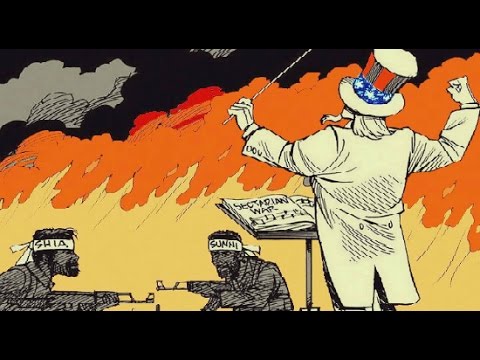
The bloodiest conflicts on planet Earth today are no longer imperialist wars waged for raw materials, territory, and markets. Instead, religious wars – mostly between Sunni Muslims and Shia Muslims – are ravaging half a dozen countries across the world. The new militancy derives sustenance from religious extremism, which in turn derives from a massive return to the faith. A 2012 Pew Global Report discovered that many Sunni majority states (Egypt-53%|, Tunisia-41%, Jordan-43% etc.) have large fractions of their population who refuse to accept Shias as real Muslims.

In this sectarian war, Pakistan has become one of the most vicious battlegrounds. Its Shia minority, estimated at 20-30% of the population, has seen thousands killed in recent years. This year has been no less tragic than earlier ones: Shikarpur on Jan 30, Peshawar on Feb 13, Rawalpindi on Feb 18; in less than three weeks, suicide bombers successfully targeted three Shia mosques packed with worshippers. Hazara Shias are fleeing Balochistan, some making futile attempts to reach Australia’s distant shores. Barricades surround segregated Shia urban neighbourhoods. But even high security often fails: a suicide bomber made it through to residential Abbas Town in Karachi with a carload of explosives, leaving dozens of broken apartments with flesh and body parts hanging from balconies. Outside of Syria and Iraq, Pakistan is now the world’s deadliest country for Shias.

Unsurprisingly, Pakistan’s Shias see themselves as victims of religious persecution. Some speak dramatically of a Shia genocide. This is surely an exaggeration since the scale is only a thousand or so per year. But the irony should not be lost: Mohammed Ali Jinnah, Pakistan’s founding father, was a Gujrati Shia Muslim. He mobilized millions stating that Muslims and Hindus could never coexist but Muslims, irrespective of sect, could. This eventually turned out to be wrong, but in my childhood things were largely peaceful. Intermarriages were fairly common until the 1980’s, and orthodox Shias had joined orthodox Sunnis into enthusiastically supporting Prime Minister Zulfiqar Ali Bhutto’s 1974 decision to declare Ahmadis, a small persecuted community, as non-Muslim.

Now, in a curious flip of history, a 2012 Pew Global Survey shows that 41% of Pakistanis believe that Shias are non-Muslim. A popular explanation of this change blames the Islamization process started by military dictator General Zia-ul-Haq in the 1980’s. His policies distinguished between different sects and indeed did promote discord. However the massive ongoing fratricide across the Middle East suggests that religious tensions would have anyway boiled over; the phenomenon is now globalized. Shias, being only 12-14 percent of all Muslims, have largely been on the receiving end. But Shia Iran has scarcely been kind to the “heretical” Bahais or Iran’s Sunnis.

At the core of today’s conflicts is the relatively recent insistence, equally by Shias and Sunnis, is that religion must fuse with political power. Sizeable fractions of both sects demand a system that has temporal authority based upon the Qu’ran, and where religion is not confined to an individual’s contemplation of God. However, apart from the Qu’ran, Shia and Sunni agree to nothing else.

What caused dormant differences to explode into war? I think that Islam’s new era owes to three catastrophic events. First, the Iranian Revolution of 1979 converted secular Iran into Islamic Iran and ignited a craving among the orthodox, both Shia and Sunni, for a religious state. Second, international jihad was created and supervised by the United States to counter the Soviet Union’s invasion of Afghanistan but eventually ran amok. Third, the American invasion of Iraq in 2003 destroyed Saddam Hussein but, in seeking to assure their legitimacy and control, the invaders found it expeditious to recognize and then unleash the sectarian monster.

Today, the world’s Shias find inspiration from Ayatollah Khomenei’s political philosophy. On the other hand, Sunni ideals of the caliphate derive from the militant preaching of Egypt’s Syed Qutb and Pakistan’s Syed Abul Ala Maudoodi. Both Sunni and Shia insist that true justice is possible only when religious law replaces secular law and religious practices are enforced in society. Both see the secular West as their mortal enemy. But thereafter the agreement grinds to a halt. There are irreconcilably different versions of early Islamic history, different choices of exemplars, and different religious rituals.

Had the Qur’an prescribed a kind of political system, Shia and Sunni would have argued their cases with that as the reference. But on matters of state and politics, the Holy Book is silent. In fact, as various scholars have pointed out, the Arabic language had no word for “state”. That which came closest was dawlah. But the word acquired its current meaning only after the 1648 Treaty of Westphalia which led to the emergence of geographically defined nation-states in Europe.

Crucially, the Qur’an is silent on how a state’s ruler is to be chosen and what might be legitimate grounds for his removal. It does not specify the limits of the ruler’s power or that of the shura’s (consultative body). Also unmentioned is the manner in which the shura, which could potentially appoint or remove a ruler, is to be chosen. Would there be an executive, judiciary, or government ministries and what should their functions be? Islam’s other source of definitive authority, Prophet Mohammed, did not outline the process for selecting future leaders of the faithful. Whether he actually specified his immediate successor remains deeply contentious and, in fact, lies at the base of centuries-long theological differences between Shia and Sunni. Nevertheless, from time to time, the idea of an Islamic state has been resurrected.

So what is to be done? With the rise of the Da’ish (the Islamic State group) and massive failures in Iraq and Libya, the West must somehow deal with the consequences of its former policies of subjugation, conquest, and extraction of resources. America’s ally, Saudi Arabia, fuels Sunni fundamentalism with petrodollars, and should be firmly dealt with. But it is Muslims, still saddled with ancient animosities and pre-modern ideas, who will have to chart out a new course. At present, the trends are not encouraging.

In Muslim countries around the world, religious faith continues to take a firmer grip over the lives of ordinary citizens. Therefore the question of what constitutes the truest form of faith becomes ever more important. Hence, sympathy for victims of mass killings, or individual assassinations, is limited. This, in turn, gives license to the killers who are implicitly encouraged by television media. Operating on laissez faire, with almost no state control, it panders to the high viewership ratings earned by ranting preachers. This is the flame which sets the abundant dead wood on fire.

There is only one way to end these mad killings. Muslim societies must realize that categorizing fellow citizens according to their religious belief is naught but a prescription for catastrophe. That realization had once existed in many Muslim societies and was articulated by countless Sufis, mystics, and bards.

Iran’s famous poet, Shams of Tabriz (1185-1248) had perhaps put it better than anyone else:

I am not a Muslim
None may call me Christian or Jew
I am not of the East, nor the West
I am neither of earth nor water
I am not of India or China
I am not of the kingdom of Iraq
I am not of this world nor the next,
not of heaven, nor of purgatory.
My place is the placeless,
My trace is the traceless.
It is not the body nor is it the soul,
for I belong to the soul of my love.
If I should win a moment with You,
I will put both worlds under my feet
and dance forever in joy.
O Shams of Tabriz, I am so drunk in the world
that except for revelry and intoxication
I have no tale to tell.

By: Pervez Hoodbhoy. He teaches physics in Lahore and Islamabad.
http://www.telesurtv.net/english/opinion/The-War-Within-Islam-20150306-0039.html


* * * * * * * * * * * * * * * * * * *
Humanity, Religion, Culture, Ethics, Science, Spirituality & Peace
Peace Forum Magazines
Over 1,000,000 Visits
* * * * * * * * * * * * * * * * * * *

Just less than 3% Muslims in Indian Army

Company Quartermaster Havildar Abdul Hamid PVC was posted in
 the 4th Battalion of the Grenadiers  which was sent to
 the Khem Karan Sector when hostilites broke out between 
India and Pakistan in 1965.He was posthumously
 awarded 'Param Vir Chakra' in 1966.

Muslims are underrepresented in India’s army. But this should not be allowed to skew recruitment.
India has made significant progress since its inception in 1945. The struggle for independence took its toll in the form of partition, with a religious animosity that continues to this day. Of India’s ballooning population, currently 1.237 billion, 12 percent are practitioners of Islam, meaning that India is home to 10 percent of the world’s Muslims, who form the largest minority in India. Muslims are looked upon with scorn and suspicion by certain other segments of the country. Discrimination in employment, social events, and public places is still quite widespread and commonplace.

In 2005, Prime Minister Manmohan Singh commissioned the Sachar Committee to prepare a report on the socioeconomic and educational situation of India’s Muslims. The report revealed significant prejudice against Muslims in the employment sector. Muslims made up only 2.5 percent of the bureaucracy, even though they constituted almost 12 percent of the population.

Another area where Muslims are underrepresented is the Indian Army. Then Chief of the Army Staff, Gen. J. J. Singh denied there was a headcount of actively enlisted Muslim soldiers, maintaining that would be a gross violation of the secular nature of the army. The high command was further incensed by the suggestion it increase Muslim representation by introducing quotas. Consequently, there is no official census showing the number of Muslim soldiers enlisted in the Indian Army.

There is, however, an unofficial number, and it is revealing. According to CNN IBN’s Minority Report, of India’s one million soldiers only 3 percent are Muslims, or roughly 29,000 soldiers in all. And if the troops serving in the Jammu & Kashmir Light Infantry (JAK LI), are subtracted (50 percent of whom are Muslim troops), that percentage is much lower. With only 29,000 fit for the army out of 150 million Muslims in the country, the ambiguous silence of the government tends to validate the suspicion of discrimination.

But before jumping to any conclusions, it is prudent to consider several facts. The Indian Army conducts recruitment drives, called rallies. Recruitment criteria, although differing from place to place, include a large pro rata quota for regional populations irrespective of religion. The recruiting officers are summoned from all over the country and randomly assigned to different locations, thus eliminating any regional animosity. However, there are no such rules for the officer cadre. And in fact Muslim officers have graduated from the country ‘s three army academies and have gone on to become high ranking officers. The Indian Army has had eight Muslim major generals so far, while the Air Force was once commanded by a Muslim air chief marshal. The Indian Military Academy has had one Muslim commandant, while the National Defense Academy has had two.

True, the representation of Muslim soldiers and officers may seem comparatively lower than those of other religions. Historically, it is believed that pre-independence Muslim recruitment was primarily done from Punjab, North West Frontier and Balochistan, all of which are part of Pakistan today. Thus, with partition, all regiments belonging to those regions went over to Pakistan..

Just as Muslims are under-represented in the army, so are the Bengalis, Biharis, Oriyas, South Indians or Gujaratis. And just as Sikhs are over-represented, so are the Jats, Dogras, Garhwalis, Kumaonis, Gurkhas, Marathas and others. The Indian army’s recruitment pattern was set 160 years ago by India’s 1857 uprising. Shocked by the revolt, the British army adopted a recruitment strategy that punished those groups that rebelled against them and rewarded the ones that stayed trustworthy. Because Muslims of Awadh, Bihar and West Bengal led the uprising, the British army stopped hiring soldiers from these areas. Also blacklisted from these places were high-caste Hindus whose regiments in Bengal were also mutineers. The Indian Army follows a regimental system based on region and caste, as seen in many Commonwealth nation armies of today. So there is a Sikh Regiment, the Maratha Light Infantry, Kumaon Rifles, the Gorkhas, and many more. These regiments usually comprise soldiers belonging to a particular caste or region, and were introduced by the British based on their “Martial Races” theory. This is why there is no pure Muslim regiment in the force, save the Jammu & Kashmir Light Infantry, which does comprise 50 percent Muslim troops. A similar argument can be made for people from the state of Andhra Pradesh or West Bengal, which likewise do not have regiments based on their geographical location.

The Indian Army is one of the only public bodies in India that has not been skewed by politics or religion, which is partly to thank for the strong reputation it commands today. Recruitment should remain on the basis of merit only. Petty notions of religious inequality should not be allowed to tarnish this.

By Amit R. Saksena. a a postgraduate scholar at the Jindal School of International Affairs.
http://thediplomat.com/2014/05/indias-muslim-soldiers/

  • indian ARMY HATE indian Muslim - YouTube

    www.youtube.com/watch?v=lu5AlLMH_7k
    Feb 15, 2011 - Uploaded by DIVIDEINDIA1
    indian ARMY HATE indian Muslim - YouTube. Subscribe 251. All comments (90). Share your thoughts. Top ...
  • indian muslim in indian army - YouTube

    www.youtube.com/watch?v=g3d3nlU3nok

    Jul 16, 2012 - Uploaded by TRIVENI DUBEY
    stupid pakistani piz see indian muslim in indian army and he always reddy fighting with pakistan.

  • King Of Indian Muslims Akbar Awaisi | Tune.pk

    tune.pk/video/.../king-of-indian-muslims-akbar-awaisi
    King Of Indian Muslims Akbar Awaisi. ... Report claims Indian army ki


    The Rajinder Sachar Committee, appointed in 2005 by the Indian Prime Minister Manmohan Singh, was commissioned to prepare a report on the latest social, economic and educational condition of the Muslim community of ...

    In a fleeting moment of generosity and apparently to acknowledge the Muslim role in returning Congress to power after years in wilderness, the prime minister had picked up eminent jurist Justice Rajinder Sachar to probe the ...
    The introduction cites the dismal findings of the Sachar Committee, a body set up to examine the plight of Indian Muslims by Prime Minister Manmohan Singh. For instance, only 8 per cent of urban Muslims are part of the ...
    * * * * * * * * * * * * * * * * * * *
    Humanity, Religion, Culture, Ethics, Science, Spirituality & Peace
    Peace Forum Network
    Over 1,000,000 Visits
    * * * * * * * * * * * * * * * * * * *