Featured Post

SalaamOne NetWork

SalaamOne سلام   is   a nonprofit e-Forum to promote peace among humanity, through understanding and tolerance of religions, cul...

Showing posts with label History. Show all posts

Prophet Muhammad's Everlasting Promise of peace and security to Christians - St. Catherine's Monastery, Sinai


النبي محمد وعد الآخرة للمسيحيين

وَأَوْفُوا بِالْعَهْدِ إِنَّ الْعَهْدَ كَانَ مَسْئُولً
Keep your promises; you will be called to account for every promise which you have made! (Quran; 17:34)

  PROPHET MUHAMMAD'S PROMISE TO CHRISTIANS


Muslims and Christians together constitute over fifty percent of the world and if they lived in peace, we will be half way to world peace. One small step that we can take towards fostering Muslim-Christian harmony is to tell and retell positive stories and abstain from mutual demonization. In this article I propose to remind both Muslims and Christians about a promise that Prophet Muhammed (pbuh) made to Christians. The knowledge of this promise can have enormous impact on Muslim conduct towards Christians. Muslims generally respect the precedent of their Prophet and try to practice it in their lives.

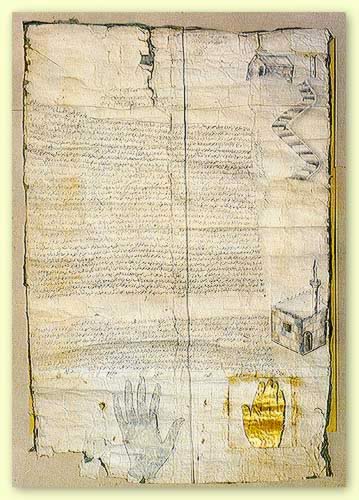
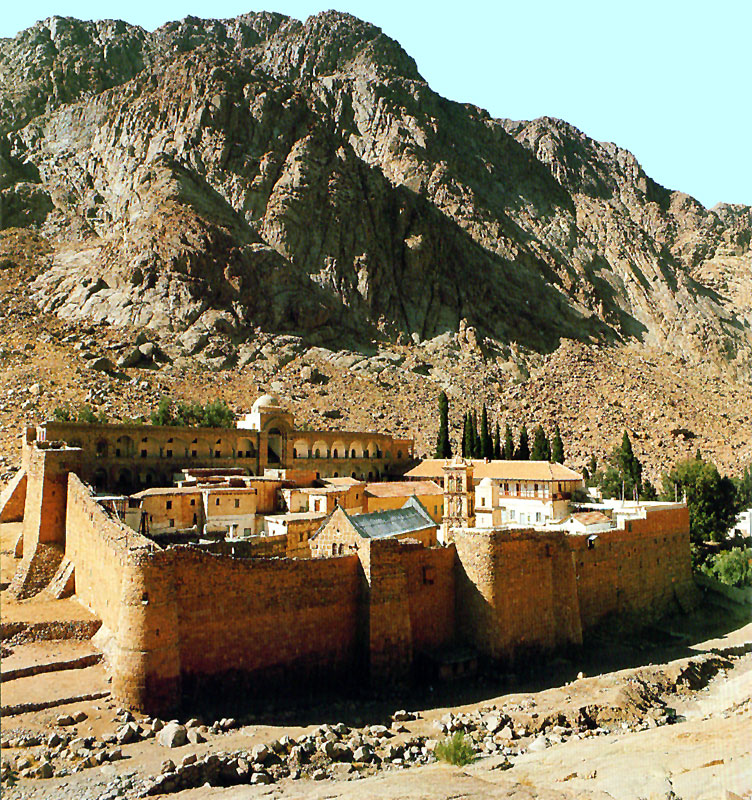
In 628 AD, a delegation from St. Catherine’s Monastery came to Prophet Muhammed and requested his protection. He responded by granting them a charter of rights, which I reproduce below in its entirety. St. Catherine’s Monastery is located at the foot of Mt. Sinai and is the world’s oldest monastery. It possess a huge collection of Christian manuscripts, second only to the Vatican, and is a world heritage site. It also boasts the oldest collection of Christian icons. It is a treasure house of Christian history that has remained safe for 1400 years under Muslim protection.

The Promise to St. Catherine:"This is a message from Muhammad ibn Abdullah, as a covenant to those who adopt Christianity, near and far, we are with them.
Verily I, the servants, the helpers, and my followers defend them, because Christians are my citizens; and by Allah! I hold out against anything that displeases them.

No compulsion is to be on them. Neither are their judges to be removed from their jobs nor their monks from their monasteries. No one is to destroy a house of their religion, to damage it, or to carry anything from it to the Muslims' houses.
Should anyone take any of these, he would spoil God's covenant and disobey His Prophet. Verily, they are my allies and have my secure charter against all that they hate.

No one is to force them to travel or to oblige them to fight. The Muslims are to fight for them. If a female Christian is married to a Muslim, it is not to take place without her approval. She is not to be prevented from visiting her church to pray. Their churches are to be respected. They are neither to be prevented from repairing them nor the sacredness of their covenants.

No one of the nation (Muslims) is to disobey the covenant till the Last Day (end of the world)."
 

The first and the final sentence of the charter are critical. They make the promise eternal and universal. Muhammed asserts that Muslims are with Christians near and far straight away rejecting any future attempts to limit the promise to St. Catherine alone. By ordering Muslims to obey it until the Day of Judgment the charter again undermines any future attempts to revoke the privileges. These rights are inalienable. Muhammed declared Christians, all of them, as his allies and he equated ill treatment of Christians with violating God’s covenant.

A remarkable aspect of the charter is that it imposes no conditions on Christians for enjoying its privileges. It is enough that they are Christians. They are not required to alter their beliefs, they do not have to make any payments and they do not have any obligations. This is a charter of rights without any duties!
The document is not a modern human rights treaty but even thought it was penned in 628 A.D. it clearly protects the right to property, freedom of religion, freedom of work, and security of the person.

I know most readers, must be thinking so what? Well the answer is simple. Those who seek to foster discord among Muslims and Christians focus on issues that divide and emphasize areas of conflict. But when resources such as Muhammad’s promise to Christians is invoked and highlighted it builds bridges. It inspires Muslims to rise above communal intolerance and engenders good will in Christians who might be nursing fear of Islam or Muslims.

When I look at Islamic sources, I find in them unprecedented examples of religious tolerance and inclusiveness. They make me want to become a better person. I think the capacity to seek good and do good inheres in all of us. When we subdue this predisposition towards the good, we deny our fundamental humanity. In this holiday season, I hope all of us can find time to look for something positive and worthy of appreciation in the values, cultures and histories of other peoples.
References
See for example Life and Teachings of Muhammed by Amir Ali, p. 176. click to read it.
Links:

The original charter does not survive, but several copies are now extant in the library of St Catherine, some of which are witnessed by the judges of Islam in order to lend some force to its semblance of authenticity. The traditional explanation which accounts for the loss of the original claims that during the Conquest of Egypt by the Ottoman sultan Selim I in 1517, the original document was seized from the monastery by Ottoman soldiers and taken to Selim's palace at Constantinople.[2][1] A copy was then made to compensate for its loss at the monastery.[1] On the other hand, it is also possible that the charter was simply renewed under the new rulers, as other documents in the archive suggest.[3] Traditions about the tolerance shown towards the monastery were reported in governmental documents issued in Cairo and during the period of Ottoman rule (1517-1798), the Pasha of Egypt annually reaffirmed its protections.[1]
In 1630, Gabriel Sionita published the first edition of the Arabic text, with Latin translation, under the title Testamentum et pactiones inter Mohammedem et Christianae fidei cultores.
The origins of the document has been the subject of a number of different traditions, best known through the accounts of European travellers who visited the monastery.[1] These authors include the French knight Greffin Affagart (d. c. 1557), the French traveller Jean de Thévenot (d. 1667) and the English prelate Richard Peacocke,[1] who included an English translation of the text.
Since the 19th century, several aspects of the Achtiname, notably the list of witnesses, have been questioned by scholars.[4] There are similarities to other documents granted to other religious communities in the Near East. One example is Muhammad's letter to the Christians of Najrān, which first came to light in 878 in a monastery in Iraq and whose text is preserved in the Chronicle of Séert.[1]
The contents of letter are however generally in line with the special privileges granted by Islam to Christians as  People of the Book. 

نص العهد: "هذا كتاب كتبه محمد بن عبدالله إلى كافة الناس أجمعين بشيراً ونذيراً ومؤتمناً على وديعة الله في خلقه لئلا يكون للناس على الله حجة بعد الرسل وكان الله عزيزاً حكيماً كتبه لأهل ملته ولجميع من ينتحل دين النصرانية من مشارق الأرض ومغاربها قريبها وبعيدها فصيحها وعجميها معروفها ومجهولها كتاباً جعله لهم عهداً. لا يغير أسقف من أسقفيته ولا راهب من رهبانيته ولا حبيس من صومعته ولا سايح من سياحته ولا يهدم بيت من بيوت كنائسهم وبيعهم ولا يدخل شيء من بناء كنائسهم في بناء مسجد ولا في منازل المسلمين فمن فعل شيء من ذلك فقد نكث عهد الله وخالف رسوله ولا يحمل على الرهبان والأساقفة ولا من يتعبد جزيةً ولا غرامة وأنا أحفظ ذمتهم أين ما كانوا من بر أو بحر في المشرق والمغرب والشمال والجنوب وهم في ذمتي وميثاقي وأماني من كل مكروه فمن نكث العهد الذي فيه وخالفه إلى غيره وتعدى ما أمره كان لعهد الله ناكثاً ولميثاقه ناقضاً وبدينه مستهزئاً وللّعنة مستوجباً سلطاناً كان أو غيره من المسلمين المؤمنين."


تعتبر الجملتان الأولى والأخيرة في هذا العهد حاسمتان، فهما تجعلان الوعد أبدياً وعالمياً. يؤكد النبي محمد (ص) أن المسلمين يقفون مع المسيحيين من قريب وبعيد، ويرفضون فوراً أية محاولات مستقبلية للحد من وعد دير القديسة كاثرين وحده. من خلال أمر المسلمين باحترام الوعد حتى يوم القيامة، يُفشل الصك مرة أخرى أية محاولات مستقبلية لإلغاء الامتيازات. هناك ثلاثة حقوق لا يمكن التنازل عنها.


أعلن النبي محمد (ص) أن المسيحيين جميعهم حلفاء له حيث ساوى بين معاملة المسيحيين السيئة مع انتهاك عهد الله تعالى.


ومن النواحي المثيرة للاهتمام والإعجاب في الصك أنه لا يفرض أية شروط على المسيحيين للتمتع بميزاته. يكفي إنهم مسيحيون، ولا يُطلب منهم تغيير إيمانهم ومعتقداتهم ولا أن يدفعوا جزية ولا تكون عليهم أية التزامات. هذا صك حقوق دون أية التزامات.


ليست الوثيقة معاهدة عصرية في حقوق الإنسان، ولكنها، ورغم أنها صيغت عام 628 بعد الميلاد فإنها تحمي بوضوح حقوق الملكية والحرية الدينية وحرية العمل والأمن الشخصي.


أعرف أن معظم القراء سوف يقولون "وماذا بعد؟".


حسناً، الجواب بسيط: يركز هؤلاء الذين يبغون رعاية الفتنة بين المسلمين والمسيحيين على قضايا تتسبب بالفرقة والنزاع. ولكن عندما تطرح موارد مثل وعد النبي محمد (ص) إلى المسيحيين ويتم إبرازها فإنها تبني الجسور.


وهي تلهم المسلمين أن يرتفعوا فوق عدم التسامح الطائفي وتولد حسن النية لدى المسيحيين الذين قد يكونوا يتعاملون مع الخوف من الإسلام والمسلمين.


عندما أنظر إلى المصادر الإسلامية أجد بها أمثلة لا سابق لها من التسامح الديني والشمولية. تجعلني أرغب بأن أصبح إنساناً أفضل. أعتقد أن القدرة على السعي لما هو صالح وصنعه متأصلان فينا جميعاً. عندما نكبت هذا التوجه نحو الصلاح فإننا ننكر إنسانيتنا الأساسية.


آمل في أعقاب فترة الأعياد أن نجد جميعاً الوقت للبحث عن أمر إيجابي يستحق التقدير في قيم وتاريخ وثقافة الشعوب الأخرى.


St. Catherine's Monastery, Sinai, Egypt                                          A Picture of Prophet Muhammad's Letter to St. Catherine's Monastery

Dr. Muqtedar Khan | 08.22.2010
This article was published in the Pittsburg Post-Gazette [03.25.2007], Daily News Egypt [03.09.2007], AltMuslim [03.03.2007],  Pakistan Link,  Middle East WindowTurkish Daily News [04.10.2007 ], OpEd news [03.19.2007],Ikhwanweb [02.11.07],  and many other places..

Article also available in:  English  |  Indonesia  |  عربي  |  اردو  |  Français
Courtesy Common Ground News Service
http://www.ijtihad.org/Prophet%20Muhammed's%20Promise.htm
Minorities in Islamic State: The hand book highlights the rights of minorites...

Read more:

Protection of Minorities, a Religious Obligation of Muslims: http://islam4humanite.blogspot.com/2015/03/non-muslims-in-islamic-society.html

~ ~ ~ ~ ~ ~ ~ ~ ~ ~ ~ ~ ~ ~ ~ ~ ~  ~ ~ ~  ~

Humanity, ReligionCultureSciencePeace
 A Project of 
Peace Forum Network
Peace Forum Network Mags
BooksArticles, BlogsMagazines,  VideosSocial Media
Overall 2 Million visits/hits


The long history of Muslims and Christians killing people together

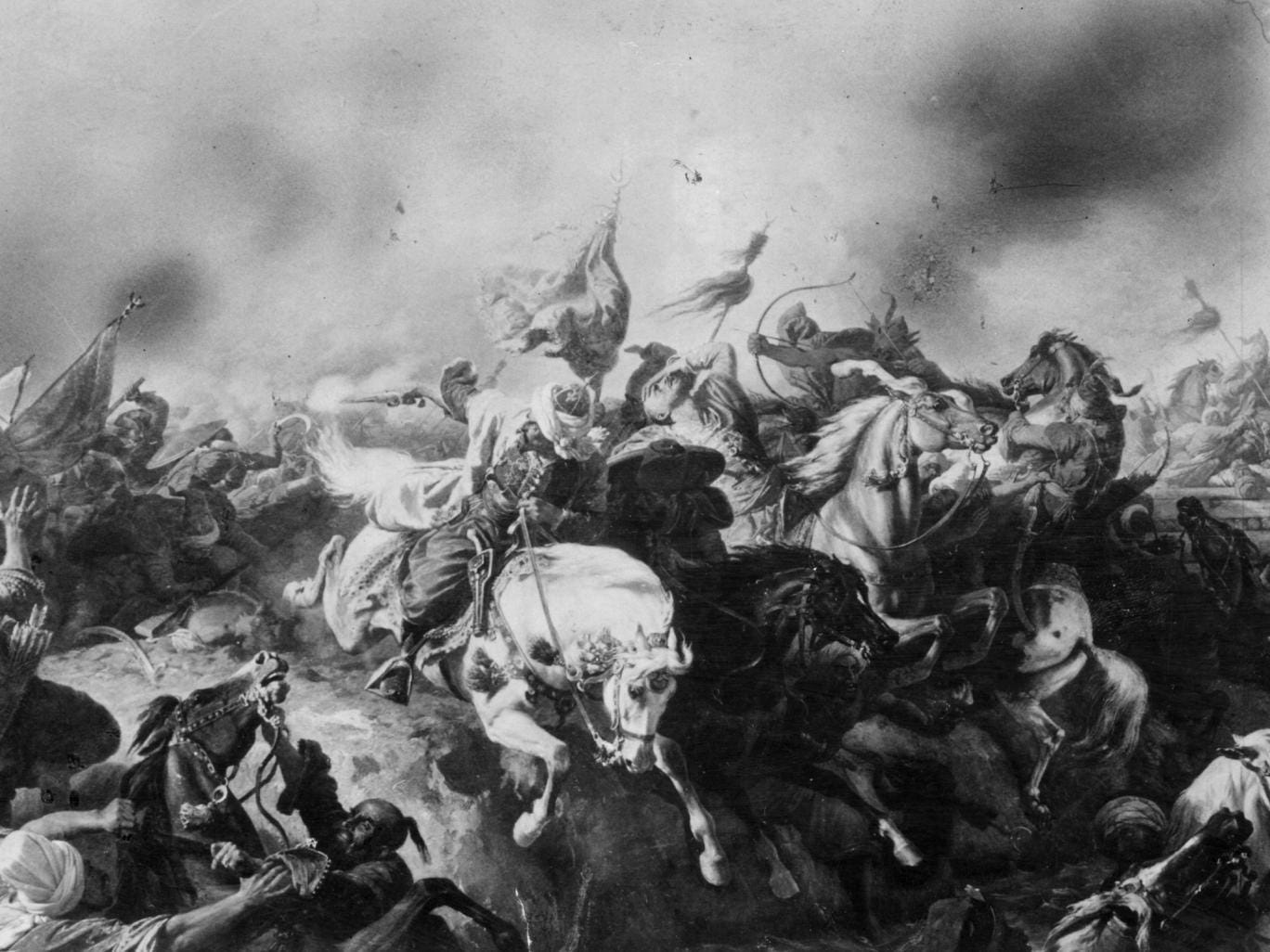
In 1683, a vast Ottoman army camped outside the gates of Vienna. For centuries thereafter, the siege and final decisive battle that took place would be cast as a defining moment in a clash of civilizations -- that time the forces of Islam were halted at the ramparts of Christendom.
Yet look just a little bit harder, and that tidy narrative falls apart. The Ottoman assault had been coordinated in league with French King Louis XIV. And perhaps more than half of the soldiers seeking to capture the Austrian capital were Christians themselves. There were Greeks, Armenians, Hungarians, Bulgarians, Romanians, Serbs, all fighting alongside Arabs, Turks, Kurds and others in the Ottoman ranks.
One of the main figures joining the Turkish campaign was Imre Thokoly, who was a Protestant born in what's now Slovakia and an avowed Hungarian nationalist. Tens of thousands of Hungarian peasants who were angry at the rapacious behavior of the Catholic Church, and the imperial Habsburg dynasty in Vienna had rallied to Thokoly's banner. His alliance with the Ottomans enabled the rapid Turkish march toward the Austrian capital.
It reflected, writes British academic Ian Almond in his 2009 book "Two Faiths, One Banner: When Muslims Marched With Christians Across Europe's Battlegrounds," how "little use terms such as 'Muslim' and 'Christian' are to describe the almost hopelessly complex web of shifting power-relations, feudal alliances, ethnic sympathies and historical grudges" that shaped much of European history.
That sense of nuance fades over centuries, and certainly wasn't apparent last year when another Hungarian nationalist -- the country's current Prime Minister Viktor Orbán -- cited the legacy of the Ottoman conquest to justify keeping Syrian refugees from passing through Hungary's borders.
"I have to say that when it comes to living together with Muslim communities, we are the only ones who have experience because we had the possibility to go through that experience for 150 years," Orbán told reporters last year, apparently referring to the period of dynastic warfare and mayhem that was sparked by the initial Ottoman invasion in the 16th century.
Orban has hardly been alone with this sort of grand, historical rhetoric. A host of Eastern European leaders, representing various right-of-center, nationalist governments, echoed Orbán's line, painting the migrant influx as an existential threat, an "invasion" of people whose cultural identity is wholly alien to Europe. A coalition of far-right activist groups in the region last week warned of "Islam conquering Europe" and announced plans for joint protests.
Further west, from France to the United States, conservative politicians -- including Republican presidential candidates -- also have gestured at a clash of civilizations when proposing bans on refugees or even halting Muslim migration altogether.
"Today, words such as 'Islam' and 'Europe' appear to have all the consistency of oil and water," Almond writes. But, he goes on, "the fact remains that in the history of Europe, for hundreds of years, Muslims and Christians shared common cultures, spoke common languages, and did not necessarily see one another as 'strange' or 'other.'"
The starkest proof of that lies in the battlefield, where Muslims and Christians died next to one another over many centuries.
It wasn't just the Ottomans who had multi-confessional armies. Muslims and Christians fought on all sides of the struggles in medieval Spain, where the last Muslim kingdom was snuffed out only in 1492. The Grand Catalan Company, an infamous mercenary outfit, ended up employing thousands of Turks even after it had been paid to fight them.
Frederick II, a 13th-century king who became the Holy Roman Emperor, deployed thousands of Arab Muslim archers and warriors during his wars with rival factions in Italy, including the armies of the pope. Chroniclers at the time documented the presence in the emperor's ranks of elephants bearing wooden towers bristling with Saracen, or Muslim, soldiers.
The Crimean War of the mid-19th century, a conflict a bit closer to our modern moment, saw a similar mishmash of identities and loyalties. Algerian soldiers were conscripted into the French army; Tatar Muslims were in the Russian ranks; all sorts of Christians -- including Cossacks, Romanian militias and Greek doctors -- were in the service of the Ottomans.
The point is not to romanticize this past -- which, in any event, was rather bloody and brutal. But it's worth bearing in mind these historical footnotes when thinking about the ideological divides and political rhetoric of the present.
"Strategically choosing when to talk about religious differences and when to keep quiet is the oldest trick in history," Almond writes. It's a pretty useful tactic in politics, too.
Washington Post:

Related:

~ ~ ~ ~ ~ ~ ~ ~ ~ ~ ~ ~ ~ ~ ~ ~ ~  ~ ~ ~  ~
Humanity, ReligionCultureSciencePeace
 A Project of 
Peace Forum Network
Peace Forum Network Mags
BooksArticles, BlogsMagazines,  VideosSocial Media
Overall 2 Million visits/hits

The Ark Before Noah by Irving Finkel

 The story of the Flood retold, An account of the Flood significantly different from that told in the Bible should have resonances with modern audiences
Dr Irving 》》》》》》》
http://www.theguardian.com/books/2014/nov/09/the-ark-before-noah-irving-finkel-review-flood-bible
Related:
~ ~ ~ ~ ~ ~ ~ ~ ~ ~ ~ ~ ~ ~ ~ ~ ~  ~ ~ ~  ~
Humanity, ReligionCultureSciencePeace
 A Project of 
Peace Forum Network
Peace Forum Network Mags
BooksArticles, BlogsMagazines,  VideosSocial Media
Overall 2 Million visits/hits

Makkah, The sacred city

Image result for makkah tower
In the name of icon-smashing, the Saudis have almost completely destroyed the city’s built culture, making instead a steel and glass “haven of consumerism”. The luxurious Royal Makkah Clock Tower, an unfeasibly silly and vertiginous development overlooking the massively expanded holy sanctuary, symbolises this “eruption of architectural bling”, though in truth “even the relatively poor are incited to shop at every available moment”. Shopping has always been part of Mecca but now, Sardar says, the pilgrimage is an adjunct to the retail, not the other way around.》》》》》》

Related:
~ ~ ~ ~ ~ ~ ~ ~ ~ ~ ~ ~ ~ ~ ~ ~ ~  ~ ~ ~  ~
Humanity, ReligionCultureSciencePeace
 A Project of 
Peace Forum Network
Peace Forum Network Mags
BooksArticles, BlogsMagazines,  VideosSocial Media
Overall 2 Million visits/hits

Christian Violence

Image result for christian violence
A mostly overlooked history of harm. It is possible to think only Islam is susceptible to religious violence and forget about centuries of intermittent Christian violence. Ninety-nine percent of Christians have never performed religious violence, and yet there is a history to recall.

Image result for christian violence

Perhaps the Pope, who is a highly educated and well-read man, and who knows the history of Christian violence as well as anyone, can educate the world on this matter. Here's a suggested theo-theatric pedagogy: The Pope will see to it that a towering monument is erected at the center of St. Peter's Square, replacing the ancient obelisk. Engravers will deeply etch the following words around the base of the memorial: As Perpetrators We Mourn Our Victims Above these words, at the pinnacle of the monument and moving downward, we'll read the inscribed names of the known causalities of Christian violence--from the fifth through the twenty-first centuries (and beyond?). These names are those who were killed, or maimed in body or in spirit, either by the ferocity of Christian certainty or by simple willful immorality. 
Here are the categories of victims: Pagans: pejorative name given to devout followers of pre-Christian Mediterranean religions, religions that were outlawed as Christianity became the religion of Empire. Heretics: devout Christians with dissimilar dogma who were hounded, menaced, tortured, executed. Apostates: those who through conscience or persuasion left the faith for another religion and were hounded, menaced, tortured, executed. Heathen: pejorative name given to non-Christians who might be hounded, menaced, tortured, executed. Infidels: pejorative name given to non-Christians who might be hounded, menaced, tortured, executed. Jews: the originators of the Abraham religions who might be hounded, menaced, forced to convert, lied about, ghettoized, exiled, tortured, executed. Muslims: like Christians, an offspring of Abrahamic religiosity, pursued and killed in the thousands by Christian armies in seven different Crusades from the 11th century to the end of the 13th. 

Image result for christian violence


Witches: mostly women, executed in the tens of thousands during the European satanic panics of the 1400s, 1500s, and 1600s. To make matters worse, there was no such thing as a 'witch.' Unbelievers: those unconvinced by the evidence for God and hounded, menaced, tortured, executed. Savages: pejorative name given to aboriginal peoples all over the globe who had their own ancient religious traditions but might be hounded, menaced, enslaved, tortured, executed. Fellow Christians: hounded, menaced, tortured, executed in the denominational religious wars of 1600s Europe. 
Small Children: sexually abused by a few clergy. All these victims failed to feel the touch of human decency in the pitiless piety of holy madmen. Victims: whose tongues were severed, whose heads were dashed, whose limbs were burned by wax and fire, who ached upon strappado and rack, who suffered libels and lies, who were raped in prepubescence. Readable names of the victims will include Bishop Pricillian, Geoffrey Valle, Domenico Scandella, Christine Boffgen, Pietro Pompanazzi, Lucilio Vanini, Noel Journet, Francscius Cuperus, Aluise Capuano, Girolamo Cardano, Pierre Charron, Pomponino Rustico, Michael Servetus, Giordano Bruno, Charles Blout, Thomas Aikenhead, and many, many more. Beneath these names engravers will scratch symbols signifying thousands more of the nameless victims. 
And finally, beneath all else, they will etch emblems for the thousands of unknown children, spouses, siblings, and loved ones of those killed or maimed, for these unknown lives too had been devastated. Once the memorial is completed, we will see a silent, massive crowd press into St. Peter's Square, among whom, let us hope, will be leaders of all Christian denominations and ordinary Christians from all sects. In the window above the basilica the Pope will intone a solemn litany: 'We do penance for the murder of Bishop Pricillian.' The people will beat their chests and reply, 'We are heartily sorry.' 'We do penance for the murder of Geoffrey Valle. -We are heartily sorry.' 'We do penance for the murder of Christine Boffgen. -We are heartily sorry.' 'We do penance for the murder of Giordano Bruno. -We are heartily sorry.' And on and on--of the known names. 
And then to the unknown: 'We do penance for the unknown killed or maimed in God's name. -We are heartily sorry.' And this will be said over and over again. After the litany, which may last days, the Pope will address the Christian world with these words: 'It is a credit to the decency of the vast majority of Christians in each generation of Christianity that they did not act violently in the name of God. Unfortunately a tiny minority of Christians in every age of Christianity, let us call them the rare and the deviant, the fraction-of-one-percent of Christians, did act violently. We repent of their sins. And now, to our Penance: Our atonement for The Centuries of Violence will be A Century of Silence, as we learn Bittul ha-tamid, the Jewish practice of ceasing liturgical worship in order to seek redress for moral wrongs. Churches: Orthodox, Catholic, Protestant, will be draped in black, their lights dimmed. 
Devotees may enter the sanctuaries, but no speech is to be uttered. No words of liturgy. No spoken prayers. No hymns. (Better to right a wrong than sway in the Holy of Holies). There will be no published works. No theology. No encyclicals. Not a word from the Churches for one hundred years. All this in Penance for the murder, for the maiming, and for the honor, of the victims.' And all the people in all the denominations, and all the leaders of all the denominations, will bow in agreement with the Penance. His Holiness will end citing a verse of scripture, breathed solemnly before a one-handed gesture of the cross traced into thin air: 'Omnis qui odit fratrem suum homicida est' --St. Jerome's Vulgate translation of 1 John 3:15. 'Everyone who hates his brother is a murderer.' 


~ ~ ~ ~ ~ ~ ~ ~ ~ ~ ~ ~ ~ ~ ~ ~ ~  ~ ~ ~  ~
Humanity, ReligionCultureSciencePeace
 A Project of 
Peace Forum Network
Peace Forum Network Mags
BooksArticles, BlogsMagazines,  VideosSocial Media
Overall 2 Million visits/hits