Saudi Arabia has drawn a lot of criticism lately for its leading role in the war against Houthi rebels in Yemen. Some deride the Kingdom, the richest Arab state, for taking action against the poorest. Others have claimed that the fight against the Houthis – a Zaidi Shia-led religious-political movement – is just one element in a broader war on the Shia that Saudi Arabia has supposedly been waging. These are simplistic claims, reflecting a fundamental misunderstanding about the Kingdom’s role in Yemen – and, indeed, in the entire Arab world. Saudi Arabia is not out to get the Zaidis. In fact, it actively supported the Zaidi royal family in Yemen’s civil war in the 1960s. What the Kingdom has reacted to in Yemen is Iran’s cynical efforts to take advantage of Yemen’s internal conflict to build a military alliance with the Houthi rebels – an alliance with only one conceivable target: Saudi Arabia. Yet when Saudi officials tried to warn the international community about Iran’s activities in Yemen, it was met with denial. Western commentators, in particular, have twisted themselves into knots to avoid recognizing any Iranian involvement in the conflict, even as evidence to the contrary has mounted.
In the last 18 months, the US Navy has intercepted four arms shipments from Iran to Yemen. Iran itself has claimed numerous times that it controls four Arab capitals, including Sana’a, and the Houthis have become closely tied with Hezbollah, Iran’s Lebanese political and military proxy. By Ali Al Shihabi, The executive director of the Arabia Foundation, a new think tank that will focus on the geopolitics of the Arabian Peninsula. He is the author of The Saudi Kingdom: Between the Jihadi Hammer and the Iranian Anvil and Arabian War Games.
The Treaty of Taif which had to be renewed after every twenty years stipulated “a state of perpetual peace, firm friendship and everlasting Islamic Arab brotherhood” between the two states and the relationship actually blossomed for many years only to be broken in 1948 by a coup in Yemen in which the coup makers killed the Yemeni ruler Imam Yahya, his prime minister, several dignitaries and promised to usher in a constitutional government
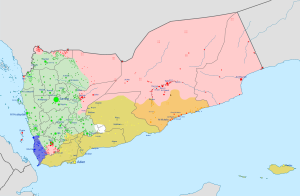
The bystanders look upon the ongoing war in Yemen as an unnecessary stupid conflict among Muslim states as it has caused over ten thousand deaths in the last two years and in which precious treasure is being frittered away not to save but kill more lives with sophisticated weaponry supplied by the most ‘civilised’ nations of the world. For the onlookers, the Yemen conflagration is nothing more than a saga of colossal human tragedy in which innocent people have been uprooted from their hearths, women widowed, children orphaned and food and medical supplies are becoming extinct, however, to the main players of this war i.e. Saudi Arabia, Iran and the US, their “national interest” is more important than human lives, particularly of Saudi Arabia, which looks upon any political crisis in Yemen as an existential threat to her territorial integrity. That is why Saudis will fight to the last man or till the time they successfully neutralise the existential threat. What is this existential threat to Saudi Arabia? It is the region of Asir bordering Yemen that has been the Saudi underbelly because even before the formation of Kingdom of Saudi Arabia (KSA), the tribal Emir of Asir and the ruler of Yemen hobnobbed to resist the authority of King Abd al-Aziz. In mid-1920s, when the ruler of Yemen, Imam Yahya and his son Ahmad threatened the main centres of Asir, the Emir of Asir went running for help to Abd al-Aziz and consented to the establishment of Saudi protectorate over his state in 1926, however, when Abd al-Aziz reduced the Emir of Asir to a mere figurehead under a new treaty in 1930, the latter intrigued with Imam Yahya which crystallised in a revolt in 1932 against Abd al-Aziz that was successfully crushed by the Saudis, forcing the Emir of Asir to flee to the sanctuary of Yemen. Before the “Asir headache” could turn into a “migraine,” the Saudi King Faisal tried to settle the issue, once and for all, when the Treaty of Taif was due for renewal in 1974. He told the Yemeni leadership that though the treaty recognised Saudi sovereignty over over Asir, Najran and Jizan, it was essential that the existing border was recognised as final and permanent The crisis lingered on because Imam Yahya was in possession of territories of Najran, Harad and a part of Asir-Tihama which the Saudi king regarded as his own and for which he eventually went to war with Yemen, that too, resulted in Saudi victory under the Treaty of Taif in 1934 in which Yemen ceded the disputed territories to Saudi Arabia. Prince (later King) Faisal who headed the Saudi military campaign wanted to conquer the whole of Yemen but his father King Abd al-Aziz ordered him to withdraw. Faisal was flabbergasted and questioned the sagacity of theorder, to which the King replied, “Yemen is not a country that can easily be conquered… If conquering Yemen were a simple undertaking that guaranteed success, Britain, which is stronger than us, in pursuit of its selfish interests, would have tried to conquer Yemen. You should be convinced by the fact that it did not do this.” The Yemenis could not forget the wounds of defeat and the very next year, during the course of Hajj, three of their pilgrims tried to stab Abd al-Aziz, who was saved by his sonEmir Saud. The Treaty of Taif which had to be renewed after every twenty years stipulated “a state of perpetual peace, firm friendship and everlasting Islamic Arab brotherhood” between the two states and the relationship actually blossomed for many years only to be broken in 1948 by a coup in Yemen in which the coup makers killed the Yemeni ruler Imam Yahya, his prime minister, several dignitaries and promised to usher in a constitutional government which was anathema to the Saudi monarch, who, despite his aversion to Imam Ahmad, the successor of the dead Imam Yahya, supported his claim to the headship of Yemen and helped him to recapture Sanaa to establish his authority and ensured that the coup makers were publicly executed. After a peaceful stint of fourteen years, there was yet another coup in Yemen in September 1962. Abdallah al-Sallal, the leader of the coup makers was an army officer, who was a republican nationalist by political conviction as well as a strong admirer of the Egyptian President Gamal Abdel Nasser, who was leading the popular pan-Arab wave in the Middle East. The successful coup turned out to be a big headache for the Saudi king because the Yemeni republicans demanded that the Saudi province of Asir be returned to Yemen as it had been forcibly snatched from them by Al-Saud in the 1930s. This claim was anexistential threat to the territorial integrity of Saudi Arabia and so it had to fight a costly protracted war in Yemen for about six years to nullify the Yemini claims against Saudi Arabia. Before the “Asir headache” could turn into a “migraine,” the Saudi King Faisal tried to settle the issue, once and for all, when the Treaty of Taif was due for renewal in 1974. He told the Yemeni leadership that though the treaty recognised Saudi sovereignty over over Asir, Najran and Jizan, it was essential that the existing border was recognised as final and permanent. Consequently, on 17 March 1973, a joint Saudi-Yemeni communique was issued to this effect but there was a severe backlash against it from the Yemeni nationalists as well as the angry Yemeni students, who seized the Yemeni embassy in Cairo. It was due to such Yemeni claims on Asir in the past and possibly in future that the Saudis built the first modern military base for their defence forces in 1971 at Khamis Mushayt which is close to the Yemeni border. The ongoing war in Yemen can bring such people in power, who can again stake claims on the Saudi territories bordering Yemen. Saudi Arabia does not want such a situation to arise again and that is why it has gone full throttle in Yemen and is likely to remain engaged till a friendly government is ensconced in power.
Till the last man in Yemen By Basharat Hussain Qizilbash, www.pakistantoday.com.pk
A military intervention was launched bySaudiArabia in 2015, leading a coalition of nine .... Aconflictover a draft constitution resulted in the Houthis consolidating control over theYemenicapital in January 2015. After resigning from his post ...
Abdrabbuh Mansur Hadi (from 2015) Ali Mohsen al-Ahmar (from 2016) Khaled Bahah .... The YemeniCivil War is an ongoing conflict that began in 2015 between two factions ... The Saudi intervention, which has included widespread bombing of civilian areas, has been sharply condemned by the international community.
Smoke rises above Sanaa, Yemen following a Saudi-led coalition air strike targeting a ... The conflicthas its roots in the failure of the political transition that was ..
Since the start of the Saudi military intervention in Yemen in March 2015 ... the strategic dimensions of the Yemen conflict to the public, insisting ...
THE Qatar crisis proves two things: the continued infantilisation of the Arab states, and the total collapse of the Sunni Muslim unity supposedly created by Donald Trump`s preposterous attendance at the Saudi summit two weeks ago. After promising to fight to the death against Shia Iranian `terror,` Saudi Arabia and its closest chums have now ganged up on one of the wealthiest of their neighbours, Qatar, for being a fountainhead of `terror`. Only Shakespeare`s plays could come close to describing such treachery. Shakespeare`s comedies, of course.
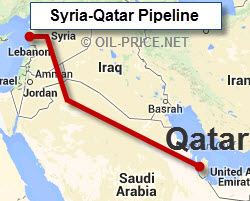
For, truly, there is something vastly fantastical about this charade. Qatar`s citizens have certainly contributed to IS. But so have Saudi Arabia`s citizens. No Qataris flew the 9/11 planes into New York and Washington. All but four of the 19 killers were Saudi. Bin L aden was not a Qatari. He was a Saudi. But Bin Laden favoured Qatar`s Al Jazeera channel with his personal broadcasts, and it was Al Jazeera who tried to give spurious morality to the Al Qaeda/Jabhat al-Nusrah desperadoes of Syria by allowing their leader hours of free airtime to explain what a moderate, peace-loving group they all were. First, let`s just get rid of the hysterically funny bits of this story. I see that Yemen is breaking air links with Qatar. Quite a shock for the poor Qatari emir, Sheikh Tamim bin Hamad al-Thani, since Yemen under constant bombardment by his former Saudi and Emirati chums doesn`t have a single service-able airliner lef t with which to create, let alone break, an air link. The Maldives have also broken relations with Qatar. To be sure, this has nothing to do with the recent promise of a Saudi five-year loan facility of $300m to the Maldives, the proposal of a Saudi property company to invest $100m in a family resort in the Maldives and a promise by Saudi Islamic scholars to spend $100,000 on 10 `world class` mosques in theMaldives. And let us not mention the rather large number of IS and other Islamist cultists who arrived to fight for IS in Iraq and Syria from well, the Maldives. Now the Qatari Emir hasn`t enough troops to defend his little country should the Saudis decide to request that he ask their army to enter Qatar to restore stability as the Saudis persuaded the King of Bahrain to do back in 2011. But Sheikh Tamim no doubt hopes that the massive US military air base in Qatar will deter such Saudi generosity. When I asked his father, Sheikh Hamad (later uncharitably deposed by Tamim) why he didn`t kick the Americans out of Qatar, he replied: `Because if I did, my Arab brothers would invade me.` Like father, like son, I suppose. God Bless America. All this started so we are supposed to believe with an alleged hacking of the Qatar News Agency, which produced some uncomplimentary but distressingly truthful remarks by Qatar`s emir about the need to maintain a rela-tionship with Iran. Qatar denied the veracity of the story. The Saudis decided it was true and broadcast the contents on their own normally staid (and immensely boring) state television network.The upstart emir, so went the message, had gone too far this time. The Saudis decided policy in the Gulf, not miniscule Qatar. Wasn`t that what Trump`s visit proved? But the Saudis had other problems to worry about. Kuwait, far from cutting relations with Qatar, is now acting as a peacemaker between Qatar and the Saudis and Emiratis. The emirate of Dubai is quite close to Iran, has tens of thousandsof Iranianexpatriates,andishardlyfollowing Abu Dhabi`s example of anti-Qatari wrath. Oman was even staging joint naval manoeuvres with Iran a couple of months ago. Pakistan long ago declined to send its army to help the Saudis in Yemen, because the Saudis asked for only Sunni and no Shia soldiers; the Pakistani army was understandably outraged to realise that Saudi Arabia was trying to sectarianise its military personnel. Pakistan`s former army commander, General Raheel Sharif, is rumoured to be on the brink of resigning as head of the Saudi-sponsored Muslim alliance to fight `terror`. President-Pield Marshal Abdel Fatah al-Sisi of Egypt has been roaring against Qatar for its support of the Egyptian Muslim Brotherhood and Qatar does indeed support the nowbanned group which Sisi falsely claims is part of IS but significantly Egypt, though the recipient of Saudi millions, also does not intend to supply its own troops to bolster the Saudis in its catastrophic Yemen war. Besides, Sisi needs his Egyptian soldiers at home to fight off IS attacks and maintain, along with Israel, the siege of the Palestinian Gaza Strip. But if we look a bit further down the road, it`s not difficult to see what really worries the Saudis. Qatar also maintains quiet links withthe Asad regime. It helped secure the release of Syrian Christian nuns in Jabhat al-Nusrah hands and has helped release Lebanese soldiers from IS hands in western Syria. When the nuns emerged from captivity, they thanked both Bashar al-Asad and Qatar. And there are growing suspicions in the Gulf that Qatar has much larger ambitions: to fund the rebuilding of post-war Syria. Even if Asad remained as president, Syria`s debt to Qatar would place the nation under Qatari economic control. And this would give tiny Qatar two golden rewards. It would give it a land empire to match its Al Jazeera media empire. Andit would extend its largesse to the Syrian territories, which many oil companies would like to use as a pipeline route from the Gulf to Europe via Turkey, or via tankers from the Syrian port of Lattakia. For Europeans, such a route would reduce the chances of Russian oil blackmail, and make sea-going oil routes less vulnerable if vessels did not have to move through the Gulf of Hormuz. So rich pickings for Qatar or for Saudi Arabia, of course, if the assumptions about US power of the two emirs, Hamad and Tamim, prove worthless. A Saudi military force in Qatar would allow Riyadh to gobble up all the liquid gas in the emirate. But surely the peaceloving `anti-terror` Saudis let`s forget the head-chopping for a moment would never contemplate such a fate for an Arab brother.
So let`s hope that for the moment, the routes of Qatar Airways are the only parts of the Qatari body politics to get chopped off.
Why Islam has not undergone culture reform? His answer: Muslims have been on the defensive for hundreds of years, their enemies continually threaten them and Westerners have never given Muslims an opportunity to think. They have always bombarded the Muslim world with their industrial power, scientific and technological capabilities and with their capacity to rule and dominate the world. They have never let it develop and examine itself. Writes Robert Fisk of The Independent.
Fisk argued the US policy on Islam is based on enmity, asking: Why is the US in Iraq, the Middle East, Kazakhstan, Uzbekistan, Pakistan, Germany, Turkey and Greece? Why are there US soldiers all around the world, beyond the US boundaries? What do they intend to do there? He made a comparison between the number of soldiers involved in the Crusades in the 12th century and the number of US soldiers currently deployed in the Middle East. The result is unbelievable: currently, the number of the US soldiers in the Middle East is twice the number of the soldiers involved in the Crusades. (Vatan newspaper, May 16, 2007).
Whether you like it or not, there are serious conflicts between Islam and the West. Without delving into the real causes of these conflicts, a fresh start does not seem likely:
(1) The West is exerting control over the Muslim territories where one-third of the world's energy resources are located, as well as exerting control over energy transfer routes. Muslims are denied ownership of their own natural resources.
(2) The primary obstacle to change in the Muslim world is the existence of oppressive regimes. The great majority of the population is young, desperate and unemployed and millions are seeking better education and health services, fair income distribution, freedom of expression and the right for a free opposition, in short, more humane conditions. However, these oppressive regimes are supported by the US and Europe. Yet, Western regimes and the media tend to portray the Islamic Salvation Front (FIS), Hamas, Hezbullah and the Muslim Brotherhood, all of which advocate free elections, democratic participation and parliamentary regimes as "extremists" and the autocracies, dictatorships and kingdoms as "moderates." Thus, one can conclude that for Westerners, "moderates" are those who do not raise objections to the Western presence in the region while "extremists" are those who do.
(3) Israel, which was mounted in the heart of the region, has been occupying lands for nearly 70 years and raining hell on the lives of Palestinians, but despite all the atrocities it commits, it gets unconditional support from all Western countries. The Palestinian issue is the "mother of all issues." This issue will not be settled unless the Israeli occupation ends, Palestinian refugees return to their own lands, Israeli settlers are stopped and the destruction of the Masjid al-Aqsa is stopped.
(4) Islam and its practitioners are being "othered" in a planned and intentional manner, and they are demonized through exclusion from the global system. Every day we face a new definition and another campaign for defamation: fanaticism, fundamentalism, political Islam, integrism, radicalism, Islamophobia, Islamofascism, reactionaryism, conservatism, extremism, Islamic terror, etc.
(5) The West imposes its culture and its lifestyle; it urges governments in Muslim countries to implement policies to ensure this, and it does not enter into dialogue on a paradigmatic level. It manipulates the social and cultural textures of Muslims without allowing them to change in their natural courses.
These are real conflicts. These are at the heart of the conflicts. On one side of the cleavage caused by these issues is the West, and on the other side is the Muslim world. Russia and China intervene in the Muslim world only from a political and strategic perspective. On the other hand, the West meddles with the Muslim world in every aspect. If the West really wants to make peace and coexist with Islam, it must pull out its occupation forces, it must stop supporting oppressive regimes, it has to make sure that Israel withdraws to pre-1967 borders and it must respect Islam and the lifestyles of Muslims.
The world is entering its most dangerous chapter in decades. The sharp uptick in war over recent years is outstripping our ability to cope with the consequences. From the global refugee crisis to the spread of terrorism, our collective failure to resolve conflict is giving birth to new threats and emergencies. Even in peaceful societies, the politics of fear is leading to dangerous polarization and demagoguery.
It is against this backdrop that Donald Trump was elected the next president of the United States — unquestionably the most important event of last year and one with far-reaching geopolitical implications for the future. Much has been said about the unknowns of Trump’s foreign-policy agenda. But one thing we do know is that uncertainty itself can be profoundly destabilizing, especially when it involves the most powerful actor on the global stage. Already, jittery allies from Europe to East Asia are parsing Trump’s tweets and casual bluster. Will he cut a deal with Russia over the heads of Europeans? Will he try to undo the Iran nuclear accord? Is he seriously proposing a new arms race?
Who knows? And that is precisely the problem.
The last 60 years have suffered their share of crises, from Vietnam to Rwanda to the Iraq War. But the vision of a cooperative international order that emerged after World War II, championed and led by the United States, has structured relations between major powers since the end of the Cold War.
That order was in flux even before Trump won the election. The retrenchment of Washington, for both good and ill, began during Barack Obama’s presidency. But Obama worked to shore up international institutions to fill the gap. Today, we can no longer assume that a United States shaped by “America first” will provide the bricks and mortar of the international system. U.S. hard power, when not accompanied and framed by its soft power, is more likely to be perceived as a threat rather than the reassurance that it has been for many.
In Europe, uncertainty over the new U.S. political posture is compounded by the messy aftermath of Brexit. Nationalist forces have gained strength, and upcoming elections in France, Germany, and the Netherlands will test the future of the European project. The potential unraveling of the European Union is one of the greatest challenges we face today — a fact that is lost amid the many other alarming developments competing for attention. We cannot afford to lose Europe’s balancing voice in the world.
Exacerbated regional rivalries are also transforming the landscape, as is particularly evident in the competition between Iran and the Persian Gulf countries for influence in the Middle East. The resulting proxy wars have had devastating consequences from Syria to Iraq to Yemen.
Many world leaders claim that the way out of deepening divisions is to unite around the shared goal of fighting terrorism. But that is an illusion: Terrorism is just a tactic, and fighting a tactic cannot define a strategy. Jihadi groups exploit wars and state collapse to consolidate power, and they thrive on chaos. In the end, what the international system really needs is a strategy of conflict prevention that shores up, in an inclusive way, the states that are its building blocks. The international system needs more than the pretense of a common enemy to sustain itself.
With the advent of the Trump administration, transactional diplomacy, already on the rise, looks set to increase. Tactical bargaining is replacing long-term strategies and values-driven policies. A rapprochement between Russia and Turkey holds some promise for reducing the level of violence in Syria. However, Moscow and Ankara must eventually help forge a path toward more inclusive governance — or else they risk being sucked ever deeper into the Syrian quagmire. A stable Middle East is unlikely to emerge from the temporary consolidation of authoritarian regimes that ignore the demands of the majority of their people.
The EU, long a defender of values-based diplomacy, has struck bargains with Turkey, Afghanistan, and African states to stem the flow of migrants and refugees — with worrying global consequences. On the other hand, Europe could take advantage of any improvement in U.S.-Russia relations to reset arms control for both conventional and nuclear forces, which would be more opportune than opportunistic.
Beijing’s hardheaded approach in its relationship with other Asian countries and with Africa and Latin America shows what a world deprived of the implicit reassurance of the United States will look like.
Such transactional arrangements may look like a revival of realpolitik. But an international system guided by short-term deal-making is unlikely to be stable. Deals can be broken when they do not reflect longer-term strategies. Without a predictable order, widely accepted rules, and strong institutions, the space for mischief is greater. The world is increasingly fluid and multipolar, pushed and pulled by a diverse set of states and nonstate actors — by armed groups as well as by civil society. In a bottom-up world, major powers cannot single-handedly contain or control local conflicts, but they can manipulate or be drawn into them: Local conflicts can be the spark that lights much bigger fires.
Whether we like it or not, globalization is a fact. We are all connected. Syria’s war triggered a refugee crisis that contributed to Brexit, whose profound political and economic consequences will again ripple outward. Countries may wish to turn inward, but there is no peace and prosperity without more cooperative management of world affairs.
1. Syria & Iraq
After nearly six years of fighting, an estimated 500,000 people killed, and some 12 million uprooted, Syrian President Bashar al-Assad appears likely to maintain power for now, but even with foreign backing his forces cannot end the war and regain total control. This was evident in the recent recapture of Palmyra by the Islamic State, just nine months after a Russian-backed military campaign had expelled the group. Assad’s strategy to cripple the non-jihadi opposition has worked to empower radical Islamist groups like the Islamic State and Jabhat Fateh al-Sham (formerly the Nusra Front). Non-jihadi rebels have been further weakened by the recent defeat in Aleppo; they remain fractious and undermined by their state backers’ divergent approaches.
The regime’s December recapture of eastern Aleppo marked a cruel turning point, with the regime and its allies succeeding by relentlessly besieging and bombarding civilians. Western diplomats expressed horror and outrage yet failed to muster a concrete response. The evacuation of civilians and rebels ultimately proceeded, haltingly, only after Russia, Turkey, and Iran struck a deal. This troika followed up with a meeting in Moscow to “revitalize the political process” for ending the war. Neither the United States nor the United Nations was invited or even consulted. A cease-fire deal brokered by Russia and Turkey at the end of December appeared to fall apart within days, as the regime continued military offensives in the suburbs of Damascus. Despite the significant challenges ahead, this new diplomatic track opens the best possibility for reducing the level of violence in Syria.
The war against the Islamic State is likely to continue, and there is an urgent need to ensure it will not fuel further violence and destabilization. In Syria, two competing efforts against the group — one led by Ankara, the other by the Syrian affiliate of the Kurdistan Workers’ Party (PKK) — are entangled with the conflict between the Turkish state and PKK inside Turkey. Washington has backed both efforts while trying to minimize direct clashes between them. The incoming Trump administration should prioritize de-escalating the conflict between its Turkish and Kurdish partners above the immediate capture of territory from jihadis. If violence between the two spirals, the Islamic State will be the first to gain.
The Islamic State still claims a caliphate across parts of Iraq and Syria, although it has lost significant territory over the past year. Even if it is defeated militarily, it or another radical group may well re-emerge unless underlying governance issues are addressed. The Islamic State itself grew from a similar failure in Iraq. It is spreading an ideology that is still mobilizing young people across the globe and poses threats well beyond the borders of Iraq and Syria, as recent attacks in Istanbul and Berlin have shown.
In Iraq, the fight against the Islamic State has further undermined the state’s ability to govern, caused enormous destruction, militarized youth, and traumatized Iraqi society. It has fragmented Kurdish and Shiite political parties into rival factions and paramilitary forces dependent on regional backers and competing over Iraq’s resources. The fight to defeat the Islamic State, whose rise has fed on deep grievances among Sunni Arabs, has compounded the damage done by the group’s rule. To avoid worse, Baghdad and the Kurdistan Regional Government need support and pressure to rein in paramilitary groups.
Success in the current U.S.-backed military campaign to retake Mosul, if mishandled, could turn into failure. Besides the regular Iraqi Army, special counterterrorism forces, and federal police who are leading the effort inside the city, local groups are also involved, seeking spoils of victory. Moreover, Iran and Turkey are competing for influence by using local proxies. The longer the battle drags on, the more these various groups will exploit opportunities to gain strategic advantage through territorial control, complicating a political settlement.
Iraq, with support from the United States and other partners, should continue military and logistics support to Iraqi forces pushing into the city and establish locally recruited stabilization forces in areas retaken from the Islamic State to ensure that military gains are not again lost. They will also need to jump-start governance involving local, and locally accepted, political actors.
2. Turkey
A New Year’s Eve attack in Istanbul — which killed at least 39 people — seems like a harbinger of more violence to come. The Islamic State claimed responsibility for the attack, a departure from the group’s general practice in Turkey that could signal an escalation. In addition to worsening spillover from the wars in Syria and Iraq, Turkey also faces a spiraling conflict with the PKK. Politically polarized, under economic strain, and with weak alliances, Turkey is poised for greater upheaval.
The conflict between the state and PKK militants continues to deteriorate following the collapse of a cease-fire in July 2015. Since then, the PKK conflict has entered one of the deadliest chapters in its three-decade history, with at least 2,500 militants, security forces, and civilians killed as both sides opt for further escalation. Clashes and security operations have displaced more than 350,000 civilians and flattened several city districts in Turkey’s majority Kurdish southeast. A PKK-linked double bomb attack killed 45 people near a soccer stadium in Istanbul in December. In response, the government is once again jailing representatives of the Kurdish movement, blocking a crucial channel to a political settlement that must include fundamental rights protections for Kurds in Turkey.
Though rooted in local sentiments, the escalation is also driven by Ankara’s growing concern over Kurdish gains in northern Syria and Iraq. This, and the danger posed by the Islamic State, persuaded Ankara to send its first detachments of troops into both countries, sucking it further into the Middle East maelstrom.
Domestically, President Recep Tayyip Erdogan’s government continues its crackdown on political opposition and dissent and is pushing for constitutional changes to usher in a presidential system — likely to be put to a public referendum in early spring. In the wake of the coup attempt last July, the government launched a massive crackdown, purging more than 100,000 officials.
Turkey’s Western allies, though dependent on a strong NATO partner on Europe’s southern border, have been strongly critical of the government’s authoritarian bent. This adds to the tensions created by stagnating negotiations between the EU and Ankara over Turkey’s accession to the bloc. In November, Erdogan responded angrily to criticism from Brussels, threatening to tear up the March 2016 refugee deal by which Ankara agreed to prevent the flow of Syrian refugees from moving onward to Europe. More than 2.7 million Syrian refugees are currently registered in Turkey; their integration poses significant challenges for the state and for host communities.
Relations with Washington are strained by Turkey’s military escalation with U.S.-allied Kurdish forces in Syria and by Turkey’s call for Washington to extradite alleged coup mastermind Fethullah Gulen. Ankara has reached an uneasy rapprochement with Moscow, and the December assassination of Russia’s ambassador to Turkey has, for the moment, brought the two countries closer together. Ankara is increasingly downplaying its Western alliances and scrambling to make arrangements with Russia and Iran. However, Turkey and Iran are still on a dangerous course, fueled by profound disagreement over their respective core interests in Iraq and Syria.
3. Yemen
The war in Yemen has created another humanitarian catastrophe, wrecking a country that was already the poorest in the Arab world. With millions of people now on the brink of famine, the need for a comprehensive cease-fire and political settlement is ever more urgent. Yemenis have suffered tremendous hardships from air bombardments, rocket attacks, and economic blockades. According to the U.N., approximately 4,000 civilians have been killed, the majority in Saudi-led coalition airstrikes. All parties to the conflict stand accused of war crimes, including indiscriminate attacks on civilian areas.
Saudi Arabia entered the conflict in March 2015 to counter advances made by the Houthis, a predominantly Zaydi Shiite militia viewed by Riyadh as a proxy for its archrival, Iran. Although the Houthis are not closely tied to Iran, it serves Tehran’s interests to have Saudi Arabia stuck in a vicious stalemate in Yemen.
Both sides appear locked in a cycle of escalating violence and provocations, derailing U.N. peace talks. In November, the Saudi-backed Yemeni government led by President Abed Rabbo Mansour Hadi rejected the U.N.’s proposed roadmap. That same month, the Houthi movement and its allies, mainly forces under former President Ali Abdullah Saleh, formed a new government. Despite the challenges, it may still be possible to convince the parties to accept the roadmap as the basis for a compromise that would end regional aspects of the war and return it to an inter-Yemeni process. Much depends on Saudi Arabia’s calculations and the willingness of its international sponsors, especially the United States and Britain, to encourage Riyadh to fully support the political compromise on offer. Failure to get the process back on track carries risks for all involved, as violent jihadi groups, including al Qaeda in the Arabian Peninsula and the Islamic State, are thriving in Yemen’s chaos.
4. Greater Sahel and Lake Chad Basin
Overlapping conflicts across the Greater Sahel and Lake Chad Basin have contributed to massive human suffering, including the uprooting of some 4.2 million people from their homes. Jihadis, armed groups, and criminal networks jockey for power across this impoverished region, where borders are porous and governments have limited reach.
In 2016, jihadis based in Central Sahel launched deadly attacks in western Niger, Burkina Faso, and Côte d’Ivoire, underscoring the region’s vulnerability. Al Qaeda in the Islamic Maghreb and al-Mourabitoun remain active while a new group claiming affiliation to the Islamic State is developing. All appear likely to continue attacks targeting civilians, as well as national and international forces. Mali is the U.N.’s most dangerous peacekeeping mission, with 70 personnel killed by “malicious acts” since 2013.
Mali could face a major crisis this year, as implementation of the 2015 Bamako peace agreement threatens to stall. The recent fracturing of the main rebel alliance in the north, the Coordination of Azawad Movements, has contributed to a proliferation of armed groups, and violence has spread to central Mali. Regional powers should use the upcoming African Union summit in January to revive the peace process and possibly bring in groups that are currently left out. Algeria, an important broker of stability in the region, has a key role to play as the deal’s chief mediator.
In the Lake Chad Basin, the security forces of Nigeria, Niger, Cameroon, and Chad have stepped up their fight against the Boko Haram insurgency. At the end of December, the Nigerian president announced the “final crushing of Boko Haram terrorists in their last enclave” in the Sambisa Forest, yet the group has not been vanquished. A leadership quarrel has split the jihadi movement, but it remains resilient and aggressive. Although international attention has focused on Boko Haram’s kidnapping and abuse of women and girls, policymakers should also note that some women joined the movement voluntarily in search of economic and social opportunities. Understanding the various ways women experience the conflict should directly inform strategies to tackle the roots of the insurgency.
The Boko Haram insurgency, the aggressive military response to it, and the lack of effective assistance to those caught up in the conflict threaten to create an endless cycle of violence and despair. If regional governments do not react responsibly to the humanitarian disaster, they could further alienate communities and sow the seeds of future rebellion. States should also invest in economic development and strengthen local governance to close off opportunities for radical groups.
5. Democratic Republic of Congo
The Democratic Republic of the Congo received some good news shortly before midnight on New Year’s Eve when Catholic bishops announced that a deal had been reached to resolve the country’s political crisis. President Joseph Kabila has not yet signed on to the agreement, which requires him to step down after elections are held, sometime before the end of 2017. Despite high levels of mistrust between the parties, the deal mediated by the Congolese Catholic Church remains the best chance for a path forward. The overarching challenge now is to prepare for elections and a peaceful transition in short order, for which solid international backing is essential.
Kabila’s determination to cling to power beyond his second term, in defiance of the Congolese Constitution, met with significant opposition and volatile street protests throughout 2016 — and threatens more widespread violence to come. Congo’s endemic corruption and winner-takes-all politics mean Kabila’s entourage has much to lose, so they may not let go easily. African and Western powers need to coordinate efforts to pull Congo back from the brink and prevent further regional instability. MONUSCO, the U.N.’s largest peacekeeping mission, does not have the capacity to deal with such challenges and would be more effective with a narrower mandate, moving away from institution building and toward good offices and human rights monitoring.
Last September, at least 53 people were killed, mostly by security forces, when demonstrations against Kabila’s rule beyond the end of his mandate turned violent. Clashes between security forces and protesters in several cities around the end of his term, on Dec. 19 and 20, reportedly killed at least 40 people. Violence is likely to continue if the elections are again postponed. The main opposition coalition, the Rassemblement, will be prepared to harness the power of the street to try to force Kabila out. The political tension in Kinshasa is also contributing to increased violence in pockets throughout the country, including the conflict-ridden east.
6. South Sudan
After three years of civil war, the world’s youngest country is still bedeviled by multiple conflicts. Grievances with the central government and cycles of ethnic violence fuel fighting that has internally displaced 1.8 million people and forced around 1.2 million to flee the country. There has been mounting international concern over reports of mass atrocities and the lack of progress toward implementing the 2015 peace agreement. In December, President Salva Kiir called for a renewed cease-fire and national dialogue to promote peace and reconciliation. Whether or not these efforts succeed depends on the transitional government’s willingness to negotiate fairly with individual armed groups and engage with disaffected communities at the grassroots level.
The internationally backed peace agreement was derailed in July 2016 when fighting flared in Juba between government forces and former rebels. Opposition leader and erstwhile Vice President Riek Machar, who had only recently returned to Juba under the terms of the deal, fled the country. Kiir has since strengthened his position in the capital and the region as a whole, which creates an opportunity to promote negotiations with elements of the armed opposition, including groups currently outside the transitional government.
The security situation in Juba has improved in recent months, although fighting and ethnic violence continue elsewhere. International diplomatic efforts are focused on the deployment of a 4,000-strong regional protection force — a distraction that would do little to quell an outbreak of major violence and pulls energy away from the deeper political engagement needed to consolidate peace. The existing U.N. peacekeeping mission in South Sudan, UNMISS, needs urgent reform — which is especially clear following its failure to protect civilians during last July’s spasm of violence in Juba. A glimmer of hope in the country’s tragedy is the delicate rapprochement underway among South Sudan, Uganda, and Sudan that might one day help guarantee greater stability.
7. Afghanistan
War and political instability in Afghanistan pose a serious threat to international peace and security, more than 15 years after U.S.-led coalition forces ousted the Taliban from power as part of a broader campaign to defeat al Qaeda. Today, the Taliban are gaining ground; the Haqqani network is responsible for attacks in major cities; and the Islamic State has claimed a series of attacks targeting Shiite Muslims that appear intent on stoking sectarian violence. The number of armed clashes last year reached the highest level since the U.N. started recording incidents in 2007, with large numbers of civilian casualties. Further weakening of the Afghan security forces would risk leaving large ungoverned spaces that could be exploited by regional and transnational militant groups.
America’s longest war barely registered as a policy issue during the U.S. presidential election. Trump’s intentions on Afghanistan remain unclear, though he has repeatedly expressed skepticism about nation building. His controversial choice for national security advisor, retired Lt. Gen. Michael Flynn, served as director of intelligence for Joint Special Operations Command in Iraq and Afghanistan. Flynn’s proclaimed focus on “radical Islamic terrorism” as the single-most important global threat misdiagnoses the problem, with worrying implications in Afghanistan and beyond. The strategic direction over time must be toward a negotiated settlement with the Taliban, which will require greater regional convergence as well as Chinese involvement. Meanwhile, Russia, Pakistan, and China have formed a working group on Afghanistan with the stated aim of creating a “regional anti-terrorism structure”; Kabul so far has been left out of the trilateral consultations.
Afghanistan’s relations with Pakistan have long been strained due to Islamabad’s support for the Taliban and other militant groups. Tensions increased last fall as thousands of Afghan refugees in Pakistan were forced to flee amid increased violence, detentions, and harassment. Afghanistan’s refugee crisis was made worse by the EU’s plan to deport 80,000 asylum-seekers back to Afghanistan — a politically driven response to a humanitarian emergency. All this on top of the country’s economic crisis adds heavy pressures on a dangerously weak state.
8. Myanmar
The new civilian government led by Nobel Peace Prize laureate Aung San Suu Kyi promised peace and national reconciliation as its top priorities; however, recent flare-ups of violence have jeopardized efforts to end nearly 70 years of armed conflict. In November, a “Northern Alliance” of four armed groups carried out unprecedented joint attacks on urban targets in a key trade zone on the Chinese border, triggering military escalation in the northeast. This does not bode well for progress at the next session of the 21st-Century Panglong Conference slated for February, part of a renewed peace process to bring together most of the country’s major ethnic armed groups.
Meanwhile, the fate of the Muslim Rohingya minority is drawing renewed international concern. The population has seen its rights progressively eroded in recent years, especially following anti-Muslim violence in Rakhine state in 2012. The latest round of violence in Rakhine was sparked by a series of attacks in October and November targeting border police and military in an area near Myanmar’s northwestern frontier with Bangladesh. Security forces hit back hard in a campaign that made little distinction between militants and civilians, with allegations of extrajudicial executions, rapes, and arson. By mid-December, the U.N. estimated that around 27,000 Rohingya had fled to Bangladesh. More than a dozen fellow Nobel laureates issued an open letter criticizing Aung San Suu Kyi for her failure to speak out about the abuses and calling for full and equal citizenship rights for the Rohingya.
The initial attacks were carried out by an armed group known as Harakah al-Yaqin (“Faith Movement”), whose emergence is a potential game-changer in Myanmar. Although the Rohingya have never been a radicalized population, the government’s heavy-handed military response increases the risk of spiraling violence. Grievances could be exploited by transnational jihadis attempting to pursue their own agendas, which would inflame religious tensions across the majority Buddhist country.
9. Ukraine
After almost three years of war and roughly 10,000 deaths, Russia’s military intervention defines all aspects of political life in Ukraine. Divided by the conflict and crippled by corruption, Ukraine is headed for even greater uncertainty. Trump’s professed admiration for Russian President Vladimir Putin scares Kiev, as do rumors that the United States may decide to scrap sanctions against Russia. Implementation of the February 2015 Minsk peace agreement is stalled, effectively bringing Russia closer to two of its goals in the Ukraine conflict: the establishment of permanent pro-Russian political entities in eastern Ukraine, as well as normalization of its annexation of Crimea that started the war in 2014.
Across Ukraine, there is growing disillusionment with leaders who were brought to power by the Maidan demonstrations of early 2014 but who now increasingly resemble the corrupt oligarchs thrown out. Western support for President Petro Poroshenko is ebbing due to Kiev’s unwillingness or inability to deliver promised economic reform and robust anti-corruption measures. Poroshenko’s problems may be compounded if early parliamentary elections are held in 2017, in which pro-Russia parties could gain ground.
The United States and EU must press Kiev harder for reforms while using strong diplomacy with Moscow, including maintaining sanctions. Putin must be convinced that there cannot be a return to normalcy in Europe so long as various forms of hybrid warfare are used to keep the situation in Ukraine unsettled. Russia’s tactics — including the use of force, cyberattacks, propaganda, and financial pressures — send a chilling message across the region.
10. Mexico
A high level of tension between the United States and Mexico might seem inevitable after Trump’s campaign pledges to build a border wall, deport millions of undocumented immigrants, and terminate the North American Free Trade Agreement. He also famously characterized Mexican immigrants as drug dealers, criminals, and rapists and drew on support from white nationalist groups. In an early effort to avoid future confrontation, Mexican President Enrique Peña Nieto invited candidate Trump to visit the country in September — a move that initially backfired with a Mexican public already angry about high crime, corruption, and a weak economy.
Peña Nieto knows Mexico cannot afford to make an enemy of its mighty neighbor. Mexico’s political and business elites are reportedly out in force to convince Trump and his advisors to modify stated positions on immigration and free trade.
If the United States were to pursue a policy of massive deportations, this would risk triggering an even worse humanitarian and security crisis. Refugees and migrants from Mexico and Central America are fleeing epidemic levels of violence combined with endemic poverty. A 2016 survey found that armed violence in Mexico and the Northern Triangle had killed around 34,000 people, more than were killed in Afghanistan over the same period. Stepped-up deportations and border enforcement tend to divert undocumented migration into more dangerous channels — benefiting criminal gangs and corrupt officials. The United States can better serve its own interests by strengthening its partnership with Mexico to address the systemic failings that give rise to violence and corruption.
The following is a list of ongoing armed conflicts that are taking place around the world and ..... Casualty Figures after 10 Years of the "War on Terror"" (PDF).
Sep 23, 2013 - The International Day of Peace or World Peace Day is celebrated annually across theworld on 21 September. Throughout the world, World ...
Feb 25, 2014 - DW takes a look at 10 of the more dangerous conflicts. ... TOP STORIES ... According to the Heidelberg Institute for International Conflict Research (HIIK), last year saw some 400 conflicts worldwide, 20 of them wars. DW takes ...
www.independent.co.uk › News › World › World Politics
Jun 7, 2016 - The world is becoming a more dangerous place and there are now just 10 countries which can be considered completely free from conflict, ... in the world, and by some margin, home to seven of the top 10 countries on the list.
It involved involved most of the world's nations, including all of the great ... only use of nuclear weapons in warfare, it was the deadliest conflict in human history, ...
Dec 20, 2013 - Current Major wars and conflicts in the world—Major conflicts are defined here as wars and conflicts in ... Also known as the “Great Lakes War.
Aug 2, 2015 - Overview of the Major Wars and Conflicts of The 20th Century. ... war was originally known as "The Great War," and also as "The World War.".