Featured Post

SalaamOne NetWork

SalaamOne سلام   is   a nonprofit e-Forum to promote peace among humanity, through understanding and tolerance of religions, cul...

Showing posts with label Qatar. Show all posts

Crisis in Qatar and Saudi Arabia, Real Story


       Image result for qatar saudi arabia conflict

THE Qatar crisis proves two things: the continued infantilisation of the Arab states, and the total collapse of the Sunni Muslim unity supposedly created by Donald Trump`s preposterous attendance at the Saudi summit two weeks ago.

After promising to fight to the death against Shia Iranian `terror,` Saudi Arabia and its closest chums have now ganged up on one of the wealthiest of their neighbours, Qatar, for being a fountainhead of `terror`. Only Shakespeare`s plays could come close to describing such treachery. Shakespeare`s comedies, of course.
Image result for qatar saudi arabia conflict

For, truly, there is something vastly fantastical about this charade. Qatar`s citizens have certainly contributed to IS. But so have Saudi Arabia`s citizens. No Qataris flew the 9/11 planes into New York and Washington. All but four of the 19 killers were Saudi. Bin L aden was not a Qatari. He was a Saudi.

But Bin Laden favoured Qatar`s Al Jazeera channel with his personal broadcasts, and it was Al Jazeera who tried to give spurious morality to the Al Qaeda/Jabhat al-Nusrah desperadoes of Syria by allowing their leader hours of free airtime to explain what a moderate, peace-loving group they all were.

First, let`s just get rid of the hysterically funny bits of this story. I see that Yemen is breaking air links with Qatar. Quite a shock for the poor Qatari emir, Sheikh Tamim bin Hamad al-Thani, since Yemen under constant bombardment by his former Saudi and Emirati chums doesn`t have a single service-able airliner lef t with which to create, let alone break, an air link.

The Maldives have also broken relations with Qatar. To be sure, this has nothing to do with the recent promise of a Saudi five-year loan facility of $300m to the Maldives, the proposal of a Saudi property company to invest $100m in a family resort in the Maldives and a promise by Saudi Islamic scholars to spend $100,000 on 10 `world class` mosques in theMaldives. And let us not mention the rather large number of IS and other Islamist cultists who arrived to fight for IS in Iraq and Syria from well, the Maldives.

Now the Qatari Emir hasn`t enough troops to defend his little country should the Saudis decide to request that he ask their army to enter Qatar to restore stability as the Saudis persuaded the King of Bahrain to do back in 2011. But Sheikh Tamim no doubt hopes that the massive US military air base in Qatar will deter such Saudi generosity.

When I asked his father, Sheikh Hamad (later uncharitably deposed by Tamim) why he didn`t kick the Americans out of Qatar, he replied: `Because if I did, my Arab brothers would invade me.` Like father, like son, I suppose. God Bless America.

All this started so we are supposed to believe with an alleged hacking of the Qatar News Agency, which produced some uncomplimentary but distressingly truthful remarks by Qatar`s emir about the need to maintain a rela-tionship with Iran.

Qatar denied the veracity of the story. The Saudis decided it was true and broadcast the contents on their own normally staid (and immensely boring) state television network.The upstart emir, so went the message, had gone too far this time. The Saudis decided policy in the Gulf, not miniscule Qatar. Wasn`t that what Trump`s visit proved? But the Saudis had other problems to worry about. Kuwait, far from cutting relations with Qatar, is now acting as a peacemaker between Qatar and the Saudis and Emiratis. The emirate of Dubai is quite close to Iran, has tens of thousandsof Iranianexpatriates,andishardlyfollowing Abu Dhabi`s example of anti-Qatari wrath.

Oman was even staging joint naval manoeuvres with Iran a couple of months ago. Pakistan long ago declined to send its army to help the Saudis in Yemen, because the Saudis asked for only Sunni and no Shia soldiers; the Pakistani army was understandably outraged to realise that Saudi Arabia was trying to sectarianise its military personnel. Pakistan`s former army commander, General Raheel Sharif, is rumoured to be on the brink of resigning as head of the Saudi-sponsored Muslim alliance to fight `terror`.

President-Pield Marshal Abdel Fatah al-Sisi of Egypt has been roaring against Qatar for its support of the Egyptian Muslim Brotherhood and Qatar does indeed support the nowbanned group which Sisi falsely claims is part of IS but significantly Egypt, though the recipient of Saudi millions, also does not intend to supply its own troops to bolster the Saudis in its catastrophic Yemen war. Besides, Sisi needs his Egyptian soldiers at home to fight off IS attacks and maintain, along with Israel, the siege of the Palestinian Gaza Strip.

But if we look a bit further down the road, it`s not difficult to see what really worries the Saudis. Qatar also maintains quiet links withthe Asad regime. It helped secure the release of Syrian Christian nuns in Jabhat al-Nusrah hands and has helped release Lebanese soldiers from IS hands in western Syria. When the nuns emerged from captivity, they thanked both Bashar al-Asad and Qatar.

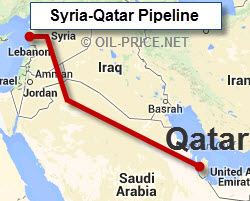
And there are growing suspicions in the Gulf that Qatar has much larger ambitions: to fund the rebuilding of post-war Syria. Even if Asad remained as president, Syria`s debt to Qatar would place the nation under Qatari economic control.

And this would give tiny Qatar two golden rewards. It would give it a land empire to match its Al Jazeera media empire. Andit would extend its largesse to the Syrian territories, which many oil companies would like to use as a pipeline route from the Gulf to Europe via Turkey, or via tankers from the Syrian port of Lattakia.

For Europeans, such a route would reduce the chances of Russian oil blackmail, and make sea-going oil routes less vulnerable if vessels did not have to move through the Gulf of Hormuz.

So rich pickings for Qatar or for Saudi Arabia, of course, if the assumptions about US power of the two emirs, Hamad and Tamim, prove worthless. A Saudi military force in Qatar would allow Riyadh to gobble up all the liquid gas in the emirate. But surely the peaceloving `anti-terror` Saudis let`s forget the head-chopping for a moment would never contemplate such a fate for an Arab brother.


So let`s hope that for the moment, the routes of Qatar Airways are the only parts of the Qatari body politics to get chopped off.

By Robert Fisk:
http://epaper.dawn.com/?page=11_06_2017_013
https://www.vox.com/world/2017/6/6/15739606/saudi-arabia-ties-qatar-trump
~ ~ ~ ~ ~ ~ ~ ~ ~ ~ ~ ~ ~ ~ ~ ~ ~  ~ ~ ~  ~


~ ~ ~ ~ ~ ~ ~ ~~ ~ ~ ~ ~ ~  ~ ~ ~  ~
Humanity, Knowledge, Religion, Culture, Tolerance, Peace
انسانیت ، علم ، اسلام ،معاشرہ ، برداشت ، سلامتی 
Books, Articles, Blogs, Magazines,  Videos, Social Media
بلاگز، ویب سائٹس،سوشل میڈیا، میگزین، ویڈیوز,کتب
سلام فورم نیٹ ورک  Peace Forum Network 
Join Millions of visitors: لاکھوں وزٹرز میں شامل ہوں 
Salaamforum.blogspot.com 
سوشل میڈیا پر جوائین کریں یا اپنا نام ، موبائل نمر923004443470+ پر"وہٹس اپپ"یا SMS کریں   
Join 'Peace-Forum' at Social Media, WhatsApp/SMS Name,Cell#at +923004443470
     
  
Facebook: fb.me/AftabKhan.page

Saudi Arabia’s diplomatic war with Qatar


Saudi Arabia’s diplomatic war with Qatar, explained

A longstanding war of words between Saudi Arabia and its oil and gas-rich neighbor Qatar has just exploded into open diplomatic warfare, threatening the US-led fight against ISIS and setting off a new wave of instability in the Gulf region.

Here’s what happened: On Monday, Saudi Arabia and three of its biggest allies — Egypt, the United Arab Emirates, and Bahrain — all announced that they were severing diplomatic ties with Qatar, as well as suspending air, land, and sea travel to and from the country. The move came after Riyadh accused Qatar of backing radical Islamist groups like the Muslim Brotherhood and ISIS. Since then, Libya, Yemen, and the Maldives have also joined the diplomatic boycott.

Qatar is one of the wealthiest countries on earth, but it’s going to feel the pain all the same because it relies heavily on its neighbors for trade and travel in and out of the region. The peninsular nation imports most of its food through its land border with Saudi, which is now closed. Al Jazeera, a Qatar government-owned news network, has reported that trucks carrying food appear to be stranded on the Saudi side of the border. And in Doha, the capital of Qatar, people are already “stockpiling perishable goods,” according to Jassim Mater Kunji, a producer for Al Jazeera English. Many ships carrying food to Doha first stop in the UAE’s biggest cities, Dubai and Abu Dhabi; it’s unclear what effect the new bans will have on their movements.

Tensions between Qatar and its neighbors skyrocketed last month after Qatar’s state-run news agency published an article in which the Qatar’s ruling emir, Tamim bin Hamad Al Thani, was quoted praising Israel and Iran — Saudi Arabia’s biggest adversaries in the region. Qatar swiftly disavowed the article as fake news manufactured by hackers, but Saudi and its friends were unconvinced. Then Sheikh Tamim made things even worse when a few days later he called Iranian President Hassan Rouhani to congratulate him on his reelection — a clear act of defiance against Saudi’s hawkish stance on Iran.

The new rift in the Persian Gulf is in and of itself a big deal — it’s already being interpreted by some observers as the biggest diplomatic crisis in the region since the Gulf War in 1991.

But the consequences will ripple beyond the region’s internal politics and seriously imperil US military operations in the region. Qatar is home to the forward headquarters of the United States Central Command, which manages all military operations in Afghanistan and the Middle East. And the air war command for the US-led fight against ISIS operates out of Qatar’s Al Udeid Air Base. All in all, there are around 11,000 US military personnel in the country.

As the New York Times notes, it’s obvious that an American-led campaign that includes aircraft from the countries severing ties with Qatar will be harder to wage if those countries refuse to allow their military representatives to even visit the American base there.


The big breakup highlights the vexing dual role Qatar has long played for the US in its fight against radicalism in the Middle East. On one hand, the US knows Qatar is a large source of support and funding for groups it considers to be terrorist organizations, like Hamas, or adversaries, like the Muslim Brotherhood. But on the other hand, it has also been willing to allow the Pentagon to operate bases in its territory and to serve as an intermediary between Washington and Islamist groups across the region. To take one high-profile example, Qatar helped broker the deal with the Taliban that won the release of the imprisoned US Army Sgt. Bowe Bergdahl.

That means successive US administrations have been willing to work with Qatar out of a belief that the positives outweighed the clear negatives, including its unofficial support for militant activities in the region. And currently it really wants all the countries in the region to be on good enough terms to be able to join the US-led campaign against ISIS.

“We certainly would encourage the parties to sit down together and address these differences,” Secretary of State Rex Tillerson said in Australia on Monday. “If there’s any role that we can play in terms of helping them address those, we think it is important that the [Gulf Cooperation Council] remain unified.” (The GCC is the club of Persian Gulf nations that Saudi Arabia, Bahrain, the UAE, and Qatar are a part of.)

Tensions between Qatar and its neighbors have been brewing for some time, but Saudi Arabia’s move — which includes no explicit demands of Qatar — has still shocked observers. Which raises the question: What caused things to escalate to this point?

One element of it is because of the controversy surrounding Sheikh Tamim, and his relationship with entities that Saudi Arabia abhors, like Iran. But another part of it can be traced to Trump. His recent warmth toward the country, and his aggressive vilification of Iran, helped empower Saudi Arabia to finally act on its longstanding distrust of Qatar. In other words, Trump’s Middle East strategy may be undercutting the administration’s ISIS fight.

Trump has given Saudi Arabia the green light to be more aggressive

The tensions began to flare late last month when Qatar’s state-run news agency ran a story in which Tamim made remarks about Israel and Iran that incensed Saudi Arabia. He deemed Iran an “Islamic power” and characterized Qatar’s relations with Israel as “good.”

This unnerved many Saudi leaders because it amounted to praise of Saudi Arabia’s two biggest enemies in the region. Qatar claims the article and the incendiary statements inserted into it were the result of a hack, but Saudi Arabia didn’t buy it. Both Saudi and the UAE blocked Qatari media, including its powerful international cable news service Al Jazeera, and slammed the country in their own state-run news organizations.

That clash didn’t prevent Tamim from making another gutsy move just a few days later. In a bid to demonstrate his independence from the Saudi line, he called Iran’s Rouhani to congratulate him for being reelected, even though he knew it would rankle Riyadh. During that call, Rouhani reportedly called for “more cooperation” in the region.

Qatar has long been viewed by its neighbors as a rabble rouser in the region and a bit of a loose cannon. Its government funds Al Jazeera, a lively media operation which is frequently critical of Saudi Arabia and other Persian Gulf states. And much to the chagrin of Saudi Arabia and the current Egyptian government, it supported the Islamist Muslim Brotherhood throughout the Arab Spring. Back in 2014, Saudi Arabia, the UAE, and Bahrain temporarily pulled their ambassadors out of Qatar because of its support for the group. So the most recent comments the emir allegedly made were just the latest of a number of offenses, in their eyes.

Still, Saudi Arabia’s move is incredibly bold. Trump’s recent deference to the country, as well as toward Egyptian President Abdel Fattah al-Sisi, may have made it feel it had the license to do things it might not have pulled off during the Obama administration.

Obama held some degree of ambivalence toward the Saudis, and didn’t give them totally free rein to do whatever they wished to. He angered them with his efforts at the Iran nuclear deal, which Saudi saw as giving too much latitude to their foremost regional rival. And he upset the Saudis when he nixed a major arms deal with them before he left office, out of disapproval of the way they were handling their war on Yemen. The Saudis also felt humiliated by Obama’s failure to stop the passage of legislation designed to help families of the victims of 9/11 sue the Saudi government.

By contrast, Trump has spent his presidency so far railing against Iran and threatening to undo the nuclear deal; he also approved a $110 billion arms deal with Saudi; and he used his first trip to Saudi Arabia to pat autocrats in the region on the back and promise them he wasn’t there to “lecture” them on how to govern. But given how antagonistic Saudi’s newfound confidence is, Trump could come to regret it.

by Zeeshan Aleem, vox.com
~ ~ ~ ~ ~ ~ ~ ~ ~ ~ ~  ~ ~ ~  ~ ~ ~  ~


~ ~ ~ ~ ~ ~ ~ ~~ ~ ~ ~ ~ ~  ~ ~ ~  ~
Humanity, Knowledge, Religion, Culture, Tolerance, Peace
انسانیت ، علم ، اسلام ،معاشرہ ، برداشت ، سلامتی 
Books, Articles, Blogs, Magazines,  Videos, Social Media
بلاگز، ویب سائٹس،سوشل میڈیا، میگزین، ویڈیوز,کتب
سلام فورم نیٹ ورک  Peace Forum Network 
Join Millions of visitors: لاکھوں وزٹرز میں شامل ہوں 
Salaamforum.blogspot.com 
سوشل میڈیا پر جوائین کریں یا اپنا نام ، موبائل نمر923004443470+ پر"وہٹس اپپ"یا SMS کریں   
Join 'Peace-Forum' at Social Media, WhatsApp/SMS Name,Cell#at +923004443470
     
  
Facebook: fb.me/AftabKhan.page