Featured Post

SalaamOne NetWork

SalaamOne سلام   is   a nonprofit e-Forum to promote peace among humanity, through understanding and tolerance of religions, cul...

Showing posts with label Revival. Show all posts

The Gulen Movement Is Not a Cult -- It's One of the Most Encouraging Faces of Islam Todayby Graham E. Fuller

Last week witnessed what may be the last act of an unfolding struggle between two major Islamic movements in Turkey. Turkish President Recep Tayyip Erdogan accused exiled Islamic leader Fethullah Gulen of plotting last week's failed coup against the government. Immediately thereafter, Erdogan unleashed massive Stalin-style purges and arrests across the country of anyone suspected of any connection with Gulen or indeed of anyone of any ideology who opposes Erdogan.

First of all, when we talk about Islamic leaders in Turkey, we're talking about a very different scene than in most of the rest of the Muslim world. 
In Turkey, it's basically a struggle among Islamic moderates. Neither Erdogan nor Gulen call for any kind of Islamic State, Sharia law or Caliphate. They both operate fairly comfortably within a primarily secular state structure established a century ago by the country's modernizing secularist founder, Mustafa Kemal Ataturk. We're not really talking about Islam or theology but about power and influence. Politics in Turkey has always been a rough game, even within a basically democratic order.
But there are important differences between the two groups:
  1. Erdogan runs a political party while Gulen operates a civil movement called Hizmet ("Service"). 
  2. Erdogan comes out of a more traditional Sunni Turkish Islamist movement; Gulen comes out of an apolitical, more Sufi, mystical and social tradition. 
  3. Gulen is interested in slow and deep social change, including secular higher education;.
  4. Erdogan as a party leader is first and foremost interested in preserving his party's power, operating in a populist manner, trying to raise the general welfare.
I believe it is unlikely that Gulen was the mastermind behind the dramatic failed coup attempt against Erdogan last week. Of course, in the absence of evidence, so far no one can speak with certainty. Gulen's social movement probably has well over a million followers or sympathizers who are not under centralized control. With the arrests of tens of thousands this week and the use of torture already suspected, there is no telling what kind of "confessions" will be generated. Erdogan demands that the U.S. extradite Gulen (he lives in Pennsylvania) to Turkey, but Washington does not usually extradite political figures unless the evidence is highly persuasive in a U.S. court.
More importantly, Erdogan's sensational and sweeping charges against Gulen seem to fly in the face of most logic. Consider the following:
Erdogan had already largely crushed Hizmet before the coup. He was enraged in 2013 at the publication -- by Gulen followers -- of police wiretap evidence of widespread corruption within Erdogan's own circles. He undertook a massive and ongoing purge against Hizmet's members, activists, supporters, officials, financial institutions, television stations, newspapers, educational and social institutions, especially within the police and judiciary. Hizmet institutions were devastated. Its members knew their base had been crippled and understood the need to regroup as a movement, perhaps working more closely with liberal and even secular forces to maintain democracy, to protect against a return of military power and to prevent Erdogan's widening abuses of authority.
People carry the coffin of a victim of the coup attempt at the Kocatepe Mosque in Ankara on July 18. (DIMITAR DILKOFF/AFP/Getty Images)
Gulen has always embraced the importance and dignity of the state, in the best Ottoman tradition. He has supported the state against earlier Islamist movements that raised Islam over the state. He even felt compelled to support the military takeover of the state in 1980 in order to preserve the state in the face of raging guerrilla warfare raging in the streets. Basically, however, he supports democracy over military rule as the surest guarantee for the freedom of Hizmet to exist and conduct its social mission.
Gulen immediately denounced last week's coup as well. Was he merely dissembling? Unlikely, since it is consistent with Gulen's discomfort with military rule over years. Furthermore, Hizmet does not engage in terrorist activities, so support for political violence in this case is extremely unlikely. Erdogan's charge that Hizmet is a "terrorist organization" is absurd to anyone with the least knowledge of the movement, given its strong emphasis on peace and dialogue.
Gulen arguably lacked even the capability to organize a serious coup in an army that, over decades, has rigorously weeded Hizmet followers out -- indeed, any officers showing any religious beliefs. Turkish intelligence has also been all over the movement for years, amassing massive dossiers. Why would Gulen choose to attempt a coup that's contrary to all his views and at a time of maximum weakness vis-a-vis Erdogan?
The coup leaders called themselves the Peace at Home Committee. "Peace at home" (yurtta sulh) is part of a famous slogan of Ataturk's and not associated with Gulen.
It beggars the imagination to believe that the now tens of thousands of people purged and arrested -- police, army, judges, lawyers, teachers, bankers, journalists -- are all terrorist enemies of the state. Clearly Erdogan is seizing the occasion to eliminate any and all opposition to his plans to create a new super-powerful presidency for himself. Erdogan will find many, even within his own party, who are dismayed at his reach for total power -- but are cowed into silence. Once objective journalists now watch their words.
In the interest of full disclosure -- it is on public record that I wrote a letter as a private citizen in connection with Gulen's U.S. green card application in 2006, stating that I did not believe that Gulen constituted a security threat to the U.S. This came shortly after I had finished a book, The Future of Political Islam, that involved extensive travel and interviews with Islamists around the world. In that context, I found Hizmet to be remarkably moderate, tolerant, non-violent, open to dialogue, a social rather than political movement, and a strong proponent of education as the means to empower Muslims in a globalizing future.
But in the years of Bush's global war on terrorism, many neoconservatives in Washington were agitating to deport Gulen -- among many hundreds of other Muslim clerics -- as a security risk to the U.S. I found the charge baseless. Indeed, I still believe that Hizmet as a movement represents one of the most encouraging faces of contemporary Islam in the world.
I wanted the U.S. Federal Bureau of Investigation to at least be aware of my considered personal opinion as they considered his case. Since then, enemies of Gulen and many conspiratorial-minded Turks decided to connect the dots: the fact that I was a U.S. Central Intelligence Agency official (I had retired from the agency 18 years before) and that I had spoken out in defense of Gulen constituted clear "proof" that Gulen is a CIA agent.
Gulen's movement is hardly without its faults. He is an old-school figure, 75 years old, reclusive and often not in touch with daily aspects of the organization. Hizmet has not been a transparent organization -- hence it's viewed as "shadowy." But in past decades, when membership in Hizmet (or any Islamic movement in Turkey) constituted grounds for possible prosecution, its members kept a low profile, often hiding their affiliation.
That changed after Erdogan's Justice and Development Party (known as the AKP) came to power in 2002. Many members of Hizmet then became free to seek positions in government (if qualified). In particular, they sought jobs in the police and judiciary, to a large measure to ensure that police powers would never be wielded against them (or the AKP) again, as in the past. The tide has now turned, and the full powers of the Erdogan-controlled police are being used against Hizmet members. Sadly, the police have regularly been a political football in Turkish politics over the years.
Turkish military leaders under custody following the failed military coup attempt, in Izmir, Turkey on July 17. (Evren Atalay/Anadolu Agency/Getty Images)
But in the end, this is not just politics. We are talking about a critical issue: what kind of movements will represent Islam's future? ISIS? Al Qaeda? The Muslim Brotherhood? As Islamic movements go, I would rank Hizmet high on the list of rational, moderate, socially constructive and open-minded organizations. It is not a cult; it sits squarely in mainstream modernizing Islam.
Erdogan's own AKP had once been a remarkable model. Indeed, if Erdogan had retired from politics in 2011 with all the party's accomplishments, he would certainly go down in history as the greatest prime minister in the history of democratic Turkey. But, as with so many leaders, after a decade in power, corruption sets in, leaders lose their touch and grow isolated and power-hungry. Erdogan is now in the process of destroying virtually everything his party created in the first decade of governance. His sweeping purges and the pall of fear and uncertainty is destroying Turkey itself.
How will it end? Erdogan has beaten Hizmet decisively. But he is planting the seeds for his own destruction. How and when he will fall remains unclear. Meanwhile, on the international scene, Turkey is rapidly becoming a pariah. The country itself is now his primary victim.
The Gulen Movement Is Not a Cult -- It's One of the Most Encouraging Faces of Islam Today,  by Graham E. Fuller, huffingtonpost.com
http://www.huffingtonpost.com/graham-e-fuller/gulen-movement-not-cult_b_11116858.html

Read More:
  • Turkey Today: The Magazine, updated periofically: http://flip.it/CSZ4B
  • فتح اللہ گولن کون ہیں؟ 
  • Who is Fethullah Gülen?
  • http://fgulen.com/ur/life-pk/fethullah-gulen-life/31382-who-is-fethullah-gulen
  • http://freebookpark.blogspot.com/2014/03/fethullah-gulen-books-and-articles.html
  • Genesis of Terror & Road to Peace

  • Wake-up Call to Muslims


    Muslims have to work out the solutions to their problems, themsleves:-
    (1) Read online or dowlnoad E Book, pdf at https://goo.gl/9S1cpe or
    (2) Keep reading at this page (Web link: http://goo.gl/S26GhY ) or
    (3) Read in Urdu: http://goo.gl/reWFXA اردو میں پڑھیں

    “The War Against Terrorism; is a war of narratives ... there is a dire need to come up with counter-narratives ... the menace of terrorism cannot be dealt with without countering the extremist, militant ideologies.”  >>>>>

    جوابی بیانیہ>>>>>


    Related:
    ~ ~ ~ ~ ~ ~ ~ ~ ~ ~ ~ ~ ~ ~ ~ ~ ~  ~ ~ ~  ~
    Humanity, ReligionCultureSciencePeace
     A Project of 
    Peace Forum Network
    Peace Forum Network Mags
    BooksArticles, BlogsMagazines,  VideosSocial Media
    Overall 2 Million visits/hits

    Prophet Muhammad's Everlasting Promise of peace and security to Christians - St. Catherine's Monastery, Sinai


    النبي محمد وعد الآخرة للمسيحيين

    وَأَوْفُوا بِالْعَهْدِ إِنَّ الْعَهْدَ كَانَ مَسْئُولً
    Keep your promises; you will be called to account for every promise which you have made! (Quran; 17:34)

      PROPHET MUHAMMAD'S PROMISE TO CHRISTIANS


    Muslims and Christians together constitute over fifty percent of the world and if they lived in peace, we will be half way to world peace. One small step that we can take towards fostering Muslim-Christian harmony is to tell and retell positive stories and abstain from mutual demonization. In this article I propose to remind both Muslims and Christians about a promise that Prophet Muhammed (pbuh) made to Christians. The knowledge of this promise can have enormous impact on Muslim conduct towards Christians. Muslims generally respect the precedent of their Prophet and try to practice it in their lives.

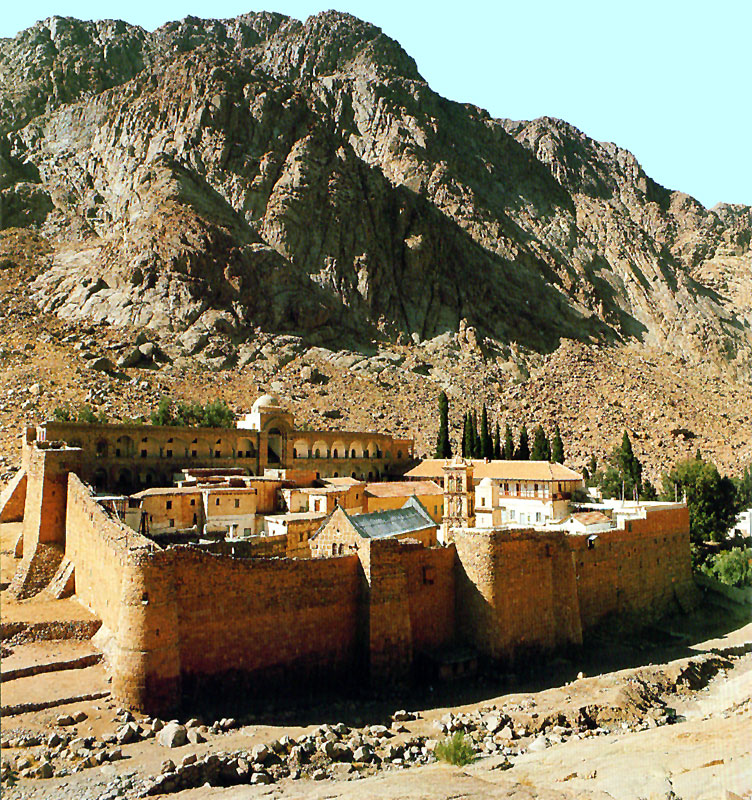
    In 628 AD, a delegation from St. Catherine’s Monastery came to Prophet Muhammed and requested his protection. He responded by granting them a charter of rights, which I reproduce below in its entirety. St. Catherine’s Monastery is located at the foot of Mt. Sinai and is the world’s oldest monastery. It possess a huge collection of Christian manuscripts, second only to the Vatican, and is a world heritage site. It also boasts the oldest collection of Christian icons. It is a treasure house of Christian history that has remained safe for 1400 years under Muslim protection.

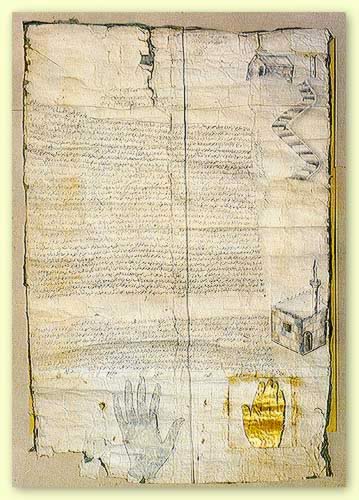
    The Promise to St. Catherine:"This is a message from Muhammad ibn Abdullah, as a covenant to those who adopt Christianity, near and far, we are with them.
    Verily I, the servants, the helpers, and my followers defend them, because Christians are my citizens; and by Allah! I hold out against anything that displeases them.

    No compulsion is to be on them. Neither are their judges to be removed from their jobs nor their monks from their monasteries. No one is to destroy a house of their religion, to damage it, or to carry anything from it to the Muslims' houses.
    Should anyone take any of these, he would spoil God's covenant and disobey His Prophet. Verily, they are my allies and have my secure charter against all that they hate.

    No one is to force them to travel or to oblige them to fight. The Muslims are to fight for them. If a female Christian is married to a Muslim, it is not to take place without her approval. She is not to be prevented from visiting her church to pray. Their churches are to be respected. They are neither to be prevented from repairing them nor the sacredness of their covenants.

    No one of the nation (Muslims) is to disobey the covenant till the Last Day (end of the world)."
     

    The first and the final sentence of the charter are critical. They make the promise eternal and universal. Muhammed asserts that Muslims are with Christians near and far straight away rejecting any future attempts to limit the promise to St. Catherine alone. By ordering Muslims to obey it until the Day of Judgment the charter again undermines any future attempts to revoke the privileges. These rights are inalienable. Muhammed declared Christians, all of them, as his allies and he equated ill treatment of Christians with violating God’s covenant.

    A remarkable aspect of the charter is that it imposes no conditions on Christians for enjoying its privileges. It is enough that they are Christians. They are not required to alter their beliefs, they do not have to make any payments and they do not have any obligations. This is a charter of rights without any duties!
    The document is not a modern human rights treaty but even thought it was penned in 628 A.D. it clearly protects the right to property, freedom of religion, freedom of work, and security of the person.

    I know most readers, must be thinking so what? Well the answer is simple. Those who seek to foster discord among Muslims and Christians focus on issues that divide and emphasize areas of conflict. But when resources such as Muhammad’s promise to Christians is invoked and highlighted it builds bridges. It inspires Muslims to rise above communal intolerance and engenders good will in Christians who might be nursing fear of Islam or Muslims.

    When I look at Islamic sources, I find in them unprecedented examples of religious tolerance and inclusiveness. They make me want to become a better person. I think the capacity to seek good and do good inheres in all of us. When we subdue this predisposition towards the good, we deny our fundamental humanity. In this holiday season, I hope all of us can find time to look for something positive and worthy of appreciation in the values, cultures and histories of other peoples.
    References
    See for example Life and Teachings of Muhammed by Amir Ali, p. 176. click to read it.
    Links:

    The original charter does not survive, but several copies are now extant in the library of St Catherine, some of which are witnessed by the judges of Islam in order to lend some force to its semblance of authenticity. The traditional explanation which accounts for the loss of the original claims that during the Conquest of Egypt by the Ottoman sultan Selim I in 1517, the original document was seized from the monastery by Ottoman soldiers and taken to Selim's palace at Constantinople.[2][1] A copy was then made to compensate for its loss at the monastery.[1] On the other hand, it is also possible that the charter was simply renewed under the new rulers, as other documents in the archive suggest.[3] Traditions about the tolerance shown towards the monastery were reported in governmental documents issued in Cairo and during the period of Ottoman rule (1517-1798), the Pasha of Egypt annually reaffirmed its protections.[1]
    In 1630, Gabriel Sionita published the first edition of the Arabic text, with Latin translation, under the title Testamentum et pactiones inter Mohammedem et Christianae fidei cultores.
    The origins of the document has been the subject of a number of different traditions, best known through the accounts of European travellers who visited the monastery.[1] These authors include the French knight Greffin Affagart (d. c. 1557), the French traveller Jean de Thévenot (d. 1667) and the English prelate Richard Peacocke,[1] who included an English translation of the text.
    Since the 19th century, several aspects of the Achtiname, notably the list of witnesses, have been questioned by scholars.[4] There are similarities to other documents granted to other religious communities in the Near East. One example is Muhammad's letter to the Christians of Najrān, which first came to light in 878 in a monastery in Iraq and whose text is preserved in the Chronicle of Séert.[1]
    The contents of letter are however generally in line with the special privileges granted by Islam to Christians as  People of the Book. 

    نص العهد: "هذا كتاب كتبه محمد بن عبدالله إلى كافة الناس أجمعين بشيراً ونذيراً ومؤتمناً على وديعة الله في خلقه لئلا يكون للناس على الله حجة بعد الرسل وكان الله عزيزاً حكيماً كتبه لأهل ملته ولجميع من ينتحل دين النصرانية من مشارق الأرض ومغاربها قريبها وبعيدها فصيحها وعجميها معروفها ومجهولها كتاباً جعله لهم عهداً. لا يغير أسقف من أسقفيته ولا راهب من رهبانيته ولا حبيس من صومعته ولا سايح من سياحته ولا يهدم بيت من بيوت كنائسهم وبيعهم ولا يدخل شيء من بناء كنائسهم في بناء مسجد ولا في منازل المسلمين فمن فعل شيء من ذلك فقد نكث عهد الله وخالف رسوله ولا يحمل على الرهبان والأساقفة ولا من يتعبد جزيةً ولا غرامة وأنا أحفظ ذمتهم أين ما كانوا من بر أو بحر في المشرق والمغرب والشمال والجنوب وهم في ذمتي وميثاقي وأماني من كل مكروه فمن نكث العهد الذي فيه وخالفه إلى غيره وتعدى ما أمره كان لعهد الله ناكثاً ولميثاقه ناقضاً وبدينه مستهزئاً وللّعنة مستوجباً سلطاناً كان أو غيره من المسلمين المؤمنين."


    تعتبر الجملتان الأولى والأخيرة في هذا العهد حاسمتان، فهما تجعلان الوعد أبدياً وعالمياً. يؤكد النبي محمد (ص) أن المسلمين يقفون مع المسيحيين من قريب وبعيد، ويرفضون فوراً أية محاولات مستقبلية للحد من وعد دير القديسة كاثرين وحده. من خلال أمر المسلمين باحترام الوعد حتى يوم القيامة، يُفشل الصك مرة أخرى أية محاولات مستقبلية لإلغاء الامتيازات. هناك ثلاثة حقوق لا يمكن التنازل عنها.


    أعلن النبي محمد (ص) أن المسيحيين جميعهم حلفاء له حيث ساوى بين معاملة المسيحيين السيئة مع انتهاك عهد الله تعالى.


    ومن النواحي المثيرة للاهتمام والإعجاب في الصك أنه لا يفرض أية شروط على المسيحيين للتمتع بميزاته. يكفي إنهم مسيحيون، ولا يُطلب منهم تغيير إيمانهم ومعتقداتهم ولا أن يدفعوا جزية ولا تكون عليهم أية التزامات. هذا صك حقوق دون أية التزامات.


    ليست الوثيقة معاهدة عصرية في حقوق الإنسان، ولكنها، ورغم أنها صيغت عام 628 بعد الميلاد فإنها تحمي بوضوح حقوق الملكية والحرية الدينية وحرية العمل والأمن الشخصي.


    أعرف أن معظم القراء سوف يقولون "وماذا بعد؟".


    حسناً، الجواب بسيط: يركز هؤلاء الذين يبغون رعاية الفتنة بين المسلمين والمسيحيين على قضايا تتسبب بالفرقة والنزاع. ولكن عندما تطرح موارد مثل وعد النبي محمد (ص) إلى المسيحيين ويتم إبرازها فإنها تبني الجسور.


    وهي تلهم المسلمين أن يرتفعوا فوق عدم التسامح الطائفي وتولد حسن النية لدى المسيحيين الذين قد يكونوا يتعاملون مع الخوف من الإسلام والمسلمين.


    عندما أنظر إلى المصادر الإسلامية أجد بها أمثلة لا سابق لها من التسامح الديني والشمولية. تجعلني أرغب بأن أصبح إنساناً أفضل. أعتقد أن القدرة على السعي لما هو صالح وصنعه متأصلان فينا جميعاً. عندما نكبت هذا التوجه نحو الصلاح فإننا ننكر إنسانيتنا الأساسية.


    آمل في أعقاب فترة الأعياد أن نجد جميعاً الوقت للبحث عن أمر إيجابي يستحق التقدير في قيم وتاريخ وثقافة الشعوب الأخرى.


    St. Catherine's Monastery, Sinai, Egypt                                          A Picture of Prophet Muhammad's Letter to St. Catherine's Monastery

    Dr. Muqtedar Khan | 08.22.2010
    This article was published in the Pittsburg Post-Gazette [03.25.2007], Daily News Egypt [03.09.2007], AltMuslim [03.03.2007],  Pakistan Link,  Middle East WindowTurkish Daily News [04.10.2007 ], OpEd news [03.19.2007],Ikhwanweb [02.11.07],  and many other places..

    Article also available in:  English  |  Indonesia  |  عربي  |  اردو  |  Français
    Courtesy Common Ground News Service
    http://www.ijtihad.org/Prophet%20Muhammed's%20Promise.htm
    http://www.ijtihad.org/Prophet%20Muhammed's%20Promise.htm
    Minorities in Islamic State: The hand book highlights the rights of minorites...

    Read more:

    Protection of Minorities, a Religious Obligation of Muslims: http://islam4humanite.blogspot.com/2015/03/non-muslims-in-islamic-society.html

    ~ ~ ~ ~ ~ ~ ~ ~ ~ ~ ~ ~ ~ ~ ~ ~ ~  ~ ~ ~  ~

    Humanity, ReligionCultureSciencePeace
     A Project of 
    Peace Forum Network
    Peace Forum Network Mags
    BooksArticles, BlogsMagazines,  VideosSocial Media
    Overall 2 Million visits/hits


    Muslims -- Take Back Your Religion from "Hackers"

    Image result for islam
    It's high time for Muslims to take back their religion from hereditary rulers and clerics. And Muslims the world over and non-Muslims should learn more about the message of the Quran if we are to extinguish the flame of Muslim terrorism. 
    Islam was essentially hijacked soon after its birth. Corrupt rulers and their supporters turned the essence of the religion--unity of God's creation, justice and freedom--on its head. The leaders lived a life of luxury, while many suffered in poverty. Today, hereditary rulers, dictators and compliant clerics have taken over the pulpit and interpret Islamic teachings to further their own interests to the detriment of all Muslims. 
    They even embrace policies that directly contradict the Quran and the practice of the Prophet Mohammad. In many Muslim countries, it has become a crime to question and discuss the teachings of the Quran, discussion that the Prophet encouraged in the nascent Muslim community in Medina, even inviting questions that challenged his own decisions. Islam is a rules-based religion, with the rules outlined in the holy Quran and interpreted by the Prophet Mohammad in the brief time that he established the first Muslim community in Medina. Rules in turn provide the scaffolding for institutions. 
    The discussion of the philosophical foundation of Islam is necessary for Muslims to establish the institutions envisaged in Islam. The institutions recommended in Islam are designed to enhance economic, social and political justice and progress. Although Muslims pray and uphold the Five Pillars of Islam in Muslim-majority countries, there is much more to Islam, and their societies do not convey the characteristics one would expect of a rule-compliant Muslim society; in other words, of a society that has adopted the rules and institutions that Islam recommends. In fact, many Western countries convey a higher degree of "Islamicity" than do Muslim countries. Over 100 years ago, Mohammad Abdou, one of the scholars who inspired the founding of the Muslim Brotherhood said as much: "I went to the West and saw Islam, but no Muslims; I got back to the East and saw Muslims, but no Islam." Muslim leaders must be pushed into embracing the important teachings of Islam from its fountainhead--the Holy Quran--advocating freedom, effective and just institutions, equal opportunities for all members of society, gender equality, economic and social progress, and must adopt a plan to establish representative governance and the effective institutions that are called for. 
    In other words, Muslim countries should become more, not less, Islamic [my talk on Islamicity on the German Public Radio System]. If they don't, terrorists will increasingly fill the void in what are failed states created by false interpretations of the Holy Quran. Terrorists will point the finger at corrupt Muslim rulers and their Western supporters, will promise a better life, if not in this world at least in the hereafter, espousing terror as the Islamic option. Disenfranchised Muslims with little hope--in Muslim countries and in Western ghettos--will be seduced into taking up arms and following them. Today, Muslim rulers actively work to obstruct just and effective institutions, which would promote equality, prosperity and justice but would undermine their absolute rule. Yet Western leaders treat many of these same Muslim rulers as if they were enlightened. The duplicitous Western message to Muslims is clear--we espouse freedom and representative governance but we support your corrupt rulers and their harsh rule in our own self-interest. If the West is truly determined to defeat terrorism, it will require a comprehensive and thoughtful approach, much time, unprecedented international cooperation and compromise on many levels. The US, Europe, Russia, China and many more countries and peoples, including Israel, the Palestinians, the Kurds, Turkey, Iran, Iraq, Saudi Arabia and Syria must make sacrifices and compromises that may seem impractical. But if they don't do so quickly, the scourge of terrorism will become more insurmountable by the day and will rob humanity of everything it has achieved over centuries. There are roughly 1.5 billion Muslims in this World and their numbers are growing faster than those of any other religion. Bombs, walls and guns are not a viable option. We have to live together. The fruitful way forward must be paved with understanding and unity. [Edited]
    By Hossein Askari Economist, Professor of Business and International Affairs at GW University, writer on Middle East Economies and Islamic economics-finance. Original at Source: http://m.huffpost.com/us/entry/8789604

    ~ ~ ~ ~ ~ ~ ~ ~ ~ ~ ~ ~ ~ ~ ~ ~ ~  ~ ~ ~  ~
    Humanity, ReligionCultureSciencePeace
     A Project of 
    Peace Forum Network
    Peace Forum Network Mags
    BooksArticles, BlogsMagazines,  VideosSocial Media
    Overall 2 Million visits/hits

    Rethinking Islamic Reform: Oxford University Islamic Society

    The conference addresses the phenomena of how, in the post 9/11 world, it has grown to be an axiomatic truth that Islam needs to reform. Whether it is Western policy-makers seeking to protect themselves from Muslim extremists, humanitarian activists fighting to liberate silenced Muslims, or Muslims themselves responding to new paradigms faced in the 21st century, all are agreed that something within Islam needs to change. The question though, is what, and perhaps more pertinently, how?
    The Rethinking Islamic Reform conference, originally held May 26, 2010, features two of the world's foremost Muslim intellectuals as they provide guidance in the ever polemical topic of reform in Islam. Oxford University Islamic Society is honoured to have hosted Sheikh Hamza Yusuf Hanson (Zaytuna Institute, USA) and Professor Tariq Ramadan (Oxford University, UK) to participate at this ground-breaking conference. << click to Keep watching >>>>>


    * * * * * * * * * * * * * * * * * * *
    Humanity, Religion, Culture, Ethics, Science, Spirituality & Peace
    Peace Forum Magazines
    Over 1,000,000 Visits
    * * * * * * * * * * * * * * * * * * *

    Fethullah Gülen : The modern Muslim scholar

    Free%20Books%20%26%20Articles
    "Be tolerant; enjoin what is right; and avoid the ignorant". (Quran;7:199)


    F
    ethullah Gülen is an authoritative mainstream Turkish Muslim scholar, thinker, author, poet, opinion leader and educational activist who supports interfaith and intercultural dialogue, science, democracy and spirituality and opposes violence and turning religion into a political ideology. Fethullah Gülen promotes cooperation of civilizations toward a peaceful world, as opposed to a clash: [Source: http://en.fgulen.com/about-fethullah-gulen/introducing-fethullah-gulen]
    “Be so tolerant that your bosom becomes wide like the ocean. Become inspired with faith and love of human beings. Let there be no troubled souls to whom you do not offer a hand and about whom you remain unconcerned.” (Fethullah Gülen, Criteria or Lights of the Way. London: Truestar.)
    Mr. Fethullah Gülen is known and respected among Turkish Muslims as well as Muslims from around the world as an authoritative mainstream Muslim scholar of the Sunni tradition, to which 87–90% of the world’s Muslim population belongs. He is also a thinker, a poet, a prolific author, an educational activist and an opinion leader. His readership in Turkey is estimated at several million. His influence outside Turkey is growing daily as his works are translated into many languages including English, Arabic, Russian, German, Spanish, Urdu, Bosnian, Albanian, Malay and Indonesian. In addition to printed publications, his ideas are accessible to an ever increasing world population through private radio and television networks sympathetic to his views.
    Public Stance against Violence, Terror and Suicide Attacks: Fethullah Gülen has been recognized for his consistent stance against the combination of violence and religious rhetoric ... Keep reading >>>>>>


    * * * * * * * * * * * * * * * * * * *
    Humanity, Religion, Culture, Ethics, Science, Spirituality & Peace
    Peace Forum Network
    Over 1,000,000 Visits
    * * * * * * * * * * * * * * * * * * *