Featured Post

SalaamOne NetWork

SalaamOne سلام   is   a nonprofit e-Forum to promote peace among humanity, through understanding and tolerance of religions, cul...

Showing posts with label Egypt. Show all posts

Brothers in arms: Rise and Fall of Muslim Brotherhood (اخوان المسلمین )

Image result for ‫اخوان المسلمین‬‎
They were waiting for some divine intervention to save their reputation, which they had earned over the past eight decades. They waited for 40 days and were finally shaken. They were Brothers and believed they had acquired the rule in Egypt as a divine reward for their long struggle. In 2013, they had staged a sit-in across the country to provide political and moral support to the Muslim Brotherhood’s first president, Mohamed Morsi. It was an incredible event in Egyptian history which was broadcast live by local and international media, including Al-Jazeera.

Political scientists usually see the rise and fall of the Muslim Brotherhood movement in historical, ideological and contemporary political contexts. But Hazem Kandil, an Egyptian political sociologist at the University of Cambridge, has brought in another perspective to understand the Islamist movement, which is the spiritual element that glues the Brotherhood with its members. In his book, Inside the Brotherhood, Kandil mainly attempts to explore the sociology of the Islamist movement, which defines its ideological and political spectrum as well. But the most interesting part of the book is an explanation of the relationship of the Brotherhood members with the divine.

The Brotherhood members were confident that some divine help would come to rescue their government, but after 40 days, Kandil notes, they were visibly shaken by the absence of any such intervention. This is an important question for a political scientist to understand: why do ideological tendencies undermine the political discourse of a movement? In the Brotherhood’s case it is a structural issue. The movement is a unique case study because it nurtured a specific mindset over eight decades and kept its members in an environment that was conducive to transforming certain perceptions into beliefs.

Hazem Kandil’s book offers an analysis of the various facets of the Muslim Brotherhood movement
The initial chapters of the book deal with the organisational structure of the Brotherhood, including how it evolved its systems and created a close community. Many other Islamist movements across the world learned from the Brotherhood’s practices. The following sentence, which is used to welcome a new member into the Brotherhood movement, may sound familiar to Pakistan’s Islamist organisations: “One cannot choose to join the Muslim Brotherhood; one has to be chosen.”

This verdict is a foundation for the character building of a new member. Pakistan’s Jamaat-i-Islami, for example, constitutes five ranks of members. The first rank is muhibin or sympathisers. After initial learning, a sympathiser member can be promoted to the rank of brother, which has its own sub-ranks, and eventually becomes a member of the nucleus group usra, or the family. These ranks are stages of the ideological, religious and sanctimonious growth of an individual.

The founder of the Muslim Brotherhood, Hassan al-Banna, had evolved these stages gradually. Before this, the Brothers had to attend a cultivating school, which was opened in 1928 with 70 students. As members multiplied, al-Banna organised them into small study groups. The members of the core group met every week, shared personal and professional concerns and lived like a family. The core group also ran the affairs of the movement. The members of the Brotherhood movement believe that this brilliant organisational method is itself a divine blessing bestowed upon al-Banna and the Brothers.
Image result for ‫اخوان المسلمین‬‎
The Brotherhood considers everything fair to achieve its ultimate goal. In the third chapter of his book, Kandil writes: “In the name of necessity, therefore, Brothers allow themselves considerable latitude.” He notes that the Brotherhood’s most frequent violation had always been disinformation and the irony is that they believe it is all religiously sanctioned.

The fourth chapter deals with the rise and fall of the Brotherhood movement in Egypt. In explaining the factors behind the slow rise and rapid fall of the Brothers, Kandil argues that historically, Muslim scholars and rulers coexisted in separate spheres. They sometimes negotiated, sometimes clashed, but mostly worked around each other with minimum friction. However, al-Banna and Sayyid Qutb, whom he calls the Marx and Engels of Islamism, had come up with the approach to bridge the gap.

He also explains how al-Banna’s and Qutb’s different backgrounds contributed to shaping the movement. Though they were born in the same year (1906) in small villages and graduated from the same college, al-Banna had a religious zeal since childhood, and Qutb grew up as a Westernised secularist, and both operated in very different political contexts. Al-Banna started his work under the liberal monarchy of the 1920s, and Qutb in contrast converted to Islamism on the eve of the 1952 coup that led to the authoritarian regime of Mohamed Naguib.

When Egypt’s last monarch first dissolved the organisation in December 1948 — after documents were found about the movement’s militant wing and that resulted in the killing of al-Banna — Qutb revised the whole strategy of the movement. The Brothers responded to the ban and killing of their founder by supporting the coup of 1952. The new Nasser regime had lifted the ban and Qutb was hired as a cultural advisor. This was the time “when [the] Brothers decided to combine the doctrine of al-Banna and Qutb to adapt to their new environment: they would capitalise on the space made available to them by the rulers to garner popular support, while continuing to nurture their pious vanguard to take power when chance allowed (as it did in 2011)”.


Kandil also touches upon the Salafis-Brothers gap and claims that Wahabi thoughts influenced Egypt after the oil boom. The immediate response of the Brothers was “how to absorb the fundamentalist (Salafi) youth that had been active in universities under the rubric of a new organisation: The Islamic Group (Al-Jamaa Al-Islamiya)”. Interestingly, the Islamic Group’s religious and political views were quite different from those espoused by the Brotherhood movement. Kandil elaborates that Islamic Group activists “had no elaborate theories about the comprehensiveness of Islam or the laws of history; they simply wanted to put pressure on rulers — as fundamentalists had done throughout Islamic history — to implement a few legal injunctions: prohibiting alcohol, outlawing usury, segregating genders, etc.” And when the Brothers failed to absorb them, they came up with quite an opposite approach. “Yet [the] Brothers realised that if they did not co-opt them, they would have to compete with them (as they did with their progeny in 2013),” Kandil notes. The Salafis and Brothers divide also helps readers understand how ‘pious’ Egyptians could turn against the Brothers in 2013 without feeling that they had turned against religion as such.

However, the major reasons behind the electoral success of the Brotherhood were its organised political and organisational structures. Apart from other reasons which contributed to the downfall of the movement, two factors were crucial. First was their strict political position: they failed to deliver because of their ineptitude at political bargaining — a skill they had never developed. Second, they attempted to keep relations smooth with the military establishment. Kandil describes how the Brothers dutifully avoided any hint of challenging the autonomy and privileges of the armed forces and even the president buried a fact-finding commission report detailing security abuses during the 18-day uprising. One can justify their accommodative approach giving the reason that the Brothers had earned the right to rule after eight-and-a-half decades of spiritual purification and socio-political toil. They adopted the appeasement policy with the armed forces, but at the same time their major focus was to regulate public morality, foil global conspiracies against Islam, and eventually secure worldwide hegemony. For this purpose they needed an army, which they did not have, and counted instead on divine support to boost their ranks.

The last chapter of the book focuses on Islamism in Egypt and beyond, and provides a comparative analysis of Islamist movements in different regions. Overall this is a comprehensive study of a contemporary Islamist movement, which could also help in understanding the violent expressions of other Islamist movements.

The reviewer is a security analyst and director of the Pakistan Institute for Peace Studies (PIPS), Islamabad.

Inside the Brotherhood: (SOCIO-POLITICS) By Hazem Kandil, Polity Press, UK, ISBN: 978-0745682914, 240pp. Published in Dawn, Books & Authors, November 20th, 2016
Source: http://www.dawn.com/news/1297506/brothers-in-arms

Related:
~ ~ ~ ~ ~ ~ ~ ~ ~ ~ ~ ~ ~ ~ ~ ~ ~  ~ ~ ~  ~
Humanity, ReligionCultureSciencePeace

Prophet Muhammad's Everlasting Promise of peace and security to Christians - St. Catherine's Monastery, Sinai


النبي محمد وعد الآخرة للمسيحيين

وَأَوْفُوا بِالْعَهْدِ إِنَّ الْعَهْدَ كَانَ مَسْئُولً
Keep your promises; you will be called to account for every promise which you have made! (Quran; 17:34)

  PROPHET MUHAMMAD'S PROMISE TO CHRISTIANS


Muslims and Christians together constitute over fifty percent of the world and if they lived in peace, we will be half way to world peace. One small step that we can take towards fostering Muslim-Christian harmony is to tell and retell positive stories and abstain from mutual demonization. In this article I propose to remind both Muslims and Christians about a promise that Prophet Muhammed (pbuh) made to Christians. The knowledge of this promise can have enormous impact on Muslim conduct towards Christians. Muslims generally respect the precedent of their Prophet and try to practice it in their lives.

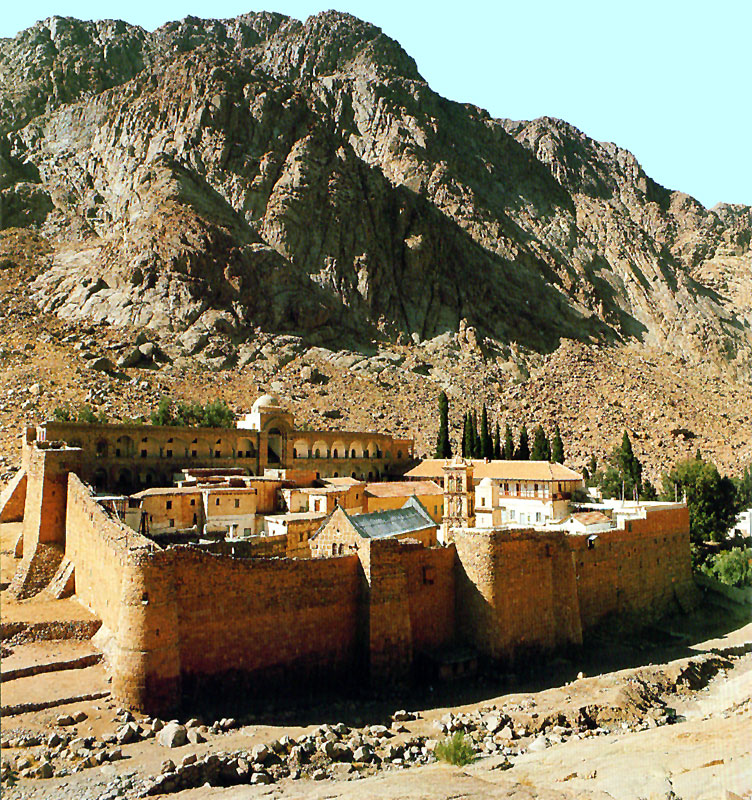
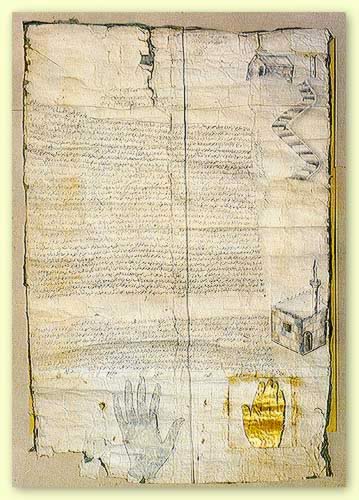
In 628 AD, a delegation from St. Catherine’s Monastery came to Prophet Muhammed and requested his protection. He responded by granting them a charter of rights, which I reproduce below in its entirety. St. Catherine’s Monastery is located at the foot of Mt. Sinai and is the world’s oldest monastery. It possess a huge collection of Christian manuscripts, second only to the Vatican, and is a world heritage site. It also boasts the oldest collection of Christian icons. It is a treasure house of Christian history that has remained safe for 1400 years under Muslim protection.

The Promise to St. Catherine:"This is a message from Muhammad ibn Abdullah, as a covenant to those who adopt Christianity, near and far, we are with them.
Verily I, the servants, the helpers, and my followers defend them, because Christians are my citizens; and by Allah! I hold out against anything that displeases them.

No compulsion is to be on them. Neither are their judges to be removed from their jobs nor their monks from their monasteries. No one is to destroy a house of their religion, to damage it, or to carry anything from it to the Muslims' houses.
Should anyone take any of these, he would spoil God's covenant and disobey His Prophet. Verily, they are my allies and have my secure charter against all that they hate.

No one is to force them to travel or to oblige them to fight. The Muslims are to fight for them. If a female Christian is married to a Muslim, it is not to take place without her approval. She is not to be prevented from visiting her church to pray. Their churches are to be respected. They are neither to be prevented from repairing them nor the sacredness of their covenants.

No one of the nation (Muslims) is to disobey the covenant till the Last Day (end of the world)."
 

The first and the final sentence of the charter are critical. They make the promise eternal and universal. Muhammed asserts that Muslims are with Christians near and far straight away rejecting any future attempts to limit the promise to St. Catherine alone. By ordering Muslims to obey it until the Day of Judgment the charter again undermines any future attempts to revoke the privileges. These rights are inalienable. Muhammed declared Christians, all of them, as his allies and he equated ill treatment of Christians with violating God’s covenant.

A remarkable aspect of the charter is that it imposes no conditions on Christians for enjoying its privileges. It is enough that they are Christians. They are not required to alter their beliefs, they do not have to make any payments and they do not have any obligations. This is a charter of rights without any duties!
The document is not a modern human rights treaty but even thought it was penned in 628 A.D. it clearly protects the right to property, freedom of religion, freedom of work, and security of the person.

I know most readers, must be thinking so what? Well the answer is simple. Those who seek to foster discord among Muslims and Christians focus on issues that divide and emphasize areas of conflict. But when resources such as Muhammad’s promise to Christians is invoked and highlighted it builds bridges. It inspires Muslims to rise above communal intolerance and engenders good will in Christians who might be nursing fear of Islam or Muslims.

When I look at Islamic sources, I find in them unprecedented examples of religious tolerance and inclusiveness. They make me want to become a better person. I think the capacity to seek good and do good inheres in all of us. When we subdue this predisposition towards the good, we deny our fundamental humanity. In this holiday season, I hope all of us can find time to look for something positive and worthy of appreciation in the values, cultures and histories of other peoples.
References
See for example Life and Teachings of Muhammed by Amir Ali, p. 176. click to read it.
Links:

The original charter does not survive, but several copies are now extant in the library of St Catherine, some of which are witnessed by the judges of Islam in order to lend some force to its semblance of authenticity. The traditional explanation which accounts for the loss of the original claims that during the Conquest of Egypt by the Ottoman sultan Selim I in 1517, the original document was seized from the monastery by Ottoman soldiers and taken to Selim's palace at Constantinople.[2][1] A copy was then made to compensate for its loss at the monastery.[1] On the other hand, it is also possible that the charter was simply renewed under the new rulers, as other documents in the archive suggest.[3] Traditions about the tolerance shown towards the monastery were reported in governmental documents issued in Cairo and during the period of Ottoman rule (1517-1798), the Pasha of Egypt annually reaffirmed its protections.[1]
In 1630, Gabriel Sionita published the first edition of the Arabic text, with Latin translation, under the title Testamentum et pactiones inter Mohammedem et Christianae fidei cultores.
The origins of the document has been the subject of a number of different traditions, best known through the accounts of European travellers who visited the monastery.[1] These authors include the French knight Greffin Affagart (d. c. 1557), the French traveller Jean de Thévenot (d. 1667) and the English prelate Richard Peacocke,[1] who included an English translation of the text.
Since the 19th century, several aspects of the Achtiname, notably the list of witnesses, have been questioned by scholars.[4] There are similarities to other documents granted to other religious communities in the Near East. One example is Muhammad's letter to the Christians of Najrān, which first came to light in 878 in a monastery in Iraq and whose text is preserved in the Chronicle of Séert.[1]
The contents of letter are however generally in line with the special privileges granted by Islam to Christians as  People of the Book. 

نص العهد: "هذا كتاب كتبه محمد بن عبدالله إلى كافة الناس أجمعين بشيراً ونذيراً ومؤتمناً على وديعة الله في خلقه لئلا يكون للناس على الله حجة بعد الرسل وكان الله عزيزاً حكيماً كتبه لأهل ملته ولجميع من ينتحل دين النصرانية من مشارق الأرض ومغاربها قريبها وبعيدها فصيحها وعجميها معروفها ومجهولها كتاباً جعله لهم عهداً. لا يغير أسقف من أسقفيته ولا راهب من رهبانيته ولا حبيس من صومعته ولا سايح من سياحته ولا يهدم بيت من بيوت كنائسهم وبيعهم ولا يدخل شيء من بناء كنائسهم في بناء مسجد ولا في منازل المسلمين فمن فعل شيء من ذلك فقد نكث عهد الله وخالف رسوله ولا يحمل على الرهبان والأساقفة ولا من يتعبد جزيةً ولا غرامة وأنا أحفظ ذمتهم أين ما كانوا من بر أو بحر في المشرق والمغرب والشمال والجنوب وهم في ذمتي وميثاقي وأماني من كل مكروه فمن نكث العهد الذي فيه وخالفه إلى غيره وتعدى ما أمره كان لعهد الله ناكثاً ولميثاقه ناقضاً وبدينه مستهزئاً وللّعنة مستوجباً سلطاناً كان أو غيره من المسلمين المؤمنين."


تعتبر الجملتان الأولى والأخيرة في هذا العهد حاسمتان، فهما تجعلان الوعد أبدياً وعالمياً. يؤكد النبي محمد (ص) أن المسلمين يقفون مع المسيحيين من قريب وبعيد، ويرفضون فوراً أية محاولات مستقبلية للحد من وعد دير القديسة كاثرين وحده. من خلال أمر المسلمين باحترام الوعد حتى يوم القيامة، يُفشل الصك مرة أخرى أية محاولات مستقبلية لإلغاء الامتيازات. هناك ثلاثة حقوق لا يمكن التنازل عنها.


أعلن النبي محمد (ص) أن المسيحيين جميعهم حلفاء له حيث ساوى بين معاملة المسيحيين السيئة مع انتهاك عهد الله تعالى.


ومن النواحي المثيرة للاهتمام والإعجاب في الصك أنه لا يفرض أية شروط على المسيحيين للتمتع بميزاته. يكفي إنهم مسيحيون، ولا يُطلب منهم تغيير إيمانهم ومعتقداتهم ولا أن يدفعوا جزية ولا تكون عليهم أية التزامات. هذا صك حقوق دون أية التزامات.


ليست الوثيقة معاهدة عصرية في حقوق الإنسان، ولكنها، ورغم أنها صيغت عام 628 بعد الميلاد فإنها تحمي بوضوح حقوق الملكية والحرية الدينية وحرية العمل والأمن الشخصي.


أعرف أن معظم القراء سوف يقولون "وماذا بعد؟".


حسناً، الجواب بسيط: يركز هؤلاء الذين يبغون رعاية الفتنة بين المسلمين والمسيحيين على قضايا تتسبب بالفرقة والنزاع. ولكن عندما تطرح موارد مثل وعد النبي محمد (ص) إلى المسيحيين ويتم إبرازها فإنها تبني الجسور.


وهي تلهم المسلمين أن يرتفعوا فوق عدم التسامح الطائفي وتولد حسن النية لدى المسيحيين الذين قد يكونوا يتعاملون مع الخوف من الإسلام والمسلمين.


عندما أنظر إلى المصادر الإسلامية أجد بها أمثلة لا سابق لها من التسامح الديني والشمولية. تجعلني أرغب بأن أصبح إنساناً أفضل. أعتقد أن القدرة على السعي لما هو صالح وصنعه متأصلان فينا جميعاً. عندما نكبت هذا التوجه نحو الصلاح فإننا ننكر إنسانيتنا الأساسية.


آمل في أعقاب فترة الأعياد أن نجد جميعاً الوقت للبحث عن أمر إيجابي يستحق التقدير في قيم وتاريخ وثقافة الشعوب الأخرى.


St. Catherine's Monastery, Sinai, Egypt                                          A Picture of Prophet Muhammad's Letter to St. Catherine's Monastery

Dr. Muqtedar Khan | 08.22.2010
This article was published in the Pittsburg Post-Gazette [03.25.2007], Daily News Egypt [03.09.2007], AltMuslim [03.03.2007],  Pakistan Link,  Middle East WindowTurkish Daily News [04.10.2007 ], OpEd news [03.19.2007],Ikhwanweb [02.11.07],  and many other places..

Article also available in:  English  |  Indonesia  |  عربي  |  اردو  |  Français
Courtesy Common Ground News Service
http://www.ijtihad.org/Prophet%20Muhammed's%20Promise.htm
Minorities in Islamic State: The hand book highlights the rights of minorites...

Read more:

Protection of Minorities, a Religious Obligation of Muslims: http://islam4humanite.blogspot.com/2015/03/non-muslims-in-islamic-society.html

~ ~ ~ ~ ~ ~ ~ ~ ~ ~ ~ ~ ~ ~ ~ ~ ~  ~ ~ ~  ~

Humanity, ReligionCultureSciencePeace
 A Project of 
Peace Forum Network
Peace Forum Network Mags
BooksArticles, BlogsMagazines,  VideosSocial Media
Overall 2 Million visits/hits


What a choice for Egypt – a megalomaniac president or the madness of Isis by Robert Fisk

The images of an Egyptian gunboat exploding off the coast of Sinai last week were a warning to our Western politicians. Yes, we support Egypt. We love Egypt. We continue to send our tourists to Egypt. Because we support President Field Marshal Abdel Fattah el-Sisi – despite the fact that his government has locked up more than 40,000 mostly political prisoners, more than 20,000 of them supporters of the Muslim Brotherhood, hundreds of whom have been sentenced to death. The Egyptian regime continues to pretend that its Brotherhood enemies are the same as Isis. And Isis – in its dangerous new role as the Islamist power in Sinai – has killed hundreds of Egyptian troops, more than 60 of them two weeks ago, after which a military spokesman in Cairo announced that Sinai was “100 per cent under control”. However, after last week’s virtual destruction of the naval vessel, we might ask: who does control the peninsula?

Yet, while the biggest battle is fought in Sinai since the 1973 Arab-Israeli war, we psychologically smother this conflict with our fears about Iraq, Syria, Libya and Yemen. So relieved are we in the West that a secular general has replaced the first democratically elected president of Egypt that we now support Sisi’s leadership as benevolently as we once supported that of Mohamed Morsi of the Muslim Brotherhood. The Americans have resumed arms supplies to Egypt – and why not when Sisi’s men are fighting the apocalyptic Isis?

To Egyptians, though, it all looks a bit different. They are being treated to Sisi’s almost Saddam-like mega-mind. This includes his grotesque ambitions for a new super-capital to replace poor old Cairo, to be completed in a maximum of seven years, not far from the new two-lane Suez canal which must be finished – and those who know Egypt will literally gasp here – in a maximum of 12 months. The “new” Cairo is going to be 700sqkm in size and will cost £30bn. The unveiling of this preposterous project a few weeks ago was accompanied by none other than our own Tony Blair, who used to be a British prime minister but is now (among other burdensome chores) advising the Egyptian president through a UAE-backed consultancy.

This “spendthrift dream of modernity”, as the American writer Maria Golia puts it, betrays an indifference to Egyptians’ real interests. Over 60 per cent of Cairo – the real Cairo that exists today – was built in the past few decades and is spread across miles of tree-bald rotting concrete estates of poverty and heat. Its thousands of newly developed villa-suburbs high above the city are largely empty; no one can afford to purchase them. Could there be a better environment for Isis?

So let’s take a brief look at Sisi’s real Egypt. Rather than rejuvenate the weary, fetid city that Cairo became under the British and then King Farouk and then Nasser and then Sadat and then Mubarak, Sisi wants to start all over again. There is already a New Cairo outside the original Cairo – it was constructed as an expansion of the city under Sadat and Mubarak – so Sisi’s megalopolis will be new New Cairo, a second attempt to alleviate social failure.

The President need not worry too much about industrial disputes in his fantasy city. The Egyptian Supreme Administrative Court has made strikes illegal on the grounds (Brotherhood-like) that practising the right to strike – albeit legalised under Article 13 of the Egyptian constitution – “violates Islamic sharia”. The court has already “retired” three civil servants and imposed penalties on 14 others for striking in the governorate of Monufia, arguing that withdrawing labour “goes against Islamic teachings and the purposes of Islamic sharia”. Under Islamic law, the court announced with almost Isis-style formality, “obeying orders by seniors at work is a duty”. This was a very weird ruling. The teachings of the Prophet forbid alcohol consumption (mercifully, for millions of Muslims, cigarettes had not been invented in the seventh century), but trade unions would have been incomprehensible in any ancient caliphate.

Not that the Egyptian government has much to worry about from its officially sanctioned unions. Gebali al-Maraghy, chairman of the Egyptian Trade Union Federation, declared in an interview with Al-Musry Al-Youm newspaper that “our task is to carry out all the demands made by the President … increasing production and fighting terrorism”. Former deputy prime minister Ziad Bahaa Eddin found the court’s ruling absurd. “Didn’t we demonstrate against the constitution drafted by the Muslim Brotherhood because it attempted to mix religion with the state?” he asked True. Indeed, we in the West are now encouraging a very familiar “new” state in Egypt: paternalistic, dictatorial, haunted by “foreign” enemies – it’s only a matter of time before the Egyptian government declares Isis an arm of Mossad – in which an ocean of poverty is regarded as the very reason why ever more draconian laws must be used against free speech. The people want bread, we are told, not freedom; security rather than “terrorism”.

Egypt is, in fact, following the path of so many other countries that are being torn apart by Isis. For, if you torture your people enough, Isis will germinate in their wounds.

Thus Sinai is now as much under the “control” of Isis as it is of Egypt. The Cairo bomb that assassinated President Sisi’s chief prosecutor proves that Isis operations have crossed the Suez Canal. And even the Egyptian navy can be attacked.

Was there ever a more potent symbol of our choice? Between the devil and the deep blue sea.

What a choice for Egypt – a megalomaniac president or the madness of Isis
by Robert Fisk, independent.co.uk

Egypt elections: The coronation of the emperor

There was no contest in Egypt’s presidential elections, and not only because only one candidate stood against Sisi. He offers the security many Egyptians now crave. Voting in  there are reports of empty polling stations despite government employees allegedly being threatened with a wage cut if they do not vote
By ROBERT FISK
Napoleon will be crowned. And after the revolution – after its terrors and deaths and instability and its Islamist Directory – who would begrudge the Emperor his coronation? Why, even the election posters for Field Marshal (retired) Abdel Fattah al-Sisi call him “President of Egypt”, and the only thing you notice, looking into his profoundly chubby, cheerful – might one say dull? – face is that he is in a suit and tie and, in one picture, reclining in a fine old armchair. This is no Emperor without clothes.
And now here’s the shock for me. If I were an Egyptian, I’d have voted for Mr Sisi yesterday. Not that he’s inspiring. Anyone who tells his people that democracy may be 10 – or 20! – years away, is not going to go down in the history books as the Great Liberator. Daniel O’Connell he is not.
But Mr Sisi has three things on his side: he is offering to free Egyptians from the past three years of pseudo-democracy under Mohamed Morsi; he has most of the Croesus-Gulf states – minus Qatar, of course – on his side to rescue Egypt from bankruptcy. And the Americans – rabbit on though they will about Egyptian human rights – will keep their mouths shut and their treasury open to the Egyptian army providing Mr Sisi guarantees the safety of Israel.
And of course, Mr Sisi has offered what all folk want in hard times, especially Westerners and Israelis supposedly confronting the danger of Islamist terror in the Middle East: stability, stability, stability. Come to think of it – and speak not thus of our favourite Field Marshal – that’s what dictators always offer.
But it’s easy for a foreign reporter to be patronising in Cairo these days, a Western liberal tut-tutting away at the re-infantilisation of a nation, a people who have fought and died for their dignity at the hands of Mubarak’s thugs and have then relapsed into a second political childhood, demanding the return of a dictator, another Nasser, another Sadat, another Mubarak – for he, too, remember, was a very senior member of the armed forces, the commander of the Egyptian air force, no less. Who cares now for the 1,500 Muslim Brotherhood civilians who died under the guns of the security forces last year? They featured in no one’s election campaign. But they were Egyptians, citizens of their country every bit as much as Mr Sisi.
Supporters of presidential candidate Abdel-Fattah al-Sissi in Cairo (AP) Supporters of presidential candidate Abdel-Fattah al-Sissi in Cairo (AP)
The reality, however, is that Mr Sisi is undoubtedly the man most Egyptians want. Who are we to deny his election if it produced the man Egyptians voted for? And that, as an Egyptian friend asked me on Tuesday, is democracy, isn’t it? Well yes, I tried to explain, but with the Muslim Brotherhood banned as “terrorists” and their supporters – surely several million are still left – with no one to vote for, what does this election mean? Surely the bland Nasserist Hamdeen Sabahi with 40 years of political huckstering (and poetry!) behind him – and he’s been the only opposing candidate to the Field Marshal – never believed that he represented the beating heart of Egypt?
The problem for Mr Sisi – and he has many more to come, not least the economic collapse of his country – is what kind of mandate he can really claim to have. A tour of polling stations in central Cairo yesterday did not suggest that the masses were turning out in the numbers he wanted. I found one off July 26 Street without a soul on the premises save for policemen and soldiers. Ala’a, a friend of mine for 10 years, went to vote in a Giza schoolhouse on Monday evening – and was the only voter there. Heba Sharf, branch manager of a Cairo bookshop spent just one minute at her Heliopolis polling station on Monday because there were only two other voters present. A Sabahi voter, I must add, told me there were at least 300 people at his polling station yesterday morning. I wonder.
Unsurprisingly, there were reports of government employees threatened with the loss of $100 from their pay packets if they did not prove they had voted. Journalists loyal to Mr Sisi – which, alas, means almost every television presenter and mainstream scribe in Cairo – were tweeting the news that Mr Sisi might withdraw from the polls if insufficient Egyptians exercised their democratic rights. Too many people, in short, have seen too few people voting.
So what does it mean if Mr Sisi can claim 82 per cent of the vote – my favourite at the moment, for he has to do better than the 81.5 per cent that the old wheelchair President of Algeria claimed a few weeks ago – if the turnout, for example, was only 20 per cent? Certainly, it has got to be far smaller than the figures for the 2012 elections when liberty was as fresh as the flaming “tree of life” acacias now blooming across Cairo.
Journalists outside Egypt have caustically suggested that Mr Sisi is neither Nasser nor Sadat, but “Mubarak in all his splendour” – this from Wael Qandil in the inevitably Qatari-backed Al-Arabi al-Jadid. Al-Musri al-Youm, published in Cairo, recalled, of course, the happiness of Egyptians when Mr Sisi announced that there were “no more Muslim Brothers”. There would be no more “religious officials”, the great man said. “The only man in charge of what goes on in the country … is the head of state. I am presenting myself before the people, and I am telling them: I am the man in charge of values, of principles, morals and religion.”
Sisi supporters asking people to vote after a lower than expected turnout threatened to undermine his credibility (Reuters) Sisi supporters asking people to vote after a lower than expected turnout threatened to undermine his credibility (Reuters)
Is this really the stuff of Egyptian dreams? Heba Sharf, the bookshop manager, talked of the growing disappointment of Egyptians after Mubarak’s overthrow and the failure of the 2011 revolution to produce mature leaders – indeed, any leaders at all. This, of course, is to Mr Sisi’s advantage. If the revolution was hijacked by Islamists – a popular narrative in the Western press – then the Field Marshal was the only man standing, untramelled by scandal (let us here forget the Egyptian army’s vast ownership of real estate, factories, etc) or impropriety. All we must forget is that leaders of that self-same 2011 revolution – no Islamists they – have themselves now been banged up in jail.
Where the catch comes in all this is that neither Mr Sisi nor Sabahi – who spent a couple of weeks in jail under Mubarak – have explained their campaign policies. Both promised detailed plans for the future economy but Mr Sisi’s spokesman announced, incredibly, that if the Field Marshal published his proposals, he would be forced to waste too much time replying to questions from the electorate.
No one, however, questions Mr Sisi’s irritation with the United States nor his new-found relationship with the Russians. Vladimir Putin is the taleb to Egyptians – the fox – an animal much admired when cunning rather than courage is a necessary commodity for survival.
The backcloth to all this history-making is that Egypt, with its 94 million people – a population now growing by one million a year – has little influence in the Arab world, let alone outside, and is propped up only by Saudi cash and US grants. But if Egyptians were freed from fear by their revolution in 2011 – and again in 2012, if Morsi’s overthrow is to be regarded as a counter-revolution rather than a military coup – then they will return to the streets again if they are sufficiently humiliated or abused. One of Mr Sisi’s posters yesterday lauded the Field Marshal’s presidency as “the way to regain the Egyptian state”. This was pretty much Napoleon’s tune after 1789 and its subsequent bloodbath. But Napoleon, as we all know, met his Waterloo.
The Indeoendent

  1. 5 things you need to know about Egypt's elections

    Washington Post (blog
    5 things you need to know about Egypt's elections ... Egyptians are voting today in an election to choose a new president, less than a year than ...

  • Egyptians vote for third day in attempt to raise election ...

    www.theguardian.com › News › World news › Egypt
    3 hours ago
    People in Cairo cast their votes in Egypt's presidential electionsafter poor turnout led organisers to arrange ...
  • PressTV - Presidential election begins in Egypt

    www.presstv.ir › Africa › Egypt
    2 days ago
    The presidential election begins in Egypt amid a boycott by the country's Muslim Brotherhood movement.
  • PressTV - Muslim Brotherhood boycotts Egypt's election

    www.presstv.ir › Africa › Egypt
    3 days ago
    Egypt's Muslim Brotherhood has boycotted the upcoming presidential election due to be held on May 26-27 ...
  • in Egypt election - BBC

    www.bbc.co.uk/news/world-middle-east-27579729
    2 days ago
    Egyptians are voting in presidential elections, which are expected to bring to power the former army chief ...
  • Role of Islamic Scholars in Society, according to Quran, Preaching, Teaching Islam or Power Politics?

    Free%20Books%20%26%20Articles
    دور علماء المسلمين في المجتمع، وفقا لالقرآن، دعوة والتدريس الإسلام أو سياسة السلطة؟

    واحد هو صدمت للغاية ويحزن لمعرفة الطريقة الوحشية انخدع الإخوان المسلمين من قبل الحاكم العلماني الرمح نخبة فاشية برئاسة العسكرية والقضاء والصحافة والبيروقراطية. وقتل الآلاف من المتظاهرين الأبرياء تمت إزالة الرئيس مرسي المنتخبة ديمقراطيا وضعت وراء القضبان. استمر القمع. لقراءة القصة كاملة يرجى الضغط هنا << >>.

    One is extremely shocked and grieved  to learn the brutal way MB [Muslim Brotherhood] was deceived by the ruling secular fascist  elite spear  headed by Military, judiciary, press and bureaucracy. The democratically elected President Morsi has been removed and put behind bars, thousands of innocent protesters have been killed. the oppression continues. To read the full story please <<click here>> 

    جاء لإخوان المسلمين الى السلطة بعد أكثر من سبعين عاما من النضال الكامل من الصبر والتضحيات. سمح لهم حكم لسنة واحدة فقط. الشعب صادقة بسيطة ليسوا على بينة من اللعبة ملتوية مؤذ سياسات القوة. المؤامرات الخارجية بقيادة الصهيوني والولايات المتحدة وبعض العرب إلى جانب القوى العلمانية الفاسدة الداخلية المعجل نهاية مأساوية لجماعة الإخوان المسلمين الحكم....

    MB came to power after over 70 years of struggle full of patience and sacrifices. They were allowed to  rule for just one year. The simple  honest people are not  aware of the mischievous crooked game of power politics. The foreign conspiracies lead by Zionist, US and some Arabs coupled with internal corrupt secular forces expedited the tragic end of MB rule. 


    There is need for the religious based Islamic political parties/forces to learn some lessons. It must be understood that indulgence in the dirty game of power politics is not the role assigned to them by Allah in noble Quran. They should stop considering themselves to be like Abu Bakir,Omar, Usman or Ali [may Allah be pleased with them]. They should keep the role of great scholars and Imams like Abu Hanifa, Malic, Humble or Shafie [may Allah bless them] who peacefully resisted against tyranny of rulers but did not seek power. They knew well their actual responsibilities, to keep and preach the true message of Islam to all. 
    Keep reading <<http://goo.gl/qBZFHk]>>>

    هناك حاجة لالدينية الإسلامية القائمة على الأحزاب السياسية / قوات لتعلم بعض الدروس. يجب أن يكون مفهوما أن التساهل في اللعبة القذرة من سياسة القوة ليس الدور المنوط لهم من قبل الله تعالى في القرآن الكريم. يجب أن يتوقفوا عن النظر لنفسها ان تكون مثل أبو بكر وعمر وعثمان أو علي [رضي الله عنهما]. ينبغي أن يحافظ على دور العلماء الكبار والأئمة مثل أبي حنيفة، الماليك، متواضع أو الشافعي [صلى الله عليهم] الذين قاوموا سلميا ضد طغيان الحكام ولكن لم تسعى السلطة. كانوا يعلمون جيدا مسؤولياتها الفعلية، للحفاظ على والوعظ الرسالة الحقيقية للإسلام للجميع. 
    الحفاظ على القراءة <<http://goo.gl/qBZFHk]>>>


    * * * * * * * * * * * * * * * * * * *
    Humanity, Religion, Culture, Ethics, Science, Spirituality & Peace
    Peace Forum Network
    Over 1,000,000 Visits
    * * * * * * * * * * * * * * * * * * *