Featured Post

SalaamOne NetWork

SalaamOne سلام   is   a nonprofit e-Forum to promote peace among humanity, through understanding and tolerance of religions, cul...

Showing posts with label ISIL. Show all posts

ISIS ... Daesh Oil route

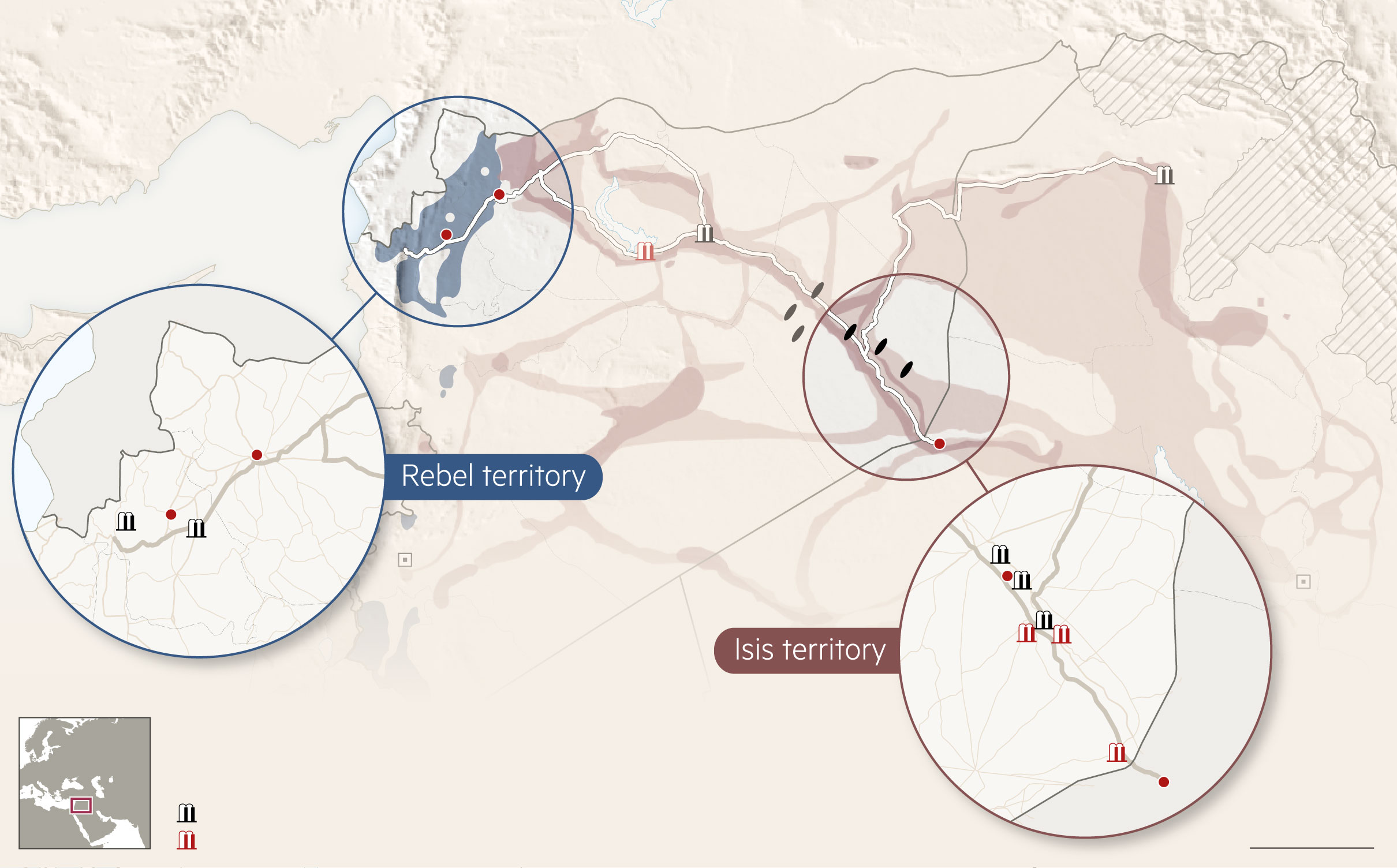
Inside Isis Inc: The journey of a barrel of oil
Isis controls most of Syria’s oil fields and crude is the militant group's biggest single source of revenue. Here we follow the progress of a barrel of oil from extraction to end user to see how the Isis production system works, who is making money from it, and why it is proving so challenging to disrupt, even with airstrikes.
By Erika Solomon, Robin Kwong and Steven Bernard
Source: http://ig.ft.com/sites/2015/isis-oil/
Where the oil is extracted
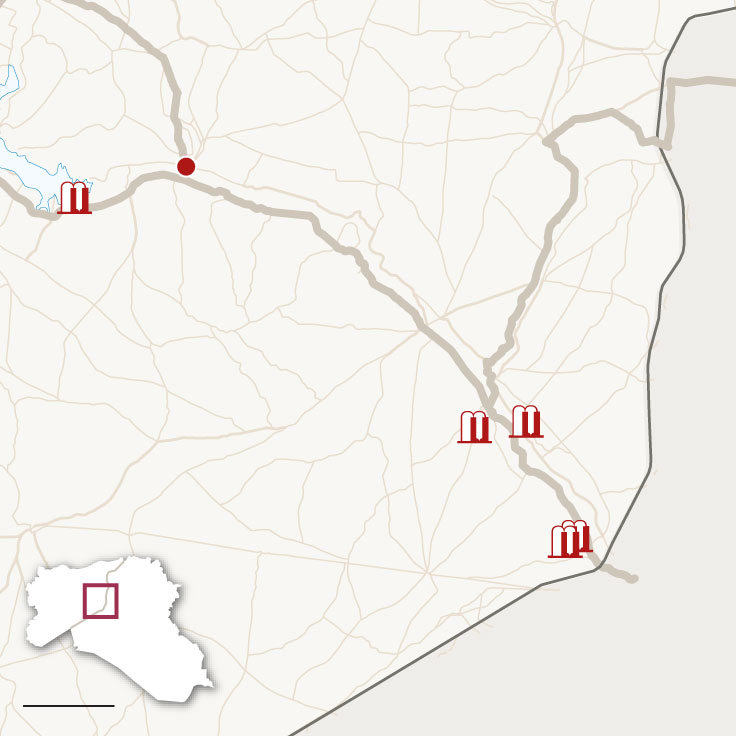
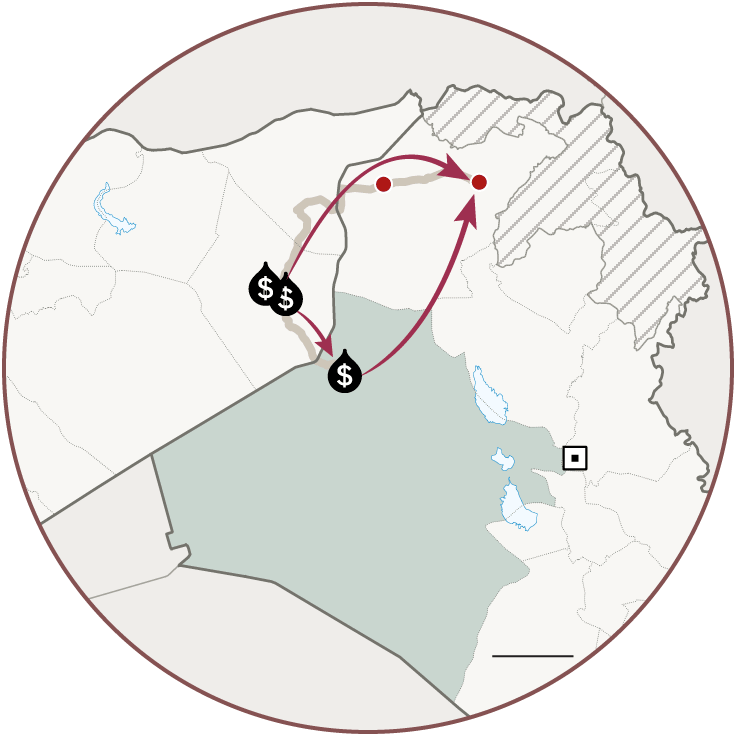
Isis’s main oil producing region is in Syria’s eastern Deir Ezzor province, where production was somewhere between 34,000 to 40,000 barrels a day in October, according to locals. This has since fallen due to coalition and Russian airstrikes against oil facilities. Isis also controls the Qayyara field near Mosul in northern Iraq that produces about 8,000 barrels a day of heavier oil that is mostly used locally to make asphalt.
It is difficult to determine a definitive oil production figure for Isis-controlled areas. But it is clear production levels have dropped in the Syrian fields since they were taken over by the militants. Most oil fields in the area are aging and the group does not have the technology or equipment needed to maintain them.
A new air campaign on Isis oil by the US-led coalition started at the end of October and is now more effectively disrupting Isis's crude extraction. Production fell by 30 pct this month at al-Omar and al-Tanak, Isis's two top producing fields and the most targeted by the recent offensive. Up to now, however, it is still likely the most lucrative revenue stream for Isis's central leadership.
The price of the oil depends on its quality. Some fields charge about $25 a barrel. Others, like al-Omar field, one of Syria’s largest, charge $45 a barrel. Overall, Isis is estimated to earn about $1.1m a day.
OilfieldEst. production (bpd)Price ($/barrel)
al-Tanak11,000-12,000$40
al-Omar6,000-9,000$45
al-Jabseh2,500-3,000$30
al-Tabqa1,500-1,800$20
al-Kharata1,000$30
al-Shoula650-800$30
Deiro600-1,000$30
al-Taim400-600$40
al-Rashid200-300$25
Selling crude oil
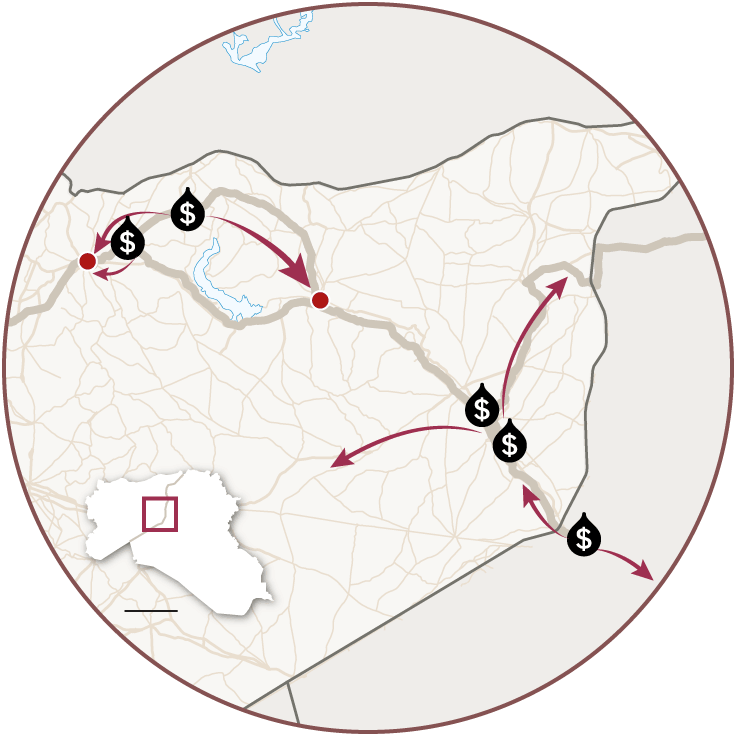
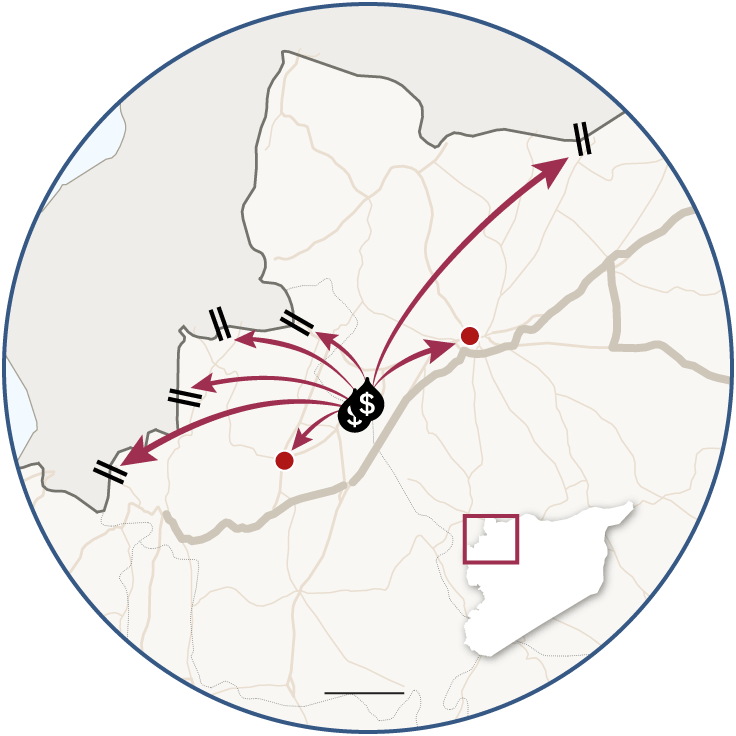
Though many believe that Isis relies on exports for its oil revenue, it profits from its captive markets closer to home in the rebel-held territories of northern Syria and in its self-proclaimed “caliphate”, which straddles the border between Syria and Iraq.
The group sells most of its crude directly to independent traders at the oil fields. In a highly organised system, Syrian and Iraqi buyers go directly to the oil fields with their trucks to buy crude. This used to result in them waiting for weeks in traffic jams that sprawled for miles outside of oilfields. But since airstrikes against oil vehicles intensified, Isis revamped its collection system. Now, when truckers register outside the field and pick up their number in line, they say they are told exactly what time they can return to fill up to avoid a pile-up of vehicles and make a more obvious target for strikes.
Oil refineries
Traders have several options after they pick up their cargo:
Take the oil to nearby refineries, unload it and return to queue at the field—usually done by traders under contract to refineries.
Sell their oil on to traders with smaller vehicles, who then send it to rebel-held northern Syria, or east towards Iraq.
Try their luck selling to a refinery or sell it at a local oil market. The biggest are near al-Qaim on the Syrian-Iraqi border.
Most traders prefer to sell the oil on immediately and pick up a fresh number at the fields. They can expect to make a profit of at least SL3,000 (about $10) per barrel.
Traders in Syria's eastern Deir Ezzor province say coalition airstrikes have not targeted their trucks by as much the coalition claims, and say Russia has targeted them more aggressively. Instead the attacks focused on disrupting the extraction process - hitting around the wells or facilities at the oil fields, as well as Isis vehicles. The goal does not appear to be to hit the actual wells but impede efforts to extract from them.

The bulk of oil refineries are in Isis-controlled Syria. The few in rebel-held territories have a reputation for lower quality output than the refineries in the east.
The refineries produce petrol and mazout, a heavy form of diesel used in generators – a necessity as many areas have little or no electricity. Because the quality of the petrol can be inconsistent and is more expensive, mazout is in greater demand.
Refining is done by local residents who constructed their rudimentary refineries after Isis's prefabricated "mobile" facilities were destroyed by coalition airstrikes. The owners make purchase agreements with the militants for their products.
There are also signs that in recent months Isis may have returned to refining. In interviews with traders, the FT discovered the group had bought five refineries since mid-2015.

At Isis refineries, the former owner stays on as a "front" man. The group supplies the oil; in return it takes all mazout production and splits the profits on petrol production with the original owner.
Traders say Isis has its own tankers that supply crude to its refineries from oil fields regularly. The group also appears to retain many of its earlier contracts with unaffiliated gas stations and other refineries.

Fuel to market
Once the oil is refined, it is bought by traders or taken by dealers to markets across Syria and Iraq. At this point, Isis is almost completely disengaged from the trade. About half the oil goes to Iraq, while the other half is consumed in Syria, both in Isis territories and rebel-held areas in the north.
There are fuel markets throughout Isis-controlled areas and rebel-held Syria, often located close to refineries. Most towns have a small fuel market where locals buy and sell oil. But traders supplying these smaller markets often buy their oil in bulk from larger hubs.

Isis markets
There are larger Isis-controlled markets in towns like Manbij or al-Bab in Aleppo’s eastern countryside. Traders here must present a document proving they have paid zakat, a tithe, to buy oil without tax. Traders from rebel-held Syria who have not paid the tithe, must pay a tax of SL200 per barrel, or about $0.67.
Some privately-owned markets also levy taxes. Al-Qaim market, one of the largest in the region, charges buyers and sellers about SL100 ($0.30) per barrel of crude purchased.
Mosul
In Isis-controlled Iraqi cities like Mosul, the fuel is sold at mini “petrol stations” with two pumps. They are ubiquitous on Mosul street corners and locals usually name the oil according to the part of Syria it came from. This helps buyers determine the quality of the oil and compare prices.
Rebel markets
Two types of fuel are sold in rebel-held Syria: pricier fuel refined in Isis areas, and cheaper locally refined fuel. Residents typically buy a mix of both, and use the cheaper variety for generators and keep better quality variety for their vehicles.
Since the airstrikes began, prices of mazout and diesel in rebel-held areas have doubled. Prices of food are higher as well because transport costs are rising.
Fuel smuggling
With Isis only concerned with making its profits ‘at the pump’, smuggling fuel into neighbouring countries can be good business for entrepreneurial Syrians and Iraqis. Syrian smugglers say it has been declining in recent months, not because of tighter border controls but because the sharp fall in international oil prices make it unprofitable. But some determined smugglers continue their trade.
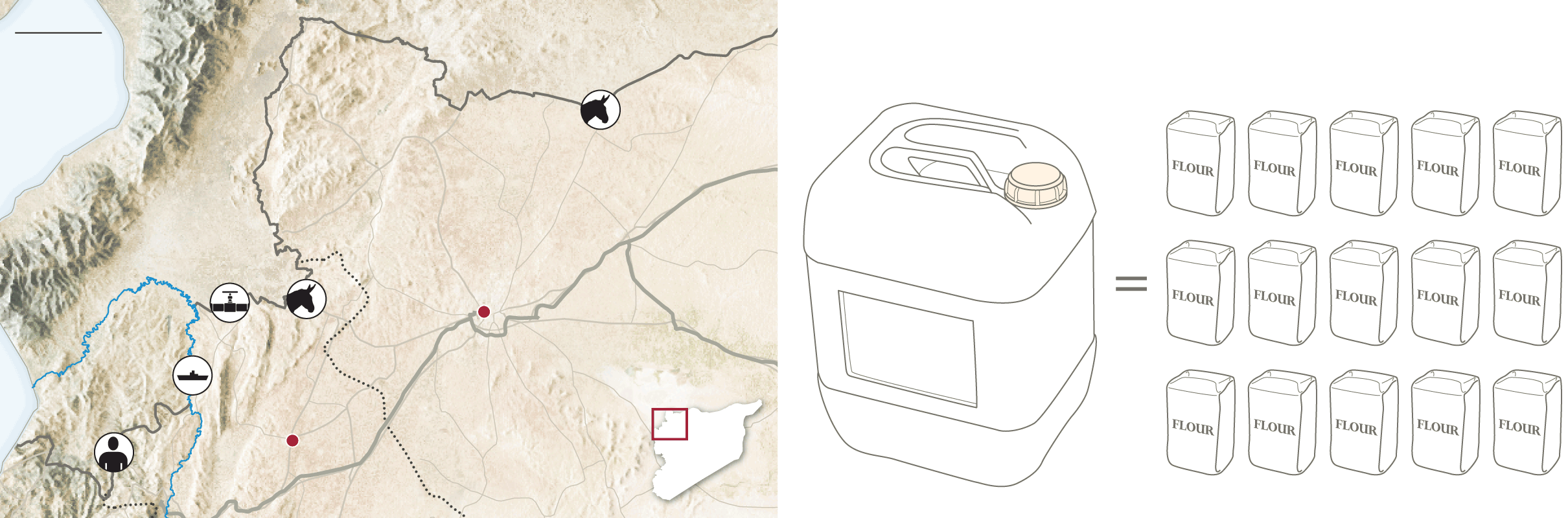
Most of the smuggling from the Syrian side has gone through opposition areas in the northwest. Locals buy fuel at the market, pour it into jerry cans and carry it over the border on foot or, in mountainous areas, by donkey or on horseback.
In Iraq, the bulk of smuggling through the northern Kurdistan region has been blocked, so locals say the route now goes south through Anbar province towards Jordan.
Boat
BoatWhen oil prices were high, smugglers loaded larger jerry cans (50-60 litres) of oil into metal tubs or small row boats and, using ropes attached to each river bank, pulled their cargo across the river and into Turkey. On the other bank, tractors picked up the supply and took it to a local informal market, where it was picked up by large trucks, which sold it on.
Pumps
PumpSome Syrian and Turkish border towns have co-operated by burying small rubber tubes under the border, such as at Besaslan. In recent months, Turkey has stepped up border patrols and are constantly digging out the makeshift pipelines.
On foot
FootA popular crossing point for smugglers carrying jerry cans of fuel on their backs has been from Kharbet al-Jawz in rebel-held Syria to Guvecci in Turkey. This has been largely shut down by Turkish forces, but the remote terrain makes it impossible to stop.
Horseback
DonkeyIn places like al-Sarmada and al-Rai, smugglers have crossed the border by mule, donkey or horses that can carry four to eight jerry cans at a time.
Airstrikes
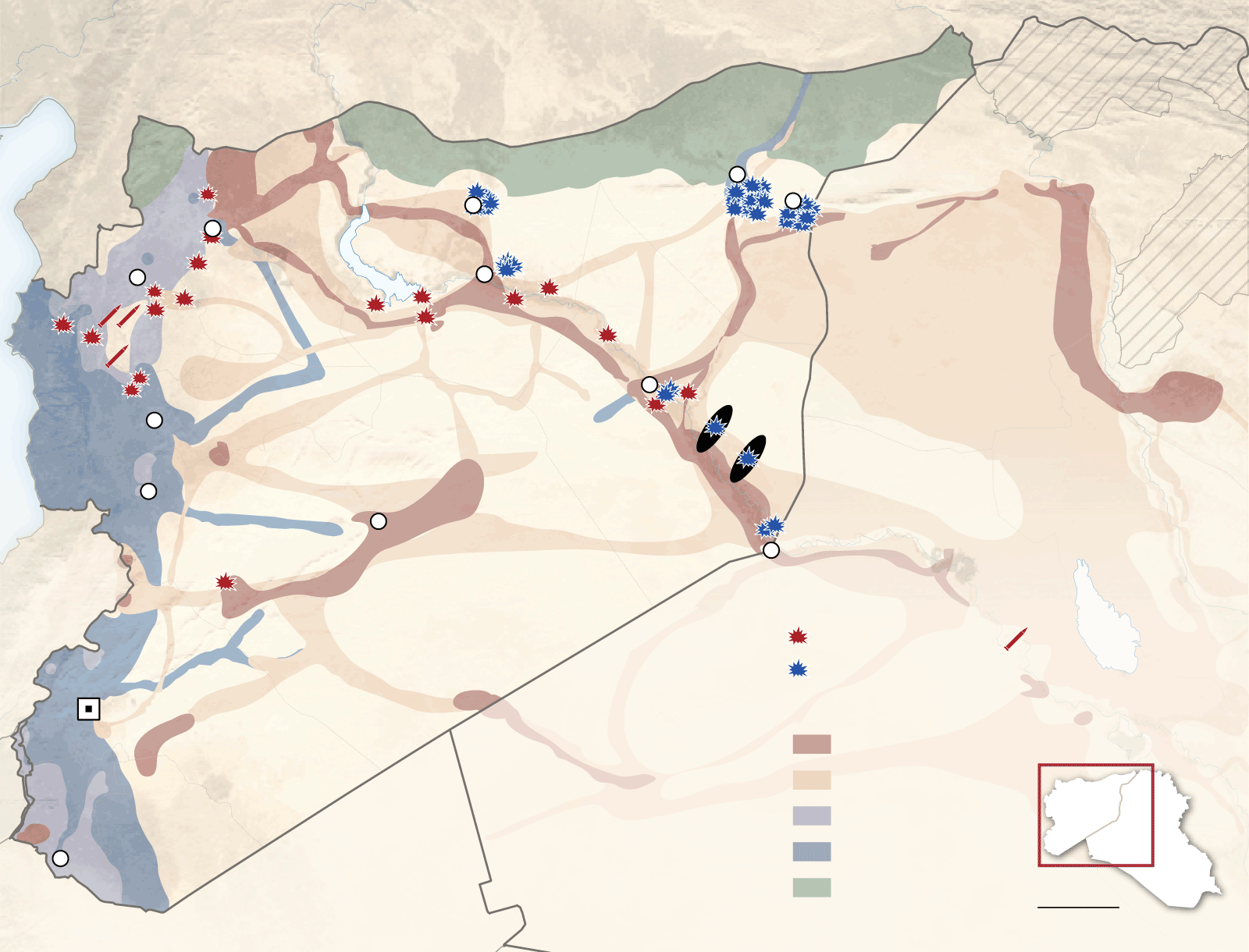
At the end of October, the US-led coalition launched a fresh assault on Isis oil infrastructure. These airstrikes were followed by Russian attacks, and intensified in mid-November.
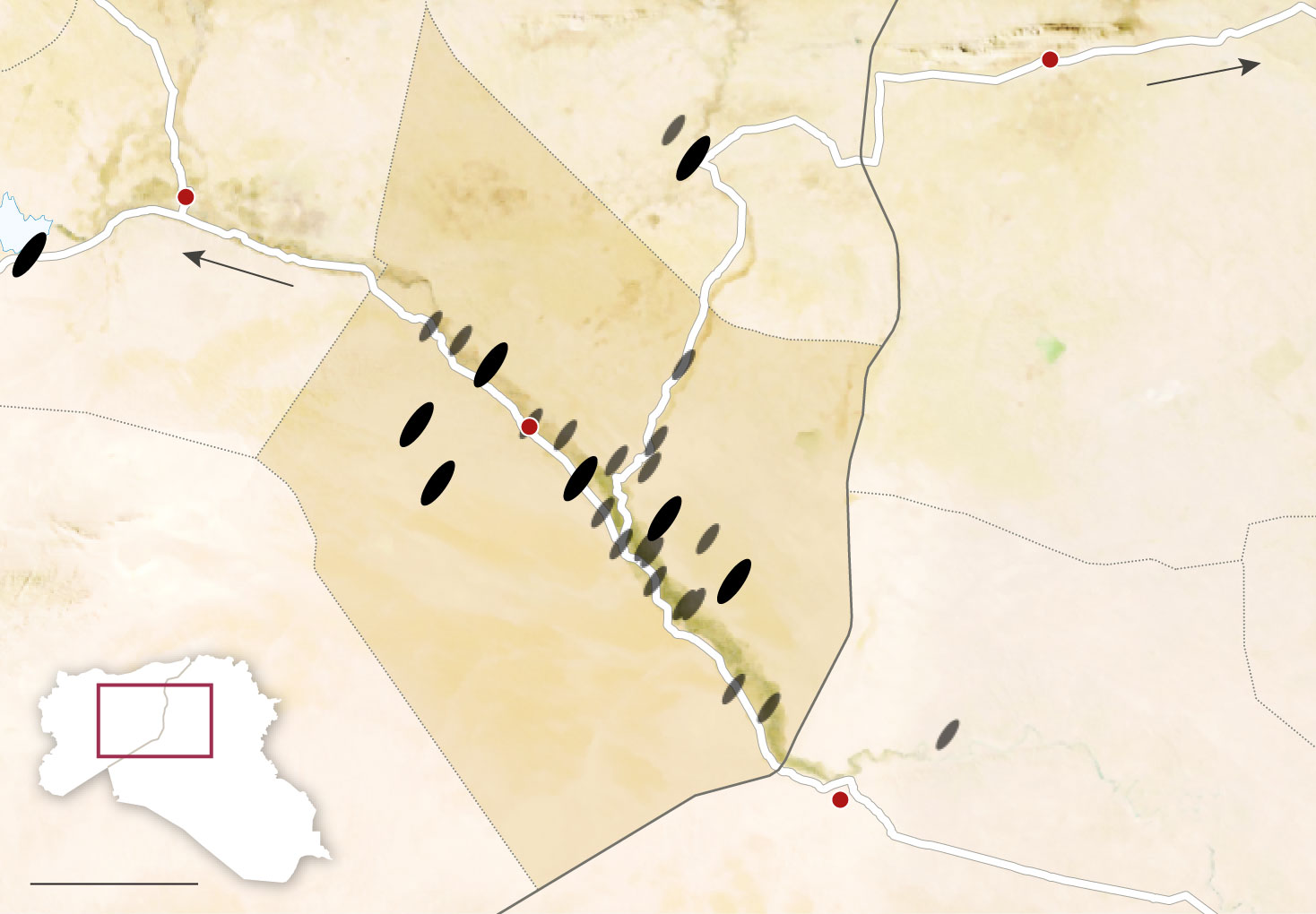
The coalition airstrikes against Isis oil operations have mainly targeted the oil extraction process, rather than refineries or oil markets. Bombs have hit Isis vehicles operating at the oil fields, and facilities for pumping or moving oil.
For example, the biggest single blow to Isis oil extraction, locals say, was a strike that took out the machinery that allowed oil workers to centrally control the wells at al-Omar field, Isis's single biggest oil source.
This had been critical because wells there can be 30km away from each other, and the machinery allowed workers to close down a well that was struck and avoid a fire spreading. Now, each well must be operated manually, which dramatically slows down the process of running the entire field.
Strikes on Syria from Nov 20
Kurds
Sources: Institute for the Study of War, US Central Command,
US Department of Defense, FT research
These efforts to stop Isis earning money from oil is starting to have an effect. Production fell by 30 per cent in December at al-Omar and al-Tanak.
But it comes at a human cost. Civilian traders have been hit by an increasing number of strikes. Local civilians are angry about the new campaign and they fear for their own economic survival, which is now entangled with that of Isis's finances.
"This is considered our infrastructure, and destroying it like this...shows that the objective is to kill the Syrian people," says Omar al-Shimali, who lives in the rebel-held Aleppo province to the northwest.
Where Isis buys its bullets

Where Isis buys its bullets
Fighting can consume tens of thousands of bullets in a single day. Securing this ammunition requires a complex logistical operation

Tony Blair makes qualified apology for Iraq war ahead of Chilcot report

Tony Blair has moved to prepare the ground for the publication of the Chilcot inquiry into the Iraq war by offering a qualified apology for the use of misleading intelligence and the failure to prepare for the aftermath of the invasion.

In an interview with Fareed Zakaria on CNN, the former British prime minister declined to apologise for the war itself and defended armed intervention in 2003, pointing to the current civil war in Syria to highlight the dangers of inaction.

Related: There is no doubt about it: Tony Blair was on the warpath from early 2002

Blair, who will be aware of what Sir John Chilcot is planning to say about him in the long-awaited report into the Iraq war, moved to pre-empt its criticisms in an interview with CNN. He told Zakaria: “I apologise for the fact that the intelligence we received was wrong.

“I also apologise for some of the mistakes in planning and, certainly, our mistake in our understanding of what would happen once you removed the regime.”

But Blair made clear that he still felt he made the right decision in backing the US invasion of Iraq to remove Saddam Hussein. He said: “I find it hard to apologise for removing Saddam.”

Blair also made light of the claims that he should stand trial on war crimes charges and defended his policy of what he used to describe as liberal interventionism. He contrasted what he described as “my ‘crime’” – the removal of Saddam – and the civil war in Syria.

“We have stood back and we, in the west, bear responsibility for this – Europe most of all. We’ve done nothing. That’s a judgment of history I’m prepared to have.”

Blair indicated that he saw merit in the argument that the Iraq war was to blame for the rise of Islamic State (Isis). “I think there are elements of truth in that,” he said when asked whether the Iraq invasion had been the “principal cause” of the rise of Isis.

He added: “Of course you can’t say those of us who removed Saddam in 2003 bear no responsibility for the situation in 2015.”

Nicola Sturgeon, the Scottish first minister, responded by saying that the “Blair spin operation” had swung into action as Chilcot prepares to set out a timetable for the publication of his report.

— Nicola Sturgeon (@NicolaSturgeon)
The Blair spin operation begins but the country still awaits the truth. The delay to Chilcot report is a scandal. https://t.co/pPhRcZzGrc

Sturgeon tweeted: “The Blair spin operation begins but the country still awaits the truth. The delay to Chilcot report is a scandal.”

In his long-awaited report, Chilcot is expected to criticise the use of intelligence that suggested Hussein had weapons of mass destruction in the run-up to the Iraq war. The former Northern Ireland Office permanent secretary is also expected to say that the UK and the US failed to make adequate preparations for the aftermath of the invasion.

Blair’s office sought to downplay the significance of the CNN interview, part of a programme called Long Road to Hell: America in Iraq, to be broadcast on the network on Monday.

A spokeswoman said: “Tony Blair has always apologised for the intelligence being wrong and for mistakes in planning. He has always also said, and says again here, that he does not however think it was wrong to remove Saddam.”

Related: There is no doubt about it: Tony Blair was on the warpath from early 2002

She added: “He did not say the decision to remove Saddam in 2003 ‘caused Isis’ and pointed out that Isis was barely heard of at the end of 2008, when al-Qaida was basically beaten. He went on to say in 2009, Iraq was relatively more stable.

“What then happened was a combination of two things: there was a sectarian policy pursued by the government of Iraq, which were mistaken policies. But also when the Arab spring began, Isis moved from Iraq into Syria, built themselves from Syria and then came back into Iraq. All of this he has said before.”

Chilcot is preparing to outline a timetable for the publication of his report in the next 10 days. Blair will be aware of what criticisms Chilcot is planning to make of him because the inquiry chair has written to all key participants as part of what is known as the Maxwellisation process. It allows them to respond to criticisms before publication.

Chilcot was a member of the Butler inquiry, which in 2004 raised concerns about the intelligence before the Iraq invasion. The inquiry also questioned the way in which senior intelligence officials and Downing Street stripped out caveats from intelligence assessments.

Tony Blair makes qualified apology for Iraq war ahead of Chilcot report
by Nicholas Watt Chief political, theguardian.com

Read more from The Guardian

http://www.theguardian.com/uk-news/2015/oct/25/tony-blair-sorry-iraq-war-mistakes-admits-conflict-role-in-rise-of-isis

Enemy at the gates: ISIS, Daesh Terror

Renowned American scholar Jessica Stern along with J.M. Berger has tried to understand the evolution of the selfstyled Islamic State (IS, also known as ISIS) in their recently published book, ISIS: The State of Terror. The book provides a comprehensive account of factors which have contributed to the genesis and transformation of the IS. Stern is a leading expert on terrorism and has authored many books on the subject.

Berger has similar credentials, but his focus has largely remained on the US. Their collaborative effort provides an analysis of the emerging threats in Iraq and Syria, where Islamist `jihadists`have not only captured certain territories but are also front runners on the social media. The IS has expanded the war from physical to virtual spaces, which has made the challenge of terrorism more complex.

The Jihadist movements have evolved to a level where establishing a state does not seem like an ambitious goal, at least for some of them. The IS is an advanced-level jihadist movement. The group has crossed all limits of brutality by using the act of beheading as a means of marketing, manipulation, and recruitment.

The initial chapters focus on the circum-stances which provided a favourable environment to jihadists in Iraq to form the terrorist group. The IS was the brainchild of Abu Musab al-Zarqawi, a Jordanian thug-turned-terrorist.

The 2003 invasion of Iraq provided him the reason to establish the group. The book provides a background of the events which nurtured the character of Zarqawi and his movement. However, the US and its Western allies, who continued to downplay the role of the upstart jihadists for months, are also blamed.

According to the authors, this downplay came as most Americans and other Westerners were disillusioned and exhausted by more than 10 years of a costly `war on terror`.

Paul Bremer, the former head of the coalition provisional authority in Iraq, was the man behind the assessment of the Iraqi situation after the eruption of civil war and policy decisions complicated the scenario. The initiatives taken in the name of state-building proved fatal and widened the sectarian divide in Iraq, which was exploited by Zarqawi. The authors believe that Bremer`s decisions of disbanding the military and firing all members of Saddam Hussein`s ruling Ba`ath Party from civil service positions proved counter-productive. More than 100,000 Sunni Ba`athists were removedfrom the government and military, leaving them unemployed, angry, and in the case of military personnel, armed.

These policies triggered sectarian tensions, which were intensely mixed with local and regional politics. Post-war Iraq was a recipe for sectarian conflict and Zarqawi wasted little time in exploiting the situation and intensifying these tensions. Later, Abu Bakr al-Baghdadi exploited the same tendencies in Syria.

The second factor which contributed to the f ormation of the IS was the growing ideological radicalisation in Iraqi prisons. The prisons facilitated radicalisation among the prisoners, many among whom were not jihadists but were unemployed citizens and were either paid or coerced into the resistance movement. The head of the IS, Baghdadi, exploited the situation when he was in Camp Bucca prison. The prison also proved to be a key transformative agent for Zarqawi.

The book also discusses the factors which contributed in developing the ideological perspective of Zarqawi: a Jordanian jihadist scholar, Abu Muhammad al-Magdisi, shaped the mindset of the terrorist. Magdisi was the `bookish fatwah monk, and Zarqawi was the man who tested his theories in real time and a real war`.

Apart from Magdisi, two other jihadist ideologues had contributed in developing the contours of the IS: Abu Bakr Naji and Abu Musab al-Suri.

Na ji`s book T he Management of Savagery: T he Most Critical Stage through Which the Umma Will Pass was a compilation of lessons learned from previous jihadist failures, as well as advancement in thinking about the movement`s future direction. Written in 2004, the book outlined the following stages of the jihadist struggle: `Disruption and exhaustion: in which terrorist attacks damage the economy of the enemy power and demoralise their population; Management of savagery: a phase of violent resistance with an emphasis on carrying out acts of highly visible violence, intended to send a message to both allies and enemies and; Empowerment: the establishment of regions controlled by jihadists that can subsequently grow and unite towards the goal of re-creation of the `Caliphate`.

The IS has adopted the same strategy for the future. Suri`s 1,600-page book The Call to a Global Islamic Resistance was the second book which influenced Zarqawi. In this book, Suri advocates leaderless jihad and strategies such as the use of the so-called lone-wolf attacks.

The book describes the background of the differences between Al Qaeda and Zarqawi, which later caused a permanent division between two camps. Al Qaeda top leaders were never happy with Zarqawi`s `ultra radical` views, but ironically, it was the invasion of Iraq that pushed Zarqawi into an alliance with Osama bin Laden and led to Al Qaeda`s enduring presence in Iraq. The alliance could not be converted into a long-term relationship and cracks appeared again when Zarqawi announced the establishment of the IS.

While describing the cognitive relationship between Al Qaeda and the IS, the authors see Al Qaeda as the intellectual side of the jihadist movement, which was the spark, and the IS provided gasoline to give the flame. The Al Qaeda model is based on a framework of attracting fighters first and radicalising them later, but the IS sought recruits and supporters who are further down the path toward ideological radicalisation or more inclined by personal disposition towards violence. `Al Qaeda`s vision is often explicitly nihilistic. The IS, for all its barbarity, is both more pragmatic and more utopian,` the book says. The authors see differences between the two jihadist movements as the conflict of visions and their assessment is that the winner of the war between Al Qaeda and the IS will wield tremendous influence over the tactics and goals of the next generation of jihadists.

In fact, Al Qaeda itself was the beneficiary of the resistance and separatist movements of Muslim countries and territories, from Philippines to Kashmir and Palestine to Bosnia. These movements were `Islamised` in Afghanistan, and Al Qaeda had absorbed the human resources while connecting them in a brotherhood relationship. The IS has further transformed the jihadist movements and provided a new model, which is broad in ideological and political perspectives and diverse in its war and communication strategies and tactics. The authors argue that the IS`s accomplishments will have longterm ramifications for jihadists and other extremist movements that may learn from its tactics.

The most important part of the book is about the propaganda wars which the IS is fighting in virtual spaces, getting results in physical form. The IS has learned from the ineffective communication struggles of Al Qaeda and other jihadist groups. Al Qaeda chapters and affiliates had very loose and unreliable communication networks and the group was following Suri`s strategy of leaderless resistance.

A few chapters of the book are devoted to analysing the communication and propaganda strategies of the IS. The chapter titled `From Vanguard to Smart Mob` describes how Al Qaeda affiliates were trying to convey their messages to their top leadership; successful attempts nurtured well-crafted communication strategies focused on the use of the social media.The authors say: `Of fline, ISIS followed the model of a functional-if-limited government. Online, it played a different game. It amassed and empowered a `smart mob` of thousands of individuals, which shared its ideology and cheered its success.

Since the war against the Soviets, jihadists have been using video and print media in sophisticated ways, but the IS has successfully managed to enter the burgeoning world of the social media. The writers say that killing civilians and destroying infrastructure are not typically a terrorist organisation`s end goals. Rather, they are a means to provoke a political reaction; the social media, too, help achieve that purpose. In this perspective, the book also refers to a study conducted by Google Ideas which estimated that at least 45,000 pro-IS accounts were online between September and November 2014, along with thousands more pro-IS bot and spam accounts.

A chapter is devoted to psychological warfare.

The authors state: `Terror can make us strike back at the wrong enemy, for the wrong reasons or both`.

The perceptions matter in risk assessments and the IS, through its brutal acts, has expanded the limits of risks. The authors raise the question: `Is ISIS deliberately trying to create a society with an appetite for violent aggression?` And they come up with the answer: `It is impossible to know ISIS`s conscious intentions in this regard, but either way, the result of its rule in Syria and Iraq will no doubt be a deeply traumatised generation and a host of new challenges from within.

There are some solutions and strategies suggested on developing counter-narratives. Most of these suggestions are already known. Different nations are trying to respond in their own way, but what is missing is a collective response. In this context, the book recommends a conference be dedicated to airing IS strategies publically, with participation from both the public and private sector, with an eye towards establishing some consistent, reasonable practices and clearly defined areas that require more study on the resolution of more complicated questions. The Summit on Countering Violent Extremism early this year in the White House was an attempt in this direction, but nothing concrete was achieved. It seems the international community is still underplaying the threat.

Overall the book provides a good narration and explanation of events from 2003 onwards to the inception of the IS. This is an essential read for those who deal with security issues; the book also has a lot to offer to students of religious studies and radical movements.
Review by M.Amir Rana . Dawn.com

Why Isis fights

For more than a century, Dabiq was one of northern Syria’s forsaken villages, a speck on a vast agricultural plain between the Turkish border and the deserts of Iraq, which hardly seemed likely to shape the fate of nations. A weathered sign at its entrance said 4,000 people lived there, most of whom appeared to have left by 2013, driven out over time by a lack of work – and lately by insurrection. For the first three years of Syria’s civil war, the arrival of a strange car would lure bored children to the town’s otherwise empty streets, scattering cats and chickens as they scampered after it. Little else moved. Dabiq’s few remaining men worked on the odd building project: a half-finished mosque, a humble house for one local who had just returned after 10 years labouring in Lebanon, or a fence for the shrine that was the town’s only showpiece – the tomb of Sulayman ibn Abd al-Malik. The Ummayad caliph was buried under a mound of earth in 717, which over many centuries had somehow grown into a small hill. The war was happening elsewhere, it seemed. Related: Isis: the inside story | Martin Chulov That was until the jihadists of Islamic State (Isis) arrived in early 2014, an event that the Dabiq elders had feared from the moment the war began – and which the new arrivals had anticipated for much longer. To the foreigners, and the leaders of the new militant juggernaut who were beckoning them, the war had by then entered a new phase that would transform the tussle for power in Syria into something far more grand and important. For them, the conflict that was slicing the country apart was not merely, as the Syrian opposition had seen it, a modern struggle between a ruthless state and a restive underclass. The jihadis instead saw themselves at the vanguard of a war that many among them believed had been preordained in the formative days of Islam. One of the earliest sayings of the Prophet Muhammad – a hadith – mentions Dabiq as the location of a fateful showdown between Christians and Muslims which will be a precursor to the apocalypse. According to another prophecy, this confrontation will come after a period of truce between Muslims and Christians, during which Muslims – and only puritanical Sunnis fit the definition – would fight an undefined enemy, which in northern Syria today is deemed to be “Persians”. “The Hour will not be established until the Romans [Christians] land at Dabiq,” the hadith says. “Then an army from Medina of the best people on the earth at that time will leave for them … So they will fight them. Then one third of [the fighters] will flee; Allah will never forgive them. One third will be killed; they will be the best martyrs with Allah. And one third will conquer them; they will never be afflicted with sorrow. Then they will conquer Constantinople.” Now, close to 1,500 years later, have come waves of fighters who paid strict heed to these prophecies – and see the rise of Islamic State as a crucial turning point in a centuries-long battle of civilisations. For their purposes, the “Persians” today are not simply Iran, but also the Alawite regime that controls Syria and the Shia militias from around the region who have come to its defence. The jihadis started to arrive in the summer of 2012, more than one year into Syria’s war, which had by then started to tip in favour of a ramshackle opposition that was locked into ousting Bashar al-Assad at all costs. Over the following six months, the foreigners came from all points of the globe, gradually asserting their will over opposition groups that were failing to press home their early gains on the battlefield and offered no convincing plan for the type of society that would eventually emerge from Syria’s ruins. One man in Dabiq recalled to me the day that the war for the north was lost to the jihadis. “They came in a column of trucks one day early last year. They said nothing. They just set themselves up at the mosque,” he said in May 2014. “Now everyone knows where Dabiq is. We are why they are destroying the whole region.” “We know about the prophecy, of course we do,” another Dabiq local told me, sitting on the concrete floor of his home in late 2013. “But we are hoping that it is just legend. God willing they will leave us alone.” The man’s faith was misplaced. Within three months, Isis had set up a command post among rows of concrete homes, and was sending hundreds of its fighters and their families to relocate there. Dabiq, which has been essentially inaccessible to journalists since that conversation, is now one of three main focal points of the war the group is waging on the region. Raqqa in eastern Syria is Isis’s strategic hub, and Mosul in Iraq is its greatest conquest. But Dabiq is the place that allows the group to underpin its rampage with theology. In the eyes of Isis, the reference to the town in Islamic teachings gives the group’s rampage an incontestable mandate – a powerful thing to table when you’re trying to impose a new world order. And it appears to be working. To the estimated 20,000 foreigners who have travelled to join the so-called Islamic caliphate, declared last June by the Isis leader Abu Bakr al-Baghdadi, the symbolism of Dabiq is one of the jihadis’ most alluring calling cards. The group has even named its online magazine in the town’s honour. Many of Dabiq’s new residents have taken prominent roles in the legions of Arab and western Muslims who have helped turn Isis into the potent and terrifying ideological force that it now represents. “They’ve moved into our homes,” said a fighter from the Islamic Front, a conservative grouping of the armed Syrian opposition that is opposed to Isis. Like all other Dabiq locals, he feared the jihadis in their midst and would only speak openly with the protection of a nom de guerre. “They have threatened my father, seized my house, killed our animals and stolen our war,” he said. “Our fight with them is as big as it is with the regime.” By mid-2015, Dabiq itself was draped in the group’s iconography, black flags flying above all its mosques and civic buildings. Many of its homes have been painted with the familiar black backdrop and white Islamic creed that Isis uses as its calling card. Columns of fighters come and go from the town, the population of which has more than doubled since Isis took over. Nearly all the locals have left, however, surrendering their vegetable farms to the marauders, who dress in ankle-length gelabiyas and eschew most of the trappings of modern life. Many wear ammunition belts around their chests. Most carry weapons. The tomb of Sulayman ibn Abd al-Malik has been destroyed, as have all other graves not considered modest enough. Save for the utility trucks, generators and modern weapons, everything else in town now has the feel of 7th-century frugality. * * * This is the story of why men from all over the world have chosen to fight in a brutal and apocalyptic war; of what drew them to the battlefields of Iraq and Syria; and of what has kept many of them there as Europe and the west have scrambled to stem the flow, first of their own nationals fleeing to join Isis and now of millions of refugees fleeing the other way. A fighter films an Isis military parade in Raqqa province, Syria. Photograph: Reuters It is told largely by five men with whom I have spoken, at some length, over the past four years, inside Syria and Iraq. Their motivations are similar, but in some cases they are diverse and contradictory. All of them draw at least some inspiration from the prophecy of an epochal confrontation in Dabiq; they see themselves as underdogs, fired by a sense of divine mission. Individually, each man painted a distinct portrait of his reasons for joining a movement that is fast causing the collapse of an order that has bound the region together for centuries, and posing a direct challenge to all the Middle East’s current forms of governance, threatening autocracies, monarchies and quasi-democracies alike. All of these men believed that by travelling to fight for the caliphate, they were standard-bearers of their faith. They also felt sure they were acting to restore Islam to its lost glories – and had a sense of privilege and pride that their generation was the one that had been chosen to right the wrongs of the past. These sentiments are shared by many others I have met: two senior Isis members who have been captured by Iraqi forces and are now facing death sentences; a Syria-based Tunisian fighter who believes his duty is to obey the orders of his superiors with unswerving servility; and even one former member of a mainstream rebel militia, who joined the ranks of his jihadi foes when he realised the battle was turning in their favour. But they also had myriad other reasons for joining the terror group that had little to do with their understanding of Islamic scripture or any sense of holy war. Some saw themselves as victims of oppression, others as sons of dispossessed families. Another thought of himself as a cultural warrior, not a holy warrior: he argued that joining the jihad was an entirely practical obligation, necessary to restore the caliphate and bring on the prophecy of the end times. Few were untouched by a yearning for the collective memory of the early centuries of Islam, alongside contemporary grievances about a humiliating loss of power at the hands of the west in recent years. By late 2014, they were all fighting under the banner of the most radical and dangerous jihadi group to have formed in the past 30 years. And Dabiq was now ground zero for their struggle. * * * In February 2013, I was a few miles from the Turkish border, standing on a road outside a government office that rebel fighters had just commandeered as a base, and inspecting the ruins of a Syrian army tank that had been destroyed in a battle a few days earlier. The rebels who had taken the office warned me that the building next door had been occupied by foreigners who had crossed the border to fight in Syria. Isis had not yet formed, but the men I could see inside that building, darting between the windows and the stairwells, would join the group when it raised its colours several months later. By early 2013, foreign fighters from around the world were converging in the rolling hills of the Jebel al-Akrad region of north-western Syria, 200 miles west of Dabiq. The men had commandeered homes of Alawite families who had been forced to flee from their path. The jihadis had taken refuge among elements of the Free Syrian Army, who in the weeks prior had pushed the Syrian army south towards the regime stronghold of Latakia. As I looked at the tank, one of these foreigners walked down a small hill towards where I stood on the road, with a Kalashnikov strapped across his chest and menace in his stride. He asked for my identification, which he refused to return. I asked him what had caused him to leave his life and travel to Syria. “Omar and Ali – is that your question?” came his enigmatic reply. “Omar” is traditionally a Sunni name; “Ali” is identified with Shia Islam. The fighter, who called himself Abu Muhammad, had immediately made the sectarian nature of his cause clear, and I soon learned that he and the other jihadis occupying the formerly Alawite houses nearby had erased any signs of iconography from their walls, painting them over with graffiti touting the superiority of Sunni Islam. A 30-year-old Lebanese national, Abu Muhammad had four wives, 10 children and an American education, and he was now trying to detain me on suspicion of being a spy. “There are reasons for us fighting now,” he said in perfect English. “All of this was destined to happen.” After an uneasy standoff on the road, where we were soon joined by armed members of the rebel group that was hosting me, Abu Muhammad calculated that taking me hostage would perhaps be unwise. So he invited me for tea instead, and we settled into plastic chairs under the house his group was using as a base. We talked more about his belief that those who lived in a western economy, earned a wage, paid taxes and took part in a community life that was not Islamic were just as deviant as those who had renounced their faith. For him, there was no room for compromise on what made a person worthy of an afterlife, or eternal damnation. “This will be a war against a powerful enemy,” he said. “And the Muslims will win. You are here on a humanitarian mission, so you can leave. But don’t stay long.” I did not, but over the next 18 months, in five more trips to northern Syria, I witnessed the relentless rise of the jihadis in Idlib and Aleppo provinces. They steadily captured swaths of land in both provinces, particularly in the countryside, imposing their will with an increasing ruthlessness and defying the writ of the other rebel units, who had their guns trained on Assad’s army, and wanted a new nation-state to rise from whatever was left of Syria. The jihadis saw Assad as part of the problem, but they had a bigger goal – and that meant subjugating the rebel cause. Wherever they were able, they were transforming the battle for Syria’s destiny from a fight against one type of tyranny into nihilistic chaos. By the time another young jihadi, Abu Issa, was freed from Aleppo’s central prison in late 2011, the Trojan horse act that was Isis was well under way – fuelled by Turkey’s porous borders, the savagery of the Syrian regime, feckless attempts to organise opposition fighters into a cohesive force, and the release of militant prisoners like himself. A Syrian with historical links to the group’s earliest incarnation, al-Qaida in Iraq, Abu Issa was released along with dozens of men like him as part of an amnesty given by Assad to Islamist detainees, which was touted by the regime as a reconciliation with men who had long fought against them. Most of the accused al-Qaida men had been in the infamous Syrian prison system for many years before the uprising against Assad began. “We were in the worst dungeons in Syria,” said Abu Issa, who was a member of the various forerunners of Isis, and fought against the US army in 2004 and 2005 before fleeing Baghdad in 2006. “If you were charged with our crimes, you were sent to Political Security prison, Saydnaya in Damascus or Air Force Intelligence in Aleppo. You could not even speak to the guards there. It was just brutality and fear.” But several months before Abu Issa was released, he and a large group of other jihadis were moved from their isolation cells elsewhere in the country and flown to Aleppo’s main prison, where they enjoyed a more communal and comfortable life. “It was like a hotel,” he said. “We couldn’t believe it. There were cigarettes, blankets, anything you wanted. You could even get girls.” Soon the detainees were puzzled by another prison oddity, the arrival of university students who had been arrested in Aleppo for protesting against the Assad regime. “They were kids with posters and they were being sent to prison with the jihadis,” he said. “One of them was a communist and he talked about his views to everyone. There was a guy from al-Qaida in the prison and he was usually very polite but he got angry with this guy. He said if he saw him again he would kill him.” Abu Issa and the other Islamist detainees soon formed the view that they had been moved to the Aleppo prison for a reason – to instil a harder ideological line into the university students, who back then were at the vanguard of the uprising in Syria’s largest city. On the same day that Abu Issa and many of his friends were released, the Lebanese government, which is supported by Damascus, also freed more than 70 jihadis, many of whom had been convicted of terrorism offences and were serving lengthy terms. The release puzzled western officials in Beirut who had been monitoring the fates of many of the accused jihadis in Lebanon’s jails for more than four years. Some had been directly linked to a deadly jihadi uprising in the Nahr al-Bared Palestinian refugee camp in July 2007, which led to 190 Lebanese soldiers being killed in battle and much of the camp destroyed. The claim that the Syrian regime aided the rise of extremism to splinter the opposition and reaffirm its own narrative that the war was all about terrorism in the first place has been widely repeated throughout the past five years. It is a central grievance of the mainstream opposition in Syria’s north, which says it lost more than 1,500 of its men ousting Isis from Idlib and Aleppo in early 2014. At the same time as the opposition was fighting the jihadis, the Syrian regime, which did not intervene, was able to advance around the city for the first time in the war. “There was no other reason for Salafi jihadis to be in that jail, and for the students to be with us,” said Abu Issa, who now lives in exile in Turkey. “They wanted them to be radicalised. If this stayed as a street protest, it would have toppled [the regime] within months, and they knew it.” Among the jihadis, there was initially no talk about why they were being freed, Abu Issa said. Just relief to have somehow made it out of a system that had swallowed other accused terrorists for decades. “Nobody wanted to acknowledge it, at first,” he said. “But in time everyone knew what was happening. There were some very important terrorists freed that day. They did what was expected of them and went straight to join the fight against the regime. That was the first moment when the war stopped being about civil rights.” * * * By early 2013, the jihadis had also set up boot camps just inside the Syrian border; several of which were within two miles of the main crossings from Turkey. A Saudi fighter named Gosowan ran the camps from the nearby town of Azaz. New recruits were given 30 days’ basic training and intensive Qur’anic lessons, then sent to the front lines. A huge Turkish flag, around the size of a two-storey building, flew over the nearby border post. Related: How Isis crippled al-Qaida | Shiv Malik, Ali Younes, Spencer Ackerman, Mustafa Khalili It was around this time that I met an Iraqi jihadi named Abu Ismael, who was not shy about his own past. “I was a member of the al-Qaida organisation from 2005-11,” he said, his black eyes set in an unflinching stare. “I joined them with my father when I was 16, and apart from one and a half months in prison, I was very active in every way.” Now 23, he had made his way to al-Bab in Aleppo province in the second half of 2012 and been accepted as an auxiliary fighter by a local opposition unit, Liwa al-Tawheed. “We don’t trust al-Qaida,” the group’s leader, Sheikh Omar Othman, said at the time. “They don’t want what we want, but as Muslims we must accept wayfarers, especially if they come to help.” Abu Ismael said he was one of many Iraqis who had travelled to Syria. For him, and others like him, the civil war was an extension of the same fault line over which Iraq had been torn in two between 2005 and 2007 – a power struggle between vanquished Sunnis and ascendant Shias. Though the battle lines were drawn on a very modern political rivalry, Abu Ismael told me he believed they were rooted in the historical split between the sects that had taken place in Mesopotamia more than a thousand years earlier. “There are around 50 Iraqis in each area of northern Syria. Perhaps more,” he said. “It was not difficult to get here and it is not hard to find other mujahideen. We can fight where we want to and when we want to. And God willing we will prevail.” In early 2012, I met another man, called Abu Ahmed, who had also come through the furnace of the Iraqi insurgency, similarly drawn into militancy by the belief that Sunnis had suffered a devastating loss of power in the wake of the American invasion. He had been affiliated with the group from its earliest days – and described to me how they had organised themselves during the US occupation of Iraq, using the Camp Bucca prison as an incubator for the decade of terror that was to follow. “By 2010, [the insurgency in Iraq] wasn’t working out,” he said. “But then we became energised again.” It was the second half of 2012 in Syria, when Iraqis like Abu Ismael came to join the fight, that had been critical for Isis, Abu Ahmed later told me: these were the months that pulled together all that the forerunners of the group had tried, and failed, to achieve in the prior 10 years. “There were some who had lost hope, others who had drifted away,” he said. “But now it was coming together. People that had scattered were now being drawn back in.” Some Iraqi veterans had been fighting with regular opposition units in Syria, others were in Syrian prisons. Yet more had grown up and moved on. And others, like Abu Ahmed, had disavowed much of the dogma associated with Isis and dreaded the inevitable call from the men who led the now revitalised group. The reunion was a match of competing motivations, much like the arrival of the new crop of fighters. By April 2013, the number of Iraqis fighting in Syria had reached at least 5,000 and was growing daily. Iraqi veterans of the fight against the US occupation, and the sectarian war against the Shias, had crossed the border and were taking leadership positions in a new group that would soon subsume the most organised and capable jihadi outfit in Syria, Jabhat al-Nusra. Throughout that year, newcomers in jihadi battle dress were regular features, both in the war zones along the Turkish border, and on flights from Istanbul to Gaziantep or Antakya, the two main staging posts for fighters wanting to cross into Syria. On every flight I took on one of the two routes from May 2012 to May 2014, there were at least five jihadis on board, clearly on their way to join the fight. Most refused to sit near women; some had Qur’anic recitations as ringtones; and none were shy about where they were going. They got on and off the plane with no trouble and, according to drivers who were sent to meet them, usually headed straight from the airport to the border. “I took four guys one week and two the next,” Suleiman Cenar, a taxi driver based in Antakya, told me in September 2013. “They knew the GPS coordinates of where they wanted to go. I dropped them by the side of the road and they walked through the forest with their belongings.” Central to its growth was the arrival some months earlier of an elderly man with a grey beard who set up home in the nondescript northern Syrian town of Tal Rifaat. The newcomer’s name was Samer al-Khlifawi. He arrived with a wife and a blueprint for how to run a security state that he had learned from his days as a colonel in Saddam Hussein’s air force. Khlifawi, like every other member of Saddam’s armed forces, lost his job, his pension, and any chance of meaningful employment after US viceroy Paul Bremer disbanded the Iraqi military and outlawed the Ba’ath party, to which many of its members – especially its senior officers – belonged. An Isis fighter distributes soft drinks, biscuits and religious pamphlets to local people in Tel Abyad, northern Syria. Photograph: AP In the years immediately following his sacking, Khlifawi, along with dozens of other Ba’athists, steadily got organising. Some joined the anti-US insurgency, which at that point was forming more or less along Islamic lines. Others, like him, formed their own networks and established bonds with Ba’athists in Syria, who offered refuge and helped with supply lines. By about 2007 the Islamist groups, among them Salafist jihadi outfits such as al-Qaida in Iraq (AQI), had allied with some of the Ba’athists – an alliance that would never have been possible under Saddam, who saw organised jihadis as one of the biggest threats to his rule. The bond gave the jihadis a tactical guile and the Ba’athists a military muscle that neither could have boasted without the other. As AQI, then the Islamic State of Iraq, and now Isis evolved, this bond has been central to nearly all of their achievements. And Khlifawi, who had managed to stay underground for nearly a decade after the fall of Baghdad, was increasingly front and centre. As soon as Khlifawi arrived in Tal Rifaat, he started laying down roots for Isis. His goal was to establish systems and structures that would help Isis eventually take over the communities in which people like him had arrived. Around 50 Iraqis, most trusted veterans of the insurgency like Khlifawi, or in some cases their sons, were soon dispatched to Syria and given the job of infiltrating the tribal and community life of their adopted homes. Khlifawi drew up documents, which were later revealed by Christoph Reuter in Der Spiegel, that showed how he planned, with clinical efficiency, to subvert the communities of the north. He encouraged the young Iraqis to set up charities that would be used as fronts, to identify the most powerful tribes and clans and to try to marry into them. Rival power bases were also to be pointed out – a precursor to them being eliminated when the time was right. The communities who had accepted the strangers as wayfarers wanting to help them did not see it coming. “One day in January, they just raised a black flag,” said Abu Abdullah, an opposition fighter from Tal Rifaat. “Nobody knew what to do.” Within months, the pieces were sufficiently in place for Baghdadi to start his move. He announced in April that Jabhat al-Nusra, the al-Qaida-aligned jihadi group, would be subsumed by the newly named Isis. That same afternoon, Baghdadi’s men, most of them Iraqis like Abu Ismael, rode into central Aleppo and kicked al-Nusra members out of their main base in the city’s eye hospital. They then painted it black and took it over. Across northern Syria, the scene was repeated with ruthless efficiency. It was the first of two bold forays that demonstrated to the Syrian opposition and to the region that Isis had become an organisation that matched its words with deeds. “That was a very important time for us,” I was told by another Isis member, Abu Saleh. Now based in Falluja, he had grown up in Muslim Brotherhood circles in Baghdad, and joined dozens of his friends in the west of the capital as the anti-US insurgency grew after 2003. Once a street-smart and risk-taking youth, he had become a true believer in what Isis was fighting for – though he freely admitted to me that his affection for western trappings like cars, technology and weapons was sometimes difficult to reconcile with the frugal ways his leaders demanded of him. But he too had been energised by the struggle spilling across the border. “Things had not always gone well in Iraq,” he said. “There had been mistakes. And we had to be patient. But now Syria had helped us revive ourselves. It would also revive the caliphate.” In August 2015 Isis announced that they had destroyed the temple of Baal Shamin in Palmyra, Syria. Photograph: Rex Shutterstock * * * Shortly after Isis ousted Jabhat al-Nusra in April 2013, Abu Muhammad, the Lebanese fighter who had tried to detain me in northern Syria, was killed while participating in an attack on a regime air base near the Turkish border. He had foreshadowed his own death during our long conversation two months earlier. “I want this more than you want life,” he had said. “This is our destiny.” Abu Ahmed, with whom I remain in regular contact, became more involved with Isis from mid-2013. He remains disaffected with the group, which he believes has strayed well beyond its original remit of fighting the US army and defending Sunnis against their marginalisation in post-Saddam Iraq. But even with his reluctance, he still believes that he too is helping to restore lost glories – of both ancient Islamic civilisation and a more recent era of Sunni power – by fighting against Iran and the Assad regime. “This is just a reality,” he said. “The Americans are working with Iran against the Sunnis. This is not a conspiracy theory.” Abu Ismael is now an emir in eastern Syria, having – perhaps unwittingly – played a key role in the subjugation by Isis of much of the north. His remit has taken him to Hama and to Palmyra, north-west of Damascus, where Isis fighters have systematically destroyed one of the most important archaeological sites in the world, in their bid to revert the region to an Islamic year zero. In Falluja, Abu Saleh, the young jihadi from Baghdad, remains on the front lines, committed to a cause that he insists is righteous. “All of this, the Iranian invasion, the Americans coming, the fall of Baghdad and the rise of Dabiq, was predicted. We will not stop until we win in the name of Allah.” Abu Issa, meanwhile, is trying to make a living in Turkey. Many friends from his younger days in the jihadi movement are still in regular contact with him, as are the men he spent prison time with – an amalgam of Muslim Brotherhood types, men who dabbled with al-Qaida, others who were drawn to fight by perceptions of injustice, and many more who, when they started protesting in 2011, saw no other cause except having a voice in an inclusive government. “Some of them became jihadis, just like the regime wanted,” Abu Issa told me. “But most faded away and lost hope. It’s mostly the jihadis who have hope now. They have lots of themes to believe in. And they choose which one suits them.”
Why Isis fights by Martin Chulov, theguardian.com

What a choice for Egypt – a megalomaniac president or the madness of Isis by Robert Fisk

The images of an Egyptian gunboat exploding off the coast of Sinai last week were a warning to our Western politicians. Yes, we support Egypt. We love Egypt. We continue to send our tourists to Egypt. Because we support President Field Marshal Abdel Fattah el-Sisi – despite the fact that his government has locked up more than 40,000 mostly political prisoners, more than 20,000 of them supporters of the Muslim Brotherhood, hundreds of whom have been sentenced to death. The Egyptian regime continues to pretend that its Brotherhood enemies are the same as Isis. And Isis – in its dangerous new role as the Islamist power in Sinai – has killed hundreds of Egyptian troops, more than 60 of them two weeks ago, after which a military spokesman in Cairo announced that Sinai was “100 per cent under control”. However, after last week’s virtual destruction of the naval vessel, we might ask: who does control the peninsula?

Yet, while the biggest battle is fought in Sinai since the 1973 Arab-Israeli war, we psychologically smother this conflict with our fears about Iraq, Syria, Libya and Yemen. So relieved are we in the West that a secular general has replaced the first democratically elected president of Egypt that we now support Sisi’s leadership as benevolently as we once supported that of Mohamed Morsi of the Muslim Brotherhood. The Americans have resumed arms supplies to Egypt – and why not when Sisi’s men are fighting the apocalyptic Isis?

To Egyptians, though, it all looks a bit different. They are being treated to Sisi’s almost Saddam-like mega-mind. This includes his grotesque ambitions for a new super-capital to replace poor old Cairo, to be completed in a maximum of seven years, not far from the new two-lane Suez canal which must be finished – and those who know Egypt will literally gasp here – in a maximum of 12 months. The “new” Cairo is going to be 700sqkm in size and will cost £30bn. The unveiling of this preposterous project a few weeks ago was accompanied by none other than our own Tony Blair, who used to be a British prime minister but is now (among other burdensome chores) advising the Egyptian president through a UAE-backed consultancy.

This “spendthrift dream of modernity”, as the American writer Maria Golia puts it, betrays an indifference to Egyptians’ real interests. Over 60 per cent of Cairo – the real Cairo that exists today – was built in the past few decades and is spread across miles of tree-bald rotting concrete estates of poverty and heat. Its thousands of newly developed villa-suburbs high above the city are largely empty; no one can afford to purchase them. Could there be a better environment for Isis?

So let’s take a brief look at Sisi’s real Egypt. Rather than rejuvenate the weary, fetid city that Cairo became under the British and then King Farouk and then Nasser and then Sadat and then Mubarak, Sisi wants to start all over again. There is already a New Cairo outside the original Cairo – it was constructed as an expansion of the city under Sadat and Mubarak – so Sisi’s megalopolis will be new New Cairo, a second attempt to alleviate social failure.

The President need not worry too much about industrial disputes in his fantasy city. The Egyptian Supreme Administrative Court has made strikes illegal on the grounds (Brotherhood-like) that practising the right to strike – albeit legalised under Article 13 of the Egyptian constitution – “violates Islamic sharia”. The court has already “retired” three civil servants and imposed penalties on 14 others for striking in the governorate of Monufia, arguing that withdrawing labour “goes against Islamic teachings and the purposes of Islamic sharia”. Under Islamic law, the court announced with almost Isis-style formality, “obeying orders by seniors at work is a duty”. This was a very weird ruling. The teachings of the Prophet forbid alcohol consumption (mercifully, for millions of Muslims, cigarettes had not been invented in the seventh century), but trade unions would have been incomprehensible in any ancient caliphate.

Not that the Egyptian government has much to worry about from its officially sanctioned unions. Gebali al-Maraghy, chairman of the Egyptian Trade Union Federation, declared in an interview with Al-Musry Al-Youm newspaper that “our task is to carry out all the demands made by the President … increasing production and fighting terrorism”. Former deputy prime minister Ziad Bahaa Eddin found the court’s ruling absurd. “Didn’t we demonstrate against the constitution drafted by the Muslim Brotherhood because it attempted to mix religion with the state?” he asked True. Indeed, we in the West are now encouraging a very familiar “new” state in Egypt: paternalistic, dictatorial, haunted by “foreign” enemies – it’s only a matter of time before the Egyptian government declares Isis an arm of Mossad – in which an ocean of poverty is regarded as the very reason why ever more draconian laws must be used against free speech. The people want bread, we are told, not freedom; security rather than “terrorism”.

Egypt is, in fact, following the path of so many other countries that are being torn apart by Isis. For, if you torture your people enough, Isis will germinate in their wounds.

Thus Sinai is now as much under the “control” of Isis as it is of Egypt. The Cairo bomb that assassinated President Sisi’s chief prosecutor proves that Isis operations have crossed the Suez Canal. And even the Egyptian navy can be attacked.

Was there ever a more potent symbol of our choice? Between the devil and the deep blue sea.

What a choice for Egypt – a megalomaniac president or the madness of Isis
by Robert Fisk, independent.co.uk

Islamic State? This death cult is not a state and it’s certainly not Islamic by Boris Johnson

We must settle on a name for our enemies that doesn’t smear all Muslims but does reflect reality

21 Egyptian Christians, who were seized by Isis fighters while working in Libya, killed in a videoreleased on February 15, 2015
If we are going to defeat our enemies we have to know who they are. We have to know what to call them. We must at least settle on a name – a terminology – with which we can all agree. And the trouble with the fight against Islamic terror is that we are increasingly grappling with language, and with what it is permissible or sensible to say.

• Horrifying footage emerges of fleeing killer - Live

When a man sprays bullets at innocent tourists on a beach, or when a man decapitates his boss and sticks his head on the railings, or when a man blows himself up in a mosque in Kuwait – and when all three atrocities are instantly “claimed” by the same disgusting organisation – it is surely obvious that we are dealing with the same specific form of evil. This is terrorism.

But what are the objectives of this terrorism? Is it religious? Is it political? Is it a toxic mixture of the two? And what exactly is its relationship with Islam? Many thoughtful Muslims are now attempting – understandably – to decouple their religion from any association with violence of this kind.

The excellent Rehman Chishti, MP for Gillingham, has launched a campaign to change the way we all talk about “Isil”. He points out that the very use of the term “Islamic State” is in itself a capitulation to these sadistic and loathsome murderers. They are not running a state, and their gangster organisation is not Islamic – it is a narcissistic death cult.

Rehman’s point is that if you call it Islamic State you are playing their game; you are dignifying their criminal and barbaric behaviour; you are giving them a propaganda boost that they don’t deserve, especially in the eyes of some impressionable young Muslims. He wants us all to drop the terms, in favour of more derogatory names such as “Daesh” or “Faesh”, and his point deserves a wider hearing.

But then there are others who would go much further, and strip out any reference to the words “Muslim” or “Islam” in the discussion of this kind of terrorism – and here I am afraid I disagree. I can well understand why so many Muslims feel this way. Whatever we may think of the “truth” of any religion, there are billions of people for whom faith is a wonderful thing: a consolation, an inspiration – part of their identity.

There are hundreds of millions of Muslims for whom the word “Islamic” is a term of the highest praise. They resent the constant association of “Islam” with “terrorism”, as though the one was always fated to give birth to the other. They dislike even the concept of “Islamic extremism”, since it seems to imply a seamless continuum of Muslim belief and behaviour: from liberal to tolerant to conservative to reactionary to terrorist.

Their point is that terrorist violence is alien from Islam, and that is why they argue so strenuously that we should drop all references to “Muslim terrorists” or “Islamic terrorists”. They say that any use of the word Islam or Muslim in such a context is actually offensive and derogatory, and helps to alienate the very people we need to win over.

As one Muslim friend put it to me, “you wouldn’t talk about Christian terrorists would you?” And there is some truth in that. We don’t talk about “Christian terrorism” even in the context of the sectarian violence between Catholics and Protestants in Northern Ireland. Why do we seem to taint a whole religion by association with a violent minority?

Well, I am afraid there are two broad reasons why some such association is inevitable. The first is a simple point of language, and the need to use terms that everyone can readily grasp. It is very difficult to bleach out all reference to Islam or Muslim from discussion of this kind of terror, because we have to pinpoint what we are actually talking about. It turns out that there is virtually no word to describe an Islamically-inspired terrorist that is not in some way prejudicial, at least to Muslim ears.

You can’t say “salafist”, because there are many law-abiding and peaceful salafists. You can’t say jihadi, because jihad – the idea of struggle – is a central concept of Islam, and doesn’t necessarily involve violence; indeed, you can be engaged in a jihad against your own moral weakness. The only word that seems to carry general support among Muslim leaders is Kharijite – which means a heretic – and which is not, to put it mildly, a word in general use among the British public.

We can’t just call it “terrorism”, as some have suggested, because we need to distinguish it from any other type of terrorism – whether animal rights terrorists or Sendero Luminoso Marxists. We need to speak plainly, to call a spade a spade. We can’t censor the use of “Muslim” or “Islamic”.

That just lets too many people off the hook. If we deny any connection between terrorism and religion, then we are saying there is no problem in any of the mosques; that there is nothing in the religious texts that is capable of being twisted or misunderstood; that there are no religious leaders whipping up hatred of the west, no perverting of religious belief for political ends.

If we purge our vocabulary of any reference to the specifically religious associations of the problem, then we are not only ignoring the claims of the terrorists themselves (which might be reasonable), but the giant fact that there is a struggle going on now for the future of Islam, and how it can adapt to the 21st century. The terrorism we are seeing across the Muslim world is partly a function of that struggle, and of the chronic failure of much Islamic thinking to distinguish between politics and religion.

The struggle is really about power, of course, rather than spirituality – but that does not mean we can ignore the potency of the religious dimension. It doesn’t much matter which word we agree on, with Muslim communities, to describe this ideology of terror – Islamism? Islamo-fascism? – but we need to settle on it fast, and then join together to stamp out the phenomenon. If we are going to beat them, we must all at least know their name.

Islamic State? This death cult is not a state and it’s certainly not Islamic
by Boris Johnson, telegraph.co.uk

Rand Paul Is Right: Republican Neocons Created ISIS by Bruce Fein

The Islamic State of Iraq and Syria (ISIS) was created and is fueled by Mr. Paul's lobotomized neocon rivals.

In other words, to paraphrase Walt Kelly's Pogo about the Vietnam War, Mr. Paul's foreign policy detractors have met the enemy, and they are them!

With the predictability of the sun rising in the East and setting in the West, power vacuums in primitive political cultures give birth to extremists--religious or otherwise. There are no exceptions. Ruthlessness and fanaticism flourish in a Hobbesian state of nature.

Israel gave birth to Hamas by crippling the Palestinian Liberation Organization and Yasser Arafat's dominant Fatah faction.

Hezbollah emerged from a power vacuum in Lebanon.

Al Qaeda and Taliban were created by a power vacuum in Afghanistan following the ouster of Soviet troops in 1989.

Iran's radical Shiite regime is the offspring of the power vacuum created by the 1979 overthrow of the Shah.

Despite the obvious, Senator Paul's deluded Republican opponents bugled for the overthrow of Iraq's secular President Saddam Hussein in 2003 heedless of the power vacuum that would ensue. Saddam was a fierce antagonist of Iran's ruling mullahs, against whom he had warred (with United States support) for eight years, 1980-1988. No-fly zones and sanctions had crippled Saddam's capacity to threaten the United States. But the neocons insisted on an invasion and the obliteration of Saddam and the ruling Baath Party to save the world from imaginary weapons of mass destruction and to erect a model democracy for the region. After Saddam's ouster and death, Iraq predictably became convulsed by internecine warfare and strife between Shiites, Sunnis, and Kurds featuring an unstable and extremist sectarian central government allied with Iran. A splinter group of Al Qaeda (which itself was armed and trained by the United States to fight the Soviet Union in Afghanistan), ISIS was born by a United States generated power vacuum in Iraq. ISIS also took root and grew from a complementary power vacuum in Syria, which neocons fortified by urging the overthrow of Syrian President Bashar al-Assad and training Sunni rebels.

Undeterred by their predictable multi-trillion dollar debacle in Iraq, Senator Paul's neocon detractors idiotically championed war against Libya's secular Muammar Gaddafi after he had abandoned WMD and support for international terrorism. The neocons supported Islamic radicals in the overthrow and murder Gaddafi, which was followed by the plunder of his vast conventional arsenal by Islamic radicals. A power vacuum predictably followed, which ISIS exploited to gain a menacing toehold in Libya.

Neocons then placed their staggering stupidity on steroids. They recklessly armed cowardly and inept opponents of ISIS knowing that the weapons would be captured or sold to the enemy--a second edition of the arms we supplied South Vietnam which quickly found their way to the Viet Cong or North Vietnamese. Emblematic is a June 5, 2015 report in Business Insider corroborating that U.S. Humvees captured by ISIS from the Iraqi army have been used in waves of suicide bombings across both Syria and Iraq.

Neocons also created a fetching calling card for ISIS recruitment. They vastly inflated its military capabilities and danger to the United States and the region. That image of omnipotence predictably excited impressionable youths to join because of the neocon engendered perception that ISIS was the New York Yankees of international terrorism. ISIS ranks swell each time a Republican neocon hyperventilates.

South Carolina Republican Senator Lindsey Graham is characteristic. On Fox, he bettered the instruction of Chicken Little in operatically insisting that ISIS was on the verge of world conquest:

"[T]hey're intending to come here. So, I will not let this president suggest to the American people we can outsource our security and this is not about our safety. There is no way in hell you can form an army on the ground to go into Syria, to destroy ISIL without a substantial American component. And to destroy ISIL, you have to kill or capture their leaders, take the territory they hold back, cut off their financing and destroy their capability to regenerate.

"This is a war we're fighting, it is not a counterterrorism operation! This is not Somalia; this is not Yemen; this is a turning point in the war on terror. Our strategy will fail yet again. This president needs to rise to the occasion before we all get killed back here at home."

"[I]f they survive our best shot, this is the last best chance, to knock him out, then they will open the gates of hell to spill out on the world. This is not a Sunni versus Sunni problem, this is ISIL versus mankind."

Notwithstanding Lindsey Graham and fellow neocons, I would wager not a single American has lost a wink of sleep worrying about ISIS attacking the United States.

Of them all, only Rand Paul has earned the accolade of Rudyard Kipling's poem If...

"If you can keep your head when all about you
Are losing theirs and blaming it on you...you'll be a Man my son."

Rand Paul Is Right: Republican Neocons Created ISIS
by Bruce Fein, huffingtonpost.com