Follow @RevMarkWoods on Twitter.
christiantoday.com
A Project of 'SalaamOne NetWork" for Knowledge, Humanity, Religion, Culture, Tolerance, Peace
SalaamOne سلام is a nonprofit e-Forum to promote peace among humanity, through understanding and tolerance of religions, cul...
London’s Muslim Mayor Sadiq Khan has invited Donald Trump to England's capital city to “educate” the bombastic US presidential candidate about Islam.
Khan rejected the notion that Islam was incompatible with modern Western values and said Trump’s “ignorant” views on Islam were “playing into the hands of extremists.”
“I want Donald Trump to come to London so I can introduce myself to him as a mainstream Muslim, very, very comfortable with Western liberal values, but also introduce him to hundreds of thousands, dare I say millions of Muslims in this country, who love being British, love being Western,” the new mayor said in an interview with NBC News on Friday.
In December, Trump called for a “total and complete” ban on Muslims entering the United States after a deadly mass shooting in San Bernardino, California, which was inspired by the Daesh (ISIL) terrorist group.
The proposal triggered widespread criticism and condemnation in the US and around the world.
Protesters gather outside of the Republican National Committee where Donald Trump was about to meet party leaders on Capitol Hill in Washington, DC on May 12, 2016. (AFP photo)
“I want to educate Donald Trump. I want to show him that you can be Muslim and be Western,” said Khan.
Khan, the son of a Pakistani bus driver scored a resounding victory in last week's London mayoral election over his billionaire Conservative rival Zac Goldsmith, who was accused of running a “dog whistle” campaign of drawing attention to Khan’s Muslim faith and trying to link him to extremist groups.
Khan condemned Goldsmith's campaign as coming “straight out of the Donald Trump playbook,” and said he would help Democratic presidential candidate Hillary Clinton beat the billionaire businessman.
Trump, the presumptive Republican nominee, told the New York Times this week that he was “happy” about Khan's election and that the Muslim mayor could be an exception to his proposed ban.
Khan rejected Trump's exemption, and said he will try to visit the United States before the November presidential election.
http://www.presstv.ir/Detail/2016/05/14/465528/Khan-wants-to-educate-Trump-on-Islam-
The great American sociologist Philip Rieff (1922–2006) stands as one of the 20th century’s keenest intellectuals and cultural commentators. His work was stunning in its intellectual breadth and depth. Rieff did sociology on a grand scale—sociology as prophecy—diagnosing the ills of Western society and offering a prognosis and prescription for the future. Although he wasn’t a Christian, his work remains one of the greatest gifts—even if a complicated and challenging one—to Christians living today. (Tim Keller often lists Rieff’s The Triumph of the Therapeutic as one of his essential “big books” on culture.)
Rieff began his academic career in the 1950s and 60s by focusing on the work of Sigmund Freud. According to Rieff, Freud’s exploration of neurosis was really an exploration of authority, as Western man was realizing the idea of divine authority is an illusion. God doesn’t exist; therefore, he isn’t a legitimate authority. Freud recognized that as belief in God faded, psychological neuroses multiplied. Instead of correcting this by pointing persons back to God, however, Freud sought to heal by teaching his patients to accept this loss of authority as a positive development.
Thus the therapeutic culture was born. In place of theology, Freud and his progeny left us with sociology. Rieff warned that the tradeoff would not be a fruitful one.
Religion in Our Blood
Though Rieff rose to prominence as a public intellectual in the 1970s, he suddenly withdrew from the public eye for more than three decades. In fact, it wasn’t until the year of his death—2006—that he re-entered the public square with the publication of his magnum opus, My Life Among the Deathworks.
Deathworks is a devastating critique of modern culture, focusing on our vain Western attempts to reorganize society without a sacred center. According to Rieff, a patently irreligious view of society—which the Western world desires—isn’t only foolish and destructive, but impossible. We can no more live without a religious framework than we can communicate without a linguistic framework or breathe without a pulmonary framework. Religion is in our blood, and the more we deny it, the sicker our society becomes. As Rieff surveyed the 21st-century Western world, he perceived the sickness had become nearly fatal.
Cultural Works of Death
To expose the problems of modern society, Rieff outlines Western history according to three cultural “worlds,” each representing a time period (not a separate sphere of existence). The first was the pagan world, enchanted by its many gods. Following this was the second cultural world, one dominated by monotheism. This era has only recently given way to the third cultural world, our present age, in which many wish to do away with the gods altogether.
As Rieff saw it, human civilizations have always understood social order to be underlain by sacred order. The latter always and necessarily funds the former by providing a world of meaning and a code of permissions and prohibitions. Sacred order translates its truths into the tangible realities of the social order. Thus culture makers and cultural products served as middlemen between sacred order and social order, between God and society.
But the spirit of our third cultural world seeks to undo all of this.
Within this three-world conception of history, Rieff placed Christianity in the second cultural world. Christian monotheism provided the sacred foundation on which Western society was built, and gave individuals a place to stand. Virtue wasn’t just taught explicitly but reinforced implicitly through cultural institutions—in such a way that it shaped the instinctual desires of each successive generation. Most importantly perhaps, the underlying sacred order provided a powerful means of opposing social and cultural decadence.
The third cultural world, however, defines itself by its desire to sever this sacred/social connection. Whereas each of the first two worlds sought to construct identity vertically from above, our third world rejects the vertical in favor of constructing identity horizontally from below. Rieff knew the result of this rejection would be nihilism: “Where there is nothing sacred, there is nothing” (Deathworks, 12).
Rieff pulls no punches in describing the cultural fruits of this project, describing them as deathworks. Instead of causing society to flourish (via works of life), modern cultural products function as subversive agents of destruction (works of death), undermining the very culture from which they arose. Rieff indicts an array of cultural elites—but especially Freud, Joyce, Picasso, and Mapplethorpe—for their role in poisoning society. “The guiding elites of our third world,” he observes, “are virtuosi of de-creation, of fictions where once commanding truths were” (4). Wishing to forget religion and rebuild society (irreligiously) from the ground up, these elites carefully construct a contemporary tower of Babel.
Enslaved to Desire
Of course, the attempt to construct a religionless society is as absurd as the attempt to reach God with a physical tower. As Reiff notes, “Culture and sacred order are inseparable. . . . No culture has ever preserved itself where there is not a registration of sacred order” (13). Yet our third world continues its production of deathworks as a “final assault [on] the sacred orders, of which their arts are some expression.” Deathworks, then, are “battles in the war against second culture” (7). In Rieff’s eyes, the third world is now busy with self-congratulatory festivities in honor its apparent rout.
One of the front lines of the contemporary battle is the notion of truth. The third-world perspective abolishes truth, leaving only desire. Yet desire proves to be as fierce an authority as any god—and jealous to boot. Nature, after all, abhors a vacuum. So the throne on which God once sat doesn’t remain empty; it’s simply filled with the more erratic god of desire.
The chief desire in our American third-world culture is sexual, and this desire demands freedom of exercise. You may now believe or disbelieve in the existence of God (yawn), but you must never question the dogma of absolute sexual freedom, nor restrict its public exercise.
Onward to a Fourth World
Christians who resonate with Rieff’s grim assessment may be tempted to go back, attempting to retrieve the lost Christendom of a previous age. But Rieff pushes us forward to envision a fourth world. We cannot ignore the deathworks our third cultural world has created, but we can work towards a world in which sacred order once again underlies social order. And if Rieff is right, the time for such change may be sooner than we think. The third cultural world seems powerful now, but its foundations are weak and already starting to crumble. A world founded on material desire, after all, may promise much, but our society requires much more (see Rieff’s The Crisis of the Officer Class, 6).
Even amid a crumbling third-cultural world, we must recognize that the fourth world will not enact itself; it awaits a people who will speak and act responsibly. Responsibility in a time such as this will involve a return to seemingly defunct notions of truth and virtue. And this will become increasingly possible as our culture undergoes a “radical disenchantment” with the permissiveness of third-world culture (Crisis, 169). It seemed so liberating to fire God from his post and live without limits! But a world without boundaries is a frightening—not a freeing—place. We must recover the beauty of the “thou shalt” and “thou shalt not.”
When we read the events of our own time with Rieff-like eyes, we’re able to recognize many cultural products of our time as deathworks, and their authors as subversive agents undermining social order. But while Rieff generally takes aim at the creative class, we can expand our vision to include not only elite artists but also more ubiquitous culture-makers—popular entertainers, media outlets, corporate giants, and Supreme Court justices. As one example, we might point to the Supreme Court majorities who created “rights” to abortion and same-sex marriage out of thin air; those decisions are social deathworks in the deepest sense.
And yet, as helpful as Rieff is in identifying the cultural deathworks of contemporary society, his prescription for overcoming them is deficient. He often glances backward, pointing society to the moral code of a previous era. He also points forward, speaking of a future that ought to follow our corrupt age, a future defined by a virtuous cultural elite. But Rieff could never fully articulate a vision for either. He understood well the poison, but could never fully formulate the antidote.
Where Hope Prevails
As he looked backward, what Rieff saw dimly was the biblical doctrine of creation. Had he reached for the wealth in that Christian doctrine, he might have grasped the enigma of humanity—of our created goodness and fallen badness—along with the Bible’s rich teaching about human flourishing. Moreover, what Rieff yearned to see in the future can only be found in a fully Christian eschatology, in its powerful and beautiful vision of Christ’s consummation of the kingdom. Only a Christian eschatology, rooted in the atonement of Christ and awaiting his triumphant return, can provide both avision for the future and the power to work toward it. We don’t merely need a heavenly vision; we need divine power to bring heaven down to earth.
This is what Christianity, and Christianity alone, offers. The resurrection of Jesus declares that where death seems to have the final word, the ending is not ultimate. God will restore the earth, and his kingdom will prevail. What he created, what he mourned over as it reveled in deathworks ranged against him, what he pursued and redeemed—this he will restore, from top to bottom. And what finally grounds our hope—a hope that, sadly, seems to have eluded Rieff—is that we’re privy to this finale before the finale. Though we live in the muddy middle of the script, we’ve caught a glimpse of the last scene.
As those who know the end of history’s story, then, Christians can engage in cultural activity with a humble confidence. As dark as it may seem, the realm of culture will one day be raised to life, made to bow in submission to the King. Since Jesus will gain victory and restore the earth, we remain confident. And since it will be his victory, we remain humble.
The 20th-century missionary theologian Lesslie Newbigin aptly captured this idea of Christian hope and action, even amid a culture of death:
[A transformed society] is not our goal, great as that is. . . . Our goal is the holy city, the New Jerusalem, a perfect fellowship in which God reigns in every heart, and his children rejoice together in his love and joy. . . . And though we know that we must grow old and die—that our labors, even if they succeed for a time, will in the end be buried in the dust of time—yet we are not dismayed. . . . We know that these things must be. But we know that as surely as Christ was raised from the dead, so surely shall there be a new heaven and a new earth wherein dwells righteousness. And having this knowledge, we ought as Christians to be the strength of every good movement of political and social effort, because we have no need either of blind optimism or of despair. (Signs Amid the Rubble: The Purposes of God in Human History, 55)
By Bruce Ashford, the provost and professor of theology & culture at Southeastern Baptist Theological Seminary. He co-authored the recently-released One Nation Under God: A Christian Hope for American Politics (with Chris Pappalardo) and the author of Every Square Inch: An Introduction to Cultural Engagement for Christians. You can follow him atwww.BruceAshford.net and on Twitter.
http://flip.it/T_.Fp
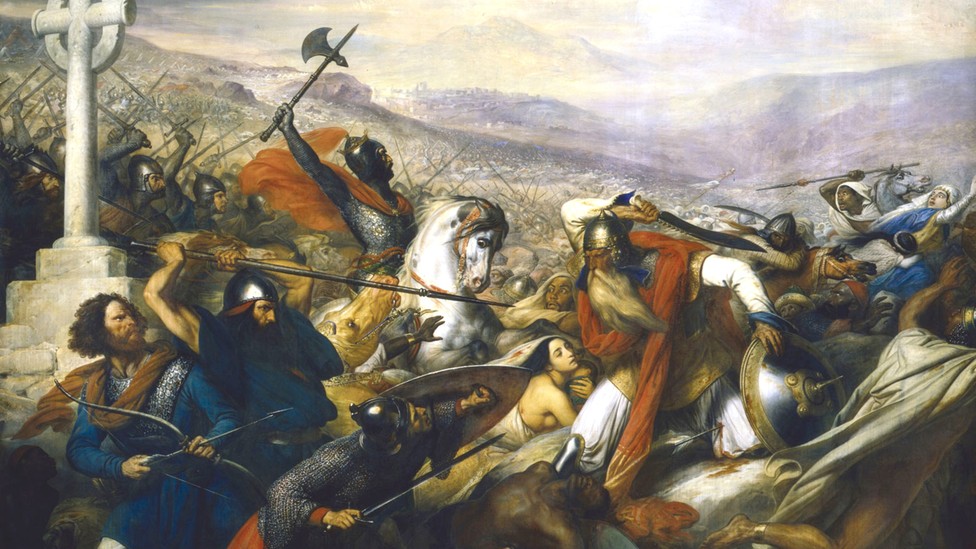
Charles Auguste Steuben's painting of the Battle of the Poitiers in 732. The Frankish leader Charles Martel's victory over Muslim invaders is seen as a decisive moment in European history. Wikimedia
Photo by: Wikimedia
Europe was essentially defined by Islam. And Islam is redefining it now.
For centuries in early and middle antiquity, Europe meant the world surrounding the Mediterranean, or Mare Nostrum (“Our Sea”), as the Romans famously called it. It included North Africa. Indeed, early in the fifth century A.D., when Saint Augustine lived in what is today Algeria, North Africa was as much a center of Christianity as Italy or Greece. But the swift advance of Islam across North Africa in the seventh and eighth centuries virtually extinguished Christianity there, thus severing the Mediterranean region into two civilizational halves, with the “Middle Sea” a hard border between them rather than a unifying force. Since then, as the Spanish philosopher José Ortega y Gasset observed, “all European history has been a great emigration toward the North.”
After the breakup of the Roman empire, that northward migration saw the Germanic peoples (the Goths, Vandals, Franks, and Lombards) forge the rudiments of Western civilization, with the classical legacy of Greece and Rome to be rediscovered only much later. It would take many more centuries for the modern European state system to develop. Slowly, though, feudalism, whose consensual give-and-take worked in the direction of individualism and away from absolutism, gave way to early modern empires and, over time, to nationalism and democracy. Along the way, new freedoms allowed the Enlightenment to take hold. In sum, “the West” emerged in northern Europe (albeit in a very slow and tortuous manner) mainly after Islam had divided the Mediterranean world.
Islam did much more than geographically define Europe, however. Denys Hay, a British historian, explained in a brilliant though obscure book published in 1957, Europe: The Emergence of an Idea, that European unity began with the concept (exemplified by the Song of Roland) of a Christendom in “inevitable opposition” to Islam—a concept that culminated in the Crusades. The scholar Edward Said took this point further, writing in his book Orientalism in 1978 that Islam had defined Europe culturally, by showing Europe what it was against. Europe’s very identity, in other words, was built in significant measure on a sense of superiority to the Muslim Arab world on its periphery. Imperialism proved the ultimate expression of this evolution: Early modern Europe, starting with Napoleon, conquered the Middle East, then dispatched scholars and diplomats to study Islamic civilization, classifying it as something beautiful, fascinating, and—most crucial—inferior.
In the postcolonial era, Europe’s sense of cultural preeminence was buttressed by the new police states of North Africa and the Levant. With these dictatorships holding their peoples prisoner inside secure borders—borders artificially drawn by European colonial agents—Europeans could lecture Arabs about human rights without worrying about the possibility of messy democratic experiments that could lead to significant migration. Precisely because the Arabs lacked human rights, the Europeans felt at once superior to and secure from them.
Islam is now helping to undo what it once helped to create. A classical geography is organically reasserting itself, as the forces of terrorism and human migration reunite the Mediterranean Basin, including North Africa and the Levant, with Europe. The Continent has absorbed other groups before, of course. In fact, Europe has been dramatically affected by demographic eruptions from the east: In the medieval centuries, vast numbers of Slavs and Magyars migrated into central and eastern Europe from deeper inside Eurasia. But those peoples adopted Christianity and later formed polities, from Poland in the north to Bulgaria in the south, that were able to fit, however bloodily, inside the evolving European state system. As for the Algerian guest workers who emigrated to France and the Turkish and Kurdish guest workers who emigrated to Germany during the Cold War, they represented a more containable forerunner to the current migration.
Today, hundreds of thousands of Muslims who have no desire to be Christian are filtering into economically stagnant European states, threatening to undermine the fragile social peace. Though Europe’s elites have for decades used idealistic rhetoric to deny the forces of religion and ethnicity, those were the very forces that provided European states with their own internal cohesion.
Meanwhile, the new migration, driven by war and state collapse, is erasing the distinction between the imperial centers and their former colonies. Orientalism, through which one culture appropriated and dominated another, is slowly evaporating in a world of cosmopolitan interactions and comparative studies, as Said intuited it might. Europe has responded by artificially reconstructing national-cultural identities on the extreme right and left, to counter the threat from the civilization it once dominated.
Although the idea of an end to history—with all its ethnic and territorial disputes—turns out to have been a fantasy, this realization is no excuse for a retreat into nationalism. The cultural purity that Europe craves in the face of the Muslim-refugee influx is simply impossible in a world of increasing human interactions.
“The West,” if it does have a meaning beyond geography, manifests a spirit of ever more inclusive liberalism. Just as in the 19th century there was no going back to feudalism, there is no going back now to nationalism, not without courting disaster. As the great Russian intellectual Alexander Herzen observed, “History does not turn back … All reinstatements, all restorations have always been masquerades.”
The question is thus posed: What, in a civilizational sense, will replace Rome? For while empire, as Said documented, certainly had its evils, its very ability to govern vast multiethnic spaces around the Mediterranean provided a solution of sorts that no longer exists.
Europe must now find some other way to dynamically incorporate the world of Islam without diluting its devotion to the rule-of-law-based system that arose in Europe’s north, a system in which individual rights and agency are uppermost in a hierarchy of needs. If it cannot evolve in the direction of universal values, there will be only the dementia of ideologies and coarse nationalisms to fill the void. This would signal the end of “the West” in Europe.
By Robert D. Kaplan, theatlantic.com
http://www.theatlantic.com/magazine/archive/2016/05/how-islam-created-europe/476388/
PROPHET MUHAMMAD'S PROMISE TO CHRISTIANS
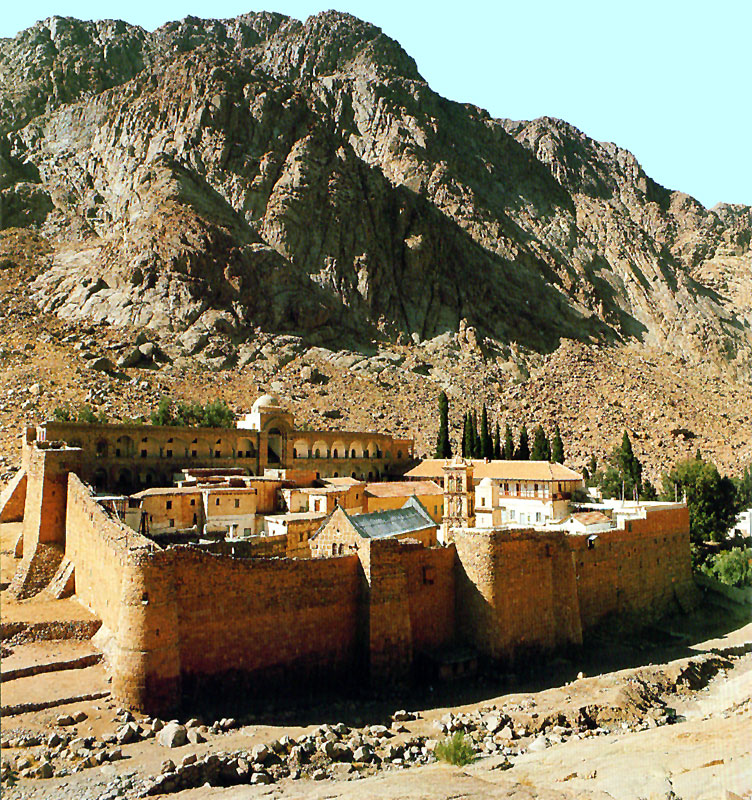
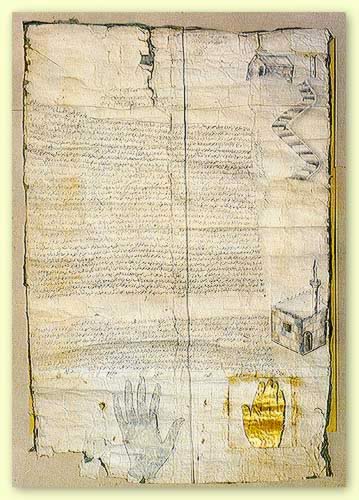
![]() ![]() Muslims and Christians together constitute over fifty percent of the world and if they lived in peace, we will be half way to world peace. One small step that we can take towards fostering Muslim-Christian harmony is to tell and retell positive stories and abstain from mutual demonization. In this article I propose to remind both Muslims and Christians about a promise that Prophet Muhammed (pbuh) made to Christians. The knowledge of this promise can have enormous impact on Muslim conduct towards Christians. Muslims generally respect the precedent of their Prophet and try to practice it in their lives. In 628 AD, a delegation from St. Catherine’s Monastery came to Prophet Muhammed and requested his protection. He responded by granting them a charter of rights, which I reproduce below in its entirety. St. Catherine’s Monastery is located at the foot of Mt. Sinai and is the world’s oldest monastery. It possess a huge collection of Christian manuscripts, second only to the Vatican, and is a world heritage site. It also boasts the oldest collection of Christian icons. It is a treasure house of Christian history that has remained safe for 1400 years under Muslim protection.
The first and the final sentence of the charter are critical. They make the promise eternal and universal. Muhammed asserts that Muslims are with Christians near and far straight away rejecting any future attempts to limit the promise to St. Catherine alone. By ordering Muslims to obey it until the Day of Judgment the charter again undermines any future attempts to revoke the privileges. These rights are inalienable. Muhammed declared Christians, all of them, as his allies and he equated ill treatment of Christians with violating God’s covenant.
A remarkable aspect of the charter is that it imposes no conditions on Christians for enjoying its privileges. It is enough that they are Christians. They are not required to alter their beliefs, they do not have to make any payments and they do not have any obligations. This is a charter of rights without any duties! The document is not a modern human rights treaty but even thought it was penned in 628 A.D. it clearly protects the right to property, freedom of religion, freedom of work, and security of the person. I know most readers, must be thinking so what? Well the answer is simple. Those who seek to foster discord among Muslims and Christians focus on issues that divide and emphasize areas of conflict. But when resources such as Muhammad’s promise to Christians is invoked and highlighted it builds bridges. It inspires Muslims to rise above communal intolerance and engenders good will in Christians who might be nursing fear of Islam or Muslims. When I look at Islamic sources, I find in them unprecedented examples of religious tolerance and inclusiveness. They make me want to become a better person. I think the capacity to seek good and do good inheres in all of us. When we subdue this predisposition towards the good, we deny our fundamental humanity. In this holiday season, I hope all of us can find time to look for something positive and worthy of appreciation in the values, cultures and histories of other peoples.
References
See for example Life and Teachings of Muhammed by Amir Ali, p. 176. click to read it.
Links:
The original charter does not survive, but several copies are now extant in the library of St Catherine, some of which are witnessed by the judges of Islam in order to lend some force to its semblance of authenticity. The traditional explanation which accounts for the loss of the original claims that during the Conquest of Egypt by the Ottoman sultan Selim I in 1517, the original document was seized from the monastery by Ottoman soldiers and taken to Selim's palace at Constantinople.[2][1] A copy was then made to compensate for its loss at the monastery.[1] On the other hand, it is also possible that the charter was simply renewed under the new rulers, as other documents in the archive suggest.[3] Traditions about the tolerance shown towards the monastery were reported in governmental documents issued in Cairo and during the period of Ottoman rule (1517-1798), the Pasha of Egypt annually reaffirmed its protections.[1]
In 1630, Gabriel Sionita published the first edition of the Arabic text, with Latin translation, under the title Testamentum et pactiones inter Mohammedem et Christianae fidei cultores.
The origins of the document has been the subject of a number of different traditions, best known through the accounts of European travellers who visited the monastery.[1] These authors include the French knight Greffin Affagart (d. c. 1557), the French traveller Jean de Thévenot (d. 1667) and the English prelate Richard Peacocke,[1] who included an English translation of the text.
Since the 19th century, several aspects of the Achtiname, notably the list of witnesses, have been questioned by scholars.[4] There are similarities to other documents granted to other religious communities in the Near East. One example is Muhammad's letter to the Christians of Najrān, which first came to light in 878 in a monastery in Iraq and whose text is preserved in the Chronicle of Séert.[1]
نص العهد: "هذا كتاب كتبه محمد بن عبدالله إلى كافة الناس أجمعين بشيراً ونذيراً ومؤتمناً على وديعة الله في خلقه لئلا يكون للناس على الله حجة بعد الرسل وكان الله عزيزاً حكيماً كتبه لأهل ملته ولجميع من ينتحل دين النصرانية من مشارق الأرض ومغاربها قريبها وبعيدها فصيحها وعجميها معروفها ومجهولها كتاباً جعله لهم عهداً. لا يغير أسقف من أسقفيته ولا راهب من رهبانيته ولا حبيس من صومعته ولا سايح من سياحته ولا يهدم بيت من بيوت كنائسهم وبيعهم ولا يدخل شيء من بناء كنائسهم في بناء مسجد ولا في منازل المسلمين فمن فعل شيء من ذلك فقد نكث عهد الله وخالف رسوله ولا يحمل على الرهبان والأساقفة ولا من يتعبد جزيةً ولا غرامة وأنا أحفظ ذمتهم أين ما كانوا من بر أو بحر في المشرق والمغرب والشمال والجنوب وهم في ذمتي وميثاقي وأماني من كل مكروه فمن نكث العهد الذي فيه وخالفه إلى غيره وتعدى ما أمره كان لعهد الله ناكثاً ولميثاقه ناقضاً وبدينه مستهزئاً وللّعنة مستوجباً سلطاناً كان أو غيره من المسلمين المؤمنين."
تعتبر الجملتان الأولى والأخيرة في هذا العهد حاسمتان، فهما تجعلان الوعد أبدياً وعالمياً. يؤكد النبي محمد (ص) أن المسلمين يقفون مع المسيحيين من قريب وبعيد، ويرفضون فوراً أية محاولات مستقبلية للحد من وعد دير القديسة كاثرين وحده. من خلال أمر المسلمين باحترام الوعد حتى يوم القيامة، يُفشل الصك مرة أخرى أية محاولات مستقبلية لإلغاء الامتيازات. هناك ثلاثة حقوق لا يمكن التنازل عنها.
أعلن النبي محمد (ص) أن المسيحيين جميعهم حلفاء له حيث ساوى بين معاملة المسيحيين السيئة مع انتهاك عهد الله تعالى.
ومن النواحي المثيرة للاهتمام والإعجاب في الصك أنه لا يفرض أية شروط على المسيحيين للتمتع بميزاته. يكفي إنهم مسيحيون، ولا يُطلب منهم تغيير إيمانهم ومعتقداتهم ولا أن يدفعوا جزية ولا تكون عليهم أية التزامات. هذا صك حقوق دون أية التزامات.
ليست الوثيقة معاهدة عصرية في حقوق الإنسان، ولكنها، ورغم أنها صيغت عام 628 بعد الميلاد فإنها تحمي بوضوح حقوق الملكية والحرية الدينية وحرية العمل والأمن الشخصي.
أعرف أن معظم القراء سوف يقولون "وماذا بعد؟".
حسناً، الجواب بسيط: يركز هؤلاء الذين يبغون رعاية الفتنة بين المسلمين والمسيحيين على قضايا تتسبب بالفرقة والنزاع. ولكن عندما تطرح موارد مثل وعد النبي محمد (ص) إلى المسيحيين ويتم إبرازها فإنها تبني الجسور.
وهي تلهم المسلمين أن يرتفعوا فوق عدم التسامح الطائفي وتولد حسن النية لدى المسيحيين الذين قد يكونوا يتعاملون مع الخوف من الإسلام والمسلمين.
عندما أنظر إلى المصادر الإسلامية أجد بها أمثلة لا سابق لها من التسامح الديني والشمولية. تجعلني أرغب بأن أصبح إنساناً أفضل. أعتقد أن القدرة على السعي لما هو صالح وصنعه متأصلان فينا جميعاً. عندما نكبت هذا التوجه نحو الصلاح فإننا ننكر إنسانيتنا الأساسية.
آمل في أعقاب فترة الأعياد أن نجد جميعاً الوقت للبحث عن أمر إيجابي يستحق التقدير في قيم وتاريخ وثقافة الشعوب الأخرى.
St. Catherine's Monastery, Sinai, Egypt A Picture of Prophet Muhammad's Letter to St. Catherine's Monastery
Dr. Muqtedar Khan | 08.22.2010
This article was published in the Pittsburg Post-Gazette [03.25.2007], Daily News Egypt [03.09.2007], AltMuslim [03.03.2007], Pakistan Link, Middle East Window, Turkish Daily News [04.10.2007 ], OpEd news [03.19.2007],Ikhwanweb [02.11.07], and many other places..
http://www.ijtihad.org/Prophet%20Muhammed's%20Promise.htm
Minorities in Islamic State: The hand book highlights the rights of minorites...
Read more:Protection of Minorities, a Religious Obligation of Muslims: http://islam4humanite.blogspot.com/2015/03/non-muslims-in-islamic-society.html
~ ~ ~ ~ ~ ~ ~ ~ ~ ~ ~ ~ ~ ~ ~ ~ ~ ~ ~ ~ ~
Humanity, Religion, Culture, Science, Peace
A Project of
Peace Forum Network Peace Forum Network Mags Books, Articles, Blogs, Magazines, Videos, Social Media Overall 2 Million visits/hits |