Featured Post

SalaamOne NetWork

SalaamOne سلام   is   a nonprofit e-Forum to promote peace among humanity, through understanding and tolerance of religions, cul...

Showing posts with label Social. Show all posts

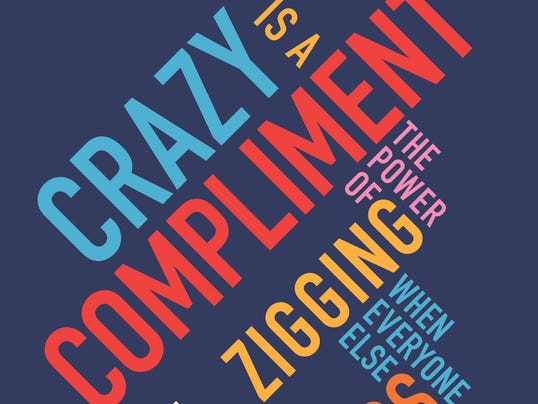
You don`t have to be crazy to start a business

Are entrepreneurs crazy? The question has certainly been asked. The costs of the start-up life can seem insanely high. You give up your salary and benefits and find yourself eating delivery pizza and living with roommates into your 30s. You never have a day off. You will live with the constant risk that everything could come crashing down around you, leaving you with no job, no income and a black mark on your resume. Economists have long believed that these costs are too high for a person who is both normal and rational. Barton Hamilton of Washington University found in 2000 that the median earnings of an entrepreneur were 35 per cent less than the median salaried worker. A team of University of Chicago economists found in 2002 that the financial return to entrepreneurship is no better, on average, than the return from putting your money in the stock market. 

This makes the decision to start a business look a little irrational. Entrepreneurs seem to be getting lower average returns with much higher risk something that economics says that normal, rational people never do. There have been many attempted explanations for why people might launch themselves into a start-up career despite these dismal average results. They might be irrational, overestimating their own chances of success. They might be lured by the small chance of a huge payoff, like a lottery ticket. They might simply love the lifestyle of running a business. Or they might be driven to find out if their pet idea really has legs. 
These things might all be true, especially of the type of people who chose entrepreneurship. But a professor at University of California Berkeley`s Haas School of Business has found another factor that may have been largely overlooked until now. Gustavo Manso realised that the payoff of entrepreneurship goes beyond the chance that your business will succeed. Starting a business is a form of experimentation that can boost your prospects later in life,even if the business fails. In his paper, Manso considered not just the current situations of entrepreneurs versus salaried workers, but their lifetime earnings. This is an important distinction, because most of the entrepreneurs we see at any point in time are simply experimenting with their new ideas. If the idea fails, they go back to a regular job, having lost only a few years of higher salary. If the venture succeeds, they can make a lot. In terms of lifetime earnings, that might not be such a bad gamble. To test this idea, Manso needed data that tracked the same sample over different points in time. He got it from the 1979 National Longitudinal Survey of Youth, which followed young people for about three decades. 
Comparing the lifetime earnings of entrepreneurs and salaried workers, he found that entrepreneurs actually make more, on average. Sure enough, self employment tends to last only a short time, maybe two years on average people who fail get out quickly. What`s more, Manso finds that entrepreneurs experience only slightly higher lifetime earnings variance that is, risk than people who go the salaried route. In other words, the lifetime risk-return trade-off of starting a business looks pretty attractive after all. Of course, Manso`s data doesn`t distinguish between types of entrepreneurship someone who starts a corner store is treated the same as someone trying to launch the next Uber. So we still don`t know whether the high octane venture-capital-funded startup lifestyle that has become so celebrated in the media is a good economic bet or not. But Manso`s analysis has at least given us a better tool for making that calculation. So if entrepreneurship actually offers a better return than the salaried life, why don`t more people do it? The answer probably lies in human psychology. In most risky decisions stock investments, career choices you have at least some idea of the chances of success and failure. But when you try to create a new business, you don`t really know how likely you are to succeed. When Bill Gates dropped out of Harvard to start a software company, he didn`t know whether his decision was a near-certain money-maker or a long shot. Psychologists and economists find that many people instinctively shy away from that sort of ambiguity. Only a few love it. These may be exactly the sort of people who become entrepreneurs people whose battle cry, in the immortal words of Han Solo, is `Never tell me the odds!
You don`t have to be crazy to start a business by Noah Smith, dawn.com 
By arrangement with Washington PostBloomberg News Service

Brilliant, Crazy, Cocky: How the Top 1% of Entrepreneurs ...

video.nextconf.eu/video/.../brilliant-crazy-cocky-how-...
Brilliant, Crazy, Cocky: How the Top 1% of Entrepreneurs Profit from Global Chaos. Sarah Lacy, TechCrunch ...

Linda Rottenberg: For Entrepreneurs, "Crazy" Is A ...

www.youtube.com/watch?v=IptQFYm5ba8
About this presentation As the CEO and Co-Founder of Endeavor, Linda Rottenberg works with entrepreneurs ...

Taran Noah Smith Evil Laugh For Two Minutes - YouTube

www.youtube.com/watch?v=6TQFjAglmqs
Oct 9, 2014 - Uploaded by tnsjtt
This is Home Improvement, season 7 episode 5, A Night To Dismember.
~ ~ ~ ~ ~ ~ ~ ~ ~ ~ ~ ~ ~ ~ ~ ~ ~  ~ ~ ~  ~
Humanity, Religion, Culture, Science, Peace

Know how to nod off


Set your (body) clock
The human body comes with its own internal alarm clock; all you have to do is know how to set it. The most important sleep hygiene measure is to maintain a regular waking and sleeping pattern. Going to bed and waking up at the same time every day sets the body’s internal clock to expect sleep at a certain time night after night. Try to stick as closely as possible to your routine on weekends as well to avoid a Monday morning sleep hangover. Waking up at the same time each day is the best way to set your clock; even if you did not sleep well the night before, the slight sleep deprivation will help you sleep better the following night.
Keep out the clutter
It may help to limit your bedroom activities to sleep. Keeping the computer, TV and work-related material out of the room will strengthen the mental association between your bedroom and sleep.
Create a sleep-inducing environment
A quiet, dark and cool environment can help promote sound sleep. If light in the early morning bothers you, use heavy curtains, blackout shades or an eye mask to block light — a powerful cue that tells the brain that it’s time to wake up. Any distracting sounds that might make it difficult to fall asleep or cause awakening during the night should be eliminated. Keep the temperature comfortably cool/warm and the room well ventilated. And make sure your mattress and pillows are comfortable.
Develop sleep rituals
It is important to give your body cues that it is time to slow down and sleep.
Indulge in some relaxing activities an hour or so before bed. Light reading before bed is a good way to prepare yourself for sleep; taking a bath (the rise, then fall in body temperature promotes drowsiness), practicing relaxation exercises or having a cup of caffeine-free tea (chamomile is ideal) are some ideas. Engaging in the same ritual each evening prior to going to bed can actually train the body that it is time to fall asleep.
Avoid stressful, stimulating activities, for example doing work or exercise or discussing emotional issues, etc right before bed. Physically and psychologically stressful activities can cause the body to secrete the stress hormone cortisol, which is associated with increasing alertness.
Don’t go to bed unless sleepy
Just lying in bed and trying to sleep for hours and hours simply creates a more stressful situation making it more difficult to fall asleep. If you’re not asleep after 20 minutes, get out of bed, go to another room, engage in some activity that might help you relax, like reading or listening to music until you are tired enough to sleep.
Nap early or not at all
Many people have a habit of taking a nap during the day. However, if you find it difficult to fall asleep or stay asleep through the night think again — your afternoon nap may be one of the culprits. This is because late-day naps decrease sleep drive. If you must nap, it’s better to keep it short and early. If you didn’t sleep well the night before, a nap during the day may seem a good idea but it can actually make the situation worse by continuing to disrupt a routine sleep-wake cycle.
Avoid caffeine, nicotine and other chemicals that interfere with sleep
Caffeine and nicotine are stimulants that interfere with your ability to fall asleep. Coffee, tea, cola, cocoa, chocolate and some prescription and non-prescription drugs contain caffeine — a stimulant that can keep you awake. So avoid caffeine for four to six hours before bedtime.
Similarly, refrain from using tobacco products too close to bedtime.

Can’t go to sleep and spend half the night tossing and turning in bed? Thinking of getting a prescription for sleeping pills? Then read on to discover the secrets of sleep hygiene and enjoy a good night’s sleep; wake up refreshed, ready to take the next day head on


Take care what you eat
If your stomach is too empty, that can interfere with sleep. However, if you eat a heavy meal before bedtime, that can interfere as well. Finish dinner several hours before bedtime and avoid foods that cause indigestion. If you feel hungry at night, snack on food that won’t disturb your sleep, perhaps dairy foods and carbohydrates. But remember, chocolate has caffeine.
Balance fluid intake
Drink enough fluid at night to keep from waking up thirsty — but not so much and so close to bedtime that you will be awakened by the need for a trip to the bathroom.
Exercise early
Regular exercise is recommended to help you sleep well, but the timing of the workout is important. Exercise stimulates the body by secreting the stress hormone cortisol, which
helps activate the alerting mechanism in the brain. So, try to finish exercising at least three hours before bed or work out earlier in the day. However, a relaxing exercise, like yoga, can be done before bed to help initiate a restful night’s sleep.
Published in Dawn, Sunday Magazine, May 25th, 2014
http://www.dawn.com/news/1107990/know-how-to-nod-off


* * * * * * * * * * * * * * * * * * *
Humanity, Religion, Culture, Ethics, Science, Spirituality & Peace
Peace Forum Network
Over 1,000,000 Visits
* * * * * * * * * * * * * * * * * * *

Hello 2013 !

Learn we must the art of being still. Can we? As prisoners of technology, it is like the body-hugging octopus that feeds our frenzy. Hallelujah! The internet, we’re convinced, is the font of all wisdom. If you need to know how to live, Google it and you’ll get hit by zillions of self-help sites; if something ails you, go to WebMD to get floored by advice, signs and symptoms you may not want to hear; if you’re lonely, chat up strangers waiting to vent in chat rooms and if you need a friend, hey, you have the Facebook! And what about that Twitter thing that has invaded the earth? Tweet and be at peace. Cheeps, peeps and squeaks will lighten your spirit.
What’s more, the internet is so sweet that it does not discriminate between old and young, black or white, rich or poor. This is one watering hole where everyone assembles. A day before New Year’s, at lunch with friends, the iPad controls the conversation. “I gave it to David as Christmas present,” says Mary. “I hate it,” pipes up David. “I am terrified of it.” We’ll get you there, sympathises the chorus. The host then proudly trots out his iPad that he too got for Christmas from his wife. “I love it!” he says, looking adoringly at his lap where the gadget sits. “I can’t imagine life without it”.
Sure enough, after lunch, David’s iPad is ceremoniously unwrapped and produced. Conversation circles around the darn thing, until it’s time to leave.
Apple doodads or thingies aside, there are still many whose heart tugs and the mind dithers when a new year rolls out, thrusting the last into the shadowy territories of history. When 2012 arrived, we made declarations to love, honour and respect life. Such vows are often a sequestered affair, unknown to the outer world. How the mind translates resolutions, wishes, hopes and promises, usually rests cloistered between the man and his soul.
While we try coming to terms with our private lives and rate our gains and losses, let’s say a big ‘Hello’ to 2013. Like the silvery pure snow, pristine blue skies and gold strands of sun that piloted the New Year (in my part of the world), we have 12 untouched months of a clean slate waiting to be lived. With the best and worst of anything you can imagine propelled into the pile we call the ‘past’, let us transfer to a future that awaits.
Trying to find answers on how to live a purpose-filled life is often impulsive. We whip out the same clichéd la-di-da ‘ways and means’ template; what we don’t have is a primer full of practical real life tips on how to achieve the unachievable.
Take happiness. Is it success, wealth, health or just plain old peace of mind that gets your body to produce serotonin? “Because happiness is hormonal, we don’t need to wait for happiness in life, we can make our body produce good hormones,” says Ilchi Lee in BrainWorld. Everybody can create happiness knowing this theory, he says. If you feel comfortable, peaceful and joyful, it secretes the “happy hormone or peace messenger” as Lee calls it. Serotonin goes direct to our brains and gives us a high.
Forming a ‘Friendship Circle’ can fulfill our multiple needs. You don’t need scores of your Facebook buddies to be in the circle. All you need is a handful of people who like you for who you are. Period. Someone you can call, text, meet, party, laugh and joke with. And when you need advice, instead of turning to the internet and scouring self-help books, you should be able to talk to your friends and ask their help.
What is a friend? The French philosopher Albert Camus has the simplest answer: “Don’t walk behind me; I may not lead. Don’t walk in front of me; I may not follow. Just walk beside me and be my friend.” The Nobel Laureate was best known as a proponent of existentialism : how to live one’s life in the present and believe that philosophical and psychological inquiry can help. Existential questions such as “death, the meaning of human existence, the place of God in human existence, the meaning of value, interpersonal relationship, the place of self-reflective conscious knowledge of one’s self in existing,” need addressing for an individual to conquer happiness.
But Apple inventor Steve Jobs had other plans in mind. The genius that he was, while he battled cancer and lost in the end, his furious race to entangle humans in technological revolution won him fame but left the human race worshipping his inventions on how to communicate. “As much as I love my iPhone 5, I’m worried,” writes Larry Momo in Washington Times. “You see, I’m a people watcher and, frankly, I don’t like what I’m seeing. In restaurants, bars, bowling alleys or just riding in cars, no one talks to each other. They text. They don’t look at each other, they don’t wave, they don’t smile at each other, they don’t know the other person is there. They just text. Couples in restaurants no longer talk. They text their friends, read their text messages and look up things on Facebook. They hardly glance at each other.”
Steve Jobs may be dead but 2013 is the world that he made. Most are lost in the techno-cloud he leaves behind.
Are we afraid to be still? Must we always be in motion to ward off isolation? Must our ears be plugged in with an earphone or our eyes fixated on a mini screen? Must our fingers be fiddling the keys on our phones or laptops? To heighten our senses, being busy is our mantra. To stop our personal universe from crashing, we think action in any form is the antidote.
Wrong! Stop! Switch off the idiot box that spews a lot of nonsense and nothing more. Shut down your computer. Switch off your cell phone. Padlock the portion of your brain where chatter is ceaseless. Go on a journey of self-discovery where you will discover something new each day as the American poet Robert Frost did in his poem The road not taken.
Instead, he took the road less travelled. Because he says it was “grassy and wanted wear”. He left the other road for another day, though he doubts if he’ll ever walk on it.
Like a sage, Frost ends with lines that haunt us till today: Somewhere ages and ages hence/two roads diverged in a wood, and I — I took the one less travelled by/ And that has made all the difference.
Happy New Year! anjumniaz@rocketmail.com
<<Free-eBooks Click here>>>