Featured Post

SalaamOne NetWork

SalaamOne سلام   is   a nonprofit e-Forum to promote peace among humanity, through understanding and tolerance of religions, cul...

Showing posts with label Atheism. Show all posts

From Atheism To Violent Extremism: The 8 Stages Of Religiosity

Today, in the frightening milieu of religious extremism, intolerance, and terrorist attacks, one gets a little uncomfortable even mentioning of the word "religion". Very often, in TV shows and debates I see younger the generation boiling with a rebellion of sorts against religion. Suddenly, people with tilaks, skull caps, robes and gowns have started to symbolise the sources of all the conflict in the world.

While it's true that a bunch of terrorists and extremists pose a grave threat to world peace and human civilisation, I think it is misguided to malign and vilify all those who publicly profess their religious identity and display its symbols. Therefore, it becomes crucial to explore the journey of religiosity to find out the nuances of the phenomenon in which a person travels from atheism or most basic theism to religious extremism.

The earliest stage could be atheism, which means an absence of faith in any omniscient, omnipotent being or supersensible entities like soul and consciousness. It also implies a counter-narrative which propounds the ultimate reality of the material world.

The next stage is agnosticism which is more of an academic concept, expressing one's inability to have any affirmative or negative judgment about entities like God, soul, and cosmos, in a very Kantian sense of the "impossibility of metaphysics".

Theism implies having a very rudimentary sense of belief in supersensible entities. However, in the case of Hinduism, Buddhism, and other oriental traditions, it might not be a correct approach to see things through the prism of theism and atheism, as there is complete oneness between God or ultimate truth and mankind, and all the plurality is illusory and relative. Hinduism incorporates atheism when Charvaka, a die-hard materialist is revered as a great sage in the Mahabharata. But, certainly Hinduism in the majority of its multiple belief systems would fall in theist category because there is a belief in the existence of transcendental entities.

The next stage is of being "religious", where one follows a particular belief system in a very basic manner with a sense of devotion which implies practicing some primary rituals and following the belief system as a part of life. However, at this stage there is no rigidity in one's outlook emanating from one's belief system. For instance, any Hindu or Muslim who adheres to scriptural injunctions and rituals without rigidity and exclusivist tendencies, and with faith in the general underlying principles of the religion and, shows respect or tolerance towards other belief systems, could be called religious.

In the next stage of religious fundamentalism, one witnesses a rigorous form of discipline obeying the fundamentals of religion which could be in the form of routine prayers, rituals, customs and other scriptural injunctions. At this stage, one witnesses a strong element of rigidity and a certain degree of intolerance towards other faiths or even a sense of superiority in one's own belief system over others. Until this stage, one can survive in a multicultural society with some level of discomfort.

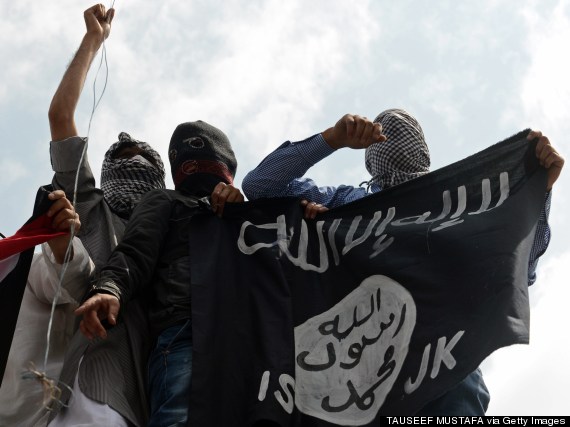
The real problem begins with the stage of religious extremism. Politically, this stage demands the domination of state institutions by the people following a particular religious ideology at the expense of other minorities. It could be a theocratic state like Saudi Arabia, Iran or the Sunni-dominated Iraq of Saddam Hussein, or the Islamic republic of Pakistan. At this stage, one has to have a feeling of animosity and hatred towards other faith systems and their followers. Extremists generally have a revisionist agenda (the concept of Gajwa-e-Hind i.e. re-conquest of India by Islam, nurtured by radical Islamic outfits and individuals), a very high degree of intolerance, hatred, and contempt towards other religious systems. Often, such systems discriminate against a religious minority, persecute them and even nurture political dreams of the ethnic cleansing of minorities. Socially such systems thrive on the strict literal translation of sacred texts in the matters of social regulation and jurisprudence (punishments). Usually, such readings of scriptural injunctions are rigid, anachronistic, out of context, and to serve the socio-political objectives of extremist organisations/governments and individuals. However, in this stage, large-scale violence to secure one's religious and socio-political objectives is not generally prevalent.

The next stage of radicalism is more of a preparatory stage leading someone towards the final stage of terrorist violence. Radicalisation may involve specialised indoctrination or brainwashing programs for specific individuals, who are in the state of religious extremism. Such individuals, by virtue of the degree of their passionate extremism, are considered more suitable to be indoctrinated for committing acts of terrorist violence.

The last stage is of violent extremism or terrorism. At this stage, terrorist organisations and individuals indulge in extreme and most brutal forms of violence to secure their socio-political ends based on their narrow reading of scriptures. The intensity, brutality and frequency of violence - always aimed to strike terror in the minds of common folk -- could vary depending on the strength of cadres and military capabilities.

After the stage of religious fundamentalism, there is a possibility of mild diversion into the spiritual domain. One may realise the futility of rigidity and contempt towards other faiths, for one's own spiritual growth. Such an individual may lose the obsession with religious symbols and rituals, especially if these are in conflict with rationality and the requirements of changing times, while retaining the core philosophical message of the religion.

Counter-terrorism measures must reflect a nuanced understanding of the process in which an individual turns from a "religious person" to a "terrorist". Most followers fall in the second and third categories i.e. "religious" and "religious fundamentalist" so the right kind of policy intervention at these stages will be very helpful in checking the growth of radicalisation. And, it might be very helpful to engage liberal and spiritual religious scholars in such policy interventions as followers will be able to repose their trust in them.

http://m.huffpost.com/in/entry/8985096

Atheism has no moral diementions


When someone points out the crimes of atheist mass murders, they try to blame religons. It is also valid to say that people don’t kill in the name of geology. Does this mean that geology has a moral dimension?

Atheism has no moral dimension; it just has implications in the manner by which we determine morality. Atheism is not a worldview or a philosophy of how to live life. It doesn’t tell us what to do and what not to do, what is right or what is wrong. It is just the belief that there is no god, and therefore leaves the definition of morality up to the individual.

Atheists are free to adopt a philosophy of reason and common moral decency or one of oppression, greed, and cruelty.

History shows they have chosen the latter more than once.

An atheist can say that people don’t kill in the name of atheism, but by the same token, he cannot say that they do good things in the name of atheism either. Atheism is morally agnostic.

To claim moral superiority for atheism because people don’t kill in its name is akin to claiming moral superiority for geology because people don’t kill in its name. This is a nonsensical boast.

RAYMOND T. PETIT: http://www.dispatch.com/content/stories/editorials/2015/12/29/1-atheism.html


~ ~ ~ ~ ~ ~ ~ ~ ~ ~ ~ ~ ~ ~ ~ ~ ~  ~ ~ ~  ~
Humanity, Religion, Culture, Science, Peace
 A Project of 
Peace Forum Network
Peace Forum Network Mags
Books, Articles, Blogs, Magazines,  Videos, Social Media
Overall 2 Million visits/hits

Islam & Secularism


Some people consider Atheism [الإلحاد] and Secularism [علمانية, دنيوية] as same, which is wrong. Atheism is based upon disbelief in God, where as Secularism is a political ideology which keeps a balance between faith and political affairs of state by keeping them separated. The term secularism could be defined in three distinct ways:
One is atheism. Karl Marx, French sociologist Emile Durkheim and German sociologist and philosopher Max Weber believed that, through functional differentiation, scientific knowledge and de-mystification, the world moves toward atheism and disbelieving in God. Their view has, of course, turned out to be false.

Secularism has also been believed to mean limiting religion to the private domain. This is impossible, because religion is not like special clothes that we can set aside as soon as we leave home. Such eminent sociologists as Robert Bellah, Charles Taylor, Jürgen Habermas and José Casanova believe that the presence of religion in the public domain is useful and desirable. But explaining and justifying any claim in the public domain must be done by resorting to reasoning, not religious texts and holy people.

The third meaning of secularism, is separation of church and state, or religion from government -- not atheism or elimination of religion from the public discourse.

The etymology of the Arabic word for secularism can be controversial in itself. Some scholars pointed out that originally there was no Arabic term to describe the secular and secularism and therefore some neologisms were spawned. Secularism was translated into Arabic either as "‘alamaniyah" [علمانية], which is derived from "‘alam(world or universe)", or as "‘ilmaniyah"[علمانية], which is derived from "‘ilm(science or knowledge)". The term "‘alamaniyah" [علمانية] first appeared at the end of the nineteenth century in the dictionary Muhit al-Muhit written by the Christian Lebanese scholar Butrus al-Bustani. It has been suggested that the use of other translations, such as "la diniyah [لا دينيه] (non-religious)", that implied the exclusion or marginalisation of religion, would have met with outright rejection by Muslims, for whom (according to the principle al-Islam din wa-dawlah, [دين ودولة ]Islam is religion and state) the division between the temporal and the spiritual is literally unthinkable.
Moreover, some refer to "‘almaniyyah" [علمانية] which is derived from the word "‘alam", and others prefer "dunyawiyyah" [دنيويه], which is derived from "dunya(دنيا temporal)", in contrast to "dini(ديني religious)".

The definition and application of Secularism, especially the place of religion in society, varies among Muslim countries as it does among European countries and the United States. Secularism is often used to describe the separation of public life and civil/government matters from religious teachings and commandments, or simply the separation of religion and politics. Secularism in Muslim countries is often contrasted with Islamism, and secularists tend to seek the ideology of promoting the secular political and social values as opposed to Islamic one. Among western scholars and Muslim intellectuals, there are some debates over Secularism which include the understanding of political and religious authorities in the Islamic world and the means and degree of application of sharia in legal system of the state.
As the concept of Secularism varies among secularists in the Muslim world, reactions of Muslim intellectuals to the pressure of Secularization also varies. On the one hand, Secularism is condemned by some Muslim intellectuals who do not feel that religious influence should be removed from the public sphere. On the other hand, Secularism is claimed by others to be compatible with Islam. For example, the quest for Secularism has inspired some Muslim scholars who argue that secular government is the best way to observe sharia; "enforcing [sharia] through coercive power of the state negates its religious nature, because Muslims would be observing the law of the state and not freely performing their religious obligation as Muslims,"[citation needed] says Abdullahi Ahmed An-Na'im, a professor of law at Emory University and author of "Islam and the secular state : negotiating the future of Shariʻa". Moreover, some scholars argue that secular states have existed in the Muslim world since the Middle Ages.
Nevertheless, many Muslim-majority countries define themselves as or are regarded as secular, and many of them have a dual system in which Muslims can bring familial and financial disputes to sharia courts. The exact jurisdiction of these courts varies from country to country, but usually includes marriage, divorce, inheritance, and guardianship. [ http://en.wikipedia.org/wiki/Islam_and_secularism ]
Keeping in view wide divergent views, both may be viewed/read, some are referred here for proper comprehension of the issue:
Mutual friends: secularism and Islam:
On the first page of his book, Islam and the Secular State, Abdullahi an-Na'im writes: "In order to be a Muslim by conviction and free choice, which is the only way one can be a Muslim, I need a secular state." http://www.theguardian.com/commentisfree/belief/2009/apr/14/religion-islam-secularism
Secularism is opposed to Islam:
The prominent Muslim scholar Sheikh Yusuf Al-Qaradawi, in his book How the Imported Solutions Disastrously Affected Our Muslim Nation, states the following:
Secularism may be accepted in a Christian society but it can never enjoy a general acceptance in an Islamic society. The New Testament itself divides life into two parts: one for God, or religion, the other for Caesar, or the state: "Render unto Caesar things which belong to Caesar, and render unto God things which belong to God" (Matthew 22:21). As such, a Christian could accept secularism without any qualms of conscience. Furthermore, Westerners, especially Christians, have good reasons to prefer a secular regime to a religious one. Their experience with "religious regimes" - as they knew them - meant the rule of the clergy, the despotic authority of the Church, and the resulting decrees of excommunication and the deeds of forgiveness, i.e. letters of indulgence.

For Muslim societies, the acceptance of secularism means something totally different. Since Islam is a comprehensive system of `Ibadah (worship) and Shari`ah (legislation), the acceptance of secularism means abandonment of Shari`ah, a denial of the Divine guidance and a rejection of Allah’s injunctions. It is a total falsification to claim that Shari`ah is not proper to the requirements of the present age. The acceptance of a legislation formulated by humans means a preference of the humans’ limited knowledge to the Divine guidance: [Say! Do you know better than Allah?] (Al-Baqarah 2: 140).


For this reason, the call for secularism among Muslims is atheism and a rejection of Islam. Its acceptance as a basis for rule in place of Shari`ah is a downright apostasy. The silence of the masses in the Muslim world about this deviation has been a major transgression and a clear-cut instance of disobedience that has led to a sense of guilt, remorse, and inward resentment, all of which have generated discontent, insecurity, and hatred among committed Muslims because such deviation lacks legality.


Secularism is compatible with the Western concept of God which maintains that after God had created the world, He left it to look after itself. In this sense, God’s relationship with the world is like that of a watchmaker with a watch: he makes it then leaves it to function without any need for him. This concept is inherited from Greek philosophy, especially that of Aristotle who argued that God neither controls nor knows anything about this world. This is a helpless God as described by Will Durant. There is no wonder that such a God leaves people to look after their own affairs. How can He legislate for them when He is ignorant of their affairs? This concept is totally different from that of Muslims.


We Muslims believe that Allah, Glory be to Him, is the sole Creator and Sustainer of the Worlds. He is Omnipotent and Omniscient; that His mercy and bounties encompass everyone and suffice for all. In that capacity, Almighty Allah revealed His divine guidance to humanity, made certain things permissible and others prohibited, commanded people observe His injunctions and to judge according to them. If they reject this guidance and follow their own whims and man-made laws, then they commit transgression against Allah’s laws
. [http://www.onislam.net/english/ask-the-scholar/ideologies-movements-and-religions/175438.html]

"ISLAM AND SECULARISM" By Asghar Ali Engineer (Secular Perspective)
Is Islam compatible with secularism? This question is quite important in the present context, particularly in 21st century. Both non-Muslims and orthodox Muslims feel that Islam is not compatible with secularism. Fundamentalist Muslims totally reject secularism as anti-Islamic and haram. Maulana Maududi, founder of Jamat-e-Islami-e-Hind had said, while leaving for Pakistan in 1948, that those who participated in secular politics were raising flag of revolt against Allah and His Messenger. The Saudi `Ulama, too, denounce secularism as strictly prohibited in Islamic tradition. Read full article >> http://ecumene.org/IIS/csss13.htm
Secularism and How to Deal with it:
Secularism is an ideology which either denies that there is a God, prophethood and revelation or declares that the role of these is limited to the personal and inner life of man and that in the political or social sphere of human life, God, prophethood or revelation cannot by their very nature play any fundamental role. Even a cursory glance through the Qur`an and Hadith is enough to show everyone that this ideology conflicts with the very mind and heart of Islam. Yet in all parts of the Muslim world many "Muslims" are consciously or unconsciously accepting this un-Islamic ideology. There even exist political movements that have either established or are trying to establish secularist systems of government in various Muslim countries: Kemalists in Turkey, Baathists in the Arab world, Mujahideen-e-Khalq in Iran, some groups affiliated with the People`s Party in Pakistan.  Keep readinng >> [ http://www.islamicperspectives.com/Secularism.htm ]
Why Secularism Is Compatible with the Quran and Sunnah -- And an 'Islamic State' Is Not?
Extremist Islamic groups such as ISIS, Boko Haram, al-Qaeda and the al-Nusra Front in Syria, have transformed the holy Quran into a manifesto for war, terrorism and bloodshed. These groups use the most modern weaponry and technology, and their crimes have created worldwide concerns. Their goal is to return the Islamic world to the medieval age.

At the same time, the corrupt dictatorial Arab regimes in the Middle East, particularly the Arab nations of the Persian Gulf, have transformed the democratic Arab Spring into a sectarian war between the Shiites and Sunnis, in order to prevent democracy from taking roots in their own nations.

Simultaneous with such developments, a Western-made "industry" called Islamophobia not only presents the Holy Quran as the manifesto of fundamentalist warmongers (that claim to represent Islam) and their rigid interpretation of its teachings, it also reduces Islam to its skewed "interpretations." This reductionist approach has been popular among the Orientalists. The approach also claims that formation of an Islamic government is a necessary condition for a society to be Islamic. The author will argue in this essay, against these claims >>> http://goo.gl/dIXE8F
Definitions: The State, Secularism And Islam
In his book, Philosophical Investigations, the Austrian-British philosopher Ludwig Wittgenstein states that words have no meaning other than their "applications." Thus, to prevent any confusion, we must first define what we mean by the key concepts that are employed here.

The state is an organized structure that is impersonal, has well-defined boundaries, rules a specific population and has the exclusive right to use legitimate violence. Paul Dragos Aligica, a senior research fellow at George Mason University, puts it this way:

The state is an organization monopolizing the legitimate use of force or claiming a monopoly on the use of coercion in a given geographic area and over a political entity, and possessing internal and external sovereignty. Recognition of the state by other states, and thus its ability to enter into international agreements, is often considered a crucial element of its nature.

The term secularism has been defined in three distinct ways. One is atheism. Karl Marx, French sociologist Emile Durkheim and German sociologist and philosopher Max Weber believed that, through functional differentiation, scientific knowledge and de-mystification, the world moves toward atheism and disbelieving in God. Their view has, of course, turned out to be false.

Secularism has also been believed to mean limiting religion to the private domain. This is impossible, because religion is not like special clothes that we can set aside as soon as we leave home. Such eminent sociologists as Robert Bellah, Charles Taylor, Jürgen Habermas and José Casanova believe that the presence of religion in the public domain is useful and desirable. But explaining and justifying any claim in the public domain must be done by resorting to reasoning, not religious texts and holy people.

The third meaning of secularism, and the one that we use in this article, is separation of church and state, or religion from government -- not atheism or elimination of religion from the public discourse......... keep reading >> http://goo.gl/dIXE8F
452325542

Waging war against Muslim state for political reasons prohibited in Islam:
In books of Hadith, there are a large number of traditions which foretell the setting in of corruption in the Muslim rulers of later times, yet Muslims were strictly forbidden to wage war on them in the name of political reform. The Muslims were rather enjoined to keep their distance from them, to take to the hills (that is, to stay away from political activities) and to devote themselves to tending their sheep and goats. That is to say that they had to abandon the path of political confrontation in favour of continuing their activities in non-political fields, such as education, Da’wah, the service of the Qur’an and Hadith, etc.
In the first phase of Islam, it was Abdullah ibn Zubayr who violated this prohibition. He engaged in an armed confrontation with the Umayyad ruler, Yazid ibn Muawaiya, in the name of reform in politics. It resulted in the loss of precious Muslim lives and resources. At that time, Abdullah ibn Umar, son of the second Caliph and companion of the Prophet, was in Makkah, yet he did not take part in the fighting. Some companions of Abdullah ibn Zubayr met him and asked him to join in the battle. The conversation that took place on this occasion has been recorded in Sahih al-Bukhari under three references.
One account has been thus recorded: Nafe narrates that during the (Fitna) revolt by Ibn Zubayr, two persons came and said to Ibn Umar that people were being killed, while he, the son of Umar (the second caliph) as well as a senior companion of the Prophet, refused to take part in the campaign. They asked him what prevented him from doing so. He replied: “I refrain from joining in this battle because of God’s express command never to shed the blood of one’s brother: it is unlawful.” Both replied: “Has not God enjoined us to fight till persecution (Fitna) ceases?” Abdullah ibn Umar then retorted: “We fought till Fitna ceased. Religion became only for God, and now you want to fight so that Fitna may return, and religion will no longer be for God.” (Fathul Bari, Kitab at-Tafsir, vol. 8, p.32, Kitab al-Fitan Vol. 13, p. 49).
From this account we learn that war against persecution as commanded by God was limited in its scope and of a particular nature. It had to be directed against those leaders who had established a system of religious persecution; who were not ready to grant to believers in monotheism the liberty to practise their faith. The companions of the Prophet waged war against such oppression, first of all in Arabia, and then in major parts of Asia and Africa, and succeeded in bringing it to an end. Thenceforth, believers in Islam had full freedom to practise their religion and to invite others to answer its call.
After the successful conclusion of this movement against religious coercion, the believers began living in an atmosphere of religious freedom. But during the reign of the Umayyads, when the rot of corruption had begun to set in, certain Muslims, referring to this verse of the Qur’an, engaged themselves in armed conflict with the rulers. To all intents and purposes, the battle was for a good cause: they wanted to oust these corrupt caliphs and replace them with men who were virtuous and just. But, in reality, their actions proved counter-productive.
The Prophet Muhammad, may peace be upon him, foresaw that the effort at political reform would, in effect, culminate in nothing but destruction. It would only replace a lesser evil with a greater evil. That is why he had issued a stern, prior warning, expressly commanding his people to confine their activities to non-political fields and to opt for a policy of avoidance as regards corruption in political institutions.
In books of Hadith a number of traditions have been recorded on this subject under the heading of Fitna. It was thanks to these traditions that, after the development of the Islamic sciences (in terms of which commentaries on the traditions were written), religious scholars arrived at a consensus that it was totally unlawful to revolt against an established Muslim government, regardless of how justified such action might appear to be.  
The famous traditionist, Imam al-Nawawi, has commented on the tradition regarding fitna as recorded in Sahih Muslim:
These traditions clearly convey that we should not enter into any confrontation with political rulers. Even if we find in them any major deviation from Islam, our responsibility will be limited purely to the giving of advice in private. According to the consensus of Muslim scholars, so far as revolt and armed confrontation are concerned, even if the rulers in question are corrupt and tyrannical these actions are unlawful (Haram). (Sahih Muslim, with the commentary of an-Nawawi, Kitab al-Imarah, vol. 12, p.229).

From this commentary, we learn that the waging of war against Fitna in no way meant the replacing of non-Muslim governments with Muslim regimes. Its actual purpose was to put an end to the use of intellectual and ideological coercion, so that God’s servants might be at liberty to perform their devotions to God and communicate God’s message in an atmosphere of freedom. Waging war against Muslim rulers will certainly result in a revival of the coercive system, for the rulers will not hesitate to resort to oppression in order to keep their political power intact. The upshot will be that the old Fitna will re-emerge in a new garb. That is why the Prophet Muhammad, may peace be upon him, strictly forbade such action and Islamic scholars arrived at a consensus that according to the Islamic Shari’ah, insurrection against an established Muslim government was unlawful. Even in unavoidable situations, Muslims are required to strive peacefully and to refrain entirely from launching violent movements aimed at unseating those in positions of authority.
This is undoubtedly an important Islamic injunction. It has great wisdom behind it. To put it briefly, the kings of ancient times made every effort to politicize religion. And when they found the adherents of any given religion placing obstacles in their path, they went all out to crush them. In a similar way, even today, certain factions attempt to Islamize governments, then those rulers who become their targets, wreak all kinds of havoc on Islamists in order to save their political power.
The solution to this problem, as laid down in Islam, is to refrain from setting oneself on a collision course with the rulers. If any evil is found in them, the course to adopt is to give advice, privately, at the individual level, and to avoid all public condemnation or armed clashes. This sage counsel was given by Islam, so that the basic task of propagating and consolidating the religion might continue unhampered in non-political fields.
The manner of working of the traditionists gives us a good historical example. The gigantic task of the compilation of the traditions in the first phase of Islam lasted from the time of the Umayyad empire till that of the Abbasid Empire. Without doubt, the rot had set in the Muslim rulers. But the Islamic scholars of this period did not launch any movement against them. Remaining aloof from politics, they continued to serve the cause of the Hadith. It is the result of this wise policy on their part that today we possess in compiled form the precious treasure of the Prophet’s traditions. If the traditions of those days had opted to set themselves up against these Muslim rulers, they would have met the same fate as that of Abdullah ibn Zubayr, Husain ibn Ali, Nafs Zakiyya, etc. any political jihad engaged in by these traditionists would have come to the same disastrous end. All the people concerned would have been assassinated by the rulers,—as had happened with other political opponents. And then the inestimable wealth of the traditions would have been buried along with the traditionists, in whose memories they had been preserved.
From a study of the Qur’an and Hadith, we find that the actual target of a religious mission is the Islamization of the individual rather than the State. The domination of Islam at the level of the state is only an offshoot of the religious mission and not its actual target.
The Qur’an has clearly stated that, for believers, political power is a gift from God, and not a goal to be striven for. That is why the Qur’an observes:
“God has promised those of you who believe and do good works to make them masters in the land as He had made their ancestors before them, to strengthen the faith he chose for them and to change their fears to safety. Let them worship me and serve no other gods besides me. Wicked indeed are they who after this deny Me”(24:55).
The same point has been made in a tradition of the Prophet: Just as you will be, so will be your rulers. (Mishkat al-Masabih).
In actual fact this tradition tells us of a law of nature. The political power of a country depends upon its people. Any system which has the acceptance of the public will perpetuate itself, while a system which is anathema to the people will prove unsustainable. In a truly Islamic society, an un-Islamic political regime cannot take root, and cannot therefore be self-perpetuating. That is why Islam has enjoined the targeting of individuals for Islamic reform. If in any society a large number of people follow Islam, both in the letter and in the spirit, such a society will on its own come under the direction of political power based on Islam. This separation of Da’wah activism and political confrontation was crucial. It was by virtue of this separation that the propagation of Islam continued unhampered for a period of a thousand years after the emergence of Islam, until the number of Muslims rose to one billion. Without this, the great achievement of the dissemination of Islam could never have become a reality.
The wisdom of this teaching of Islam has become clearer than ever today. In present times two revolutions have taken place contemporaneously. After a long historical process, religious freedom has been held to be an irrevocable right of human beings all over the world. Today, the right to believe, practise and propagate any religion of one’s choice has become an established right of human beings. This freedom has only one condition: that in the availing of these rights, one should not engage in violence of any sort. The adoption of violence will render the practice and propagation of one’s religion impossible, whatever the part of the world that might be.

Another great revolution of our times has come in the form of modern communications, which has rendered the spread of Islam much more effective than hitherto. The print and electronic media, as well as other means of communication, have opened all the doors to the global dissemination of the message of Islam. Now the task of Da’wah in the present age has been so greatly facilitated that it seems as rapid and easy as the diffusion of the sun’s rays across the earth.
["Islam Redisciverd" by Molan WaheedudDin Khan, http://aftabkhan-net.blogspot.com/2015/01/rediscovering-islam-with-maulana.html] 

* * * * * * * * * * * * * * * * * * *
Related  Topics:
Why Pakistan, Why Islamic Democracy? 
The percentage of Muslims who say they want Shari’a to be “the official law of the land” varies widely around the world, from fewer than one-in-ten in Azerbaijan (8%) to near unanimity in Afghanistan (99%). But solid majorities in most of the countries surveyed across the Middle Eastand North Africa, sub-Saharan Africa, South Asia and Southeast Asia favour the establishment of Shari’a, including 71% of Muslims in Nigeria, 72% in Indonesia, 74% in Egypt and 89% in the Palestinian territories.
At the same time, the survey finds that even in many countries where there is strong backing for Shari’a, most Muslims favour religious freedom for people of other faiths. In Pakistan, for example, three-quarters of Muslims say that non-Muslims are very free to practice their religion, and fully 96% of those who share this assessment say it is “a good thing.” Yet 84% of Pakistani Muslims favour enshrining Shari’a as official law. These seemingly divergent views are possible partly because most supporters of sharia in Pakistan– as in many other countries – think Islamic law should apply only to Muslims. Moreover, Muslims around the globe have differing understandings of what sharia means in practice.
The survey – which involved more than 38,000 face-to-face interviews in 80-plus languages with Muslims across Europe, Asia, the Middle Eastand Africa – shows that Muslims tend to be most comfortable with using sharia in the domestic sphere, to settle family or property disputes. In most countries surveyed, there is considerably less support for severe punishments, such as cutting off the hands of thieves or executing people who convert from Islam to another faith. And even in the domestic sphere, Muslims differ widely on such questions as whether polygamy, divorce and family planning are morally acceptable and whether daughters should be able to receive the same inheritance as sons.
In most countries surveyed, majorities of Muslim women as well as men agree that a wife is always obliged to obey her husband. Indeed, more than nine-in-ten Muslims in Iraq (92%), Morocco (92%), Tunisia (93%), Indonesia (93%), Afghanistan (94%) and Malaysia (96%) express this view. At the same time, majorities in many countries surveyed say a woman should be able to decide for herself whether to wear a veil.
Overall, the survey finds that most Muslims see no inherent tension between being religiously devout and living in a modern society. Nor do they see any conflict between religion and science. Many favor democracy over authoritarian rule, believe that humans and other living things have evolved over time and say they personally enjoy Western movies, music and television – even though most think Western popular culture undermines public morality.
According to the Pew Research Center’s 2012 report “The World’s Muslims: Unity and Diversity.” The current report focuses on Muslims’ social and political attitudes, and it incorporates findings from both waves of the survey.
Relatively few Muslims say that tensions between more religiously observant and less observant Muslims are a very big problem in their country. In most countries where the question was asked, Muslims also see little tension between members of Islam’s two major sects, Sunnis and Shias – though a third or more of Muslims in Pakistan (34%) and Lebanon (38%) consider Sunni-Shia conflict to be a very big problem.
Support for making Shari’a the official law of the land tends to be higher in countries like Pakistan (84%) and Morocco (83%) where the constitution or basic laws favour Islam over other religions.
In many countries, Muslims who pray several times a day are more likely to support making sharia official law than are Muslims who pray less frequently. In Russia, Lebanon, the Palestinian territories and Tunisia, for example, Muslims who pray several times a day are at least 25 percentage points more supportive of enshrining sharia than are less observant Muslims. Generally, however, there is little difference in support for sharia by age, gender or education.
According to another survey conducted by British High commission in Pakistan published in April 2013more than half of young Pakistanis believe democracy has not been good for their country and nearly 40 percent are in favour of having Islamic Shari’a rule. Just 29 percent chose democracy as the best system for Pakistan, a constitutional Islamic republic, with 38 percent favouring Shari’a, saying it was the best for giving rights and freedom and promoting tolerance. When asked to pick the best political system, both Shari’a and military rule were favoured over democracy. It is evident that the biggest issue facing Pakistan today is the lack of a social consensus over the direction people want the country to go in. Should Pakistan, as a society and state, be organized as a military dictatorship, a theocracy or should it head toward a stronger democratic culture that respects the place of Islam in society? The absence of this consensus is tearing society apart. Hence there is a need to understand the difference between 'Sham, Pseudo democracy’, 'Western democracy'  and true 'Islamic Democracy':  Keep reading >> http://pakistan-posts.blogspot.com/2013/04/shariah-or-democracy-conflict-or.html

The Case for God: By Karen Armstrong

The Case for God is a 2009 book by Karen Armstrong. It is an answer to the recent atheism of Richard Dawkins, Christopher Hitchens, Sam Harris and Daniel Dennett and focuses on the three Abrahamic religions: Judaism, Christianity and Islam from the paleolithic age to the present day. Also included are Buddhism and Hinduism.
Among the themes of the book are apophatic theology and intellectualism versus practice. Armstrong claims that the fundamental reality, later called God, Brahman, nirvana or Tao, transcends human concepts and thoughts, and can only be known through devoted religious practice. In 2009, the book was awarded the Dr. Leopold Lucas Prize by the University of Tübingen  in recognition of its contribution to the fields of theology, philosophy and intellectual history, and for improving international understanding and tolerance between faiths. [Wiki]
¬¬¬¬¬¬¬¬¬¬¬¬¬¬¬¬¬¬¬¬¬¬¬¬¬¬¬¬¬¬¬¬¬¬¬¬¬¬
The Case for God: What , religion really means, Book By Karen Armstrong, Reviewed by Simon Blackburn.
This is an eloquent and interesting book, although you do not quite get what it says on the tin. Karen Armstrong takes the reader through a history of religious practice in many different cultures, arguing that in the good old days and purest forms they all come to much the same thing. They use devices of ritual, mystery, drama, dance and meditation in order to enable us better to cope with the vale of tears in which we find ourselves. Religion is therefore properly a matter of a practice, and may be compared with art or music. These are similarly difficult to create, and even to appreciate.
  1. The Case for God: Karen Armstrong at St Paul's Cathedral - YouTube

    www.youtube.com/watch?v=uEoAdopw_-A‎

    Oct 19, 2012 - Uploaded by StPaulsLondon
    Karen Armstrong, acclaimed author and religious scholar, speaks at St Paul's Cathedral on the topic of her ...
  1. An Evening with Karen Armstrong - YouTube

    www.youtube.com/watch?v=ftuw-kZ8fac‎

    JOne of the world's leading commentators on religious affairs, Karen Armstrong ... The Case for God: Karen ...
But nobody who has managed either would doubt that something valuable has happened in the process. We come out of the art gallery or concert hall enriched and braced, elevated and tranquil, and may even fancy ourselves better people, though the change may or may not be noticed by those around us.
This is religion as it should be, and, according to Armstrong, as it once was in all the world’s best traditions. However, there is a serpent in this paradise, as in others. Or rather, several serpents, but the worst is the folly of intellectualising the practice.
This makes it into a matter of belief, argument, and ultimately dogma. It debases religion into a matter of belief in a certain number of propositions, so that if you can recite those sincerely you are an adept, and if you can’t you fail. This is Armstrong’s principal target.
With the scientific triumphs of the 17th century, religion stopped being a practice and started to become a theory — in particular the theory of the divine architect. This is a perversion of anything valuable in religious practice, Armstrong writes, and it is only this perverted view that arouses the scorn of modern ‘militant’ atheists.
So Dawkins, Dennett, Hitchens and Harris have chosen a straw man as a target. Real religion is serenely immune to their discovery that it is silly to talk of a divine architect.
So what should the religious adept actually say by way of expressing his or her faith? Nothing. This is the ‘apophatic’ tradition, in which nothing about God can be put into words. Armstrong firmly recommends silence, having written at least 15 books on the topic.
Words such as ‘God’ have to be seen as symbols, not names, but any word falls short of describing what it symbolises, and will always be inadequate, contradictory, metaphorical or allegorical. The mystery at the heart of religious practice is ineffable, unapproachable by reason and by language. Silence is its truest expression.
The right kind of silence, of course, not that of the pothead or inebriate. The religious state is exactly that of Alice after hearing the nonsense poem ‘Jabberwocky’: ‘Somehow it seems to fill my head with ideas — only I don’t exactly know what they are.’ If Alice puts on a dog collar, she will be at one with the tradition.
Armstrong is not presenting a case for God in the sense most people in our idolatrous world would think of it. The ordinary man or woman in the pew or on the prayer mat probably thinks of God as a kind of large version of themselves with mysterious powers and a rather nasty temper.
That is the vice of theory again, and as long as they think like that, ordinary folk are not truly religious, whatever they profess. By contrast, Armstrong promises that her kinds of practice will make us better, wiser, more forgiving, loving, courageous, selfless, hopeful and just. Who can be against that?
The odd thing is that the book presupposes that such desirable improvements are the same thing as an increase in understanding — only a kind of understanding that has no describable content. It is beyond words, yet is nevertheless to be described in terms of awareness and truth.
But why should we accept that? Imagine that I come out of the art gallery or other trance with a beatific smile on my face. I have enjoyed myself, and feel better. Perhaps I give a coin to the beggar I ignored on the way in. Even if I do so, there is no reason to describe the improvement in terms of my having understood anything. If I feel more generous, well and good, but the proof of that pudding is not my beatific smile but how I behave.
As Wittgenstein, whose views on religion Armstrong thoroughly endorses, also said, an inner process stands in need of outward criteria. You can feel good without being good, and be good without stretching your understanding beyond words. Her experience of ‘Jabberwocky’ may have improved Alice.
 Silence is just that. It is a kind of lowest common denominator of the human mind. The machine is idling. Which direction it then goes after a period of idling is a highly unpredictable matter.
As David Hume put it, in human nature there is ‘some particle of the dove, mixed in with the wolf and the serpent’. So we can expect that some directions will be better and others worse. And that is what, alas, we always find, with or without the song and dance.
[The Case for God: What , religion really means  By Karen Armstrong Knopf, USA, ISBN 978-0307269188, 432pp. $27.95 . Dawn/Guardian Service, Courtesy Dawn, Books and Authors, 12 July 2009]


Free-eBooks: http://goo.gl/2xpiv
Peace-Forum Video Channel: http://goo.gl/GLh75