Featured Post

SalaamOne NetWork

SalaamOne سلام   is   a nonprofit e-Forum to promote peace among humanity, through understanding and tolerance of religions, cul...

Exporting Iranian revolution to Arabs


After the Iranian Revolution the foreign policy of Iran changed dramatically. In many cases diplomatically inimical Arab nations became more cooperative with Iran, while some formerly supportive nations decreased their support.
Ruhollah Khomeini, leader of the revolution and founder of the Islamic Republic of Iran and its first Supreme Leader declared that, "The concept of monarchy totally contradicts Islam." Therefore, Arab leaders developed a hostile attitude towards the Islamic Republic of Iran. Khomeini's idea of supporting the mustazafeen (those who are wronged or oppressed) as opposed to the mustakbareen (those who are arrogant) led to many problems with neighboring countries due to some Arab regimes being judged by Iranian jurists to be among the mustakbareen. Ayatollah Khomeini was open about his intention to export the revolution to other parts of the Muslim world. Thus, during the early 1980s, Iran was isolated regionally and internationally. This diplomatic and economic isolation intensified during the Iran–Iraq War in which almost all neighboring Arab states, except Syria, supported Iraq logistically and economically. According to some observers,Saddam Hussein fought on behalf of other Arab states that viewed Iran as a potential threat to their stability.
In the late 1980s and early 1990s, the revolutionary zeal cooled and a degree of pragmatism was adopted by Iranian policy makers. During the presidency of Akbar Hashemi and Mohammad Khatami, Iranian foreign policy switched to reducing international tensions and Iran tried to normalize its relations with its Arab neighbors. When the United States attacked Iraq in the early 1990s, it promoted Iran's political influence in the Middle East.
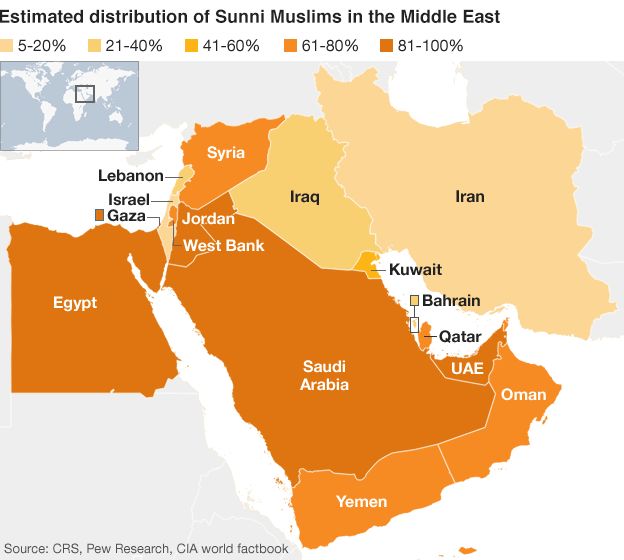
Since 2000 the situation changed completely. The most significant factor was Bush administration's decision to attack Iraq in 2003 which led to the fall of Saddam, a ba'athist leader with pan-Arab sympathies who was determined to balance Shi'a Iran's regional influence. With the deposition of Saddam, Iran found a major obstacle to its expansion removed. This gave Iran a good chance to emerge as a major player in the Middle East. As Richard Haass quoted Iran will be one of the two most powerful states in the region...The influence of Iran and groups associated with it has been reinforced. Iran could find allies in Arab world comprising Syria, Lebanon, Kuwait and Iraq. On the other hand, Saudi Arabia, Jordan and United Arab Emirates united against Iran, with support from the United States. Other Arab countries continued to have normal relations with Iran.
Another aspect of tension between Iran and Arab countries has been sectarianism. During the early days of the Iranian Revolution, Ayatollah Khomeini endeavored to bridge the gap between Shias and Sunnis by forbidding criticizing the Caliphs who preceded Ali. He also declared it permissible for Shiites to pray behind Sunni imams. However, the influence of Iran on Shiite communities outside its borders and the territorial disputes with Arab neighbors among other issues remain sources of tension in Arab-Iranian relations.[citation needed]
Diplomatic cables leaked in 2010 revealed Arab leaders singled out Iran as the greatest threat to regional stability, yet refuse to speak publicly, telling US diplomats in private, they'd face domestic troubles if they were seen as siding with the West against a Muslim country. The cables showed that Saudi Arabia and Bahrain supported a military attack against Iran aimed to stop the Iranian nuclear program.
On January 4, 2016, Saudi Arabia and Bahrain severed diplomatic ties with Iran. Saudi Arabia cited attacks on the Saudi embassy in Tehran following predominantly Sunni Saudi Arabia's execution of a Shiite cleric. Bahrain cited Iran's "blatant and dangerous interference" in Bahrain and other Arab countries. Read full article at Wikipedia >>>
Read English translation below.....
ایران سے عرب ممالک میں 'انقلاب کی برآمد'
لبنان - حسن فحص
انیس سو پچاسی کے اوخر میں ایرانی قیادت نے پاسداران اسلامی انقلاب کے زیرانتظام "ورلڈ لبریشن موومنٹس بیورو – دفتر سازمانهائے أزادى بخش" کو بند کرکے ان تحریکوں کے ساتھ رابطے کی ذمہ داری وزارت خارجہ کے حوالے کردی۔ اس وقت علی ولایتی وزیر خارجہ، میر حسین موسوی وزیراعظم اور علی خامنہ ای ایران کے صدر تھے۔
اس فیصلے کے بعد تہران میں لبریشن موومنٹس کے دفاتر پر پابندیوں کے حوالے سے اقدامات کا آغاز ہوا جن کا نتیجہ بالآخر ایران سے ان تحریکوں کے نکل جانے پر ہوا۔ تاہم عراقی اور افغان تحریکوں کو مستقبل میں ان کے خصوصی کردار کی وجہ سے باقی رکھا گیا۔ بعد ازاں یہ کردار 1988 اور 2003 میں عراقیوں اور 2001 میں افغانوں کے ساتھ واضح ہوگیا۔ اس کے علاوہ فلسطینی سفارت خانے کو بھی برقرار رکھا گیا تاکہ ایران کی نگرانی میں پروان چڑھنے والی تنظیموں کے مفاد میں فلسطین کے ساتھ تعلق استوار کیا جائے۔
بعض میدانوں کی خصوصیت
یہ بات بالکل واضح ہے کہ شروع سے ہی لبنان کے ساتھ خصوصی تعلق رکھا گیا۔ لبنانی بحران میں فوجی پاسداران کے ادارے کی جلد اور براہ راست مداخلت کا ایرانی حکمت عملی سے گہرا تعلق تھا کیوں کہ وہ لبریشن موومنٹس کے لیے بہترین میدان تھا۔ بالخصوص 1982 میں اسرائیلی حملے اور اس کے بعد ایرانی فورس کے لبنان بھیجے جانے کے بعد۔ تاہم اس منصوبے کی راہ میں بھی دو بنیادی رکاوٹیں تھیں :
پہلی : خمینی نے "سب سے پہلے ایران" کے نعرے کے تحت ایرانی فوجیوں کی بڑی تعداد کو نہ بھیجنے کا فیصلہ کیا کیوں کہ ایران کو عراق میں صدام حسین کی حکومت کے ساتھ جنگ کا سامنا تھا۔
دوسری : اس وقت کے شامی صدر حافظ الاسد نے دمشق پہنچنے والے ایرانی فوج کے ہراول دستے کے تقریبا 4 ہزار اہل کاروں کو لبنان کی سرحد تک پہنچنے سے روک دیا تھا۔
اس کے مقابل تہران میں ان تحریکوں کے نمائندوں کا نظر آنا ختم ہوگیا جو جزیرہ عرب میں انقلاب لانے کی کوششیں کررہی تھیں جن میں بحرین، کویت اور دیگر عرب ممالک شامل ہیں۔
اس کے علاوہ دیگر تحریکوں مثلا جنوبی امریکا کے انقلابی، پولیساریو تحریک، الجزائر کے انقلابی، مصری انقلابی، یورپی بائیں بازو کی جماعتیں اور اسپین میں باسک تنظیم وغیرہ کے نمائندے بھی ایران سے کوچ کرگئے۔
آزادی کی عالمی تحریکوں کے ساتھ تعلق محدود کرنے کے ایرانی فیصلے سے تین میدانوں کو مستثنی رکھا گیا جو ایرانی قیادت کے لیے تزویراتی گہرائی کی حیثیت رکھتے تھے۔ ان میں ایک میدان تو افغانستان تھا جہاں شمالی اتحاد سے تعلق استوار کیا گیا۔
دوسرا میدان عراق تھا جہاں سپریم کونسل برائے اسلامی انقلاب تشکیل دی گئی۔ آغاز میں اس کونسل میں ایران میں موجود تمام اسلامی گروپ شامل تھے۔ تاہم بعد میں ان گروپوں کے اندر بعض اختلافات بھی سامنے آئے اور پھر محمد باقر الحکیم نے اس سپریم کونسل کی قیادت سنبھال لی۔ اس دوران پاسداران انقلاب کے خصوصی حلقوں نے عراق میں کرد جماعتوں کے ساتھ بھی سیکورٹی، عسکری اور سیاسی تعلقات قائم کیے۔ افغانی اور عراقی پتوں کو بچا کر رکھنے کی براہ راست اہمیت 11 ستمبر کے واقعات کے بعد 2001 میں افغانستان میں اور اپریل 2003 میں عراق میں بین الاقوامی مداخلت کے بعد پوری طرح واضح ہوگئی۔
تشکیل اور تربیب
مستثنی رکھا جانے والا تیسرا میدان لبنان تھا.. جہاں ایران کی جانب سے تشکیل دی گئی تنظیم "امت حزب الله" کو امل موومنٹ کے سامنے حقیقی حریف کی شکل میں بدل دیا۔
انیس سو بیاسی میں خمینی کے فیصلے اور شام اور لبنان میں ایرانی توسیع سے متعلق حافظ الاسد کے اندیشوں کے باوجود پاسداران انقلاب کے تقریبا 4 ہزار اہل کار دمشق پہنچ کر سیدہ زینب کے علاقے میں ٹھہر گئے۔ شامی حکومت نے ان اہل کاروں کو الزبدانی کے علاقے میں منتقل کر کے ان کے لیے ایک خاص کیمپ قائم کردیا تاکہ وہ مقامی باشندوں اور ایران کے حامی لبنانی فریقوں تک نہ پہنچ سکیں۔
بعد ازاں شامی حکومت اور ایرانی سفارت خانے کے درمیان ایک معاہدے کے تحت ان ایرانی اہل کاروں کی مقررہ تعداد کو لبنان کے مشرقی میں البقاع کے علاقے بعلبک میں تربیتی کیمپ قائم کرنے کی اجازت دی گئی.. تاکہ اسرائیلی قابض فوجوں کا مقابلہ کرنے والے گروپوں کو تربیت دی جاسکے۔
یہ منتقلی تہران میں وزارت دفاع، پاسداران انقلاب کی قیادت، وزارت خارجہ، خمینی کے انقلاب کے بیورو کے سربراہ اور باسیج فورس کے سربراہ کے درمیان کئی ملاقاتوں کے بعد عمل میں آئی۔ بعد ازاں تہران میں امل موومنٹ کے نمائندے کو بھی شریک کیا گیا جس نے لبنان میں شیعہ فرقے کے اندر امل موومنٹ کے خلاف اور متوازی ایران کے زیرانتظام ایک خصوصی تنظیم قائم کرنے پر آمادگی کا اظہار کیا۔ اس طرح "امت حزب اللہ" کے نام سے یہ تنظیم وجود میں آئی۔
کردار کی بنیاد
پچاسی میں لبنان سے اسرائیل کے جزوی انخلاء نے ایران کو یہ موقع فراہم کردیا کہ وہ "امت حزب اللہ - اسلامی مزاحمت" تشکیل دے کر لبنان میں اپنے رسوخ اور کنٹرول کو مضبوط بنائے۔ یہ نئی جماعت اپنی پیچیدہ سیکورٹی، سماجی، سیاسی اور عسکری کارروائیوں کے ذریعے بائیں بازو کی قومی جماعتوں کو مزاحمت کے عمل سے دور کرنے میں کامیاب ہوگئی۔
اس سلسلے میں شام کی ایران کے ساتھ یہ مفاہمت طے پائی کہ لبنان کے میدان کو دو شیعہ فریقوں کے درمیان تقسیم کردیا جائے۔ ان میں ایک تو امل موومنٹ میں شام سے وابستگی رکھنے والا گروپ تھا جو نبیہ بری کی قیادت میں سیاسی سرگرمیوں کا ذمہ دار تھا.. جب کہ دوسرا گروپ ایران سے وابستگی رکھنے والے عناصر پر مشتمل تھا جن کے ذمے سرحدی پٹی پر اسرائیلی وجود کے خلاف عسکری کارروائیاں سرانجام دینا تھا۔
1993 میں "حزب الله" (جس نے اپنے نام سے امت کا لفظ ہٹا دیا تھا) کی جانب سے ادا کیے جانے والے کردار کی اہمیت اس وقت بھرپور انداز سے واضح ہوگئی.. جب ایران نے خود کو خطے کے نئے نقشے سے باہر پایا۔ 1993 میں حزب اللہ اور اسرائیل کے درمیان ہونے والے معرکے نے تصفیے کے عمل کو بڑی حد تک برباد کر دیا یا کم از کم پیچیدہ ضرور بنا دیا.. جس کے بعد علاقائی سطح پر شام اور ایران ایک مرتبہ پھر نمایاں کھلاڑی بن کر ابھرے۔
1996 میں بھی لبنان کے جنوب میں حزب اللہ اور اسرائیل کے درمیان جنگ ایران اور شام کے اس مشترکہ کردار کو مضبوط کرنے کی کوشش ثابت ہوئی۔ دونوں نے اپنے مفادات کو پورا کرنے میں کوئی کسر نہ چھوڑی۔
اپریل 1996 میں حزب اللہ اور اسرائیل کے درمیان طے پائے جانے والے معاہدے کے مطابق فریقین کو ایک دوسرے کے خلاف جارحیت کے صورت میں اپنے دفاع کا حق دیا گیا۔ اس معاہدے کے نتیجے میں حزب اللہ محض ایک ایران نواز لبنانی جماعت کے خول سے باہر آ کر "علاقائی سطح پر کردار کی حامل" جماعت بن گئی۔
اس طرح اس کے سامنے لبنان کے علاوہ پوری عرب دنیا اور دیگر ممالک میں بھی بڑا کردار ادا کرنے کی راہ ہموار ہوگئی۔ ایرانی قیادت کو جو حزب اللہ کے لیے سیاسی، مذہبی اور ثقافتی سائبان شمار کی جاتی ہے.. ولایت فقیہہ کے نظام اور اپنے عالمی منصوبے پر عمل درامد کے سلسلے میں تنظیم سے بڑی توقعات وابستہ ہوگئیں۔
جولائی 2006 میں اسرائیل کے ساتھ جنگ کے دوران اور اس کے بعد خطے کی سطح پر حزب اللہ کا کردار مضبوط ہو کر زیادہ سنجیدہ مرحلے کی طرف منتقل ہوگیا۔ اس لیے کہ نیوکلیئر پروگرام کے حوالے سے ایران کو بچانے کی جنگ تھی.. یہ معاملہ اس وقت ڈیڈلاک کا شکار ہوگیا تھا اور نیوکلیئر پروگرام کے علاوہ عراق، افغانستان اور فلسطین میں کردار کی وجہ سے امریکا اور مغربی ممالک کی جانب سے ایران کے خلاف بھرپور ممکنہ جنگ کی دھمکیاں عروج پر پہنچ گئیں تھیں۔
کرداروں کی تقسیم
1997 ایران کے لیے ایک اہم سال تھا جب محمد خاتمی نے ملک کی صدارت سنبھالی۔ اس سے قبل عالمی برادری کے ساتھ ایران کے تعلقات انتہائی نازک مرحلے میں داخل ہوچکے تھے۔ ایران پر جرمنی اور ارجنٹائن میں دہشت گرد کارروائیوں کا الزام عائد کرکے یورپی ممالک نے اس کے بائیکاٹ کا اعلان کرتے ہوئے وہاں سے اپنے سفارت کاروں کو واپس بلالیا۔
مغربی دنیا کے سامنے خاص طور پر اور پڑوسی عرب ممالک کے سامنے کشادگی اور خیرسگالی کے جذبے کے اظہار کے لیے ایران کو اطمینان بخش اقدامات کرنے کے ساتھ ساتھ اعتماد کی راہوں کو پھر سے استوار کرنا تھا۔ اس موقع پر خاتمی نے اپنے مصالحانہ خطاب میں عالمی برادری کے ساتھ مکالمے کی فضا سازگار کرنے کا عندیہ دیا۔
اس کے مقابل ایرانی حکومت نے خاتمی کے خطاب کو خطے کی سطح پر میدان میں اپنی صلاحیتوں کے دوبارہ حصول کا موقع شمار کیا اور اصلاح پسند صدر کی جانب سے فراہم کردہ سکون کی فضا کا پورا فائدہ اٹھایا۔
یہاں سے ایران نے براہ راست سیاسی نگرانی کے تحت خطے میں سیاسی اور عسکری قوتوں کے ساتھ دوبارہ تعلق استوار کرنے کا فیصلہ کیا۔ اس سلسلے میں لبنان میں حزب اللہ اور اس کے سکریٹری جنرل حسن نصر اللہ کو مہرہ بنایا گیا.. جس کے بعد بیروت ایرانی فلک پر گھومنے والی فلسطینی قوتوں مثلا حماس اور اسلامی جہاد یہاں تک کہ فلسطینی اتھارٹی کے ساتھ بات چیت کے لیے بھی ملاقات کا مرکز بن گیا۔ اس کے علاوہ سوڈان، یمن اور مصر کے میدانوں میں بھی تعلقات استوار کرنے پر کام کیا گیا۔
لبنان سے شروع کرکے مختلف میدانوں میں سیاسی، سیکورٹی اور فوجی سطح پر سرگرمیوں کو پھر سے فعال بنانے کے نتیجے میں ایران کو ورلڈ لبریشن موومنٹس کے بیورو کو بھی دوبارہ سے متحرک کرنے کا موقع مل گیا جب کہ نہ تو اس کا نام استعمال کرنے کی ضرورت پیش آئی اور نہ ان سرگرمیوں میں اپنے کردار کے حوالے سے براہ راست شک و شبہات کی گنجائش چھوڑی گئی۔
تقریبا چار دہائیوں سے جاری اس انبار سازی کی اہمیت گزشتہ پانچ سالوں میں ایران کے لیے بہت نمایاں ہوگئی.. اس کی وجوہات میں عرب دنیا میں انقلابی لہر کا بیدار ہونا اور خطے کی پیش رفت میں حزب اللہ کا براہ راست داخل ہونا شامل ہیں۔ اس طرح حزب اللہ کا یمن، عراق، بحرین اور یہاں تک کہ مصر اور نائیجیریا میں... اور سب سے زیادہ خطرناک کردار شام میں نمایاں ہوگیا جو ایرانی دائرہ کار میں موجود قوتوں کی سرگرمیوں اور ان کے درمیان رابطے کے محور میں تبدیل ہوگیا... اور یہ ایرانی توسیع پسندی کے بڑے منصوبے کے سلسلے کی ایک اہم کڑی ہے۔
پیر 28 جمادی الاول 1437هـ - 7 مارچ 2016م
رابط مختصر 
http://urdu.alarabiya.net
English Translation by Google:

Aukr administered in nineteen hundred and fifty leaders of the Iranian Islamic Revolutionary Guard "World Liberation Movements Bureau - Office sazmanهayy free unsatisfactory" closed by the Ministry of Foreign Affairs with responsibility for communication these movements. The foreign minister Ali Velayati, Minister Mir Hossein Mousavi, Ali Khamenei, Iran's president.
In Tehran after the initiative of restrictions on the offices of Liberation Movements, which ultimately result in the withdrawal of these movements from Iran. The Iraqi and Afghan campaigns was the cause of their special role in the future. Later it became clear with the Iraqis and Afghans in 2001, 1988 and 2003. The Israeli embassy was maintained in order to establish contact with the Palestinians nurtured in the interest of the monitoring organizations in Iran.
The grounds feature
It is clear that the special relationship with Lebanon began. Why the Lebanese crisis was closely linked to the Iranian strategy of early and direct intervention of the institution of the military elite that was the best field for the Liberation Movements. After the attack, especially in 1982 and then sent to Lebanon by Iranian forces. The project had two main obstacles to:
The first revolution of "Iran first" slogan was the number of soldiers facing war with Iran did not decide to send Iran to the government of Saddam Hussein in Iraq.
Second: The Syrian President Hafez al-Assad had stopped about 4 thousand vanguard of the Iranian military officials arrived in Damascus from reaching Lebanon. It has over its competitors to see the representatives of these movements in Tehran Turks were trying to bring revolution in the Arab world, including Bahrain, Kuwait and other Arab countries.
The other movements such as the South American revolutionary, pulysaryu movement, the Algerian revolution, revolution, European left-wing parties and representatives of the Basque coach Iran've also organized in Spain.
Iran's decision to limit to three areas with the liberation movements were freed who had the status of a strategic depth for the Iranian leadership. If a field has been developed with the Northern Alliance in Afghanistan where he was.
The field was formed the Supreme Council for Islamic Revolution in Iraq where. The Islamist group in Iran were included in the Council. However, some differences emerged within these groups and then Mohammad Baqir al-Hakim took over the leadership of the Supreme Council. The Revolutionary Guards have set up special areas of security, military and political ties with the Kurdish parties in Iraq. Afghan and directly after the events of September 11 to save the addresses in Afghanistan in 2001 and Iraq in April 2003 became fully apparent after the international intervention in Iraq.
Creating and trbyb
The third field was sorry about Lebanon. The organization was formed by Iran, "people turned into Hizb Allah" real rival in front of the Amal Movement.
Since the revolution, despite the decision to extend the Iranian Hafez al-Assad of Syria and Lebanon reached about 4 concerns eighty thousand men stayed in Sayyida Zainab in Damascus between Iranian territory. The Syrian government has set up a special camp for these officials moved alzbdany area so they can not reach the Lebanese parties to support local residents and Iran.
Later, the government was allowed to set up camp in the Iranian embassy in eastern Lebanon's Bekaa balbk fixed number of Iranian officials, under an agreement to groups fighting the Israeli occupation forces. be trained.
The transition between the Defence Ministry in Tehran, led the Revolutionary Guards, Ministry of Foreign Affairs, head of the Khomeini revolution and Basij Force chief of bureau came after several meetings. Later, the participants were representatives of Amal Movement in Tehran, which has agreed to the Shia Amal movement in Lebanon and to establish a special body run parallel to Iran. Such "people come into this entity called Hezbollah".
Role-based
Fifty Israel's partial withdrawal from Lebanon has provided an opportunity for Iran to create "Muslim Hezbollah - Islamic resistance" to strengthen their influence and control in Lebanon. The party succeeded in removing the resistance of the left-wing political parties through their complex security, social, political, and military operations.
The rapprochement with Iran and Syria are scheduled to be divided between the two Shiite parties Lebanon field. One of them was responsible for the political Amal Movement led by an evil prophetess who was affiliated groups in Syria. The second group was composed of elements from Iran, whose ties to Israel's existence rests on the border strip was to carry out military operations against. in 1993, "Hizb Allah" (the importance of the role to be played by the word removed) from the time the nation became clear his name when Iran itself strongly. found out the new maps of the region. In 1993, the battle between Hezbollah and Israel destroyed the settlement process has largely or at least complicate the course of the evening. Iran once again emerged as a leading player at the regional level. 1996 war between Hezbollah and Israel in south Lebanon was the joint effort to strengthen its role of Iran and Syria. Both left no stone unturned to meet their own interests. April 1996, Hezbollah and Israel in accordance with the agreement between the parties was found on the right of self-defense in case of aggression against one another. The agreement resulted in Hezbollah just come out of the shell of a senior pro-Syrian party "has become a" party role at the regional level.
Thus paved the way to Lebanon to play a greater role in the Arab world and other countries. Iranian opposition that led to the political, religious and cultural layers are counted. Guardianship system and the scribes were great expectations associated with the organization in implementing our global plan. During the war with Israel in July 2006 and then regional level, Hezbollah's role shifted towards more serious stage strong. اس لیے کہ نیوکلیئر پروگرام کے حوالے سے ایران کو بچانے کی جنگ تھی.. یہ معاملہ اس وقت ڈیڈلاک کا شکار ہوگیا تھا اور نیوکلیئر پروگرام کے علاوہ عراق، افغانستان اور فلسطین میں کردار کی وجہ سے امریکا اور مغربی ممالک کی جانب سے ایران کے خلاف the full potential threats were climaxed.
Distribution of roles
1997 was a critical year for Iran when Mohammad Khatami became president of the country. Earlier, Iran's relations with the international community had entered a critical stage. The terrorist acts against Germany and Argentina announced its boycott on Iran imposed by the European Union pulled its diplomats from there. Especially neighbor spirit of openness and goodwill in the Arab world expression was the way to build trust with Iran and to give satisfaction measures. اس موقع پر خاتمی نے اپنے مصالحانہ خطاب میں عالمی برادری کے ساتھ مکالمے کی فضا سازگار کرنے کا عندیہ دیا۔ اس کے مقابل ایرانی حکومت نے خاتمی کے خطاب کو خطے کی سطح پر میدان میں اپنی صلاحیتوں کے دوبارہ حصول کا موقع شمار کیا اور اصلاح پسند advantage of the relaxed atmosphere provided by the President. from Iran decides to rebuild relations with political and military powers in the region directly under the political supervision. The piece was Hezbollah and its Secretary General Hassan Nasrallah in Lebanon. The Israeli forces on Beirut after grinding the Iranian orbit, such as Hamas and Islamic Jihad even called for talks with Palestinian Authority was the center. In addition, Sudan, Yemen and Egypt has been working to develop relations in the fields. Starting from Lebanon in various fields of political, security and military activities of the Bureau of the World Liberation Movements in Iran revivify was also an opportunity to mobilize again that neither the need to use his name, and not in the scope of activities directly planted doubts of his character. this repository of nearly four decades Listing has significant importance for Iran in the past five years. the reasons for this include the revolutionary wave in the Arab world to be awakened and entered directly into the region's progress in Lebanon. Thus Hezbollah's changed in Yemen, Iraq, Bahrain, Egypt and Nigeria, and even in the most dangerous part of the activities of the forces that were in Syria and Iran scope axis of communication between them ... and this is an important part of Iranian expansion project.
More >>>>>>

If Christian EU, Why not Muslim Union?

Image result for european union
Writing in 1751 Voltaire described Europe as `a kind of great republic, divided into several states, some monarchical, the others mixed but all corresponding with one another. They all have the same religious foundation, even if divided into several confessions.

They all have the same principles of public law and politics unknown in other parts of the world.` But they also had a lot of war.

Fifty years ago in a way that Charlemagne, Voltaire, William Penn and William Gladstone, the early advocates of European unity, could only dream, a united Europe became a reality.

War, time and time again, has interrupted the pursuit of that objective. Continued civil war across the continent, across the centuries, has pitted French against Germans, British against kallans, Czechs against Poles, Serbs against Austrians and Spaniards against Spaniards reaching its dreadful climax in World Wars One and Two. As Jan Morris has written in her Fifty Years of Europe, `great cities lay in ruin, bridges were broken, roads and railways were in chaos.

Conquerors from East and West flew their ensigns above the seats of old authority, and proud populations would do almost anything for a pack of cigarettes or some nylon stockings. Europe was in shock, powerless, discredited and degraded.

Over the ages no other continent has been the scene of so much war.

Many, if not most, of that generation wondered in 1945 if they`d ever see Europe again in any state of grace or glory, much less unified.

The fact that the urge to bury the hatchet and forge common institutions has come so far in such a short time against such a background is arguably for the world as a whole the twentieth century`s greatest political achievement. (Following the Declaration of Independence it took the US nearly 90 years to establish a fully mature common currency; Europe has travelled the same course in 40 years.)

Yet this astonishing and triumphant success begs the question:
What is the glue that holds it all together? 
After all what is Europe?
Geographically, it is no more than a peninsula protruding from the landmass of Asia. Culturally, it has always been a potage of languages, peoples and traditions. Politically, it is a moveable feast of the 35 sovereign states in post Iron Curtain Europe nine have been created or resurrected since World War Two.

Indeed it is religion, not politics nor the single market and monetary union that through the ages has made Europe one, held it together through its vicissitudes and bloody wars (many, tragically, of religious origin) and provided the common basic morality and common identity that made the EU, makes a single currency workable, the Schengen agreement making passport-free travel possible inside most of Europe today and political union a tangible, if still hotly debated, goal tomorrow.

Broadcasting to a defeated Germany in 1945, the poet T.S.

Elliot reminded his audience that despite the war and `the closing of Europe`s mental frontiers because of an excess of nationalism it is in Christianity that our arts have developed, it is in Christianity that the laws of Europe until recently have been rooted. An individual European may not believe the Christian faith is true; and yet what he says, and makes, and does, will depend on the Christian heritage for its meaning.

Of course, today one can ask what do the contemporary European cults of finance, sports, TV, pop culture, eroticism and Ryanair flying wherever it wants have to do with a Christian heritage? Nevertheless, the fact is through changing fashions, through wars big and small, the idea of Europe that persists is essentially Christian unity of principles and peace in relationships. On its own, economic self interest never would have created the EU and, more recently, monetary union. Economic, legal, social and monetary unions have been driven all along by men and women who were essentially idealistic and visionary. From Jean Monnet, the founder of modern Europe, to Helmut Schmidt, Valery Giscard D`Estaing, Francois Mitterand and Helmut Kohl, the founders and creators of the EU and the euro, the urge to remove the causes of belligerency and to form institutions that would further the development of a common democracy has been a central purpose.

Europe is not first and foremost a political concept or a un ancial convenience. It is an ideal. Thus it will never be complete. We will work at it all our lives, as will future generations.

For the British to decide not to pull out now can only happen if the university-trained elite together with the leadership of the pro-European trade unions (most of them) educate the public on the history and the ideals of Europe.

Extracts from "Big question for UK on European Union", By Jonathan Power 
Dawn.Com

Image result for OIC
Ummah (Arabic: أمة‎) is an Arabic word meaning "community". It is distinguished from Sha'b (Arabic: شعب‎) which means a nation with common ancestry or geography. Thus, it can be said to be a supra-national community with a common history. It is a synonym for ummat al-Islamiyah (Arabic: الأمة الإسلامية‎) (the Islamic Community), and it is commonly used to mean the collective community of Islamic peoples. In the Quran the ummah typically refers to a single group that shares common religious beliefs, specifically those that are the objects of a divine plan of salvation.[1][2] In the context of Pan-Islamism and politics, the word Ummah can be used to mean the concept of a Commonwealth of the Believers (أمة المؤمنين ummat al-mu'minīn).
Image result for OIC

Internet could trigger religious ‘revolution’ as big as birth of Christianity – Lord Sacks

New technology marks turning point in civilisation but so far the voices of ‘anger and violence and hate’ are making best use of it, warns former Chief Rabbi

The internet will transform civilisation as much as the invention of writing or the printing press - even ushering in new types of religion in the world, the former Chief Rabbi, Lord Sacks, has suggested.

But so far religious extremists and terrorists have been quicker to realise the potential of the “revolution” we are living through - leaving moderate voices far behind, he warned.

The prediction came as he was announced as this year’s winner of the £1.1 million Templeton Prize, the world’s biggest annual award, for his work promoting religious understanding.

He follows in the footsteps of the Dalai Lama, Mother Theresa and Archbishop Desmond Tutu as the latest recipient of the prize, which recognises efforts to promote “life’s spiritual dimension”.

Rabbi Lord Jonathan Sacks next to Jennifer Templeton Simpson, grand daughter of Sir John Templeton and Chair of the John Templeton Foundation Board of Trustees

ADVERTISEMENT

Speaking in London he pledged to use the money, from a fund set up by the philanthropist Sir John Templeton more than 40 years ago, to expand his efforts to spread a message of tolerance and forgiveness.

He insisted that, far from religion being in inevitable decline amid scientific progress and social change, most of the world is rapidly being “de-secularised” – something he said “nobody expected”.

Technology, he argued, will itself help transform people’s beliefs in a way that only a handful of breakthroughs in the past - from the development of the first hieroglyphics to the introduction of the printing press – have done.

Pope Francis waves to the crowd from the central balcony of St Peter's Basilica at the Vatican
Mobile phones and iPads lit up St Peter's Square as Pope Francis was elected in 2013  AP

He said: “I think we’re at a turning point in the history of civilisation.

“Turning points happen when there’s a revolution in information technology.

“This has happened four times in human history and we’re living through the fifth,"
Lord Sacks
“This has happened four times in human history and we’re living through the fifth.

“Each time there was a revolution in information technology there was a spiritual revolution.”

He said the first of these had been the invention of cuneiform writing in Mesopotamia and hieroglyphics in Egypt which had led to the birth of civilisation itself.

Clay tablets dating from 350 to 50 BC featuring the wedge-shaped ancient Babylonian cuneiform script.

Later he said, the development of the first alphabet, was linked to the emergence of monotheism. The third big turning point was the move away from scrolls to the first codex books which, he said, coincided with “the birth of Christianity”.

“The fourth was the invention of print, which led to the Reformation, and the fifth is the one we are living through now of instantaneous global communication,” he said.

“We have not yet learnt to turn that into a spiritual plus.

“On the contrary, the best users of the web right now are the people of anger and violence and hate.”

Jihadi John
Mohammed Emwazi - Jihadi John - reached a global audience through terror videos

Asked if this meant the world was “on the cusp” of a new form of religion, he replied: “We are in very early days indeed.

“At the moment most of our responses have been dysfunctional.”

"The best users of the web right now are the people of anger and violence and hate,"
Lord Sacks
He added: “The history of Crusades and holy wars is not a happy history and none of us is free of that historic guilt.

“Jews, Christians, Muslims we have all had violent periods in our history.”

But he predicted that the Sunni and Shia branches of Islam would reach a greater understanding - echoing accommodations reached previously by different factions within Judaism and Christianity when they had recognised those they were fighting were fellow believers.

“This is undoubtedly going to happen within Islam in the 21st Century as Sunni and Shia realise that their primary victims are Muslims,” he said.

“They may be Muslims of a different kind but they are primarily Muslims.

“When faiths reach that realisation they say ‘this cannot be the way that God wants us to take’ and then they come up with a solution and it is always the same solution which is the formal or substantive separation between religion and power – not always between Church and State but always between religion and power.

“So we know that will be the solution within Islam but we’re not in sight of that yet, we are in very, very early days.”

He added that religions could learn from atheists and secularists.

“What the spirituality of secularism brings is a refusal to accept religious justification for suffering in the world, for hierarchy in the world, for exclusion in the world,” he said.

http://www.telegraph.co.uk/news/religion/12181281/Internet-could-trigger-religious-revolution-as-big-as-birth-of-Christianity-Lord-Sacks.html

Quantum Entanglement

An experiment that would allow humans to directly perceive quantum entanglement for the first time has been devised by researchers in Switzerland, and they say the same technique could be used to quantum entangle two people.

While it would be incredibly cool to be the first person ever to witness quantum entanglement with your own eyes, the experiment has been designed to answer some important and far-reaching questions, such as what does quantum entanglement actually look like, and what does it feel like to be entangled with another human being?
Keep reading 》》》 http://flip.it/uLhe9

US Army aims to arm soldiers with lasers in 2023

The prospect of developing laser weapons for soldiers on the battlefield is "very close", according to the US Army, which aims to deploy the weapons in 2023.

Addressing a House subcommittee, Mary J. Miller, deputy assistant secretary of the Army for Research and Technology, said extensive tests were being carried out to ensure lasers could combat threats ranging from rockets and mortars to drones and cruise missiles.

"We're trying to make sure that we understand, before we offer it to a soldier, what it can do and that they understand its capabilities," she told the House Armed Services Committee's Subcommittee on Emerging Threats and Capabilities.

When asked how close the Army was to developing offensive and defensive directed-energy weapons, Ms Miller said they were "very close".

"What we need to do now is build trust with our operators so they understand what lasers can do. Lasers have been promised for an awful long time and they've never held up or delivered what was asked for.

The RADBO system Photo: US Airforce
Photo by: The RADBO system Photo: US Airforce
"So the operators are quite rightfully sceptical, which is why you see the [armed] services taking the lasers out in operational environments and letting them be used by operators so they can understand what the capabilities are.

"While we're looking at the large capabilities that these [lasers] can provide, there will be steps along the way when we spin out lesser capable laser systems that can do good things on smaller platforms and that's something you'll see coming out relatively soon."

Raytheon, one of the leading firms developing the technology, is working on creating a laser for the US Marines that is small enough to be carried on a tactical ground vehicle.

The US AIr Force, meanwhile, has already begun trialling lasers.

Dr. David Walker, deputy assistant secretary of the Air Force for Science, Technology and Engineering, told the committee the Air Force had "spun out lower-power lasers that give us a capability to protect our aircraft flying in theatre today".

"The Air Force is flying every day with lasers under its large aircraft, using them as an infrared countermeasure system ... As we get larger power outputs and better thermal management out of smaller package lasers, (we'll be) able to transition these to other aircraft besides our large transport aircraft.

"And as we build those powers, eventually (we'll) move from defensive capability to uisng that same laser to give us offensive capability as well."

US Naval base tests out Laser weapons Photo: ONR
Photo by: US Naval base tests out Laser weapons Photo: ONR
He also said the Air Force was working with Special Operations Command to develop an offensive laser that would be fitted to AFSOC AC-130 gunships.

The AIr Force said in December that it aimed to put lasers on fighter jets by 2020.

Last summer, it began testing a high-powered laser cannon mounted on an armoured truck to clear air fields of unexploded bombs and booby-traps.

The US Navy has also experimented with the technology, with a laser fitted to the USS Ponce in 2014. US naval commanders believe the technology will enable them to shoot down drones or burn up small attacking speed boats.

Britain joined the laser arms race last year. The MOD said it was looking for defence firms to help build prototype machines “to enhance the UK’s understanding of the capability of a laser based weapon system”.
US Army aims to arm soldiers with lasers in 2023
By Chris Graham, telegraph.co.uk
http://flip.it/IsfoH

India received $14.3 billion from Pakistan in 3 years

India received an estimated $14.36 billion in remittances from Pakistan in last three years, if World Bank’s ‘analytical estimates’ are to be believed. Interestingly, World Bank itself says this is “not an actual official data” and only “an estimate based on logical assumptions”.
The World Bank’s Migration and Remittances Factbook 2016 says, “India was the largest remittance receiving country, with an estimated $72 billion in 2015, followed by China ($64 billion) and the Philippines ($30 billion).”
https://weeklycorporateambassador.wordpress.com/2016/02/28/india-received-14-3-billion-from-pakistan-in-3-years/

The Grand Old man: Anti Racist, Anti Colonialist

In the 19th century, European imperialism colonised most of the African and Asian countries and was perhaps at its zenith regarding its success as a blessing of God. The political power and domination over colonies created a sense of pride and arrogance among European nations to condescend the colonised nations as backward and uncivilised.

The imperialist policies were supported by European intellectuals who provided theories for its justification. It was during this period that the racist theory was circulated among the European societies with the assertion that the white race was endowed with special qualities by nature, and hence was believed to be superior and they had a moral right to rule over the inferior races of African and Asian countries. When Darwin’s book, The Origin of Species, was published in 1859, his theory of evolution was misinterpreted by the racists as social Darwinism and they popularised the idea of hegemony of the white race over non-white nations.

In 1863, John Crawfurd (d.1868), the president of Ethnological Society of London delivered a lecture which was attended by the top intellectuals of the city. The objective of his lecture was to justify the rule of the white races in the colonies on the basis of their superiority in knowledge of technology and culture.

Dadabhai Naoroji was one of the founding members of the Indian National Congress, the first British Asian MP to be elected in 1892 and Mr Jinnah’s mentor and confidant
Among the audience sat Dadabhai Naoroji, an Indian, who was greatly disturbed by the logic of racial superiority of the whites and decided to respond to the lecture. In the same hall, before the same audience, Naoroji logically rejected the argument of John Crawfurd and presented his views that there was no difference among different races while each had the potential and the energy to survive against the odds and expressed its creativity in order to accomplish its design. Therefore, it was wrong to believe that the white races had special qualities and character. Every race had its merits and demerits.

The audience appreciated his lecture and Naoroji emerged as a political figure in London. He decided to take part in politics and joined the Liberal party. He contested for the general elections but did not win the first time; however, in 1892 he contested from the constituency of Finsbury Park and this time won the elections to become the first Indian member of the British Parliament. During his election campaign, Lord Salsbury (prominent conservative statesman and thrice prime minister) had famously referred to him as a black man in one of his remarks in regard to the elections and the constituency of Finsbury. Incidently, being a Parsi, Naoroji was not dark but fairly pale. The remarks went in his favour and his supporters rejected the prime minister’s comments for being racist. In the House of Commons, Naoroji presented the issues of the subcontinent before the House and also supported the Irish cause.

Naoroji was well-educated and understood the impact of colonialism in the subcontinent. In 1901, his book Poverty and un-British Rule in India presented the drain theory explaining how every year the British took away from £30 to £40 million from India and consequently reduced it to poverty. His argument was that many invaders had plundered India’s wealth in the past. However, after their departure, the damage and loss was eventually recovered by the Indians and the wounds inflicted by the invaders would heal with the passage of time. This indicated the energy and potential of the people of the subcontinent. On the other hand, invaders who settled in India kept its wealth within the country. But in case of the British rule, the Indian resources were drained constantly to Britain, leaving the Indian wounds unhealed. As a result, India was not getting any benefits but facing losses becoming poor and backward. His thesis provided a base for the anti-colonial movement in the subcontinent.

Dadabhai was among the founding members of the Indian National Congress and became its president in 1886. He inspired the young generation of Indian politicians including Bal Gangadhar Tilak (d.1920), Gopal Krishna Gokhale (d.1915) and Mohammad Ali Jinnah (d.1948). He died in 1917, leaving a rich political and intellectual heritage in the politics of India which laid the foundation for the want of freedom from the British rule. He was moderate and believed to have adopted constitutional ways and means to struggle for freedom. He belonged to the European-educated generation who had studied European politics and learnt how to use it against the colonial power and how to adjust in the changing environment in order to become a progressive and modern country.

By Mubarak Ali
http://www.dawn.com/news/1242054

This is the most profound explanation I've heard of what it means to detect gravitational waves

"We can hear the cosmos."
The scientific world is still reeling over the first ever detection of ripples in the fabric of space-time, called gravitational waves.
Albert Einstein predicted their existence 100 years ago but never believed we'd actually detect the waves. So right now if you hang around physicists, who can't contain their excitement, you're bound to hear some profound scientific poetry.

One scientist from the Laser Interferometer Gravitational-Wave Observatory (LIGO) experiment, which announced the detection of gravitational waves on February 11, shared what is perhaps the most beautiful and poignant description Tech Insider has heard so far.

Physicist Szabi Marka, a LIGO collaborator based at Columbia University, gushed about the coming scientific revolution to a crowded Columbia lecture hall in New York.

"The skies will never be the same," Marka told the audience, mainly physics students. "Gravitational waves will let us listen to the music of the cosmos."

NASA
Marka's use of the word "listen" is no accident.
Sound travels as waves, and so does a gravitational wave. Except instead of air or water or some other matter, gravitational waves move through a medium that permits everything in it — you, me, the Earth, the stars — to exist at all.

What's more, when something calamitous happens in outer space, like the truly awesome collision of two black holes, the waves warp space as they pass by. Until September 2015, when LIGO first recorded this "music," it was entirely out of reach of humankind.

No telescope that detects light of any wavelength — radio, microwave, infrared, visible, ultraviolet, X-ray, or gamma — could have detected such an event.

NASA
"Imagine that you can touch, you can smell, you can taste, you can see, and one day, one day you can hear. That day is a glorious day," Marka said. "You can appreciate Beethoven … Your life will never be the same again. This is what happened to us. This is what happened to us as a community."
Marka finished: "From today, we can hear the cosmos. We can see the unseen."

Many researchers, like Marka, told us the discovery of gravitational waves is just the beginning of a revolution in science. It's such a radically new paradigm that the detection itself brought with it a (growing) list of firsts.

"We're humans, we're curious, and on a quest to understand such weird things that are a big part of our universe," Kip Thorne, a physicist at Caltech and a cofounder of LIGO, told Tech Insider. "It's a quest that's part of dream of humanity that goes back to a child's earliest days."

This is the most profound explanation I've heard of what it means to detect gravitational waves
By Dave Mosher, businessinsider.com
http://flip.it/diWnB

Artificial Intelligence (AI) 'could leave half of world unemployed

Scientist Moshe Vardi tells colleagues that change could come within 30 years, with few professions immune to effect of advanced artificial intelligence.
Machines could put more than half the world’s population out of a job in the next 30 years, according to a computer scientist who said on Saturday that artificial intelligence’s threat to the economy should not be understated.

Expert Moshe Vardi told the American Association for the Advancement of Science (AAAS): “We are approaching a time when machines will be able to outperform humans at almost any task.

“I believe that society needs to confront this question before it is upon us: if machines are capable of doing almost any work humans can do, what will humans do?”

Physicist Stephen Hawking and the tech billionaires Bill Gates and Elon Musk issued a similar warning last year. Hawking warned that AI “could spell the end of the human race” and Musk said it represents “our biggest existential threat”.

The fear of artificial intelligence has even reached the UN, where a group billing itself the Campaign to Stop Killer Robots met with diplomats last year.

Vardi, a professor at Rice University and Guggenheim fellow, said that technology presents a more subtle threat than the masterless drones that some activists fear. He suggested AI could drive global unemployment to 50%, wiping out middle-class jobs and exacerbating inequality.

Unlike the industrial revolution, Vardi said, “the AI revolution” will not be a matter of physically powerful machines that outperform human laborers, but rather a contest between human wit and mechanical intelligence and strength. In China the question has already affected thousands of jobs, as electronics manufacturers, Foxconn and Samsung among them, develop precision robots to replace human workers.

In his talk, the computer scientist alluded to economist John Maynard Keynes’ rosy vision of a future in which billions worked only a few hours a week, with intelligent machines to support their easy lifestyles – a prediction embraced wholesale by Google head of engineering Ray Kurzweil, who believes “the singularity” of super-AI could bring about utopia for a future hybrid of mankind.

Vardi insisted that even if machines make life easier, humanity will face an existential challenge.

“I do not find this a promising future, as I do not find the prospect of leisure-only life appealing,” he said. “I believe that work is essential to human wellbeing.”

Computer scientist Bart Selman told reporters at the conference that as self-driving cars, “household robots, service robots” and other intelligent systems become more common, humans will “sort of be in a symbiosis with those machines, and we’ll start to trust them and start to work with them”.

Selman, a professor at Cornell University, said: “Computers are basically starting to hear and see the way humans do,” thanks to advances in big data and “deep learning”.

Vardi predicted that driving will be almost fully automated in the next 25 years, and asked, for all the benefits of technology, “what can humans do when machines can do almost everything?”

He said that technology has already massively changed the US economy in the last 50 years. “We were all delighted to hear that unemployment went down to 4.8%” this month, he said, “but focusing on the monthly job report hides the fact that for the last 35 years the country has been in economic crisis.”

Citing research from MIT, he noted that although Americans continue to drive GDP with increasing productivity, employment peaked around 1980 and average wages for families have gone down. “It’s automation,” Vardi said.

He also predicted that automation’s effect on unemployment would have huge political consequences, and lamented that leaders have largely ignored it. “We are in a presidential election year and this issue is just nowhere on the radar screen.”

He said that virtually no human profession is totally immune: “Are you going to bet against sex robots? I would not.”

Last year, the consultant company McKinsey published research about which jobs are at risk thanks to intelligent machines, and found that some jobs – or at least well-paid careers like doctors and hedge fund managers – are better protected than others. Less intuitively, the researchers also concluded that some low-paying jobs, including landscapers and health aides, are also less likely to be changed than others.

In contrast, they concluded that 20% of a CEO’s working time could be automated with existing technologies, and nearly 80% of a file clerk’s job could be automated. Their research dovetails with Vardi’s worst-case scenario predictions, however; they argued that as much as 45% of the work people are paid to do could be automated by existing technology.

Vardi said he wanted the gathering of scientists to consider: “Does the technology we are developing ultimately benefit mankind?

“Humanity is about to face perhaps its greatest challenge ever, which is finding meaning in life after the end of ‘in the sweat of thy face shalt thou eat bread’,” he said. “We need to rise to the occasion and meet this challenge.”

In the US, the labor secretary, Thomas Perez, has told American seaports that they should consider robotic cranes and automatic vehicles in order to compete with docks around the world, despite the resistance of unions. In 2013, two Oxford professors predicted that as much as 47% of the US workforce, from telemarketers to legal secretaries and cooks, were vulnerable to automation.

Dire forecasts such as Vardi’s are not without their critics, including Pulitzer-winning author Nicholas Carr and Stanford scientist Edward Geist. Carr has argued that human creativity and intuition in the face of complex problems is essentially irreplaceable, and an advantage over computers and their overly accurate reputation.

Walking the line between the pessimists and optimists, Martin Ford, author of Rise of the Robots: Technology and the Threat of a Jobless Future, has suggested that automation will come down to politics today, telling National Geographic that if scientists and governments don’t address the issue “for lots of people who are not economically at the top, it’s going to be pretty dystopian”.

By Alan Yuhas in Washington DC, theguardian.com

http://flip.it/C-SDi

From Atheism To Violent Extremism: The 8 Stages Of Religiosity

Today, in the frightening milieu of religious extremism, intolerance, and terrorist attacks, one gets a little uncomfortable even mentioning of the word "religion". Very often, in TV shows and debates I see younger the generation boiling with a rebellion of sorts against religion. Suddenly, people with tilaks, skull caps, robes and gowns have started to symbolise the sources of all the conflict in the world.

While it's true that a bunch of terrorists and extremists pose a grave threat to world peace and human civilisation, I think it is misguided to malign and vilify all those who publicly profess their religious identity and display its symbols. Therefore, it becomes crucial to explore the journey of religiosity to find out the nuances of the phenomenon in which a person travels from atheism or most basic theism to religious extremism.

The earliest stage could be atheism, which means an absence of faith in any omniscient, omnipotent being or supersensible entities like soul and consciousness. It also implies a counter-narrative which propounds the ultimate reality of the material world.

The next stage is agnosticism which is more of an academic concept, expressing one's inability to have any affirmative or negative judgment about entities like God, soul, and cosmos, in a very Kantian sense of the "impossibility of metaphysics".

Theism implies having a very rudimentary sense of belief in supersensible entities. However, in the case of Hinduism, Buddhism, and other oriental traditions, it might not be a correct approach to see things through the prism of theism and atheism, as there is complete oneness between God or ultimate truth and mankind, and all the plurality is illusory and relative. Hinduism incorporates atheism when Charvaka, a die-hard materialist is revered as a great sage in the Mahabharata. But, certainly Hinduism in the majority of its multiple belief systems would fall in theist category because there is a belief in the existence of transcendental entities.

The next stage is of being "religious", where one follows a particular belief system in a very basic manner with a sense of devotion which implies practicing some primary rituals and following the belief system as a part of life. However, at this stage there is no rigidity in one's outlook emanating from one's belief system. For instance, any Hindu or Muslim who adheres to scriptural injunctions and rituals without rigidity and exclusivist tendencies, and with faith in the general underlying principles of the religion and, shows respect or tolerance towards other belief systems, could be called religious.

In the next stage of religious fundamentalism, one witnesses a rigorous form of discipline obeying the fundamentals of religion which could be in the form of routine prayers, rituals, customs and other scriptural injunctions. At this stage, one witnesses a strong element of rigidity and a certain degree of intolerance towards other faiths or even a sense of superiority in one's own belief system over others. Until this stage, one can survive in a multicultural society with some level of discomfort.

The real problem begins with the stage of religious extremism. Politically, this stage demands the domination of state institutions by the people following a particular religious ideology at the expense of other minorities. It could be a theocratic state like Saudi Arabia, Iran or the Sunni-dominated Iraq of Saddam Hussein, or the Islamic republic of Pakistan. At this stage, one has to have a feeling of animosity and hatred towards other faith systems and their followers. Extremists generally have a revisionist agenda (the concept of Gajwa-e-Hind i.e. re-conquest of India by Islam, nurtured by radical Islamic outfits and individuals), a very high degree of intolerance, hatred, and contempt towards other religious systems. Often, such systems discriminate against a religious minority, persecute them and even nurture political dreams of the ethnic cleansing of minorities. Socially such systems thrive on the strict literal translation of sacred texts in the matters of social regulation and jurisprudence (punishments). Usually, such readings of scriptural injunctions are rigid, anachronistic, out of context, and to serve the socio-political objectives of extremist organisations/governments and individuals. However, in this stage, large-scale violence to secure one's religious and socio-political objectives is not generally prevalent.

The next stage of radicalism is more of a preparatory stage leading someone towards the final stage of terrorist violence. Radicalisation may involve specialised indoctrination or brainwashing programs for specific individuals, who are in the state of religious extremism. Such individuals, by virtue of the degree of their passionate extremism, are considered more suitable to be indoctrinated for committing acts of terrorist violence.

The last stage is of violent extremism or terrorism. At this stage, terrorist organisations and individuals indulge in extreme and most brutal forms of violence to secure their socio-political ends based on their narrow reading of scriptures. The intensity, brutality and frequency of violence - always aimed to strike terror in the minds of common folk -- could vary depending on the strength of cadres and military capabilities.

After the stage of religious fundamentalism, there is a possibility of mild diversion into the spiritual domain. One may realise the futility of rigidity and contempt towards other faiths, for one's own spiritual growth. Such an individual may lose the obsession with religious symbols and rituals, especially if these are in conflict with rationality and the requirements of changing times, while retaining the core philosophical message of the religion.

Counter-terrorism measures must reflect a nuanced understanding of the process in which an individual turns from a "religious person" to a "terrorist". Most followers fall in the second and third categories i.e. "religious" and "religious fundamentalist" so the right kind of policy intervention at these stages will be very helpful in checking the growth of radicalisation. And, it might be very helpful to engage liberal and spiritual religious scholars in such policy interventions as followers will be able to repose their trust in them.

http://m.huffpost.com/in/entry/8985096