Oil. That is what the modern Middle Eastern geopolitics have usually been about. Given the vast energy resources that form the backbone of western economies, influence and involvement in the Middle East has been of paramount importance for the former and current imperial and super powers, including France, Britain, USA and the former Soviet Union.

Prior to the discovery of oil, the region had been a hotbed for religious conflict and wars over other rich resources and land. The declining Ottoman Empire paved way for the rising European imperial and colonial powers interested in securing various territories and controlling access to Asia. In more recent times, interest in the region has been due to the energy resources there.
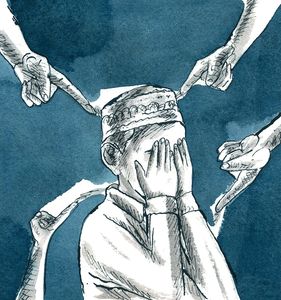
As a result, for centuries, western populations have been acclimatized to a type of propaganda and vilification of the Arab and other people of the Middle East, and of Islam in general. This was especially so during the European colonial times, as so vividly examined by Edward Said, in his well-respected book, Orientalism. This negative stereotyping has served to provide justifications for involvement and to ensure
stabilityfor the
national interestsof the powers that want to be involved in the region.
This cultural stereotyping and racism has occurred in the modern times too. Often, especially in the 1980s, war films depicting an Arab or Islamic group as the bad guys were common place, sometimes reflecting prevailing turmoils at the time. Even in the 1990s, those ideas continued, where the bad guy was often a despotic Arab from one of the
rogue statesand as a result of the terrorist attacks against the US in September 11, 2001 and the resulting
War on terror, such imagery is likely to continue. Over such a long time then, such boundaries of discourse about the Middle East have already been framed. To overstep those boundaries is to be labeled anti-Semitic, neo-Nazi, anti-West or some other equally negative label. For most journalists in the mainstream then, self-censorship is often the course, sometimes unknowingly.
To maintain superiority, control and influence over the region, the West has placed corrupt Arab leaders into positions of power and supported the overthrow of those that are not seen as favorable. This has also served to keep their populations at bay, in return for militarization, power and personal wealth of the elite. Sometimes this has been done in the name of fighting communism. The common theme underlying it though has been the struggle to control access to important resources such as oil.
The Middle East is the most militarized region in the world and most arms sales head there. A suppressed people that sees US influence as a major root cause of the current problems in the Middle East has led to a rise in Islamic militancy, acts of terrorism and anti-west sentiment, anti-US in particular. When looking at some of the actions of the US, it can often be seen why this is unfortunately so.
19 articles on “Middle East” and 2 related issues:
Middle East: A 1300 Year Struggle for Control of Resources
Posted Tuesday, September 18, 2001.
With kind permission from J.W. Smith and the Institute for Economic Democracy, part of chapter 14 from the book, The World’s Wasted Wealth II, (Institute for Economic Democracy, 1994) has been reproduced here. It looks back at the last 1300 years of struggle over control of resources in the Middle East to give some context to various events in recent history.
Read “Middle East: A 1300 Year Struggle for Control of Resources” to learn more.
Middle East and North Africa Unrest
Last updated Thursday, May 12, 2011.
 A wave of protests has erupted throughout the Middle East and North Africa. A combination of the global financial crisis, rising costs of living, high unemployment — especially of educated youth, frustration from decades of living under authoritarian and corrupt regimes, various document leaks revealing more details about how governments around the world are dealing and viewing each other, have all combined in different ways in various countries, leading to a wave of rising anger.
Some protests have become revolutions as governments such as those in Tunisia and Egypt have been overthrown. Others have not got that far but have sometimes been peaceful, other times met with very brutal repression.
Is this a wave of democracy that cannot be stopped, and will forever change the region, and the global power politics?
Read “Middle East and North Africa Unrest” to learn more.
Control of Resources; Supporting Dictators, Rise of Terrorism
Last updated Monday, December 30, 2002.
After the Second World War, with former Imperial Europe weakened, countries around the world had a chance to break for their freedom away from colonial rule. This struggle for freedom and the Cold War had a geopolitical impact on the Middle East. Control of resources and access to oil became paramount, to the extent that dictators and human rights abusers were supported. Within this backdrop, we see another complex reason for the rise of terrorism and extremism.
Read “Control of Resources; Supporting Dictators, Rise of Terrorism” to learn more.
Energy Security
Last updated Sunday, May 15, 2011.
 Energy security is a growing concern for rich and emerging nations alike. The past drive for fossil fuel energy has led to wars, overthrow of democratically elected leaders, and puppet governments and dictatorships.
Leading nations admit we are addicted to oil, but investment into alternatives has been lacking, or little in comparison to fossil fuel investments.
As the global financial crisis takes hold and awareness of climate change increases, more nations and companies are trying to invest in alternatives. But will the geopolitics remain the same?
Read “Energy Security” to learn more.
Crisis in Libya
Posted Monday, April 04, 2011.
 The crisis in Libya comes in the context of wider unrest throughout the Middle East and North Africa. The surge of what looks like spontaneous and ground up pro-democracy protests has been spreading throughout a region long controlled by authoritarian regimes from left and right of the political spectrum, and both pro and anti-West.
Peaceful protests against the long-running oppressive Qadhafi regime in February resulted in a violent crackdown. As the situation quickly escalated ordinary citizens took up arms to help free themselves from Qadhafi’s brutal regime. Despite some military defections, the opposition has generally been a disorganized and out-gunned rebel force.
As Qadhafi’s forces increasingly targeted civilians the opposition appealed to the international community for a no-fly zone to limit or prevent the bloodbath that Qadhafi threatened.
The West appears to have responded with what looks like a genuine humanitarian intervention attempt. Yet, when looked at a bit more deeply, there are many murky — often contradictory — issues coming to the fore that complicate the picture.
These mixed messages make the future for Libya uncertain. Civil war is how some commentators have already started to describe the conflict, which would imply a long drawn out conflict, not a quick fix that the West hoped for.
Read “Crisis in Libya” to learn more.
Syria Unrest
Posted Tuesday, June 05, 2012.
 Following the trend throughout the Middle East, the so-called Arab Spring appears to have spread to Syria. The government crackdown on anti-government demonstrators in Homs and other provincial cities began over a year ago and is thought to have claimed thousands of lives. Attempts at brokering ceasefires have predictably failed.
This page provides coverage of recent events via Inter Press Service’s news feed.
Read “Syria Unrest” to learn more.
Iran
Last updated Tuesday, December 06, 2011.
 Iran has had a turbulent history in just its recent past. From a democracy in the 1950s, Iran seems to have moved backwards, from an authoritarian regime (backed by Britain and the US) that overthrew the democratic one, to a religious fundamentalist regime toppling the authoritarian one and taking an anti-US stance.
The US ended its support for Iran and instead supported Iraq in a brutal war through the 1980s against Iran where over 1 million people died. More recently, Iran was described as being part of an “axis of evil” by US President George Bush, as part of his “war on terror.”
The US has also accused Iran of pursuing the development of nuclear weapons, while Iran says it is only pursuing peaceful development. Internally, movements towards moderate policies and democratic values are gaining traction, but not with hardliners in power trying to hold on. This section looks into these and related issues.
Read “Iran” to learn more.
Iraq Crisis
Last updated Wednesday, August 01, 2007.
 In 2003, the US and UK invaded Iraq under false pretenses (that Iraq had weapons of mass destruction ready for deployment within minutes and posed a great threat to the world, etc.), without the backing of the international community and even with large domestic opposition to war in both those countries.
Since the bombing campaign ended and Saddam Hussein was overthrown, the expected quick democracy, peace, and gratitude to the US quickly became a nightmare and disaster as major religious and ethnic factions started fighting each other and the US/UK occupation forces. The civilian death toll has been immense, with 2006 seeing almost 100 deaths a day.
This section looks into issues during the sanctions following the first Gulf War when the US forced Saddam Hussein to get out of Kuwait, which he invaded, as well as the propaganda build-up to the 2003 invasion and issues since.
Read “Iraq Crisis” to learn more.
Iraq—2003 onwards; War, Aftermath and Post-Saddam
Last updated Sunday, December 12, 2010.
Regardless of international opinion and their failure to secure a second UN resolution authorizing war, the U.S. and U.K. decided to invade Iraq anyway. The Iraqi regime was hardly able to resist and the war ended quickly. However, numerous issues turned up, including,
- Media reporting of the war once again proving controversial as did the intelligence used by US/UK governments;
- That even though democratic transition has been attempted, it has not worked out;
- That religious and ethnic factions have turned on the occupation forces, and on each other as the power vacuum was not fully filled by the coalition-backed new democratic government. Into 2006, for example, some 100 people per day have been dying from suicide bombings, roadside attacks, and other aspects of sectarian violence, and what looks increasingly like civil war;
- The geopolitical aftermath of the attacks, which will have a long lasting effect, especially as Iran and Syria start to gain more influence.
The collection of articles in this section looks at these issues.
Read “Iraq—2003 onwards; War, Aftermath and Post-Saddam” to learn more.
US/UK Buildup for War on Iraq
Last updated Sunday, February 05, 2006.
The build-up to the war on Iraq up to 2003 led to immense media coverage and propaganda. This section looks at the way the US/UK tried to make the case for war based on controversial, often misleading or incorrect messages that the mainstream media often failed to cover adequately, even amidst the immense opposition to the war.
Read “US/UK Buildup for War on Iraq” to learn more.
Iraq—Post 1991 Persian Gulf War/Sanctions
Last updated Sunday, October 02, 2005.
This section provides a series of articles looking at issues during the period of UN-sanctions that were mostly enforced by the US and UK. Issues during this period included the immense civilian death toll due to sanctions. Other issues looked at include various bombing campaigns by coalition forces during the sanctions, and the impact on the environment.
Read “Iraq—Post 1991 Persian Gulf War/Sanctions” to learn more.
Palestine and Israel
Last updated Sunday, February 01, 2009.
Read “Palestine and Israel” to learn more.
Palestine and Israel Introduction
Last updated Wednesday, December 20, 2000.
The Israeli-Palestinian conflict, or Arab-Israeli conflict, or whatever name it goes by, is perhaps one of the more sensitive issues that is discussed. The introduction section talks about the western involvement in the Middle East in general, that forms a backdrop to the situation between Palestine and Israel.
Read “Palestine and Israel Introduction” to learn more.
The Middle East conflict—a brief background
Last updated Sunday, July 30, 2006.
The history of the Middle East region in the past 100 or so years has been violent. Due to the importance of the region primarily due to the natural resources, geopolitical interests have seen immense power-play at work affecting local populations. This section gives a brief time line of the events that have affected the Jewish and Palestinian people from the creation of the modern state of Israel to the conflicts of today. Maps are also provided.
Read “The Middle East conflict—a brief background” to learn more.
The Gaza Crisis
Posted Sunday, February 01, 2009.
 The Israeli offensive on Hamas in the Gaza Strip on 27th December, 2008 ended on January 17, 2009 when both Hamas and Israel announced separate ceasefires, which have turned out to be quite fragile. The 3 week offensive claimed some 1,300 Palestinian lives, 400 of which were children. Another 5,000 were injured including some 1,800 children and 800 women. 13 Israelis were also killed. How did this crisis come about and what were some of the issues raised?
Read “The Gaza Crisis” to learn more.
Crisis in Lebanon, 2006
Last updated Tuesday, August 15, 2006.
According to most mainstream media outlets, the kidnapping of an Israeli soldier by Hezbollah in mid 2006 sparked off the crisis in Lebanon. While Hezbollah has been firing many, many rockets at civilian targets in northern Israel, Israel has retaliated with air strikes at Beirut and elsewhere, bombing civilian infrastructure. The UN has described both sides as committing war crimes. Thousands have become refugees in Lebanon and Israel, as innocent civilians attempt to flee bombardment. Bush and Blair’s stance give the appearance of a green light to Israel to continue its wave of attacks in order to route out Hezbollah, but they too have received criticism from around the world for this. But there were a number of incidents before the kidnapping that contributed to this latest crisis.
Read “Crisis in Lebanon, 2006” to learn more.
Oslo Dead? Violence and Palestinian Uprising in 2000
Last updated Thursday, January 16, 2003.
The end of September and October, 2000, has seen a series of violent events unfold that probably unofficially mark the end of the Oslo accords. The 1993 Oslo Accord, whereby Israel recognized the PLO and gave them limited autonomy in return for peace and an end to Palestinian claims on Israeli territory, has been largely criticized as a one-sided accord, that benefits only Israel, not the Palestinian people.
A former Israeli military general, Ariel Sharon, (accompanied by 1000 soldiers) visited a holy Muslim site, called the Temple Mount by the Israelis, and Haram al Sharif (Noble Sanctuary) by the Muslims and proclaimed it as eternal Israeli territory. Sharon had been accused of massacres in his military days and is well known to all. He is very right wing and against the peace process. This infuriated Palestinians, and led to a series of protests and violence.
Around the world, countries have condemned Israel's excessive violence. Human Rights groups have likewise criticized the Israeli forces.
This article looks at the rising violence, and also introduces other articles looking at media reporting, how Palestinian, Israeli, US, and UN leadership reacted, and at the quality of the media reporting.
Read “Oslo Dead? Violence and Palestinian Uprising in 2000” to learn more.
Palestine/Israel Links to more information
Last updated Monday, November 12, 2001.
This part provides links to many other web sites and resources for more in-depth information. Sources include web site and commentators that are critical of the mainstream, of the US, Israeli and Palestinian leaderships. Many include Jewish commentators, that provide an interesting perspective on the issues as they strongly object to the actions of the Israeli leaders. Palestinian perspectives are also provided.
Read “Palestine/Israel Links to more information” to learn more.
The “Threat” of Islam
Last updated Tuesday, November 11, 2003.
Often when Islam is mentioned negative impressions of fundamentalists, intolerance and terrorism is conjured up; Islamist movements and organizations are automatically linked with terrorism and is blamed for the lack of progress in the Middle East peace process. Islam is stereotyped as a threat to democracy without distinguishing it from terrorism or corrupt leaders who use the ideals of Islam to their own ends.
Read “The “Threat” of Islam” to learn more.
The Strikes against Afghanistan and Sudan
Last updated Thursday, July 15, 1999.
When US embassies in Nairobi and Dar es Salaam were bombed, the US retaliated by bombing two sites suspected of being involved in the appalling bombing which cost the lives of many innocent people. Eight months after the bombing, the US quietly admitted it made a mistake.
Read “The Strikes against Afghanistan and Sudan” to learn more.
More Information on the Middle East
Last updated Saturday, September 27, 2003.
Read “More Information on the Middle East” to learn more.
.
~~~~~~~~~~~~~~~~~~~~~~
 SalaamOne, سلام is a nonprofit e-Forum to promote peace among humanity, through understanding and tolerance of religions, cultures & other human values. The collection is available in the form of e-Books. articles, magazines, videos, posts at social media, blogs & video channels. .Explore the site English and Urdu sections at Indexعلم اور افہام و تفہیم کے لئے ایک غیر منافع بخش ای فورم ہے. علم،انسانیت، مذہب، سائنس، سماج، ثقافت، اخلاقیات اورروحانیت امن کے لئے.اس فورم کو آفتاب خان، آزاد محقق اور مصنف نے منظم کیا ہے. تحقیقی کام بلاگز، ویب سائٹ، سوشل میڈیا، میگزین، ویڈیو چننل اور برقی کتابوں کی صورت میں دستیاب ہے.اس نیٹ ورک کو اب تک لاکھوں افراد وزٹ کر چکے ہیں, مزید تفصیلات>>> Page Index - Salaam One
..........................................................................
مزید پڑھیں:
-
مسلما نوں اور علماء کے نام کھلا خط : آج کے حالات میں مسلم معاشرہ نظریاتی ابتری اور انحطاط کا شکار ہے. مادہ پرستی، دہشت گردی، عدم برداشت، اور جہالت انسانیت، امن اور مذھب کے لیے خطرہ بن چکے ہیں- ان حالات میں صاحب علم و ذی فہم حضرات سے ممکنہ حل کی توقع کی جا سکتی ہے. ہمارا مقصد ہے کہ آپ کی توجہ ضروری حل پذیر مسائل کی طرف مبذول کرنا ہے تاکہ جلد حل تلاش کیا جا سکے- آپ کی توجہ اور مدد سے ہم کوشش کر سکتے ہیں کہ معاشرہ کو اس گہری دلدل سے نکال سکیں. مکمل خط اس <<< لنک پر پڑھیں>>
-
نظریاتی اور فکری کنفیوژن اور ممکنہ حل
- خطبات اقبال - اسلام میں تفکر کا انداز جدید Reconstruction of Religious Thought in Islam- http://goo.gl/lqxYuw
~ ~ ~ ~ ~ ~ ~ ~ ~ ~ ~ ~ ~ ~ ~ ~ ~ ~ ~ ~ ~

* * * * * * * * * * * * * * * * * * *