
Some people consider Atheism [الإلحاد] and Secularism [علمانية, دنيوية] as same, which is wrong. Atheism is based upon disbelief in God, where as Secularism is a political ideology which keeps a balance between faith and political affairs of state by keeping them separated. The term secularism could be defined in three distinct ways:
One is atheism. Karl Marx, French sociologist Emile Durkheim and German sociologist and philosopher Max Weber believed that, through functional differentiation, scientific knowledge and de-mystification, the world moves toward atheism and disbelieving in God. Their view has, of course, turned out to be false.
Secularism has also been believed to mean limiting religion to the private domain. This is impossible, because religion is not like special clothes that we can set aside as soon as we leave home. Such eminent sociologists as Robert Bellah, Charles Taylor, Jürgen Habermas and José Casanova believe that the presence of religion in the public domain is useful and desirable. But explaining and justifying any claim in the public domain must be done by resorting to reasoning, not religious texts and holy people.
The third meaning of secularism, is separation of church and state, or religion from government -- not atheism or elimination of religion from the public discourse.
One is atheism. Karl Marx, French sociologist Emile Durkheim and German sociologist and philosopher Max Weber believed that, through functional differentiation, scientific knowledge and de-mystification, the world moves toward atheism and disbelieving in God. Their view has, of course, turned out to be false.
Secularism has also been believed to mean limiting religion to the private domain. This is impossible, because religion is not like special clothes that we can set aside as soon as we leave home. Such eminent sociologists as Robert Bellah, Charles Taylor, Jürgen Habermas and José Casanova believe that the presence of religion in the public domain is useful and desirable. But explaining and justifying any claim in the public domain must be done by resorting to reasoning, not religious texts and holy people.
The third meaning of secularism, is separation of church and state, or religion from government -- not atheism or elimination of religion from the public discourse.
The etymology of the Arabic word for secularism can be controversial in itself. Some scholars pointed out that originally there was no Arabic term to describe the secular and secularism and therefore some neologisms were spawned. Secularism was translated into Arabic either as "‘alamaniyah" [علمانية], which is derived from "‘alam(world or universe)", or as "‘ilmaniyah"[علمانية], which is derived from "‘ilm(science or knowledge)". The term "‘alamaniyah" [علمانية] first appeared at the end of the nineteenth century in the dictionary Muhit al-Muhit written by the Christian Lebanese scholar Butrus al-Bustani. It has been suggested that the use of other translations, such as "la diniyah [لا دينيه] (non-religious)", that implied the exclusion or marginalisation of religion, would have met with outright rejection by Muslims, for whom (according to the principle al-Islam din wa-dawlah, [دين ودولة ]Islam is religion and state) the division between the temporal and the spiritual is literally unthinkable.
Moreover, some refer to "‘almaniyyah" [علمانية] which is derived from the word "‘alam", and others prefer "dunyawiyyah" [دنيويه], which is derived from "dunya(دنيا temporal)", in contrast to "dini(ديني religious)".
The definition and application of Secularism, especially the place of religion in society, varies among Muslim countries as it does among European countries and the United States. Secularism is often used to describe the separation of public life and civil/government matters from religious teachings and commandments, or simply the separation of religion and politics. Secularism in Muslim countries is often contrasted with Islamism, and secularists tend to seek the ideology of promoting the secular political and social values as opposed to Islamic one. Among western scholars and Muslim intellectuals, there are some debates over Secularism which include the understanding of political and religious authorities in the Islamic world and the means and degree of application of sharia in legal system of the state.
As the concept of Secularism varies among secularists in the Muslim world, reactions of Muslim intellectuals to the pressure of Secularization also varies. On the one hand, Secularism is condemned by some Muslim intellectuals who do not feel that religious influence should be removed from the public sphere. On the other hand, Secularism is claimed by others to be compatible with Islam. For example, the quest for Secularism has inspired some Muslim scholars who argue that secular government is the best way to observe sharia; "enforcing [sharia] through coercive power of the state negates its religious nature, because Muslims would be observing the law of the state and not freely performing their religious obligation as Muslims,"[citation needed] says Abdullahi Ahmed An-Na'im, a professor of law at Emory University and author of "Islam and the secular state : negotiating the future of Shariʻa". Moreover, some scholars argue that secular states have existed in the Muslim world since the Middle Ages.
Nevertheless, many Muslim-majority countries define themselves as or are regarded as secular, and many of them have a dual system in which Muslims can bring familial and financial disputes to sharia courts. The exact jurisdiction of these courts varies from country to country, but usually includes marriage, divorce, inheritance, and guardianship. [ http://en.wikipedia.org/wiki/Islam_and_secularism ]
Keeping in view wide divergent views, both may be viewed/read, some are referred here for proper comprehension of the issue:
Mutual friends: secularism and Islam:
On the first page of his book, Islam and the Secular State, Abdullahi an-Na'im writes: "In order to be a Muslim by conviction and free choice, which is the only way one can be a Muslim, I need a secular state." http://www.theguardian.com/commentisfree/belief/2009/apr/14/religion-islam-secularism
Secularism is opposed to Islam:
The prominent Muslim scholar Sheikh Yusuf Al-Qaradawi, in his book How the Imported Solutions Disastrously Affected Our Muslim Nation, states the following:
Secularism may be accepted in a Christian society but it can never enjoy a general acceptance in an Islamic society. The New Testament itself divides life into two parts: one for God, or religion, the other for Caesar, or the state: "Render unto Caesar things which belong to Caesar, and render unto God things which belong to God" (Matthew 22:21). As such, a Christian could accept secularism without any qualms of conscience. Furthermore, Westerners, especially Christians, have good reasons to prefer a secular regime to a religious one. Their experience with "religious regimes" - as they knew them - meant the rule of the clergy, the despotic authority of the Church, and the resulting decrees of excommunication and the deeds of forgiveness, i.e. letters of indulgence.
For Muslim societies, the acceptance of secularism means something totally different. Since Islam is a comprehensive system of `Ibadah (worship) and Shari`ah (legislation), the acceptance of secularism means abandonment of Shari`ah, a denial of the Divine guidance and a rejection of Allah’s injunctions. It is a total falsification to claim that Shari`ah is not proper to the requirements of the present age. The acceptance of a legislation formulated by humans means a preference of the humans’ limited knowledge to the Divine guidance: [Say! Do you know better than Allah?] (Al-Baqarah 2: 140).
For this reason, the call for secularism among Muslims is atheism and a rejection of Islam. Its acceptance as a basis for rule in place of Shari`ah is a downright apostasy. The silence of the masses in the Muslim world about this deviation has been a major transgression and a clear-cut instance of disobedience that has led to a sense of guilt, remorse, and inward resentment, all of which have generated discontent, insecurity, and hatred among committed Muslims because such deviation lacks legality.
Secularism is compatible with the Western concept of God which maintains that after God had created the world, He left it to look after itself. In this sense, God’s relationship with the world is like that of a watchmaker with a watch: he makes it then leaves it to function without any need for him. This concept is inherited from Greek philosophy, especially that of Aristotle who argued that God neither controls nor knows anything about this world. This is a helpless God as described by Will Durant. There is no wonder that such a God leaves people to look after their own affairs. How can He legislate for them when He is ignorant of their affairs? This concept is totally different from that of Muslims.
We Muslims believe that Allah, Glory be to Him, is the sole Creator and Sustainer of the Worlds. He is Omnipotent and Omniscient; that His mercy and bounties encompass everyone and suffice for all. In that capacity, Almighty Allah revealed His divine guidance to humanity, made certain things permissible and others prohibited, commanded people observe His injunctions and to judge according to them. If they reject this guidance and follow their own whims and man-made laws, then they commit transgression against Allah’s laws. [http://www.onislam.net/english/ask-the-scholar/ideologies-movements-and-religions/175438.html]
Keeping in view wide divergent views, both may be viewed/read, some are referred here for proper comprehension of the issue:
Mutual friends: secularism and Islam:
On the first page of his book, Islam and the Secular State, Abdullahi an-Na'im writes: "In order to be a Muslim by conviction and free choice, which is the only way one can be a Muslim, I need a secular state." http://www.theguardian.com/commentisfree/belief/2009/apr/14/religion-islam-secularism
Secularism is opposed to Islam:
The prominent Muslim scholar Sheikh Yusuf Al-Qaradawi, in his book How the Imported Solutions Disastrously Affected Our Muslim Nation, states the following:
Secularism may be accepted in a Christian society but it can never enjoy a general acceptance in an Islamic society. The New Testament itself divides life into two parts: one for God, or religion, the other for Caesar, or the state: "Render unto Caesar things which belong to Caesar, and render unto God things which belong to God" (Matthew 22:21). As such, a Christian could accept secularism without any qualms of conscience. Furthermore, Westerners, especially Christians, have good reasons to prefer a secular regime to a religious one. Their experience with "religious regimes" - as they knew them - meant the rule of the clergy, the despotic authority of the Church, and the resulting decrees of excommunication and the deeds of forgiveness, i.e. letters of indulgence.
For Muslim societies, the acceptance of secularism means something totally different. Since Islam is a comprehensive system of `Ibadah (worship) and Shari`ah (legislation), the acceptance of secularism means abandonment of Shari`ah, a denial of the Divine guidance and a rejection of Allah’s injunctions. It is a total falsification to claim that Shari`ah is not proper to the requirements of the present age. The acceptance of a legislation formulated by humans means a preference of the humans’ limited knowledge to the Divine guidance: [Say! Do you know better than Allah?] (Al-Baqarah 2: 140).
For this reason, the call for secularism among Muslims is atheism and a rejection of Islam. Its acceptance as a basis for rule in place of Shari`ah is a downright apostasy. The silence of the masses in the Muslim world about this deviation has been a major transgression and a clear-cut instance of disobedience that has led to a sense of guilt, remorse, and inward resentment, all of which have generated discontent, insecurity, and hatred among committed Muslims because such deviation lacks legality.
Secularism is compatible with the Western concept of God which maintains that after God had created the world, He left it to look after itself. In this sense, God’s relationship with the world is like that of a watchmaker with a watch: he makes it then leaves it to function without any need for him. This concept is inherited from Greek philosophy, especially that of Aristotle who argued that God neither controls nor knows anything about this world. This is a helpless God as described by Will Durant. There is no wonder that such a God leaves people to look after their own affairs. How can He legislate for them when He is ignorant of their affairs? This concept is totally different from that of Muslims.
We Muslims believe that Allah, Glory be to Him, is the sole Creator and Sustainer of the Worlds. He is Omnipotent and Omniscient; that His mercy and bounties encompass everyone and suffice for all. In that capacity, Almighty Allah revealed His divine guidance to humanity, made certain things permissible and others prohibited, commanded people observe His injunctions and to judge according to them. If they reject this guidance and follow their own whims and man-made laws, then they commit transgression against Allah’s laws. [http://www.onislam.net/english/ask-the-scholar/ideologies-movements-and-religions/175438.html]
"ISLAM AND SECULARISM" By Asghar Ali Engineer (Secular Perspective)
Is Islam compatible with secularism? This question is quite important in the present context, particularly in 21st century. Both non-Muslims and orthodox Muslims feel that Islam is not compatible with secularism. Fundamentalist Muslims totally reject secularism as anti-Islamic and haram. Maulana Maududi, founder of Jamat-e-Islami-e-Hind had said, while leaving for Pakistan in 1948, that those who participated in secular politics were raising flag of revolt against Allah and His Messenger. The Saudi `Ulama, too, denounce secularism as strictly prohibited in Islamic tradition. Read full article >> http://ecumene.org/IIS/csss13.htm
Secularism and How to Deal with it:
Secularism is an ideology which either denies that there is a God, prophethood and revelation or declares that the role of these is limited to the personal and inner life of man and that in the political or social sphere of human life, God, prophethood or revelation cannot by their very nature play any fundamental role. Even a cursory glance through the Qur`an and Hadith is enough to show everyone that this ideology conflicts with the very mind and heart of Islam. Yet in all parts of the Muslim world many "Muslims" are consciously or unconsciously accepting this un-Islamic ideology. There even exist political movements that have either established or are trying to establish secularist systems of government in various Muslim countries: Kemalists in Turkey, Baathists in the Arab world, Mujahideen-e-Khalq in Iran, some groups affiliated with the People`s Party in Pakistan. Keep readinng >> [ http://www.islamicperspectives.com/Secularism.htm ]
Why Secularism Is Compatible with the Quran and Sunnah -- And an 'Islamic State' Is Not?
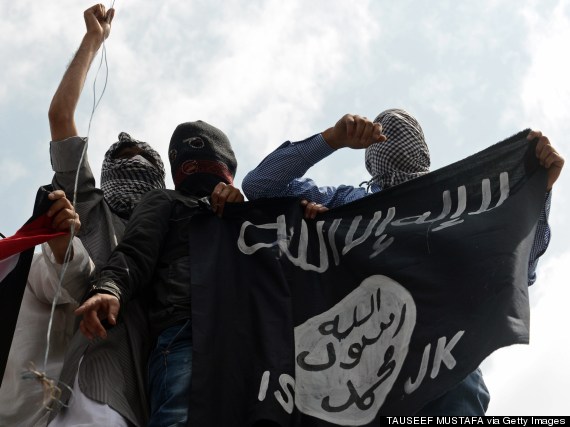
Extremist Islamic groups such as ISIS, Boko Haram, al-Qaeda and the al-Nusra Front in Syria, have transformed the holy Quran into a manifesto for war, terrorism and bloodshed. These groups use the most modern weaponry and technology, and their crimes have created worldwide concerns. Their goal is to return the Islamic world to the medieval age.
At the same time, the corrupt dictatorial Arab regimes in the Middle East, particularly the Arab nations of the Persian Gulf, have transformed the democratic Arab Spring into a sectarian war between the Shiites and Sunnis, in order to prevent democracy from taking roots in their own nations.
Simultaneous with such developments, a Western-made "industry" called Islamophobia not only presents the Holy Quran as the manifesto of fundamentalist warmongers (that claim to represent Islam) and their rigid interpretation of its teachings, it also reduces Islam to its skewed "interpretations." This reductionist approach has been popular among the Orientalists. The approach also claims that formation of an Islamic government is a necessary condition for a society to be Islamic. The author will argue in this essay, against these claims >>> http://goo.gl/dIXE8F
Definitions: The State, Secularism And Islam
In his book, Philosophical Investigations, the Austrian-British philosopher Ludwig Wittgenstein states that words have no meaning other than their "applications." Thus, to prevent any confusion, we must first define what we mean by the key concepts that are employed here.
The state is an organized structure that is impersonal, has well-defined boundaries, rules a specific population and has the exclusive right to use legitimate violence. Paul Dragos Aligica, a senior research fellow at George Mason University, puts it this way:
The state is an organization monopolizing the legitimate use of force or claiming a monopoly on the use of coercion in a given geographic area and over a political entity, and possessing internal and external sovereignty. Recognition of the state by other states, and thus its ability to enter into international agreements, is often considered a crucial element of its nature.
The term secularism has been defined in three distinct ways. One is atheism. Karl Marx, French sociologist Emile Durkheim and German sociologist and philosopher Max Weber believed that, through functional differentiation, scientific knowledge and de-mystification, the world moves toward atheism and disbelieving in God. Their view has, of course, turned out to be false.
Secularism has also been believed to mean limiting religion to the private domain. This is impossible, because religion is not like special clothes that we can set aside as soon as we leave home. Such eminent sociologists as Robert Bellah, Charles Taylor, Jürgen Habermas and José Casanova believe that the presence of religion in the public domain is useful and desirable. But explaining and justifying any claim in the public domain must be done by resorting to reasoning, not religious texts and holy people.
The third meaning of secularism, and the one that we use in this article, is separation of church and state, or religion from government -- not atheism or elimination of religion from the public discourse......... keep reading >> http://goo.gl/dIXE8F
Waging war against Muslim state for political reasons prohibited in Islam:
Secularism and How to Deal with it:
Secularism is an ideology which either denies that there is a God, prophethood and revelation or declares that the role of these is limited to the personal and inner life of man and that in the political or social sphere of human life, God, prophethood or revelation cannot by their very nature play any fundamental role. Even a cursory glance through the Qur`an and Hadith is enough to show everyone that this ideology conflicts with the very mind and heart of Islam. Yet in all parts of the Muslim world many "Muslims" are consciously or unconsciously accepting this un-Islamic ideology. There even exist political movements that have either established or are trying to establish secularist systems of government in various Muslim countries: Kemalists in Turkey, Baathists in the Arab world, Mujahideen-e-Khalq in Iran, some groups affiliated with the People`s Party in Pakistan. Keep readinng >> [ http://www.islamicperspectives.com/Secularism.htm ]
Why Secularism Is Compatible with the Quran and Sunnah -- And an 'Islamic State' Is Not?
Extremist Islamic groups such as ISIS, Boko Haram, al-Qaeda and the al-Nusra Front in Syria, have transformed the holy Quran into a manifesto for war, terrorism and bloodshed. These groups use the most modern weaponry and technology, and their crimes have created worldwide concerns. Their goal is to return the Islamic world to the medieval age.
At the same time, the corrupt dictatorial Arab regimes in the Middle East, particularly the Arab nations of the Persian Gulf, have transformed the democratic Arab Spring into a sectarian war between the Shiites and Sunnis, in order to prevent democracy from taking roots in their own nations.
Simultaneous with such developments, a Western-made "industry" called Islamophobia not only presents the Holy Quran as the manifesto of fundamentalist warmongers (that claim to represent Islam) and their rigid interpretation of its teachings, it also reduces Islam to its skewed "interpretations." This reductionist approach has been popular among the Orientalists. The approach also claims that formation of an Islamic government is a necessary condition for a society to be Islamic. The author will argue in this essay, against these claims >>> http://goo.gl/dIXE8F
Definitions: The State, Secularism And Islam
In his book, Philosophical Investigations, the Austrian-British philosopher Ludwig Wittgenstein states that words have no meaning other than their "applications." Thus, to prevent any confusion, we must first define what we mean by the key concepts that are employed here.
The state is an organized structure that is impersonal, has well-defined boundaries, rules a specific population and has the exclusive right to use legitimate violence. Paul Dragos Aligica, a senior research fellow at George Mason University, puts it this way:
The state is an organization monopolizing the legitimate use of force or claiming a monopoly on the use of coercion in a given geographic area and over a political entity, and possessing internal and external sovereignty. Recognition of the state by other states, and thus its ability to enter into international agreements, is often considered a crucial element of its nature.
The term secularism has been defined in three distinct ways. One is atheism. Karl Marx, French sociologist Emile Durkheim and German sociologist and philosopher Max Weber believed that, through functional differentiation, scientific knowledge and de-mystification, the world moves toward atheism and disbelieving in God. Their view has, of course, turned out to be false.
Secularism has also been believed to mean limiting religion to the private domain. This is impossible, because religion is not like special clothes that we can set aside as soon as we leave home. Such eminent sociologists as Robert Bellah, Charles Taylor, Jürgen Habermas and José Casanova believe that the presence of religion in the public domain is useful and desirable. But explaining and justifying any claim in the public domain must be done by resorting to reasoning, not religious texts and holy people.
The third meaning of secularism, and the one that we use in this article, is separation of church and state, or religion from government -- not atheism or elimination of religion from the public discourse......... keep reading >> http://goo.gl/dIXE8F
Waging war against Muslim state for political reasons prohibited in Islam:
In books of Hadith, there are a large number of traditions which foretell the setting in of corruption in the Muslim rulers of later times, yet Muslims were strictly forbidden to wage war on them in the name of political reform. The Muslims were rather enjoined to keep their distance from them, to take to the hills (that is, to stay away from political activities) and to devote themselves to tending their sheep and goats. That is to say that they had to abandon the path of political confrontation in favour of continuing their activities in non-political fields, such as education, Da’wah, the service of the Qur’an and Hadith, etc.
In the first phase of Islam, it was Abdullah ibn Zubayr who violated this prohibition. He engaged in an armed confrontation with the Umayyad ruler, Yazid ibn Muawaiya, in the name of reform in politics. It resulted in the loss of precious Muslim lives and resources. At that time, Abdullah ibn Umar, son of the second Caliph and companion of the Prophet, was in Makkah, yet he did not take part in the fighting. Some companions of Abdullah ibn Zubayr met him and asked him to join in the battle. The conversation that took place on this occasion has been recorded in Sahih al-Bukhari under three references.
One account has been thus recorded: Nafe narrates that during the (Fitna) revolt by Ibn Zubayr, two persons came and said to Ibn Umar that people were being killed, while he, the son of Umar (the second caliph) as well as a senior companion of the Prophet, refused to take part in the campaign. They asked him what prevented him from doing so. He replied: “I refrain from joining in this battle because of God’s express command never to shed the blood of one’s brother: it is unlawful.” Both replied: “Has not God enjoined us to fight till persecution (Fitna) ceases?” Abdullah ibn Umar then retorted: “We fought till Fitna ceased. Religion became only for God, and now you want to fight so that Fitna may return, and religion will no longer be for God.” (Fathul Bari, Kitab at-Tafsir, vol. 8, p.32, Kitab al-Fitan Vol. 13, p. 49).
From this account we learn that war against persecution as commanded by God was limited in its scope and of a particular nature. It had to be directed against those leaders who had established a system of religious persecution; who were not ready to grant to believers in monotheism the liberty to practise their faith. The companions of the Prophet waged war against such oppression, first of all in Arabia, and then in major parts of Asia and Africa, and succeeded in bringing it to an end. Thenceforth, believers in Islam had full freedom to practise their religion and to invite others to answer its call.
From this account we learn that war against persecution as commanded by God was limited in its scope and of a particular nature. It had to be directed against those leaders who had established a system of religious persecution; who were not ready to grant to believers in monotheism the liberty to practise their faith. The companions of the Prophet waged war against such oppression, first of all in Arabia, and then in major parts of Asia and Africa, and succeeded in bringing it to an end. Thenceforth, believers in Islam had full freedom to practise their religion and to invite others to answer its call.
After the successful conclusion of this movement against religious coercion, the believers began living in an atmosphere of religious freedom. But during the reign of the Umayyads, when the rot of corruption had begun to set in, certain Muslims, referring to this verse of the Qur’an, engaged themselves in armed conflict with the rulers. To all intents and purposes, the battle was for a good cause: they wanted to oust these corrupt caliphs and replace them with men who were virtuous and just. But, in reality, their actions proved counter-productive.
The Prophet Muhammad, may peace be upon him, foresaw that the effort at political reform would, in effect, culminate in nothing but destruction. It would only replace a lesser evil with a greater evil. That is why he had issued a stern, prior warning, expressly commanding his people to confine their activities to non-political fields and to opt for a policy of avoidance as regards corruption in political institutions.
In books of Hadith a number of traditions have been recorded on this subject under the heading of Fitna. It was thanks to these traditions that, after the development of the Islamic sciences (in terms of which commentaries on the traditions were written), religious scholars arrived at a consensus that it was totally unlawful to revolt against an established Muslim government, regardless of how justified such action might appear to be.
The famous traditionist, Imam al-Nawawi, has commented on the tradition regarding fitna as recorded in Sahih Muslim:
These traditions clearly convey that we should not enter into any confrontation with political rulers. Even if we find in them any major deviation from Islam, our responsibility will be limited purely to the giving of advice in private. According to the consensus of Muslim scholars, so far as revolt and armed confrontation are concerned, even if the rulers in question are corrupt and tyrannical these actions are unlawful (Haram). (Sahih Muslim, with the commentary of an-Nawawi, Kitab al-Imarah, vol. 12, p.229).
From this commentary, we learn that the waging of war against Fitna in no way meant the replacing of non-Muslim governments with Muslim regimes. Its actual purpose was to put an end to the use of intellectual and ideological coercion, so that God’s servants might be at liberty to perform their devotions to God and communicate God’s message in an atmosphere of freedom. Waging war against Muslim rulers will certainly result in a revival of the coercive system, for the rulers will not hesitate to resort to oppression in order to keep their political power intact. The upshot will be that the old Fitna will re-emerge in a new garb. That is why the Prophet Muhammad, may peace be upon him, strictly forbade such action and Islamic scholars arrived at a consensus that according to the Islamic Shari’ah, insurrection against an established Muslim government was unlawful. Even in unavoidable situations, Muslims are required to strive peacefully and to refrain entirely from launching violent movements aimed at unseating those in positions of authority.
This is undoubtedly an important Islamic injunction. It has great wisdom behind it. To put it briefly, the kings of ancient times made every effort to politicize religion. And when they found the adherents of any given religion placing obstacles in their path, they went all out to crush them. In a similar way, even today, certain factions attempt to Islamize governments, then those rulers who become their targets, wreak all kinds of havoc on Islamists in order to save their political power.
The solution to this problem, as laid down in Islam, is to refrain from setting oneself on a collision course with the rulers. If any evil is found in them, the course to adopt is to give advice, privately, at the individual level, and to avoid all public condemnation or armed clashes. This sage counsel was given by Islam, so that the basic task of propagating and consolidating the religion might continue unhampered in non-political fields.
The manner of working of the traditionists gives us a good historical example. The gigantic task of the compilation of the traditions in the first phase of Islam lasted from the time of the Umayyad empire till that of the Abbasid Empire. Without doubt, the rot had set in the Muslim rulers. But the Islamic scholars of this period did not launch any movement against them. Remaining aloof from politics, they continued to serve the cause of the Hadith. It is the result of this wise policy on their part that today we possess in compiled form the precious treasure of the Prophet’s traditions. If the traditions of those days had opted to set themselves up against these Muslim rulers, they would have met the same fate as that of Abdullah ibn Zubayr, Husain ibn Ali, Nafs Zakiyya, etc. any political jihad engaged in by these traditionists would have come to the same disastrous end. All the people concerned would have been assassinated by the rulers,—as had happened with other political opponents. And then the inestimable wealth of the traditions would have been buried along with the traditionists, in whose memories they had been preserved.
From a study of the Qur’an and Hadith, we find that the actual target of a religious mission is the Islamization of the individual rather than the State. The domination of Islam at the level of the state is only an offshoot of the religious mission and not its actual target.
The Qur’an has clearly stated that, for believers, political power is a gift from God, and not a goal to be striven for. That is why the Qur’an observes:
“God has promised those of you who believe and do good works to make them masters in the land as He had made their ancestors before them, to strengthen the faith he chose for them and to change their fears to safety. Let them worship me and serve no other gods besides me. Wicked indeed are they who after this deny Me”(24:55).
The same point has been made in a tradition of the Prophet: Just as you will be, so will be your rulers. (Mishkat al-Masabih).
In actual fact this tradition tells us of a law of nature. The political power of a country depends upon its people. Any system which has the acceptance of the public will perpetuate itself, while a system which is anathema to the people will prove unsustainable. In a truly Islamic society, an un-Islamic political regime cannot take root, and cannot therefore be self-perpetuating. That is why Islam has enjoined the targeting of individuals for Islamic reform. If in any society a large number of people follow Islam, both in the letter and in the spirit, such a society will on its own come under the direction of political power based on Islam. This separation of Da’wah activism and political confrontation was crucial. It was by virtue of this separation that the propagation of Islam continued unhampered for a period of a thousand years after the emergence of Islam, until the number of Muslims rose to one billion. Without this, the great achievement of the dissemination of Islam could never have become a reality.
The wisdom of this teaching of Islam has become clearer than ever today. In present times two revolutions have taken place contemporaneously. After a long historical process, religious freedom has been held to be an irrevocable right of human beings all over the world. Today, the right to believe, practise and propagate any religion of one’s choice has become an established right of human beings. This freedom has only one condition: that in the availing of these rights, one should not engage in violence of any sort. The adoption of violence will render the practice and propagation of one’s religion impossible, whatever the part of the world that might be.
Another great revolution of our times has come in the form of modern communications, which has rendered the spread of Islam much more effective than hitherto. The print and electronic media, as well as other means of communication, have opened all the doors to the global dissemination of the message of Islam. Now the task of Da’wah in the present age has been so greatly facilitated that it seems as rapid and easy as the diffusion of the sun’s rays across the earth.
["Islam Redisciverd" by Molan WaheedudDin Khan, http://aftabkhan-net.blogspot.com/2015/01/rediscovering-islam-with-maulana.html]
* * * * * * * * * * * * * * * * * * *
Related Topics:
- RELIGION CAUSE WARS?
- Tribulation and Discord in Muslim World & Future
- Learning & Science
- Islamic Society & Culture
- Rise & Decline of Muslim
- Caliphate: Redundant or Relevant?
- Sectarianism
- Jihad: Myth & Reality
- Takfir- Docrine of Terror
- Islamic Decree [Fatwa] Against Terrorism
- Tolerance
- Rebellion by Khawarij Taliban & Shari’ah in Pakistan
- Rebuttal to Anti-Islam FAQs
- Islamic Scholars in modern age علماء اور دور جدید
- Islam and the State: A Counter Narrative: The situation which today has been created in the whole world for Islam and Muslims by certain extremist organisations is the evil consequence of the ideology taught in our religious seminaries, and also propagated day and night by Islamic movements and religious-political parties. The true understanding of Islam in contrast to this has been presented by this writer in his comprehensive treatise on Islam: Meezan. http://peace-forum.blogspot.com/2015/02/islam-and-state-counter-narrative.html
- http://freebookpark.blogspot.com/2015/02/institute-of-islamic-studies-and-centre.html
Why Pakistan, Why Islamic Democracy?
- http://pakistan-posts.blogspot.com/p/why-pakistan.html
- http://pakistan-posts.blogspot.com/2013/04/shariah-or-democracy-conflict-or.html
The percentage of Muslims who say they want Shari’a to be “the official law of the land” varies widely around the world, from fewer than one-in-ten in Azerbaijan (8%) to near unanimity in Afghanistan (99%). But solid majorities in most of the countries surveyed across the Middle East and North Africa , sub-Saharan Africa , South Asia and Southeast Asia favour the establishment of Shari’a, including 71% of Muslims in Nigeria , 72% in Indonesia , 74% in Egypt and 89% in the Palestinian territories.
At the same time, the survey finds that even in many countries where there is strong backing for Shari’a, most Muslims favour religious freedom for people of other faiths. In Pakistan Pakistan
The survey – which involved more than 38,000 face-to-face interviews in 80-plus languages with Muslims across Europe , Asia , the Middle East and Africa – shows that Muslims tend to be most comfortable with using sharia in the domestic sphere, to settle family or property disputes. In most countries surveyed, there is considerably less support for severe punishments, such as cutting off the hands of thieves or executing people who convert from Islam to another faith. And even in the domestic sphere, Muslims differ widely on such questions as whether polygamy, divorce and family planning are morally acceptable and whether daughters should be able to receive the same inheritance as sons.
In most countries surveyed, majorities of Muslim women as well as men agree that a wife is always obliged to obey her husband. Indeed, more than nine-in-ten Muslims in Iraq (92%), Morocco (92%), Tunisia (93%), Indonesia (93%), Afghanistan (94%) and Malaysia (96%) express this view. At the same time, majorities in many countries surveyed say a woman should be able to decide for herself whether to wear a veil.
Overall, the survey finds that most Muslims see no inherent tension between being religiously devout and living in a modern society. Nor do they see any conflict between religion and science. Many favor democracy over authoritarian rule, believe that humans and other living things have evolved over time and say they personally enjoy Western movies, music and television – even though most think Western popular culture undermines public morality.
According to the Pew Research Center
Relatively few Muslims say that tensions between more religiously observant and less observant Muslims are a very big problem in their country. In most countries where the question was asked, Muslims also see little tension between members of Islam’s two major sects, Sunnis and Shias – though a third or more of Muslims in Pakistan (34%) and Lebanon (38%) consider Sunni-Shia conflict to be a very big problem.
Support for making Shari’a the official law of the land tends to be higher in countries like Pakistan Morocco
In many countries, Muslims who pray several times a day are more likely to support making sharia official law than are Muslims who pray less frequently. In Russia , Lebanon , the Palestinian territories and Tunisia , for example, Muslims who pray several times a day are at least 25 percentage points more supportive of enshrining sharia than are less observant Muslims. Generally, however, there is little difference in support for sharia by age, gender or education.
According to another survey conducted by British High commission in Pakistan published in April 2013more than half of young Pakistanis believe democracy has not been good for their country and nearly 40 percent are in favour of having Islamic Shari’a rule. Just 29 percent chose democracy as the best system for Pakistan , a constitutional Islamic republic, with 38 percent favouring Shari’a, saying it was the best for giving rights and freedom and promoting tolerance. When asked to pick the best political system, both Shari’a and military rule were favoured over democracy. It is evident that the biggest issue facing Pakistan today is the lack of a social consensus over the direction people want the country to go in. Should Pakistan , as a society and state, be organized as a military dictatorship, a theocracy or should it head toward a stronger democratic culture that respects the place of Islam in society? The absence of this consensus is tearing society apart. Hence there is a need to understand the difference between 'Sham, Pseudo democracy’, 'Western democracy' and true 'Islamic Democracy': Keep reading >> http://pakistan-posts.blogspot.com/2013/04/shariah-or-democracy-conflict-or.html


