Featured Post

SalaamOne NetWork

SalaamOne سلام   is   a nonprofit e-Forum to promote peace among humanity, through understanding and tolerance of religions, cul...

The long history of Muslims and Christians killing people together

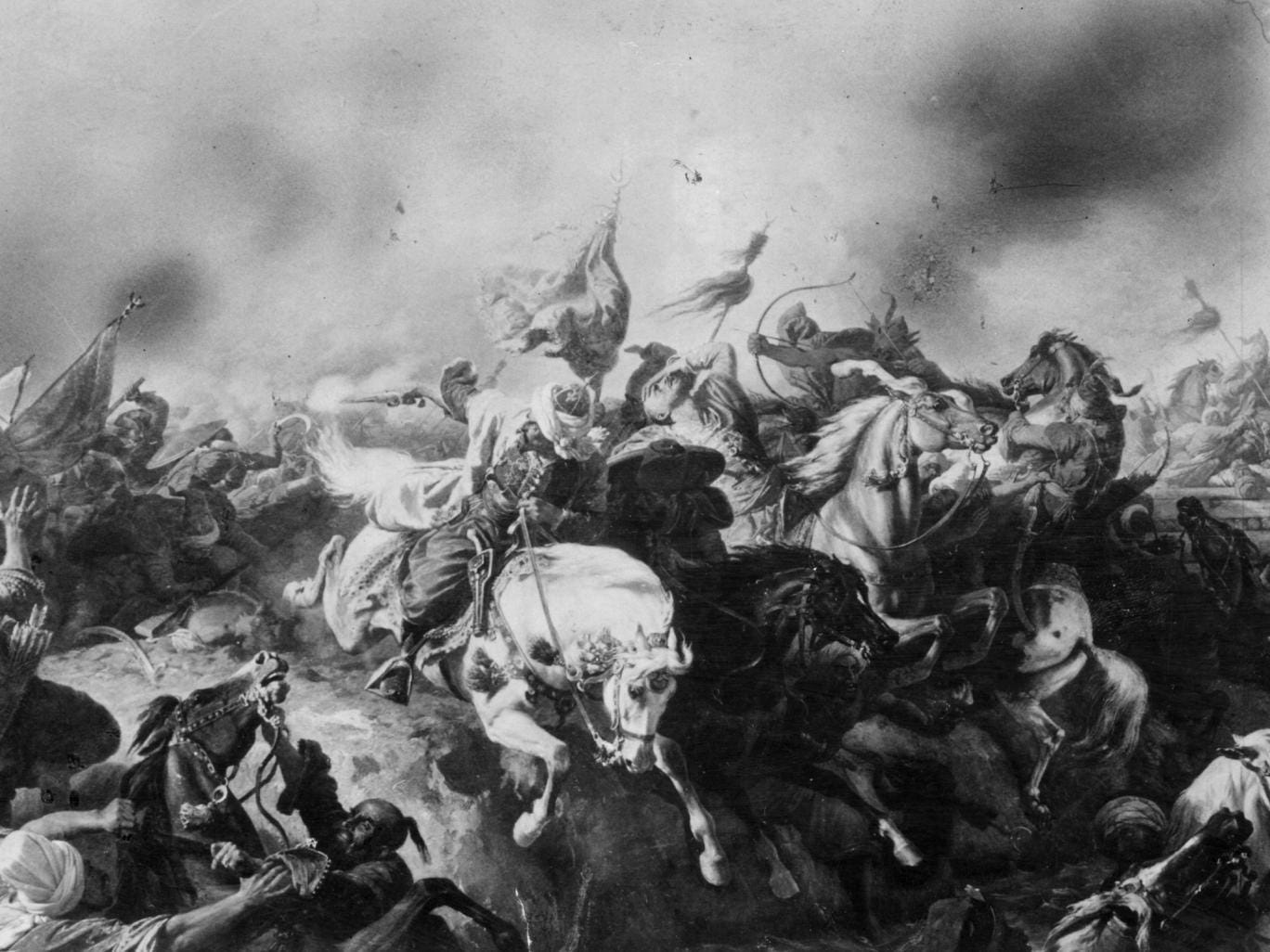
In 1683, a vast Ottoman army camped outside the gates of Vienna. For centuries thereafter, the siege and final decisive battle that took place would be cast as a defining moment in a clash of civilizations -- that time the forces of Islam were halted at the ramparts of Christendom.
Yet look just a little bit harder, and that tidy narrative falls apart. The Ottoman assault had been coordinated in league with French King Louis XIV. And perhaps more than half of the soldiers seeking to capture the Austrian capital were Christians themselves. There were Greeks, Armenians, Hungarians, Bulgarians, Romanians, Serbs, all fighting alongside Arabs, Turks, Kurds and others in the Ottoman ranks.
One of the main figures joining the Turkish campaign was Imre Thokoly, who was a Protestant born in what's now Slovakia and an avowed Hungarian nationalist. Tens of thousands of Hungarian peasants who were angry at the rapacious behavior of the Catholic Church, and the imperial Habsburg dynasty in Vienna had rallied to Thokoly's banner. His alliance with the Ottomans enabled the rapid Turkish march toward the Austrian capital.
It reflected, writes British academic Ian Almond in his 2009 book "Two Faiths, One Banner: When Muslims Marched With Christians Across Europe's Battlegrounds," how "little use terms such as 'Muslim' and 'Christian' are to describe the almost hopelessly complex web of shifting power-relations, feudal alliances, ethnic sympathies and historical grudges" that shaped much of European history.
That sense of nuance fades over centuries, and certainly wasn't apparent last year when another Hungarian nationalist -- the country's current Prime Minister Viktor Orbán -- cited the legacy of the Ottoman conquest to justify keeping Syrian refugees from passing through Hungary's borders.
"I have to say that when it comes to living together with Muslim communities, we are the only ones who have experience because we had the possibility to go through that experience for 150 years," Orbán told reporters last year, apparently referring to the period of dynastic warfare and mayhem that was sparked by the initial Ottoman invasion in the 16th century.
Orban has hardly been alone with this sort of grand, historical rhetoric. A host of Eastern European leaders, representing various right-of-center, nationalist governments, echoed Orbán's line, painting the migrant influx as an existential threat, an "invasion" of people whose cultural identity is wholly alien to Europe. A coalition of far-right activist groups in the region last week warned of "Islam conquering Europe" and announced plans for joint protests.
Further west, from France to the United States, conservative politicians -- including Republican presidential candidates -- also have gestured at a clash of civilizations when proposing bans on refugees or even halting Muslim migration altogether.
"Today, words such as 'Islam' and 'Europe' appear to have all the consistency of oil and water," Almond writes. But, he goes on, "the fact remains that in the history of Europe, for hundreds of years, Muslims and Christians shared common cultures, spoke common languages, and did not necessarily see one another as 'strange' or 'other.'"
The starkest proof of that lies in the battlefield, where Muslims and Christians died next to one another over many centuries.
It wasn't just the Ottomans who had multi-confessional armies. Muslims and Christians fought on all sides of the struggles in medieval Spain, where the last Muslim kingdom was snuffed out only in 1492. The Grand Catalan Company, an infamous mercenary outfit, ended up employing thousands of Turks even after it had been paid to fight them.
Frederick II, a 13th-century king who became the Holy Roman Emperor, deployed thousands of Arab Muslim archers and warriors during his wars with rival factions in Italy, including the armies of the pope. Chroniclers at the time documented the presence in the emperor's ranks of elephants bearing wooden towers bristling with Saracen, or Muslim, soldiers.
The Crimean War of the mid-19th century, a conflict a bit closer to our modern moment, saw a similar mishmash of identities and loyalties. Algerian soldiers were conscripted into the French army; Tatar Muslims were in the Russian ranks; all sorts of Christians -- including Cossacks, Romanian militias and Greek doctors -- were in the service of the Ottomans.
The point is not to romanticize this past -- which, in any event, was rather bloody and brutal. But it's worth bearing in mind these historical footnotes when thinking about the ideological divides and political rhetoric of the present.
"Strategically choosing when to talk about religious differences and when to keep quiet is the oldest trick in history," Almond writes. It's a pretty useful tactic in politics, too.
Washington Post:

Related:

~ ~ ~ ~ ~ ~ ~ ~ ~ ~ ~ ~ ~ ~ ~ ~ ~  ~ ~ ~  ~
Humanity, Religion, Culture, Science, Peace
 A Project of 
Peace Forum Network
Peace Forum Network Mags
Books, Articles, Blogs, Magazines,  Videos, Social Media
Overall 2 Million visits/hits

The Ark Before Noah by Irving Finkel

 The story of the Flood retold, An account of the Flood significantly different from that told in the Bible should have resonances with modern audiences
Dr Irving 》》》》》》》
http://www.theguardian.com/books/2014/nov/09/the-ark-before-noah-irving-finkel-review-flood-bible
Related:
~ ~ ~ ~ ~ ~ ~ ~ ~ ~ ~ ~ ~ ~ ~ ~ ~  ~ ~ ~  ~
Humanity, Religion, Culture, Science, Peace
 A Project of 
Peace Forum Network
Peace Forum Network Mags
Books, Articles, Blogs, Magazines,  Videos, Social Media
Overall 2 Million visits/hits

Makkah, The sacred city

Image result for makkah tower
In the name of icon-smashing, the Saudis have almost completely destroyed the city’s built culture, making instead a steel and glass “haven of consumerism”. The luxurious Royal Makkah Clock Tower, an unfeasibly silly and vertiginous development overlooking the massively expanded holy sanctuary, symbolises this “eruption of architectural bling”, though in truth “even the relatively poor are incited to shop at every available moment”. Shopping has always been part of Mecca but now, Sardar says, the pilgrimage is an adjunct to the retail, not the other way around.》》》》》》

Related:
~ ~ ~ ~ ~ ~ ~ ~ ~ ~ ~ ~ ~ ~ ~ ~ ~  ~ ~ ~  ~
Humanity, Religion, Culture, Science, Peace
 A Project of 
Peace Forum Network
Peace Forum Network Mags
Books, Articles, Blogs, Magazines,  Videos, Social Media
Overall 2 Million visits/hits
Zika Virus- Basic information

There are many things we don’t know about Zika virus, the mosquito-borne disease that may infect three to four million people before the epidemic dies out, according to the World Health Organization.
Experts suspect Zika may be responsible for thousands of babies born with birth defects and an increase in neurological disorders, but it’s going to be a while before we have clear answers on if, and how, the virus actually causes these problems.》》》》》
http://m.huffpost.com/us/entry/faqs-about-zika-virus_us_56ae80c9e4b077d4fe8e8f6c?utm_hp_ref=healthy-living&
Related:
~ ~ ~ ~ ~ ~ ~ ~ ~ ~ ~ ~ ~ ~ ~ ~ ~  ~ ~ ~  ~
Humanity, Religion, Culture, Science, Peace
 A Project of 
Peace Forum Network
Peace Forum Network Mags
Books, Articles, Blogs, Magazines,  Videos, Social Media
Overall 2 Million visits/hits

What it like being a Muslim during the US presidential elections?

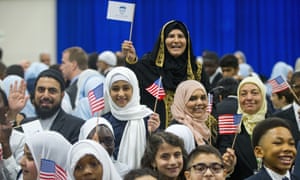
Children from Al-Rahmah school and other guests react after seeing President Barack Obama during his visit to the Islamic Society of Baltimore on Wednesday.
Barack Obama used his first presidential visit to an American mosque on Wednesday to call for writers and producers to create more rounded Muslim characters on television.
If you’re a Muslim living in America, we want to know what you think of Obama’s comments, what it’s like living in the US, and what you think of the presidential candidates’ views of Islam.
The president addressed thousands of attendees at the Islamic Society of Baltimore on Wednesday, and said many Americans do not know a Muslim person and form a “hugely distorted impression” based on TV, film and negative news reports. Since 9/11, Paris and San Bernardino attacks, he continued, “You’ve seen too often people conflating the horrific acts of terrorism with the beliefs of an entire faith.
“And of course recently we’ve heard inexcusable political rhetoric against Muslim Americans that has no place in our country. No surprise, then, that threats and harassment of Muslim Americans have surged.”
Republican presidential candidate Marco Rubio then criticised Obama for the speech.
“Oh, you know, basically implying that America is discriminating against Muslims. Of course there’s discrimination in America, of every kind. But the bigger issue is: radical Islam. And by the way, radical Islam poses a threat to Muslims themselves.” >>>>>>

Humanity, Religion, Culture, Science, 
Peace
Related:
~ ~ ~ ~ ~ ~ ~ ~ ~ ~ ~ ~ ~ ~ ~ ~ ~  ~ ~ ~  ~

Questions you have to answer!

Image result for terrorism in pakistan school
Today’s young parents should indeed be prepared to be asked some awkward questions by their children when they grow up. 

  1. Why were you quiet even after thousands of Pakistanis were slaughtered by extremists? 
  2. What was the state waiting for before finally launching a military operation against the extremists? 
  3. Were you looking the other way when schoolgirls were being shot in the face and then called agents? 
  4. How did you react when students were being cut down at schools and universities? Why did you allow such a situation to exist? 
  5. Why don’t you talk about it? 
  6. Are you ashamed of it, or did you actually defend what the extremists were doing?
  7. Pakistani children today are living in extremely testing times. Their memory of such a time is bound to finally make them ask some pointed and difficult questions from their parents and the state of Pakistan when they grow up. 
So be ready, and more so, be honest.
Smokers’ Corner: Generation landslide - Pakistan - DAWN.COM
Image result for terrorism in pakistan

Related:

~ ~ ~ ~ ~ ~ ~ ~ ~ ~ ~ ~ ~ ~ ~ ~ ~  ~ ~ ~  ~
Humanity, Religion, Culture, Science, Peace


 A Project of 
Peace Forum Network
Peace Forum Network Mags
Books, Articles, Blogs, Magazines,  Videos, Social Media
Overall 2 Million visits/hits

World disorder

Image result for world disorder
HENRY Kissinger’s last book World Order could more aptly have been entitled ‘World Disorder’. As he observes, there has never been a ‘world order’. Today, in a globalised world, as disparate civilisations meet in the midst of a historic transition from Western domination to multipolarity, constructing a world order has become an existential compulsion. However, the challenges in the way of achieving this are complex and daunting.

Asian drama

The most significant evolution under way is the multifaceted relationship between a powerful yet anxious America and a rising China. The Greek historian, Thucydides, posited the inevitability of conflict between a ruling and a rising power. Kissinger lists 15 such instances in history of which 10 led to conflict.

Hopefully, given the significant interdependence between the US and China and their convergence of interest on myriad regional and global issues, such as climate change and sustainable development, they will be able to avoid the Thucydides trap.

However, the points of friction and rivalry are growing: the US-led alliances around China’s periphery; US intervention in China’s maritime disputes; the emerging Sino-US naval rivalry; competing trade pacts and development institutions. The ‘muscular’ rhetoric of US Republican candidates is matched by a Beijing leadership which is no longer willing to ‘hide’ China’s strength or tolerate challenges to its vital interests. A Cold War looms over Asia.

Russian reassertion

This Asian Cold War may well be accompanied by a revived one in Europe.

The Western- engineered ouster of the pro-Russian Ukrainian regime crossed Putin’s red line. Moscow’s response, including the takeover of Crimea and “protection” of ethnic Russians in Eastern Ukraine, was predictable.

Today, the Muslim world needs its own version of a Westphalian peace.
Putin is unlikely to be cowed by economic punishment. Historically, the Russians have a high threshold for suffering. Confrontation will yield actions like Moscow’s intervention in Syria. The US will quadruple military spending in Europe and deploy a full brigade on Russia’s borders, provoking Moscow without changing the military balance. Unless the more measured approach of German and French leaders avoids a mutually debilitating confrontation, tensions could lead to a conflict by accident or miscalculation.

European disarray

Apart from the confrontation with Russia, Europe faces economic stagnation; massive migration and political division.

After almost a decade, Europe remains mired in economic stagnation. The common currency, which was supposed to integrate Europe into a robust economic area, has instead constrained the ability of its weaker economies to revive growth. Greece may yet be forced to leave the eurozone. The economic recession, the failure to integrate minorities and the large Muslim influx have led to the sharp rise of racial discrimination and neo-fascist parties in Europe. The schism between West and East Europe has become more visible. Resistance is growing to European institutions, and to the very idea of the European Union. Britain will shortly hold a referendum whether to stay in the EU.

Many Europeans see economic salvation in a closer relationship with China. Inevitably, this will require normalisation with Russia and weaken the transatlantic ties with the US. Europe’s strategic role is no longer clear.

Muslim chaos

The numerous internal and inter-state conflicts raging across the Muslim world today signify the final collapse of the West’s colonial legacy. Within the Muslim world, the forces of the status quo, of the modernisers, and ‘Islamists’ are vying for supremacy. The most extreme among them seek to impose their vision by force and violence. Each of these three competing forces often overlap and are themselves divided into factions and subgroups.

The past and on-going involvement of foreign powers has intensified, complicated and prolonged the internal struggles within Islamic countries.

The revival of the geopolitical rivalry between Shia Iran, and its allies, and Sunni Saudi Arabia, its Arab allies and other Sunni powers, like Turkey, has intensified Muslim conflicts militarily and strengthened ideologically motivated groups on both sides.

In many ways, Islam’s wars today resemble the Thirty Years War in 17th-century Europe. That war was ended by the negotiated Peace of Westphalia, constructed through a balance of European powers and agreement to allow each power to impose its own religious order within its territory. Today, the Muslim world needs its own version of a Westphalian peace which accommodates the essential interests of the major Islamic states and builds a new post-colonial regional security order within the Muslim world. Reliance on external powers will not produce sustainable peace in the Islamic world.

Modern complexities

Solutions to the world’s concurrent conflicts are made more difficult by the nature of modern combat. Today, the military capabilities of the major and some minor powers are enormous. Since this makes direct conflict between these powers unthinkable, most conflicts now are a combination of conventional, clandestine and irregular warfare. The calculus of military strength and the determination of victory or defeat is more complex. It is impossible to reach political settlements when the warring parties are unclear if and when they are winning or losing.

Most of the conflicts around the world, domestic and inter-state, are the direct or indirect consequence of either injustice or poverty. Despite the United Nations Charter and numerous international prescriptions, injustice against the weak remains the global norm. An effective and impartial mechanism to ensure the just resolution of disputes is a critical prerequisite for the settlement of current and future conflicts.

The technology and capital are now available to end world poverty and remove the most pervasive cause of conflict. Unfortunately, greed stands in the way. The world is more unequal today than ever before in history. Half of the world’s wealth is owned by 1pc of its population.

Constructing a world order, and preventing global chaos, will not prove possible unless the major powers can be persuaded to fully support and facilitate the endeavours of the United Nations and other impartial mechanisms to address and overcome the enormous challenges to security and development.

The next UN secretary general must lead the way in addressing these challenges.

By Munir Akram, former Pakistan ambassador to the UN.
http://www.dawn.com/news/1237892/world-disorder
Articles by Munir Akram: http://www.dawn.com/authors/368

Related:
~ ~ ~ ~ ~ ~ ~ ~ ~ ~ ~ ~ ~ ~ ~ ~ ~  ~ ~ ~  ~
Humanity, Religion, Culture, Science, Peace
 A Project of 
Peace Forum Network
Peace Forum Network Mags
Books, Articles, Blogs, Magazines,  Videos, Social Media
Overall 2 Million visits/hits