Featured Post

SalaamOne NetWork

SalaamOne سلام   is   a nonprofit e-Forum to promote peace among humanity, through understanding and tolerance of religions, cul...

Iran linked to every Middle East war


Iran frequently accuses other nations of being behind tensions and terrorism in the Middle East. This is part of its classic strategy to divert attention from actual issues and to buttress its four-decade-old argument that it has enemies. Maintaining these enemies help Iranian leaders survive politically and advance their regional hegemonic ambitions. If we examine every conflict, war or terrorist act in the region, Iran is either directly or indirectly a contributor.


Image result for middle east war iran

If it was not for its support of the Alawite-dominated state of Bashar Assad, the Syrian government would have likely been altered a few months after the uprising began in 2011.
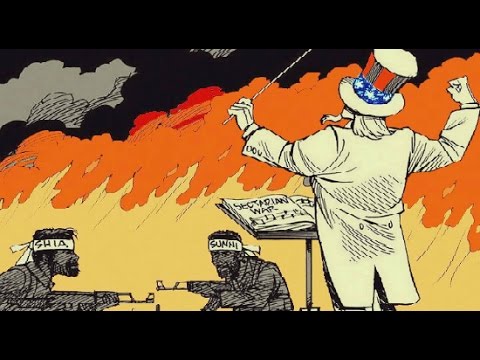
Hundreds of thousands of lives would have been saved. More than a thousand militia groups would not have emerged in Syria. Groups such as Daesh would not have found a safe haven to expand and recruit. And the Shiite-Sunni sectarian war would not have escalated.
Iran deployed its Revolutionary Guard Corps (IRGC) and Quds Force (the IRGC’s elite branch that operates in foreign countries) to assist Assad’s forces. It also provides significant financial, intelligence and advisory assistance to Assad’s apparatuses.

Tehran has long used proxies to influence Lebanese affairs and advance its revolutionary, religious and geopolitical interests. Iran created Hezbollah, and continues to train, arm and finance it and other Shiite fighters in Lebanon. To help Iran achieve its regional ambitions, these fighters are being deployed in conflicts and wars in foreign nations such as Syria.
Tehran has deeply infiltrated Iraq’s political and security infrastructures. Not only is Iran intervening directly via the IRGC and Quds Force, it is also employing proxies and militia groups, some of them designated as terrorist organizations, to influence and dominate Iraq.
We cannot resolve crises and conflicts in the region by targeting the symptoms; the disease should be tackled. Tehran is part of the problem, not the solution.

Iran is intervening in Yemen by delivering weapons to the Houthis and providing advisory and financial assistance. Tehran has also escalated sending arms to militias and terrorists in Bahrain. In last month’s sanctions announcement, the US State Department said Iran has undoubtedly “provided weapons, funding and training” to Bahraini militants.
As former British Prime Minister Tony Blair said at the American Israel Public Affairs Committee (AIPAC) annual conference in March, “if you had a benign regime in Iran, all of the problems in the Middle East would be resolvable.”

We cannot resolve Middle East crises and conflicts by targeting the symptoms; the disease should be tackled. Almost every ongoing war, conflict and crisis in the region is traceable to Tehran. It is part of the problem, not the solution.

Dr. Majid Rafizadeh is a Harvard-educated, Iranian-American political scientist. He is a leading expert on Iran and US foreign policy, a businessman and president of the International American Council. He serves on the boards of the Harvard International Review, the Harvard International Relations Council and the US-Middle East Chamber for Commerce and Business. He can be reached on Twitter @Dr_Rafizadeh.

10 free online courses you can take to learn to be more productive


Invest some time in one or more of these courses to help increase your productivity.WOCinTech Chat/flickr

Increasing your productivity is a goal that many busy professionals, parents, students, and entrepreneurs share.
Finding enough hours in the day to accomplish all of your tasks or goals can be difficult.
Sometimes the day has slipped away and you have accomplished little, and you don’t know why.
It is also frustrating when you know that part of the reason you cannot get everything done is because you are not organized enough or because you cannot manage your time well.
Invest some time in one or more of these courses to help increase your productivity.

1. Create a Perfect Morning Routine

Screenshot
Platform: SkillShare
Course Duration: 12 lectures
Time: 1–3 min/lecture
Everyone’s mornings can be crazy, but they don’t have to be. Having a less stressful morning can make you more productive throughout the day. Waking up earlier to focus on things that you really enjoy can also help your personal growth and overall mental health. Creating the perfect morning routine can give you the tools to get started on the right foot every morning.
Find it here.

2. The Science of Everyday Thinking

Screenshot
Platform: edX
Course Duration: 12 weeks
Time: 2 hours/week
Your “self-talk” has a lot of influence on your daily life. If you train yourself with methods to improve your everyday thinking, then you can increase your productivity. This edX course will also cover tricks and techniques to help you retain information longer. It also goes through the basic psychology of changing people’s minds and recognizing reality from falsehoods. All of these can be great tools for increase overall productivity.
Find it here. 

3. How to Create a Productivity System

Screenshot
Platform: Highbrow
Course Duration: 10 days
Time: 5 minutes/day
Having a productivity system that works for you is perhaps your best tool to increase productivity. Once you have a system, you can spend less time organizing and planning and more time doing. Your system can also reduce your overall stress levels and those feelings over being overworked as well.
Highbrow’s course is tailored to those who do not have much free time — each portion of the course is delivered in small chunks directly to your e-mail.
Find it here. 

4. Journey into Minimalism

Screenshot
Platform: Highbrow
Course Duration: 10 days
Time: 5 minutes/day
Minimalism is a way to escape the excesses of the world around us — the excesses of consumerism, material possessions, clutter, having too much to do, too much debt, too many distractions, too much noise. But too little meaning. It is a way of eschewing the non-essential in order to focus on what’s truly important, what gives our lives meaning, what gives us joy and value. Subscribe to this email course and learn how to become a minimalist, day by day.
Find it here.

5. How to Make Better Decisions with the Matrix

Screenshot
Platform: Highbrow
Course Duration: 10 days
Time: 5 minutes/day
Prioritization is a huge challenge for busy individuals. With so many things demanding your attention, it can be difficult to decide which tasks should be tackled first and which one can sit on the backburner.
In this Highbrow class, a fun emoji helps you learn strategies to help you prioritize faster and smarter, so you can save valuable time.
Find it here.

6. Learning How to Learn: Powerful mental tools to help you master tough subjects

Screenshot
Platform: Coursera
Course Duration: 4 weeks
Time: 1 hour/week
Learning information faster can help you be more productive. Memory techniques, illusions of learning, and learning best practices are all covered in this course. It even provides techniques to deal with procrastination.
This course from Coursera offers practical techniques that you can use at work, school, or anywhere where you need to learn a new subject or task.

7. Sit Less, Get Active

Screenshot
Platform: Coursera
Course Duration: 3 weeks
Time: 1.5 hour/week
Your mental alertness and focus are affected by your activity level throughout the day. Sitting in one spot too long saps energy and creativity, and can have a negative effect on your overall mood. Once you learn how to sit less and be more active, you will have more energy to be your most productive self throughout the day. This course helps you monitor your current movement and set healthy goals for yourself.
Find it here.

8. Introduction to Time Management

Screenshot
Platform: Alison
Course Duration: 1–2 hours
At the end of the day, do you ever sit and wonder what you did all day? You were working, but it seemed like you didn’t get anything done. Perhaps you need to focus more on time management to increase your productivity. This online course focuses on prioritization, distractions, interruptions, and working efficiently.
Find it here.

9. Effective Time Management — Get 10X More Done in Less Time

Screenshot
Platform: Udemy
Course Duration: 9 lectures
Time: 5–7 min/lecture
Time management is especially difficult for small business owners and entrepreneurs. Perhaps that is why there is a course specifically tailored to this audience. Instead of managing time, this Udemy course is focused on deciding which tasks are “high value” tasks, so you get more of a return for the time that you have invested.
Find it here.

10. Achieve More in Less Time Using SMART Goals

Screenshot
Platform: Udemy
Course Duration: 10 lectures
Time: 3 min/lecture
This Udemy course focuses on goal setting as a means to be more productive. Having your own goals helps keep you attentive and motivated to get more done in the limited time that you have. It also helps you learn to evaluate yourself when compared to the goals that you have set for yourself.
This course may also be helpful for those who want to teach others about the importance of goal setting and productivity.
Find it here.
Artem Zavyalov is the co-founder of Highbrow – a learning platform that sends people quick little email lessons and helps them develop daily learning habits.
~ ~ ~ ~ ~ ~ ~ ~ ~ ~ ~ ~ ~ ~ ~ ~ ~  ~ ~ ~  ~

Trump Doctrine for Middle East

Trump doctrine must be driven by US core vital interests, which are:

• Eliminating ISIS as a functioning entity.

• Preventing Iran from achieving a nuclear weapon capability.

• Preventing Iranian hegemony throughout the Middle East.

• Removing the Iranian theocracy from power.

• Re-establishing and strengthening our relations with our traditional allies.

• Ensuring the survival of Israel.

• Establishing a sovereign Kurdistan.

• Maintaining freedom of navigation throughout the Persian Gulf and Red Sea, including strategic choke points, e.g., the Suez Canal, the Bab el-Mandeb Strait and the Strait of Hormuz.
..............
Trump’s Middle East doctrine
by James A. Lyons, washingtontimes.com

President Trump’s historic visit last month to Saudi Arabia, where he met with the heads of more than 50 mostly Sunni heads of state, dramatically marked the end of eight years of Barack Obama’s appeasement of Iran. It signaled to all the Muslim leaders that the United States as the “strong horse” is back. There was no doubt in any of the Muslim leaders’ minds that Mr. Trump is a man of action and a leader who will keep his word.

Mr. Trump’s goal of establishing a coalition of nations that share the objective of defeating terrorist groups and providing for a stable and hopeful future made it clear that the assembled nations cannot be indifferent to the presence of evil. That evil is represented not only by the Islamic State (ISIS), al Qaeda et al., but also by Iran, the recognized world leader of state-sponsored terrorism. In that sense, one of the key objectives of the summit was to isolate Iran, a goal embraced by the coalition, as well as their shared disdain for the Obama administration’s atrocious failed nuclear agreement with Iran.

Mr. Trump also made it clear that this coalition of nations must adopt a policy of “sovereign responsibility,” which means that they cannot wait for American power to defeat the enemy for them. They must be directly involved, with our assistance.

Nonetheless, the Trump doctrine must be driven by our core vital interests, which are:

• Eliminating ISIS as a functioning entity.

• Preventing Iran from achieving a nuclear weapon capability.

• Preventing Iranian hegemony throughout the Middle East.

• Removing the Iranian theocracy from power.

• Re-establishing and strengthening our relations with our traditional allies.

• Ensuring the survival of Israel.

• Establishing a sovereign Kurdistan.

• Maintaining freedom of navigation throughout the Persian Gulf and Red Sea, including strategic choke points, e.g., the Suez Canal, the Bab el-Mandeb Strait and the Strait of Hormuz.

The establishment of a Global Terrorism Center for Combating Extremism in Riyadh was a manifestation of the shared objective of defeating terrorist groups and isolating Iran, but its effectiveness will depend on results. The same can be said for the establishment of the Terrorist Financing Targeting Center, co-chaired by the United States and Saudi Arabia, as well as the United States-United Arab Emirates Center to Counter the Online Spread of Hate. It was clear to all the attendees that a peaceful, stable future can only be achieved by defeating the ideology that drives terrorism. Carrying this out will require some very fundamental and painful changes. For example, mosques and imams that preach hate and urge all Muslims to conduct violent jihad should be closed and the imams removed.

Concrete steps must be taken to stop funds from going to radical mosques and front groups that promote terrorism. Targeting funds being sent to various terrorists groups, e.g., ISIS and al Qaeda, must receive immediate priority. The source of these funds, be it from individuals or states like Qatar, must be identified and interdicted.

Qatar has been a particular problem because of its support of the Muslim Brotherhood and its cozy relationship with Iran. This came to a head on June 5, when Saudi Arabia broke diplomatic and some commercial relations with Qatar over its terrorist financing and its links to the Muslim Brotherhood, ISIS, Hamas and the Houthi rebels in Yemen. Qatar’s relationship with Iran was a decisive factor in causing the United Arab Emirates, Egypt and Bahrain to quickly join with Saudi Arabia in breaking relations. Most land, sea and air routes to Qatar have been closed. Qatar is an isthmus whose only land route is through Saudi Arabia by which it receives 40 percent of its food. This is a major problem for Qatar, despite Turkey’s offer of food and water delivered by sea.

Another issue that must be addressed is the U.S. Central Command’s forward air base in Qatar, which has been an essential element of our air campaign in the region. As of today, there has been no impact on U.S. air operations, but contingency plans should be made ready for an alternative air base if regional relationships further deteriorate.

An underlying element of the Trump doctrine that cannot be overstated is recognition that 65 percent of the population of the Middle East is under the age of 30, and that those youths must be provided with opportunities for a satisfying life as an attractive option to the lure of terrorist groups. While this is a worthy objective, Muslims don’t commit to jihad because they don’t have jobs. They commit to jihad because they are devout Muslims, many with university degrees. The only way they can be dissuaded from jihad is to see a crushing defeat of jihadis on the battlefield. Once they understand they cannot win, they are obligated by their own doctrine to back off.

Saudi Prince Mohammad bin Salman is taking the lead for economic and cultural reform in Saudi Arabia, and other members of the coalition should follow. Nevertheless, the indispensable principle for achieving the objectives of the Riyadh summit is the isolation of Iran, the prime mover of instability throughout the region. As a start, sanctions on the mullahs’ ballistic missile programs must be imposed. Further, until the unsigned nuclear weapons deal with Iran is formally canceled, real inspections by the U.N. International Atomic Energy Agency must be conducted on all the sites in their nuclear weapon infrastructure.

Finally, an aggressive plan must be developed with the objective of removing the regime of Ayatollah Ali Khamenei from power. That is the first principle of any plan to return stability and peace to the Middle East.

• James A. Lyons, a retired U.S. Navy admiral, was commander in chief of the U.S. Pacific Fleet and senior U.S. military representative to the United Nations.

Source: http://m.washingtontimes.com/news/2017/jun/13/donald-trumps-middle-east-doctrine/

Wilayat-e-Faqih:
Wilayat-e-Faqih doctrine, a fifth column strategy, has propagated sectarianism in the Muslim world

Crisis in Qatar and Saudi Arabia, Real Story


       Image result for qatar saudi arabia conflict

THE Qatar crisis proves two things: the continued infantilisation of the Arab states, and the total collapse of the Sunni Muslim unity supposedly created by Donald Trump`s preposterous attendance at the Saudi summit two weeks ago.

After promising to fight to the death against Shia Iranian `terror,` Saudi Arabia and its closest chums have now ganged up on one of the wealthiest of their neighbours, Qatar, for being a fountainhead of `terror`. Only Shakespeare`s plays could come close to describing such treachery. Shakespeare`s comedies, of course.
Image result for qatar saudi arabia conflict

For, truly, there is something vastly fantastical about this charade. Qatar`s citizens have certainly contributed to IS. But so have Saudi Arabia`s citizens. No Qataris flew the 9/11 planes into New York and Washington. All but four of the 19 killers were Saudi. Bin L aden was not a Qatari. He was a Saudi.

But Bin Laden favoured Qatar`s Al Jazeera channel with his personal broadcasts, and it was Al Jazeera who tried to give spurious morality to the Al Qaeda/Jabhat al-Nusrah desperadoes of Syria by allowing their leader hours of free airtime to explain what a moderate, peace-loving group they all were.

First, let`s just get rid of the hysterically funny bits of this story. I see that Yemen is breaking air links with Qatar. Quite a shock for the poor Qatari emir, Sheikh Tamim bin Hamad al-Thani, since Yemen under constant bombardment by his former Saudi and Emirati chums doesn`t have a single service-able airliner lef t with which to create, let alone break, an air link.

The Maldives have also broken relations with Qatar. To be sure, this has nothing to do with the recent promise of a Saudi five-year loan facility of $300m to the Maldives, the proposal of a Saudi property company to invest $100m in a family resort in the Maldives and a promise by Saudi Islamic scholars to spend $100,000 on 10 `world class` mosques in theMaldives. And let us not mention the rather large number of IS and other Islamist cultists who arrived to fight for IS in Iraq and Syria from well, the Maldives.

Now the Qatari Emir hasn`t enough troops to defend his little country should the Saudis decide to request that he ask their army to enter Qatar to restore stability as the Saudis persuaded the King of Bahrain to do back in 2011. But Sheikh Tamim no doubt hopes that the massive US military air base in Qatar will deter such Saudi generosity.

When I asked his father, Sheikh Hamad (later uncharitably deposed by Tamim) why he didn`t kick the Americans out of Qatar, he replied: `Because if I did, my Arab brothers would invade me.` Like father, like son, I suppose. God Bless America.

All this started so we are supposed to believe with an alleged hacking of the Qatar News Agency, which produced some uncomplimentary but distressingly truthful remarks by Qatar`s emir about the need to maintain a rela-tionship with Iran.

Qatar denied the veracity of the story. The Saudis decided it was true and broadcast the contents on their own normally staid (and immensely boring) state television network.The upstart emir, so went the message, had gone too far this time. The Saudis decided policy in the Gulf, not miniscule Qatar. Wasn`t that what Trump`s visit proved? But the Saudis had other problems to worry about. Kuwait, far from cutting relations with Qatar, is now acting as a peacemaker between Qatar and the Saudis and Emiratis. The emirate of Dubai is quite close to Iran, has tens of thousandsof Iranianexpatriates,andishardlyfollowing Abu Dhabi`s example of anti-Qatari wrath.

Oman was even staging joint naval manoeuvres with Iran a couple of months ago. Pakistan long ago declined to send its army to help the Saudis in Yemen, because the Saudis asked for only Sunni and no Shia soldiers; the Pakistani army was understandably outraged to realise that Saudi Arabia was trying to sectarianise its military personnel. Pakistan`s former army commander, General Raheel Sharif, is rumoured to be on the brink of resigning as head of the Saudi-sponsored Muslim alliance to fight `terror`.

President-Pield Marshal Abdel Fatah al-Sisi of Egypt has been roaring against Qatar for its support of the Egyptian Muslim Brotherhood and Qatar does indeed support the nowbanned group which Sisi falsely claims is part of IS but significantly Egypt, though the recipient of Saudi millions, also does not intend to supply its own troops to bolster the Saudis in its catastrophic Yemen war. Besides, Sisi needs his Egyptian soldiers at home to fight off IS attacks and maintain, along with Israel, the siege of the Palestinian Gaza Strip.

But if we look a bit further down the road, it`s not difficult to see what really worries the Saudis. Qatar also maintains quiet links withthe Asad regime. It helped secure the release of Syrian Christian nuns in Jabhat al-Nusrah hands and has helped release Lebanese soldiers from IS hands in western Syria. When the nuns emerged from captivity, they thanked both Bashar al-Asad and Qatar.

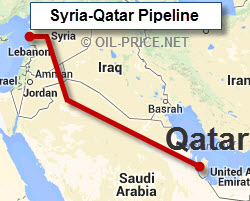
And there are growing suspicions in the Gulf that Qatar has much larger ambitions: to fund the rebuilding of post-war Syria. Even if Asad remained as president, Syria`s debt to Qatar would place the nation under Qatari economic control.

And this would give tiny Qatar two golden rewards. It would give it a land empire to match its Al Jazeera media empire. Andit would extend its largesse to the Syrian territories, which many oil companies would like to use as a pipeline route from the Gulf to Europe via Turkey, or via tankers from the Syrian port of Lattakia.

For Europeans, such a route would reduce the chances of Russian oil blackmail, and make sea-going oil routes less vulnerable if vessels did not have to move through the Gulf of Hormuz.

So rich pickings for Qatar or for Saudi Arabia, of course, if the assumptions about US power of the two emirs, Hamad and Tamim, prove worthless. A Saudi military force in Qatar would allow Riyadh to gobble up all the liquid gas in the emirate. But surely the peaceloving `anti-terror` Saudis let`s forget the head-chopping for a moment would never contemplate such a fate for an Arab brother.


So let`s hope that for the moment, the routes of Qatar Airways are the only parts of the Qatari body politics to get chopped off.

By Robert Fisk:
http://epaper.dawn.com/?page=11_06_2017_013
https://www.vox.com/world/2017/6/6/15739606/saudi-arabia-ties-qatar-trump
~ ~ ~ ~ ~ ~ ~ ~ ~ ~ ~ ~ ~ ~ ~ ~ ~  ~ ~ ~  ~


~ ~ ~ ~ ~ ~ ~ ~~ ~ ~ ~ ~ ~  ~ ~ ~  ~
Humanity, Knowledge, Religion, Culture, Tolerance, Peace
انسانیت ، علم ، اسلام ،معاشرہ ، برداشت ، سلامتی 
Books, Articles, Blogs, Magazines,  Videos, Social Media
بلاگز، ویب سائٹس،سوشل میڈیا، میگزین، ویڈیوز,کتب
سلام فورم نیٹ ورک  Peace Forum Network 
Join Millions of visitors: لاکھوں وزٹرز میں شامل ہوں 
Salaamforum.blogspot.com 
سوشل میڈیا پر جوائین کریں یا اپنا نام ، موبائل نمر923004443470+ پر"وہٹس اپپ"یا SMS کریں   
Join 'Peace-Forum' at Social Media, WhatsApp/SMS Name,Cell#at +923004443470
     
  
Facebook: fb.me/AftabKhan.page

Dark Age of Muslim World

Image result for dark ages


The "Dark Ages" is a historical periodization traditionally referring to the Middle Ages. It emphasizes the demographic, cultural and economic deterioration that supposedly occurred in Western Europe following the decline of the Roman Empire, and the relative scarcity of written records from the period.

IN the 14th and 15th centuries, Christian Europe was divided by the rivalries of the kingdoms of Spain, France and England, the Holy Roman Empire and the squabbling papal and city states of Italy. They were unable to unite in halting the advance of the ascendant Ottomans who reached the gates of Vienna and were stopped there more by Sultan Suleiman’s demise rather than credible Christian resistance.

Today, the roles are reversed. It is the Muslim world which is unable to unite to fend off the domination of the West. The crisis between Qatar and its GCC partners is reminiscent of the rivalries of Italy’s papal states and role of external powers in determining the destiny of its weak rulers.
Image result for dark ages
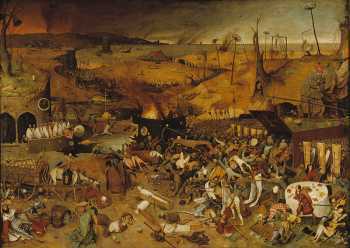
The Islamic world, wracked by multiple conflicts and crises, is traversing a period akin to Europe’s Dark Ages.

Today’s vulnerable Muslim world is wide open to the influence and domination of external powers.

First, in many Muslim countries, there is crisis of political legitimacy. Governance structures, mostly bequeathed by departing Western colonists, have corroded. The authoritarian regimes in the GCC and Iran were untouched by the Arab Spring; but most are vulnerable domestically to both democratic and ideological challenge.

Egypt has reverted to military rule. Turkey’s populist leader battles internal and external opposition. External intervention in Libya has yielded a civil war and the emergence of the militant Islamic State group and other terrorist groups. Similarly, Syria has been destroyed by external intervention and a brutal sectarian and ethnic civil war. The fiction of Iraq’s unity is preserved by the presence of Iranian militias, US military support and the war against IS. The US-installed Afghan regime is weak, corrupt, divided, and militarily beleaguered. Ironically, among OIC members, Pakistan is one of the few which, despite corruption scandals, retains a modicum of democratic legitimacy.

Second, violence is spreading across the Muslim world. Global terrorist groups — IS, Al Qaeda, Boko Haram, Al Shabab, etc — are now active participants in civil and cross-border conflicts and pose a threat to global stability.

Muslim nations are not the main sponsors of global terrorism; they are its principal victims. Some major powers have fought terrorists selectively and at times used them for partisan purposes. No effort has been made to stop state terrorism or to differentiate between terrorists and insurgencies which, like the Afghan Taliban, have local, negotiable goals. Most important, no concerted effort has been made to address terrorism’s ‘root causes’: persistent injustices against Muslim peoples eg in Palestine and Kashmir, or poverty, ignorance and social alienation which create recruits for terrorism, including over the internet.

Third, the crises within the Islamic world have been exacerbated by ideological and doctrinal differences. The most vital schism is between Sunni and Shia power. This schism was dormant until Iran’s 1979 ‘Islamic Revolution’. It rose to the fore in the Iraq-Iran war. It was manifest in the Afghan civil war between the Afghan Taliban and the Northern Alliance. It was, however, the US invasion of Iraq, its dismantling of the Sunni-dominated Baath party and army and the organisation of one-man one-vote elections that enabled the Iran-sponsored Shia parties to gain central power in Iraq and extend Iranian influence across the Levant and beyond.

Iran’s rise is anathema to its Sunni rivals: Saudi Arabia, the GCC and Egypt. Turkey has also been uncomfortable; although it has been obliged recently to moderate its rivalry and secure Tehran’s cooperation to forestall Kurdish separatism. Pakistan’s once close ties with Iran also deteriorated over time due to multiple reasons: Islamabad’s termination of peaceful nuclear cooperation, competition for influence in post-Soviet Afghanistan, Iranian ‘interference’ with Pakistan’s Shia community, cross-border events in Iranian and Pakistani Balochistan and Iran’s sudden reversal of support on Kashmir in response to Indian ‘incentives’.

But the sectarian divide is not the sole ideological rift within the Muslim world today. The Muslim Brotherhood and its populist ideology have become abhorrent to Saudi Arabia, Egypt and the UAE. Hamas, the Palestinian affiliate of the Brotherhood, has suffered collateral damage. On the other hand, Qatar and Turkey have espoused the Brotherhood and Hamas, offered refuge to their adherents and support to them in the Libyan civil war. Such Qatari divergence was evidently the main reason for the Saudi-UAE break with Doha.

Last, but not least, today’s weak, vulnerable Islamic world is wide open to the influence and domination of major external powers. The recent Arab Islamic American Summit in Riyadh was, more than anything, an illustration of the susceptibility of most of the assembled Muslim nations to US domination. Russia also enjoys critical influence with several Muslim countries, including Iran and Turkey, due to its military power and growing role in Syria and the region. So far, China has remained aloof from inter-Islamic differences. Its desire seems to be to use its economic and financial power as a force for greater cohesion with Muslim countries.

What seems most dangerous for the immediate future is the hard-line positions being adopted by the Trump administration on most international disputes and crises, including North Korea, South China Sea, Syria and Iran. If implemented, these positions, particularly the formation of an alliance against Iran, are likely to lead to the intensification of the conflicts affecting the Muslim world.

Pakistan’s main preoccupations are: TTP and IS terrorism, Afghanistan and India. It appears that Pakistan will face challenges in addressing these issues. President Ghani’s recent atrocious accusations against Pakistan obviously had clearance from his US patrons. Trump’s refusal to meet Prime Minister Nawaz Sharif in Riyadh was no accident. The Pentagon’s pre-emptive identification last week of Pakistan as host of a Chinese military base is another negative signal.

While addressing its own priorities, Pakistan cannot ‘play possum’ on issues involving the Islamic world. Such abstention does not behove the Muslim world’s second largest nation, its largest military power and its only nuclear weapon state. Pakistan has consistently concluded that its national and security interests can be best advanced by promoting unity and cooperation among Muslim countries. Today, more than ever, Pakistan is obliged to play an active role to develop viable avenues for conflict resolution and cooperation among the Islamic nations and, hopefully, lead the way to a new age of enlightenment in the Muslim world.
Munir Akram : The writer is a former Pakistan ambassador to the UN.
https://www.dawn.com/news/1338770/a-dark-age
https://en.wikipedia.org/wiki/Dark_Ages_(historiography)

~ ~ ~ ~ ~ ~ ~
Islamic Revival Messages رساله تجديد الاسلام ‏

An in-depth study of the Qur’an and Islamic religious history reveals startling facts. “Risala-e-Tajdeed-ul-Islam” is a message to develop positive change in the thought and practices of Muslims.
قرآن اور اسلام کے گہرے مطالعه سےحیران کن حقائق کا انکشاف ہوا، "رساله تجديد الاسلام" مسلمانوں کے انداز فکروعمل میں مثبت تبدیلی کا پیغام ہے:

Saudi Arabia’s diplomatic war with Qatar


Saudi Arabia’s diplomatic war with Qatar, explained

A longstanding war of words between Saudi Arabia and its oil and gas-rich neighbor Qatar has just exploded into open diplomatic warfare, threatening the US-led fight against ISIS and setting off a new wave of instability in the Gulf region.

Here’s what happened: On Monday, Saudi Arabia and three of its biggest allies — Egypt, the United Arab Emirates, and Bahrain — all announced that they were severing diplomatic ties with Qatar, as well as suspending air, land, and sea travel to and from the country. The move came after Riyadh accused Qatar of backing radical Islamist groups like the Muslim Brotherhood and ISIS. Since then, Libya, Yemen, and the Maldives have also joined the diplomatic boycott.

Qatar is one of the wealthiest countries on earth, but it’s going to feel the pain all the same because it relies heavily on its neighbors for trade and travel in and out of the region. The peninsular nation imports most of its food through its land border with Saudi, which is now closed. Al Jazeera, a Qatar government-owned news network, has reported that trucks carrying food appear to be stranded on the Saudi side of the border. And in Doha, the capital of Qatar, people are already “stockpiling perishable goods,” according to Jassim Mater Kunji, a producer for Al Jazeera English. Many ships carrying food to Doha first stop in the UAE’s biggest cities, Dubai and Abu Dhabi; it’s unclear what effect the new bans will have on their movements.

Tensions between Qatar and its neighbors skyrocketed last month after Qatar’s state-run news agency published an article in which the Qatar’s ruling emir, Tamim bin Hamad Al Thani, was quoted praising Israel and Iran — Saudi Arabia’s biggest adversaries in the region. Qatar swiftly disavowed the article as fake news manufactured by hackers, but Saudi and its friends were unconvinced. Then Sheikh Tamim made things even worse when a few days later he called Iranian President Hassan Rouhani to congratulate him on his reelection — a clear act of defiance against Saudi’s hawkish stance on Iran.

The new rift in the Persian Gulf is in and of itself a big deal — it’s already being interpreted by some observers as the biggest diplomatic crisis in the region since the Gulf War in 1991.

But the consequences will ripple beyond the region’s internal politics and seriously imperil US military operations in the region. Qatar is home to the forward headquarters of the United States Central Command, which manages all military operations in Afghanistan and the Middle East. And the air war command for the US-led fight against ISIS operates out of Qatar’s Al Udeid Air Base. All in all, there are around 11,000 US military personnel in the country.

As the New York Times notes, it’s obvious that an American-led campaign that includes aircraft from the countries severing ties with Qatar will be harder to wage if those countries refuse to allow their military representatives to even visit the American base there.


The big breakup highlights the vexing dual role Qatar has long played for the US in its fight against radicalism in the Middle East. On one hand, the US knows Qatar is a large source of support and funding for groups it considers to be terrorist organizations, like Hamas, or adversaries, like the Muslim Brotherhood. But on the other hand, it has also been willing to allow the Pentagon to operate bases in its territory and to serve as an intermediary between Washington and Islamist groups across the region. To take one high-profile example, Qatar helped broker the deal with the Taliban that won the release of the imprisoned US Army Sgt. Bowe Bergdahl.

That means successive US administrations have been willing to work with Qatar out of a belief that the positives outweighed the clear negatives, including its unofficial support for militant activities in the region. And currently it really wants all the countries in the region to be on good enough terms to be able to join the US-led campaign against ISIS.

“We certainly would encourage the parties to sit down together and address these differences,” Secretary of State Rex Tillerson said in Australia on Monday. “If there’s any role that we can play in terms of helping them address those, we think it is important that the [Gulf Cooperation Council] remain unified.” (The GCC is the club of Persian Gulf nations that Saudi Arabia, Bahrain, the UAE, and Qatar are a part of.)

Tensions between Qatar and its neighbors have been brewing for some time, but Saudi Arabia’s move — which includes no explicit demands of Qatar — has still shocked observers. Which raises the question: What caused things to escalate to this point?

One element of it is because of the controversy surrounding Sheikh Tamim, and his relationship with entities that Saudi Arabia abhors, like Iran. But another part of it can be traced to Trump. His recent warmth toward the country, and his aggressive vilification of Iran, helped empower Saudi Arabia to finally act on its longstanding distrust of Qatar. In other words, Trump’s Middle East strategy may be undercutting the administration’s ISIS fight.

Trump has given Saudi Arabia the green light to be more aggressive

The tensions began to flare late last month when Qatar’s state-run news agency ran a story in which Tamim made remarks about Israel and Iran that incensed Saudi Arabia. He deemed Iran an “Islamic power” and characterized Qatar’s relations with Israel as “good.”

This unnerved many Saudi leaders because it amounted to praise of Saudi Arabia’s two biggest enemies in the region. Qatar claims the article and the incendiary statements inserted into it were the result of a hack, but Saudi Arabia didn’t buy it. Both Saudi and the UAE blocked Qatari media, including its powerful international cable news service Al Jazeera, and slammed the country in their own state-run news organizations.

That clash didn’t prevent Tamim from making another gutsy move just a few days later. In a bid to demonstrate his independence from the Saudi line, he called Iran’s Rouhani to congratulate him for being reelected, even though he knew it would rankle Riyadh. During that call, Rouhani reportedly called for “more cooperation” in the region.

Qatar has long been viewed by its neighbors as a rabble rouser in the region and a bit of a loose cannon. Its government funds Al Jazeera, a lively media operation which is frequently critical of Saudi Arabia and other Persian Gulf states. And much to the chagrin of Saudi Arabia and the current Egyptian government, it supported the Islamist Muslim Brotherhood throughout the Arab Spring. Back in 2014, Saudi Arabia, the UAE, and Bahrain temporarily pulled their ambassadors out of Qatar because of its support for the group. So the most recent comments the emir allegedly made were just the latest of a number of offenses, in their eyes.

Still, Saudi Arabia’s move is incredibly bold. Trump’s recent deference to the country, as well as toward Egyptian President Abdel Fattah al-Sisi, may have made it feel it had the license to do things it might not have pulled off during the Obama administration.

Obama held some degree of ambivalence toward the Saudis, and didn’t give them totally free rein to do whatever they wished to. He angered them with his efforts at the Iran nuclear deal, which Saudi saw as giving too much latitude to their foremost regional rival. And he upset the Saudis when he nixed a major arms deal with them before he left office, out of disapproval of the way they were handling their war on Yemen. The Saudis also felt humiliated by Obama’s failure to stop the passage of legislation designed to help families of the victims of 9/11 sue the Saudi government.

By contrast, Trump has spent his presidency so far railing against Iran and threatening to undo the nuclear deal; he also approved a $110 billion arms deal with Saudi; and he used his first trip to Saudi Arabia to pat autocrats in the region on the back and promise them he wasn’t there to “lecture” them on how to govern. But given how antagonistic Saudi’s newfound confidence is, Trump could come to regret it.

by Zeeshan Aleem, vox.com
~ ~ ~ ~ ~ ~ ~ ~ ~ ~ ~  ~ ~ ~  ~ ~ ~  ~


~ ~ ~ ~ ~ ~ ~ ~~ ~ ~ ~ ~ ~  ~ ~ ~  ~
Humanity, Knowledge, Religion, Culture, Tolerance, Peace
انسانیت ، علم ، اسلام ،معاشرہ ، برداشت ، سلامتی 
Books, Articles, Blogs, Magazines,  Videos, Social Media
بلاگز، ویب سائٹس،سوشل میڈیا، میگزین، ویڈیوز,کتب
سلام فورم نیٹ ورک  Peace Forum Network 
Join Millions of visitors: لاکھوں وزٹرز میں شامل ہوں 
Salaamforum.blogspot.com 
سوشل میڈیا پر جوائین کریں یا اپنا نام ، موبائل نمر923004443470+ پر"وہٹس اپپ"یا SMS کریں   
Join 'Peace-Forum' at Social Media, WhatsApp/SMS Name,Cell#at +923004443470
     
  
Facebook: fb.me/AftabKhan.page