Featured Post

SalaamOne NetWork

SalaamOne سلام   is   a nonprofit e-Forum to promote peace among humanity, through understanding and tolerance of religions, cul...

No Peace through Coercion

Image result for peace and war
THE longest war in the United States of America’s history is not going according to plan. The US army, however, does not accept this reality which is actually quite clear. The generals always blame their failure or lack of progress on the paucity of resources. Humiliation is difficult to swallow when the US calls itself the world superpower and its army prides itself as being the world’s best.

If the objectives could not be achieved with 150,000 troops, how can they do it now through Operation Resolute Support with 13,500 troops — more than half of them American soldiers who stay at the rear? Can another 3,000 make a difference? J. William Fulbright in his book The Arrogance of Power says, “There is a kind of voodoo about American foreign policy. Certain drums have to be beaten regularly to ward off evil spirits.”

The Russians stayed in Afghanistan for nine years and lost 15,000 soldiers. They had to leave and left behind a surrogate government which also succumbed after three years. This is no good lesson for the US as it was Russia’s experience. The total fatalities of the US in the last 16 years have been over 2,200 — the vast majority of soldiers killed in action.

The US wants peace no doubt, but on its own terms: total surrender.

True, they have paid more in treasure and less in blood. But the loss in treasure they can sustain. It has made little dent in their economy.

The pain of waging wars around the Muslim world has not yet reached the common American man. Afghanistan is a good ground to try newly produced or not yet tested ordnance like the ‘Mother of all Bombs’ dropped in April. Has it made any difference to the resolve of the Afghan Taliban?

The US wants peace no doubt, but on its own terms, despite the fact that its war machine has not brought it anywhere near the objective. The objective is to establish itself in Afghanistan and lord over the region. It routinely blames Pakistan for its troubles and repeats the catchphrase ‘to do more’.

It is said that the path to peace in Afghanistan is through Islamabad. Sadly, we consider this as measure of our importance in regional and international affairs. Pakistan may be involved in the Afghan imbroglio as much as India is, but the US never said that the path to peace starts from New Delhi and goes through Islamabad.

The US troubles are not going to end even if India and Pakistan both disinvest in Afghanistan. The US needs to be told loud and clear that the responsibility for peace in that country squarely rests on its shoulders. This is quite apparent. Osama bin Laden is dead; the Taliban have declared that they will never host anyone who is a threat to any other country; they have also declared that they will come to the table if the US announces that its forces will leave the country. As a nation it is their inalienable right to demand that.

The American problem stems from optimism, and not its ‘pragmatism’. War is politics by other means. The end is to achieve a lasting peace. America in any war wants total surrender.

That is the behaviour they displayed in the Second World War. After the Casablanca Conference in 1943, President Roosevelt demanded “unconditional surrender” by Hitler in his press conference after the moot.

Unconditional surrender was not discussed during the moot. According to historians, it was a costly mistake. This gave the Nazi propagandists their best arguments for last-ditch resistance. It made the underground German resistance against Hitler very weak. The war could have ended with less bloodshed.

Similar behaviour was displayed in the Pacific theatre. The use of the atomic bomb against a

prostrate and defeated Japan in the closing days of the war was completely unnecessary. Japan was totally surrounded and blockaded. Its surrender was a matter of time and it had already made its intention known to discuss peace.

But America had one goal and one alone: total surrender, no conditions asked. In every negotiations after the war there has to be conditions.

In Afghanistan too there have to be negotiations and conditions to end the war. The aim should be that the end of war should lead to lasting peace.

A reflection from a prison cell by the German general Kliest ought to be emblazoned above every doorway in GHQs around the world,

 “The general mistake was to think that military success would solve political problems. Indeed under the Nazis we tended to reverse Clauseweitz’s dictum and to regard peace as continuation of war.”

"For peace" by A. Rauf K. Khattak, The writer is a former civil servant and former minister.
raufkkhattak@gmail.com

Source: https://www.dawn.com/news/1344177/for-peace
~ ~ ~ ~ ~ ~ ~ ~ ~ ~ ~ ~ ~ ~ ~ ~ ~  ~ ~ ~  ~


~ ~ ~ ~ ~ ~ ~ ~~ ~ ~ ~ ~ ~  ~ ~ ~  ~
Humanity, Knowledge, Religion, Culture, Tolerance, Peace
انسانیت ، علم ، اسلام ،معاشرہ ، برداشت ، سلامتی 
Books, Articles, Blogs, Magazines,  Videos, Social Media
بلاگز، ویب سائٹس،سوشل میڈیا، میگزین، ویڈیوز,کتب
سلام فورم نیٹ ورک  Peace Forum Network 
Join Millions of visitors: لاکھوں وزٹرز میں شامل ہوں 
Salaamforum.blogspot.com 
سوشل میڈیا پر جوائین کریں یا اپنا نام ، موبائل نمر923004443470+ پر"وہٹس اپپ"یا SMS کریں   
Join 'Peace-Forum' at Social Media, WhatsApp/SMS Name,Cell#at +923004443470
     
  
Facebook: fb.me/AftabKhan.page

If I were Muslim ... Bakha Dutt, explains the agony of Muslims in India under grip of Hindu extremists

82-Muslim

I am agnostic and entirely non-religious; I do not self-identify with any religion and leave the required column blank in application forms. I suppose you could call me—as my beloved Twitter trolls will—(that dreaded word) a liberal, deracinated by her own lack of cultural roots. I concede that my secularism has suffered from a lack of mooring in faith. So I am not best qualified to see life through the prism of any religious identity. Yet, for the last week, a question has been gnawing at me, nibbling away, bit by bit, at my conscience and sense of comfort: what if I were Muslim?
Image result for hindu violence against muslims on cow

What would I feel to discover that my voice is now barely audible in the country’s political discourse because I am no longer needed to win elections? Or, that in the most populous state of India, not a single candidate of the party that stormed home with a mammoth majority was Muslim? Would I be able to celebrate Eid after seeing the photograph of Junaid’s blood-spattered body lying lifeless on a railway platform in north India? A teenager, Junaid was coarsely taunted for his religion in a squabble that started over an elusive seat on a crowded train, but eventually became only about Being Muslim. What would I tell myself after seeing the cattle trader, Pehlu Khan, flung to the side of a pavement by a murderous mob, his tear-stained face crying out for help that never came? Would I be able to share the optimism of Mohammed Sartaj, a proud corporal in the Air Force, who told me, “Saare Jahan se Accha Hindustan Hamara,” his belief in justice intact even after his father, Akhlaq, was murdered over beef rumours, and the body of a man accused of killing him was draped in the national flag, with a senior minister present at the village? What sense would I make of this new lexicon where words like ‘vigilantes’ and ‘lynching’ are casual normalisations of collective bigotry?

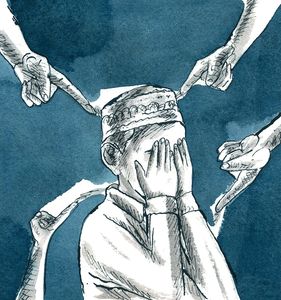
If I were Muslim, how much helpless rage might I feel about radical Islamists and terrorists who soil the name of my faith and then leave me to carry the cross of condemning them, like I am somehow responsible for their monstrous acts? What would I say to the family of Ayub Pandith, a brave Kashmiri police officer, beaten to death outside a mosque on the holiest night of Shab-e-Qadr? Or, to the family of strappingly handsome Umar Fayaz, a young soldier, killed while home for a family wedding? How would I deal with the self-appointed custodians of my religion—the orthodoxy that defends retrograde practices like triple talaq—only to embarrass me and strengthen the bigots who attack my community?

 82-Muslim Illustration: Bhaskaran
If I were Muslim, what might I feel as a citizen to learn that no Central minister attended an iftar evening hosted by India’s President? I would remind myself that even heroes of my community, President Abdul Kalam among them, said no to the wastefulness of iftar parties, donating money to orphanages instead. And, I would tell myself that my identity need not be reduced to such tokenism. But a small part of me would wonder if the same (welcome) political separation between religion and state would apply to all other festivals, too, like Diwali, Christmas and Holi.

If I were Muslim, I would look back in dismay at parties that claimed to speak for me but manipulated me and then abandoned me. I would think of Shah Bano, who went to court for the right to alimony, only to have the decision reversed by the Rajiv Gandhi government, in what would be the first, but not the only, instance of ‘secular’ malpractice. And I would think: are these my only options—a party that pushes me to the margins of irrelevance and a party that uses me?

If I were Muslim, I would remind myself of all the million reasons I love my country. But, just like every time they told me that I as a ‘moderate’ must speak up, I would ask, will the moderate Hindus—the vast majority of India—speak up for me?
...
By Barkha Dutt | From issue dated July 09, 2017 twitterlinkedingooglefacebook
http://www.theweek.in/columns/barkha-dutt/if-i-were-muslim.html   editor@theweek.in

More:

  1. https://en.wikipedia.org/wiki/Violence_against_Muslims_in_India
  2. The decline of Indian Muslims
  3. Just less than 3% Muslims in Indian Army
  4. Indian Muslims reject extremist creeds- Wiki-leaks
  5. Indian Muslims: Sachar Committee Report on latest social, economic and educational condition of the Muslim community of India

How are Indian Muslims different from other Muslims around the world ...

https://www.quora.com/How-are-Indian-Muslims-different-from-other-Muslims-arou...
The difference from social science prospective. for example, Inter faith and ... Indian Muslims as a minority group of India could be an interesting case study in the ...

'Isn't this our country?' Why Indian Muslims feel shaken and 'harassed ...

www.hindustantimes.com/india...muslims.../story-JuOWUrpN8uMPcvJ13GzoVI.html
May 30, 2017 - The feeling of distrust between the BJP government and Muslims in Uttar Pradesh has grown after the recent assembly elections.

al-Qaeda operative Zakir Musa: Zakir Musa slams Indian Muslims for ...

timesofindia.indiatimes.com › India News
Jun 6, 2017 - Al-Qaeda operative Zakir Musa asked Indian Muslims to join Jihad; He said that most of their tragedies are triggered by the United Nations ...

Indian Muslims in the Age of Muslim Uprisings | HuffPost

www.huffingtonpost.com/.../indian-muslims-in-the-age-of-muslim-uprisings_b_7213...
In this ocean of despair, one finds the Indian Muslim community, an island of calm moderation. Its not a small island either, it is a pretty big chunk. Indian Muslims ...

How oppressed are Muslims in India? - In Review - Herald

herald.dawn.com › In Review › Review essay
Aug 2, 2016 - In that sense, then, Indian Muslims certainly are a minority, particularly when one considers the growing influence of Hindu right-wing forces ..

~ ~ ~ ~ ~ ~ ~
Islamic Revival رساله تجديد الاسلام ‏

An in-depth study of the Qur’an and Islamic religious history reveals startling facts. “Risala-e-Tajdeed-ul-Islam” is a message to develop positive change in the thought and practices of Muslims.
قرآن اور اسلام کے گہرے مطالعه سےحیران کن حقائق کا انکشاف ہوا، "رساله تجديد الاسلام" مسلمانوں کے انداز فکروعمل میں مثبت تبدیلی کا پیغام ہے:

Why Saudis fighting in Yemen?

Saudi Arabia has drawn a lot of criticism lately for its leading role in the war against Houthi rebels in Yemen. Some deride the Kingdom, the richest Arab state, for taking action against the poorest. Others have claimed that the fight against the Houthis – a Zaidi Shia-led religious-political movement – is just one element in a broader war on the Shia that Saudi Arabia has supposedly been waging. These are simplistic claims, reflecting a fundamental misunderstanding about the Kingdom’s role in Yemen – and, indeed, in the entire Arab world.
Saudi Arabia is not out to get the Zaidis. In fact, it actively supported the Zaidi royal family in Yemen’s civil war in the 1960s. What the Kingdom has reacted to in Yemen is Iran’s cynical efforts to take advantage of Yemen’s internal conflict to build a military alliance with the Houthi rebels – an alliance with only one conceivable target: Saudi Arabia.
Yet when Saudi officials tried to warn the international community about Iran’s activities in Yemen, it was met with denial. Western commentators, in particular, have twisted themselves into knots to avoid recognizing any Iranian involvement in the conflict, even as evidence to the contrary has mounted.

In the last 18 months, the US Navy has intercepted four arms shipments from Iran to Yemen. Iran itself has claimed numerous times that it controls four Arab capitals, including Sana’a, and the Houthis have become closely tied with Hezbollah, Iran’s Lebanese political and military proxy.
By Ali Al Shihabi, The executive director of the Arabia Foundation, a new think tank that will focus on the geopolitics of the Arabian Peninsula. He is the author of The Saudi Kingdom: Between the Jihadi Hammer and the Iranian Anvil and Arabian War Games.
................................................................
The Treaty of Taif which had to be renewed after every twenty years stipulated “a state of perpetual peace, firm friendship and everlasting Islamic Arab brotherhood” between the two states and the relationship actually blossomed for many years only to be broken in 1948 by a coup in Yemen in which the coup makers killed the Yemeni ruler Imam Yahya, his prime minister, several dignitaries and promised to usher in a constitutional government

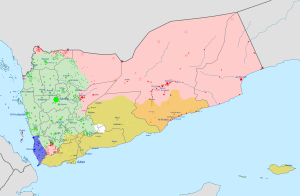
Yemeni Civil War.svg

  Controlled by Houthi (Ansar Allah) and Saleh loyalists
  Controlled by Hadi loyalists
  Controlled by Al-Qaeda/Ansar al-Sharia forces


The bystanders look upon the ongoing war in Yemen as an unnecessary stupid conflict among Muslim states as it has caused over ten thousand deaths in the last two years and in which precious treasure is being frittered away not to save but kill more lives with sophisticated weaponry supplied by the most ‘civilised’ nations of the world. For the onlookers, the Yemen conflagration is nothing more than a saga of colossal human tragedy in which innocent people have been uprooted from their hearths, women widowed, children orphaned and food and medical supplies are becoming extinct, however, to the main players of this war i.e. Saudi Arabia, Iran and the US, their “national interest” is more important than human lives, particularly of Saudi Arabia, which looks upon any political crisis in Yemen as an existential threat to her territorial integrity. That is why Saudis will fight to the last man or till the time they successfully neutralise the existential threat.

What is this existential threat to Saudi Arabia? It is the region of Asir bordering Yemen that has been the Saudi underbelly because even before the formation of Kingdom of Saudi Arabia (KSA), the tribal Emir of Asir and the ruler of Yemen hobnobbed to resist the authority of King Abd al-Aziz. In mid-1920s, when the ruler of Yemen, Imam Yahya and his son Ahmad threatened the main centres of Asir, the Emir of Asir went running for help to Abd al-Aziz and consented to the establishment of Saudi protectorate over his state in 1926, however, when Abd al-Aziz reduced the Emir of Asir to a mere figurehead under a new treaty in 1930, the latter intrigued with Imam Yahya which crystallised in a revolt in 1932 against Abd al-Aziz that was successfully crushed by the Saudis, forcing the Emir of Asir to flee to the sanctuary of Yemen.


Before the “Asir headache” could turn into a “migraine,” the Saudi King Faisal tried to settle the issue, once and for all, when the Treaty of Taif was due for renewal in 1974. He told the Yemeni leadership that though the treaty recognised Saudi sovereignty over over Asir, Najran and Jizan, it was essential that the existing border was recognised as final and permanent


The crisis lingered on because Imam Yahya was in possession of territories of Najran, Harad and a part of Asir-Tihama which the Saudi king regarded as his own and for which he eventually went to war with Yemen, that too, resulted in Saudi victory under the Treaty of Taif in 1934 in which Yemen ceded the disputed territories to Saudi Arabia. Prince (later King) Faisal who headed the Saudi military campaign wanted to conquer the whole of Yemen but his father King Abd al-Aziz ordered him to withdraw. Faisal was flabbergasted and questioned the sagacity of theorder, to which the King replied, “Yemen is not a country that can easily be conquered… If conquering Yemen were a simple undertaking that guaranteed success, Britain, which is stronger than us, in pursuit of its selfish interests, would have tried to conquer Yemen. You should be convinced by the fact that it did not do this.” The Yemenis could not forget the wounds of defeat and the very next year, during the course of Hajj, three of their pilgrims tried to stab Abd al-Aziz, who was saved by his sonEmir Saud.

The Treaty of Taif which had to be renewed after every twenty years stipulated “a state of perpetual peace, firm friendship and everlasting Islamic Arab brotherhood” between the two states and the relationship actually blossomed for many years only to be broken in 1948 by a coup in Yemen in which the coup makers killed the Yemeni ruler Imam Yahya, his prime minister, several dignitaries and promised to usher in a constitutional government which was anathema to the Saudi monarch, who, despite his aversion to Imam Ahmad, the successor of the dead Imam Yahya, supported his claim to the headship of Yemen and helped him to recapture Sanaa to establish his authority and ensured that the coup makers were publicly executed.

After a peaceful stint of fourteen years, there was yet another coup in Yemen in September 1962. Abdallah al-Sallal, the leader of the coup makers was an army officer, who was a republican nationalist by political conviction as well as a strong admirer of the Egyptian President Gamal Abdel Nasser, who was leading the popular pan-Arab wave in the Middle East. The successful coup turned out to be a big headache for the Saudi king because the Yemeni republicans demanded that the Saudi province of Asir be returned to Yemen as it had been forcibly snatched from them by Al-Saud in the 1930s. This claim was anexistential threat to the territorial integrity of Saudi Arabia and so it had to fight a costly protracted war in Yemen for about six years to nullify the Yemini claims against Saudi Arabia.

Before the “Asir headache” could turn into a “migraine,” the Saudi King Faisal tried to settle the issue, once and for all, when the Treaty of Taif was due for renewal in 1974. He told the Yemeni leadership that though the treaty recognised Saudi sovereignty over over Asir, Najran and Jizan, it was essential that the existing border was recognised as final and permanent. Consequently, on 17 March 1973, a joint Saudi-Yemeni communique was issued to this effect but there was a severe backlash against it from the Yemeni nationalists as well as the angry Yemeni students, who seized the Yemeni embassy in Cairo. It was due to such Yemeni claims on Asir in the past and possibly in future that the Saudis built the first modern military base for their defence forces in 1971 at Khamis Mushayt which is close to the Yemeni border.

The ongoing war in Yemen can bring such people in power, who can again stake claims on the Saudi territories bordering Yemen. Saudi Arabia does not want such a situation to arise again and that is why it has gone full throttle in Yemen and is likely to remain engaged till a friendly government is ensconced in power.

Till the last man in Yemen
By Basharat Hussain Qizilbash, www.pakistantoday.com.pk


Saudi Arabian-led intervention in Yemen - Wikipedia

A military intervention was launched by Saudi Arabia in 2015, leading a coalition of nine .... A conflictover a draft constitution resulted in the Houthis consolidating control over the Yemeni capital in January 2015. After resigning from his post ...

Yemeni Civil War (2015–present) - Wikipedia

Abdrabbuh Mansur Hadi (from 2015) Ali Mohsen al-Ahmar (from 2016) Khaled Bahah .... The YemeniCivil War is an ongoing conflict that began in 2015 between two factions ... The Saudi intervention, which has included widespread bombing of civilian areas, has been sharply condemned by the international community.
Smoke rises above Sanaa, Yemen following a Saudi-led coalition air strike targeting a ... The conflicthas its roots in the failure of the political transition that was ..

Middle East Conflict: Why Is Saudi Arabia Attacking Yemen? Important ...

Tribesmen attend a tribal gathering to show support to the Houthi rebel movement in Sanaa, Yemen, Nov. 10, 2016. Photo: Reuters.

Why Saudi Arabia is Hammering Yemen | The National Interest

When Saudi Arabia began bombing Yemen last year, many .... paint this as a religiousconflict the truth is that a regional power is rising from the ...

Why Saudi Arabia Is Continuing Its War In Yemen | HuffPost

Since the start of the Saudi military intervention in Yemen in March 2015 ... the strategic dimensions of the Yemen conflict to the public, insisting ...

Why is Saudi Arabia at War in Yemen? by Ali Al Shihabi - Project ...

Criticism of Saudi Arabia's role in the war against Yemen's Houthi rebels ... What drewSaudi Arabia into the conflict was Iran's effort to build a ...
~ ~ ~ ~ ~ ~ ~ ~ ~ ~ ~ ~ ~ ~ ~ ~ ~  ~ ~ ~  ~


~ ~ ~ ~ ~ ~ ~ ~~ ~ ~ ~ ~ ~  ~ ~ ~  ~
Humanity, Knowledge, Religion, Culture, Tolerance, Peace
انسانیت ، علم ، اسلام ،معاشرہ ، برداشت ، سلامتی 
Books, Articles, Blogs, Magazines,  Videos, Social Media
بلاگز، ویب سائٹس،سوشل میڈیا، میگزین، ویڈیوز,کتب
سلام فورم نیٹ ورک  Peace Forum Network 
Join Millions of visitors: لاکھوں وزٹرز میں شامل ہوں 
Salaamforum.blogspot.com 
سوشل میڈیا پر جوائین کریں یا اپنا نام ، موبائل نمر923004443470+ پر"وہٹس اپپ"یا SMS کریں   
Join 'Peace-Forum' at Social Media, WhatsApp/SMS Name,Cell#at +923004443470
     
  
Facebook: fb.me/AftabKhan.page

Iran linked to every Middle East war


Iran frequently accuses other nations of being behind tensions and terrorism in the Middle East. This is part of its classic strategy to divert attention from actual issues and to buttress its four-decade-old argument that it has enemies. Maintaining these enemies help Iranian leaders survive politically and advance their regional hegemonic ambitions. If we examine every conflict, war or terrorist act in the region, Iran is either directly or indirectly a contributor.


Image result for middle east war iran

If it was not for its support of the Alawite-dominated state of Bashar Assad, the Syrian government would have likely been altered a few months after the uprising began in 2011.
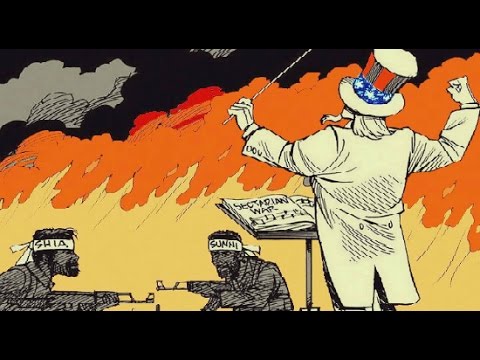
Hundreds of thousands of lives would have been saved. More than a thousand militia groups would not have emerged in Syria. Groups such as Daesh would not have found a safe haven to expand and recruit. And the Shiite-Sunni sectarian war would not have escalated.
Iran deployed its Revolutionary Guard Corps (IRGC) and Quds Force (the IRGC’s elite branch that operates in foreign countries) to assist Assad’s forces. It also provides significant financial, intelligence and advisory assistance to Assad’s apparatuses.

Tehran has long used proxies to influence Lebanese affairs and advance its revolutionary, religious and geopolitical interests. Iran created Hezbollah, and continues to train, arm and finance it and other Shiite fighters in Lebanon. To help Iran achieve its regional ambitions, these fighters are being deployed in conflicts and wars in foreign nations such as Syria.
Tehran has deeply infiltrated Iraq’s political and security infrastructures. Not only is Iran intervening directly via the IRGC and Quds Force, it is also employing proxies and militia groups, some of them designated as terrorist organizations, to influence and dominate Iraq.
We cannot resolve crises and conflicts in the region by targeting the symptoms; the disease should be tackled. Tehran is part of the problem, not the solution.

Iran is intervening in Yemen by delivering weapons to the Houthis and providing advisory and financial assistance. Tehran has also escalated sending arms to militias and terrorists in Bahrain. In last month’s sanctions announcement, the US State Department said Iran has undoubtedly “provided weapons, funding and training” to Bahraini militants.
As former British Prime Minister Tony Blair said at the American Israel Public Affairs Committee (AIPAC) annual conference in March, “if you had a benign regime in Iran, all of the problems in the Middle East would be resolvable.”

We cannot resolve Middle East crises and conflicts by targeting the symptoms; the disease should be tackled. Almost every ongoing war, conflict and crisis in the region is traceable to Tehran. It is part of the problem, not the solution.

Dr. Majid Rafizadeh is a Harvard-educated, Iranian-American political scientist. He is a leading expert on Iran and US foreign policy, a businessman and president of the International American Council. He serves on the boards of the Harvard International Review, the Harvard International Relations Council and the US-Middle East Chamber for Commerce and Business. He can be reached on Twitter @Dr_Rafizadeh.