Featured Post

SalaamOne NetWork

SalaamOne سلام   is   a nonprofit e-Forum to promote peace among humanity, through understanding and tolerance of religions, cul...

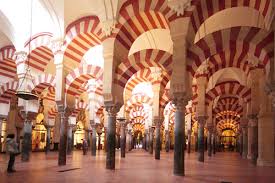
Islam is just as European as Christianity

The truth is that Muslims have lived in Europe for centuries. And while Germany and France have the largest Muslim populations of any nation in Europe (unless we’re counting Russia or Turkey), the European Union member with the highest percentage of Muslims is actually Bulgaria.
These are not immigrants: Some are descendants of Turks who’ve lived in what is now Bulgaria for centuries. But many of them are Bulgarians who converted to Islam under Ottoman rule. By choice.
Image result for islam in europe dailymotion
How old is European Islam? When Viktor Orbán isn’t busy rigging the system in favor of his increasingly authoritarian party, otherwise destroying Hungarian democracy, passively observing a dangerous rise in anti-Semitism, or cozying up to Vladimir Putin (best friend to Islamophobes like the Assad regime, which is driving so many Syrians to Hungary in the first place), he’s rewriting history.
It’s a long history, even without the longer legacy of Spanish, Portuguese, and Sicilian Islam. But briefly: 
The Ottoman Empire invaded and conquered the Balkans in the 14th century. Many of their new subjects slowly began to convert to Islam. That might sound shocking, and some use this as proof Islam isn’t indigenous to Europe. But such xenophobic logic ignores the fact that Christianity spread through Europe in almost the same way; in fact, while the Ottomans were establishing themselves in Eastern Europe, Teutonic knights were already crusading against the indigenous peoples of what are now the Baltic states, forcing them to convert to Christianity. But who amongst us thinks Lithuania or Latvia is any less European for it? Islam is simply held to a different standard.
Rising nationalism saw many of these early Muslim communities wiped out, not very differently from how Eastern Europe’s Jewish communities were. The decline of Ottoman power in the 19th century was like a receding tide, leaving behind isolated communities, often viciously attacked by authoritarian, homogeneity-obsessed nationalists.
Decades of massacres and expulsions have reduced Eastern European Islam to pockets within pockets in Albania, Kosovo, Bosnia, Macedonia, Montenegro, Bulgaria. It’s tragic, but it’s not exceptional. At the same time that many Muslims were being wiped out in Europe, Ottoman armies were extinguishing the Christian Armenian population of Anatolia. Keep reading >>>>>
Northern Europe also remained outside Christian influence until the 11th century or later, and became a crusading venue as part of the Northern Crusades of the 12th to 14th centuries. These crusades also spawned a military order, the Order of the Sword Brothers. Another order, the Teutonic Knights, although originally founded in the crusader states, focused much of its activity in the Baltic after 1225, and in 1309 moved its headquarters to Marienburg in Prussia.
Islam gained its first foothold in continental Europe in 711 with the Umayyad conquest ofHispania. They advanced into France but in 732, were defeated by the Franks at the Battle of Tours. Over the centuries the Umayyads were gradually driven south and in 1492 the Moorish Emirate of Granada surrendered to Ferdinand V and Isabella. Muslim civilians were expelled from Spain and by 1614 none remained in Spain.
Islam entered Eastern and Southeastern Europe in what are now parts of Russia and Bulgaria in the 13th century. The Ottoman Empire expanded into Europe taking huge portions of the Byzantine Empire in the 14th and 15th centuries. Over the centuries, the Ottoman Empire also gradually lost almost all of its European territories, until the empire collapsed in 1922. However, parts of the Balkans (such as Albania, Kosovo, Macedonia, Bulgaria, Sandzak (Serbia and Montenegro) and Bosnia) continue to have large populations of native, European Muslims. This is also the case in a number of regions within the Russian Federation such as the Northern Caucasus (Chechnya, Dagestan, Ingushetia, Kabardino-Balkaria, Karachay-Cherkessia, Stavropol Krai, Adygea), Crimea, Tatarstan, Bashkortostan and the Astrakhan Oblast. Transcontinental countries, such as Turkey, Azerbaijan and Kazakhstan have large Muslim populations.
In the late 20th and early 21st centuries substantial numbers of non-native Muslims immigrated to Western Europe. By 2010 an estimated 44 million Muslims were living in Europe, including an estimated 19 million in the EU.

Islamic History of Europe part 1 - Video Dailymotion

www.dailymotion.com/.../x1sdbot_islamic-history-o...

May 1, 2014
Islamic History of Europe. ... BBC - An IslamicHistory of Europe 8 of 12. by حفيد الصحابة Saif Al-Islam Omar. 582 ...

Rise of Islam in Europe - Video Dailymotion

www.dailymotion.com/.../x1fbdne_rise-of-islam-in-eu...
Mar 7, 2014
Watch the video «Rise of Islam in Europe» uploaded by Alwaladmuslim on Dailymotion.

Albanian Muslims - Islam in Southern Europe - Dailymotion

www.dailymotion.com/video/x2gmkmu
Feb 7, 2015
Watch the video «Albanian Muslims - Islam in Southern Europe» uploaded by way2jannah onDailymotion.
~ ~ ~ ~ ~ ~ ~ ~ ~ ~ ~ ~ ~ ~ ~ ~ ~  ~ ~ ~  ~
Humanity, Religion, Culture, Science, Peace
 A Project of 
Peace Forum Network
Peace Forum Network Mags
Books, Articles, Blogs, Magazines,  Videos, Social Media
Overall 2 Million visits/hits

European economies stand to gain from influx of people

The greatest influx of people into Europe in decades is not just a humanitarian emergency, but also a potential stroke of luck for many countries facing the economic threat of an aging population.

A plunge in birth rates means there will be a dearth of European workers in coming years to support the growing number of retirees. So the arrival of thousands of young and of ten well-e ducate d potential workers stands to boost the long-term economic prospects of the region.

The key is how well they are integrated and how many jobs are on offer.

Germany, among the most vocal in welcoming refugees, is also conveniently the country that stands to gain most quickly, as it has a strong labour market with lots of vacancies. But weaker economies like Greece and Italy will take years, even decades, to see positive effects as they struggle to create jobs though they too face the threat of a demographic time bomb.

`Let us not forget, we are an aging continent in demographic decline,` the president of the European Union Commission, Jean-Claude Juncker, said last month in a speech. `We will be needing talent.

Before the influx of people began this year, the German statistics office said it expected the country`s population, now 80.8 million, to shrink by a tenth or more by 2060. Germany forecasts its workforce will drop by 6m in the next 15 years.

Welcoming an estimated 800,000 people from Syria, Iraq and other countries this year will cost Germany about 6 billion euros ($6.6bn) next year in welfare support and language training.

But such upfront costs may be recouped through higher economic growth. Andreas Rees, economist at UniCredit banlc, estimates that the flood of new arrivals over the next few years could grow Germany`s economy by an extra 1.7 per cent by 2020.

Daimler CEO Dieter Zetsche made the case this week: `To take into Germany more than 800,000 people who need our help is without a doubt a Herculean task, but in the best case, it can also be the basis for the next German economic miracle.

Sweden, which last year received 80,000 asylum seekers, second highest in the EU behind Germany, also views the newcomers as a net gain, though up-front costs may be stiff. `Because we have an aging population,` Kristina Persson, minister for Nordic cooperation, said, `we have to replace those who leave the labour market.

That may not be so easy in other countries. Greece, which is the first EU country of arrival for many people travelling from the Middle East, has an unemployment rate near 25pc, with about half of young people out of work. It is expected to take a generation to turn the economy around.

And the new arrivals know it, preferring to move on to try to reach Germany and thericher countries of Northern Europe.

Ironically, some of the countries in Europe that are most threatened by a drop in birth rates are working the hardest to keep newcomers out. Hungary is one such case. It is sealing its borders with barbed wire and firing tear gas and water cannons to keep migrants away.

In Poland, a shift to smaller-size families years ago means fewer workers now support each retiree, a trend expected to worsen dramatically over the next two decades. So far, Poland has agreed to accept 2,000 refugees.

And the Czech government has barely cracked its door open, allowing in just 1,500 migrants, despite a demographic drag on its own economy.

Overall, the politics of welcoming refugees and other migrants is influenced more by cultural and political factors than economic ones. Germany`s economy could benefit from an even greater increase in immigration, experts say, but the government is hesitant. Chancellor Angela Merl
A migration expert at the OECD in Paris, Jean-Christophe Dumont, said that it`s costlier upfront tointegrate refugees than other categories of immigrants, because they often need language and vocational training as well as treatment for physical injuries or psychological trauma.

However, refugees, if well integrated, ultimately have a positive impact on the economy, Dumont said. One Australian study found that within 15 years, humanitarian migrants contribute more to their new country of residence than they cost it in benefits.

Ulrich Grillo, head of the Federation of German Industries, has said the German government needs to ensure the refugees now arriving are quickly permitted to work. Already, some companies have indicated their willingness to take on some of the newcomers, with Siemens and Deutsche Telekom offering a small number of paid internships.

McDonald`s Germany has said it would help the government provide 20,000 online language courses for asylum-seekers.

Zetsche, Daimler`s CEO, has been among the most bullish about migrants` impact, saying at the Frankfurt auto show this weel< that anyone who has managed to surmount the obstacles to make it to Germany from the Middle East or Africa has obviously got what it takes to work for him.

`I believe anybody who leaves their life completely behind will be highly motivated to learn and work here, and to build a new life,` said Zetsche. `We are looking for exactly this type of person at Mercedes, and everywhere in our country.
Dawn.com

America enters the ‘Old Middle East

What does Russia want from what remains of Syria? Well, one thing is for sure: any bet that Moscow may be willing to implement the Geneva documents – even according to the interpretation of Vladimir Putin and his diplomatic “commissar” Sergey Lavrov – is naïve to say the least. The current political climate in the Middle East is not only suitable, but encouraging for Moscow to flex its muscles.

It is not every day that a president like Barack Obama occupies the White House; and, as long as Obama continues to make the alliance with Iran the focus of his “political legacy,” while his Republican opponents fail to come up with an alternative and meaningful Middle East policy, Washington’s room for maneuver in the region will be limited, and belatedly reactive.

Some claim that behind Obama’s insistence on securing the nuclear deal with Iran is a “carrot and stick” strategy. This means he is betting on improving the chances of a pragmatist “reformists” victory against the “conservative” Mullahs and the Islamic Revolutionary Guard Corps leadership, and bartering Iran’s nuclear weapons with regional influence granted to it at the expense of its neighbors.

America’s inaction towards the Syrian uprising has been the green light that reassured Putin that he could do what he pleased.

Eyad Abu Shakra
Such a scenario is of course possible given the relatively large number of pro-Israel senators whom the White House managed to “convince” and win over, and the “satisfied” silence of Israel’s military and security establishment which – as reported recently – rejected more than once Benjamin Netanyahu’s prodding to attack Iran.

Reformist camp
If the reformist camp does manage to win – as Obama seems to believe it will – I reckon Moscow would have some sort of “arrangement” that would guarantee it enough influence near Russia’s southern borders and in the eastern Mediterranean.

Putin is a politician and former intelligence officer whose political identity matured in the thick of the Cold War and the East-West confrontation. He later witnessed the humiliation suffered by the defeated, and consequently fragmented, USSR at the hands of a jubilant and disrespectful West. Thus, as the slogans of “Socialism,” “Humanity,” and the “Right of self-determination” lectured to us by the old Pravda are today only entertained by imbeciles of the childish left and traded by “intelligence service Arabists,” one must realize that we are dealing with a “neo-Tsarist” Russia.

Inaction
America’s inaction towards the Syrian uprising has been the green light that reassured Putin that he could do what he pleased, whether in Crimea or eastern Ukraine. Today, we are back at full circle; and, again, Washington is reiterating that it is only interested in reassuring Iran and Israel, even if the price is alienating Turkey and the Arabs.

Neo-Tsarist Russia will never forget the Middle East, where old Tsarist Russia had prominent consuls, monasteries, “seminars,” and “Muscovite” schools. And while France thought of itself as the guardian of Catholics and Maronites in the region, and Britain and later America became active in spreading Protestant institutions, Russia became the protector and guide of the Orthodox community in the Middle East.

Tsarist past
So, Putin’s Russia, now that socialism is a profitable commodity no more, is reverting to its Tsarist past, and why not? It is powerful enough not to seek approval, or permission, from anyone to fight the “political Islam” it has fought against for centuries throughout its vast lands and along its long borders extending from the Balkans, through the Caucasus, to central Asia.
There is also another side to the story, this time linked to Russia’s erstwhile tactical alliance with Iran. A few months ago a rumor began to spread that senior Iranian leaders informed a high-ranking Syrian regime official visiting the country that Iran “has paid and continues to pay a lot” in defending Bashar Al-Assad’s regime. They added that Iran needs as collateral lands they have already chosen inside Syria, valued close to their estimate of what Tehran has already spent on the conflict – $26 billion.

Upon his return, the Syrian official reported to Assad what he had heard in Tehran. Assad reacted to the Iranian message – so the rumor goes – by contacting a number of Syrian Christian notables and informing them bluntly that the Iranians “want to take over the country,” and that he was in no position to protect them; thus he may need to rely on Russia!

This rumor was published in the Middle East, but like most rumors no one is willing to own up or give credence to, it soon faded and disappeared. Still, the way Iran is managing the war in Syria through its Revolutionary Guards – including its sectarian Lebanese, Iraqi, and other Shi’ite militias – in Zabadani, the Qalamoun Mountains, Hauran, and northern Syria, and its central role in negotiations concerned with population exchange, confirms that it is fully in charge.

The ‘useful Syria’
Yes, Iran is now actually and effectively running the “useful Syria,” leaving Assad as a mere figurehead. This means that the pre-March 2011 Syria is finished and gone regardless of what happens to Assad and the skeleton of his moribund regime. It also means that if Turkey finds itself forced to pre-empt the establishment of an independent Kurdish entity along its southern border with Syria, extending from northern Iraq to Turkey’s Hatay Province, Russia may decide it wouldn’t be a good idea after all to relinquish its influence in Syria to Iran; more so if victorious Iran’s “reformists” become Washington’s allies.

In the meantime, Washington has just “discovered” that after being quite busy envisaging a “New Middle East” it seems to be looking the “Old Middle East” in the face!

In an assessment that is at odds with official Obama administration policy, Lt. Gen. Vincent Stewart, the head of the Defense Intelligence Agency, said recently at an industry conference that Iraq and Syria may have been permanently torn asunder by war and sectarian tensions, adding that “I’m having a tough time seeing it [Iraq and Syria] come back together.” On Iraq, Stewart said he was “wrestling with the idea that the Kurds will come back to a central government of Iraq,” suggesting he believed it was unlikely. On Syria, he said: “I can see a time in the future where Syria is fractured into two or three parts.” That is not the US goal, he said, but it’s looking increasingly likely.

CIA Director John Brennan, speaking on the same panel, meanwhile said: “Iraqis and Syrians now more often identify themselves by tribe or religious sect, rather than by their nationality . . . I think the Middle East is going to be seeing change over the coming decade or two that is going to make it look unlike it did.”

Brilliant “discoveries” indeed. Pity they do not surprise monitors of Washington’s policies anymore!

This article was first published in Asharq al-Awsat on Sept 16, 2015.

________________
Eyad Abu Shakra (also written as Ayad Abou-Chakra) began his media career in 1973 with Annahar newspaper in Lebanon. He joined Asharq Al-Awsat newspaper in the UK in 1979, occupying several positions including: Senior Editor, Managing Editor, and Head of Research Unit, as well as being a regular columnist. He has several published works, including books, chapters in edited books, and specialized articles, in addition to frequent regular TV and radio appearances.

http://english.alarabiya.net/en/views/news/world/2015/09/19/Obama-in-the-Middle-East-What-we-ve-got-here-is-failure-of-leadership.html

Why Isis fights

For more than a century, Dabiq was one of northern Syria’s forsaken villages, a speck on a vast agricultural plain between the Turkish border and the deserts of Iraq, which hardly seemed likely to shape the fate of nations. A weathered sign at its entrance said 4,000 people lived there, most of whom appeared to have left by 2013, driven out over time by a lack of work – and lately by insurrection. For the first three years of Syria’s civil war, the arrival of a strange car would lure bored children to the town’s otherwise empty streets, scattering cats and chickens as they scampered after it. Little else moved. Dabiq’s few remaining men worked on the odd building project: a half-finished mosque, a humble house for one local who had just returned after 10 years labouring in Lebanon, or a fence for the shrine that was the town’s only showpiece – the tomb of Sulayman ibn Abd al-Malik. The Ummayad caliph was buried under a mound of earth in 717, which over many centuries had somehow grown into a small hill. The war was happening elsewhere, it seemed. Related: Isis: the inside story | Martin Chulov That was until the jihadists of Islamic State (Isis) arrived in early 2014, an event that the Dabiq elders had feared from the moment the war began – and which the new arrivals had anticipated for much longer. To the foreigners, and the leaders of the new militant juggernaut who were beckoning them, the war had by then entered a new phase that would transform the tussle for power in Syria into something far more grand and important. For them, the conflict that was slicing the country apart was not merely, as the Syrian opposition had seen it, a modern struggle between a ruthless state and a restive underclass. The jihadis instead saw themselves at the vanguard of a war that many among them believed had been preordained in the formative days of Islam. One of the earliest sayings of the Prophet Muhammad – a hadith – mentions Dabiq as the location of a fateful showdown between Christians and Muslims which will be a precursor to the apocalypse. According to another prophecy, this confrontation will come after a period of truce between Muslims and Christians, during which Muslims – and only puritanical Sunnis fit the definition – would fight an undefined enemy, which in northern Syria today is deemed to be “Persians”. “The Hour will not be established until the Romans [Christians] land at Dabiq,” the hadith says. “Then an army from Medina of the best people on the earth at that time will leave for them … So they will fight them. Then one third of [the fighters] will flee; Allah will never forgive them. One third will be killed; they will be the best martyrs with Allah. And one third will conquer them; they will never be afflicted with sorrow. Then they will conquer Constantinople.” Now, close to 1,500 years later, have come waves of fighters who paid strict heed to these prophecies – and see the rise of Islamic State as a crucial turning point in a centuries-long battle of civilisations. For their purposes, the “Persians” today are not simply Iran, but also the Alawite regime that controls Syria and the Shia militias from around the region who have come to its defence. The jihadis started to arrive in the summer of 2012, more than one year into Syria’s war, which had by then started to tip in favour of a ramshackle opposition that was locked into ousting Bashar al-Assad at all costs. Over the following six months, the foreigners came from all points of the globe, gradually asserting their will over opposition groups that were failing to press home their early gains on the battlefield and offered no convincing plan for the type of society that would eventually emerge from Syria’s ruins. One man in Dabiq recalled to me the day that the war for the north was lost to the jihadis. “They came in a column of trucks one day early last year. They said nothing. They just set themselves up at the mosque,” he said in May 2014. “Now everyone knows where Dabiq is. We are why they are destroying the whole region.” “We know about the prophecy, of course we do,” another Dabiq local told me, sitting on the concrete floor of his home in late 2013. “But we are hoping that it is just legend. God willing they will leave us alone.” The man’s faith was misplaced. Within three months, Isis had set up a command post among rows of concrete homes, and was sending hundreds of its fighters and their families to relocate there. Dabiq, which has been essentially inaccessible to journalists since that conversation, is now one of three main focal points of the war the group is waging on the region. Raqqa in eastern Syria is Isis’s strategic hub, and Mosul in Iraq is its greatest conquest. But Dabiq is the place that allows the group to underpin its rampage with theology. In the eyes of Isis, the reference to the town in Islamic teachings gives the group’s rampage an incontestable mandate – a powerful thing to table when you’re trying to impose a new world order. And it appears to be working. To the estimated 20,000 foreigners who have travelled to join the so-called Islamic caliphate, declared last June by the Isis leader Abu Bakr al-Baghdadi, the symbolism of Dabiq is one of the jihadis’ most alluring calling cards. The group has even named its online magazine in the town’s honour. Many of Dabiq’s new residents have taken prominent roles in the legions of Arab and western Muslims who have helped turn Isis into the potent and terrifying ideological force that it now represents. “They’ve moved into our homes,” said a fighter from the Islamic Front, a conservative grouping of the armed Syrian opposition that is opposed to Isis. Like all other Dabiq locals, he feared the jihadis in their midst and would only speak openly with the protection of a nom de guerre. “They have threatened my father, seized my house, killed our animals and stolen our war,” he said. “Our fight with them is as big as it is with the regime.” By mid-2015, Dabiq itself was draped in the group’s iconography, black flags flying above all its mosques and civic buildings. Many of its homes have been painted with the familiar black backdrop and white Islamic creed that Isis uses as its calling card. Columns of fighters come and go from the town, the population of which has more than doubled since Isis took over. Nearly all the locals have left, however, surrendering their vegetable farms to the marauders, who dress in ankle-length gelabiyas and eschew most of the trappings of modern life. Many wear ammunition belts around their chests. Most carry weapons. The tomb of Sulayman ibn Abd al-Malik has been destroyed, as have all other graves not considered modest enough. Save for the utility trucks, generators and modern weapons, everything else in town now has the feel of 7th-century frugality. * * * This is the story of why men from all over the world have chosen to fight in a brutal and apocalyptic war; of what drew them to the battlefields of Iraq and Syria; and of what has kept many of them there as Europe and the west have scrambled to stem the flow, first of their own nationals fleeing to join Isis and now of millions of refugees fleeing the other way. A fighter films an Isis military parade in Raqqa province, Syria. Photograph: Reuters It is told largely by five men with whom I have spoken, at some length, over the past four years, inside Syria and Iraq. Their motivations are similar, but in some cases they are diverse and contradictory. All of them draw at least some inspiration from the prophecy of an epochal confrontation in Dabiq; they see themselves as underdogs, fired by a sense of divine mission. Individually, each man painted a distinct portrait of his reasons for joining a movement that is fast causing the collapse of an order that has bound the region together for centuries, and posing a direct challenge to all the Middle East’s current forms of governance, threatening autocracies, monarchies and quasi-democracies alike. All of these men believed that by travelling to fight for the caliphate, they were standard-bearers of their faith. They also felt sure they were acting to restore Islam to its lost glories – and had a sense of privilege and pride that their generation was the one that had been chosen to right the wrongs of the past. These sentiments are shared by many others I have met: two senior Isis members who have been captured by Iraqi forces and are now facing death sentences; a Syria-based Tunisian fighter who believes his duty is to obey the orders of his superiors with unswerving servility; and even one former member of a mainstream rebel militia, who joined the ranks of his jihadi foes when he realised the battle was turning in their favour. But they also had myriad other reasons for joining the terror group that had little to do with their understanding of Islamic scripture or any sense of holy war. Some saw themselves as victims of oppression, others as sons of dispossessed families. Another thought of himself as a cultural warrior, not a holy warrior: he argued that joining the jihad was an entirely practical obligation, necessary to restore the caliphate and bring on the prophecy of the end times. Few were untouched by a yearning for the collective memory of the early centuries of Islam, alongside contemporary grievances about a humiliating loss of power at the hands of the west in recent years. By late 2014, they were all fighting under the banner of the most radical and dangerous jihadi group to have formed in the past 30 years. And Dabiq was now ground zero for their struggle. * * * In February 2013, I was a few miles from the Turkish border, standing on a road outside a government office that rebel fighters had just commandeered as a base, and inspecting the ruins of a Syrian army tank that had been destroyed in a battle a few days earlier. The rebels who had taken the office warned me that the building next door had been occupied by foreigners who had crossed the border to fight in Syria. Isis had not yet formed, but the men I could see inside that building, darting between the windows and the stairwells, would join the group when it raised its colours several months later. By early 2013, foreign fighters from around the world were converging in the rolling hills of the Jebel al-Akrad region of north-western Syria, 200 miles west of Dabiq. The men had commandeered homes of Alawite families who had been forced to flee from their path. The jihadis had taken refuge among elements of the Free Syrian Army, who in the weeks prior had pushed the Syrian army south towards the regime stronghold of Latakia. As I looked at the tank, one of these foreigners walked down a small hill towards where I stood on the road, with a Kalashnikov strapped across his chest and menace in his stride. He asked for my identification, which he refused to return. I asked him what had caused him to leave his life and travel to Syria. “Omar and Ali – is that your question?” came his enigmatic reply. “Omar” is traditionally a Sunni name; “Ali” is identified with Shia Islam. The fighter, who called himself Abu Muhammad, had immediately made the sectarian nature of his cause clear, and I soon learned that he and the other jihadis occupying the formerly Alawite houses nearby had erased any signs of iconography from their walls, painting them over with graffiti touting the superiority of Sunni Islam. A 30-year-old Lebanese national, Abu Muhammad had four wives, 10 children and an American education, and he was now trying to detain me on suspicion of being a spy. “There are reasons for us fighting now,” he said in perfect English. “All of this was destined to happen.” After an uneasy standoff on the road, where we were soon joined by armed members of the rebel group that was hosting me, Abu Muhammad calculated that taking me hostage would perhaps be unwise. So he invited me for tea instead, and we settled into plastic chairs under the house his group was using as a base. We talked more about his belief that those who lived in a western economy, earned a wage, paid taxes and took part in a community life that was not Islamic were just as deviant as those who had renounced their faith. For him, there was no room for compromise on what made a person worthy of an afterlife, or eternal damnation. “This will be a war against a powerful enemy,” he said. “And the Muslims will win. You are here on a humanitarian mission, so you can leave. But don’t stay long.” I did not, but over the next 18 months, in five more trips to northern Syria, I witnessed the relentless rise of the jihadis in Idlib and Aleppo provinces. They steadily captured swaths of land in both provinces, particularly in the countryside, imposing their will with an increasing ruthlessness and defying the writ of the other rebel units, who had their guns trained on Assad’s army, and wanted a new nation-state to rise from whatever was left of Syria. The jihadis saw Assad as part of the problem, but they had a bigger goal – and that meant subjugating the rebel cause. Wherever they were able, they were transforming the battle for Syria’s destiny from a fight against one type of tyranny into nihilistic chaos. By the time another young jihadi, Abu Issa, was freed from Aleppo’s central prison in late 2011, the Trojan horse act that was Isis was well under way – fuelled by Turkey’s porous borders, the savagery of the Syrian regime, feckless attempts to organise opposition fighters into a cohesive force, and the release of militant prisoners like himself. A Syrian with historical links to the group’s earliest incarnation, al-Qaida in Iraq, Abu Issa was released along with dozens of men like him as part of an amnesty given by Assad to Islamist detainees, which was touted by the regime as a reconciliation with men who had long fought against them. Most of the accused al-Qaida men had been in the infamous Syrian prison system for many years before the uprising against Assad began. “We were in the worst dungeons in Syria,” said Abu Issa, who was a member of the various forerunners of Isis, and fought against the US army in 2004 and 2005 before fleeing Baghdad in 2006. “If you were charged with our crimes, you were sent to Political Security prison, Saydnaya in Damascus or Air Force Intelligence in Aleppo. You could not even speak to the guards there. It was just brutality and fear.” But several months before Abu Issa was released, he and a large group of other jihadis were moved from their isolation cells elsewhere in the country and flown to Aleppo’s main prison, where they enjoyed a more communal and comfortable life. “It was like a hotel,” he said. “We couldn’t believe it. There were cigarettes, blankets, anything you wanted. You could even get girls.” Soon the detainees were puzzled by another prison oddity, the arrival of university students who had been arrested in Aleppo for protesting against the Assad regime. “They were kids with posters and they were being sent to prison with the jihadis,” he said. “One of them was a communist and he talked about his views to everyone. There was a guy from al-Qaida in the prison and he was usually very polite but he got angry with this guy. He said if he saw him again he would kill him.” Abu Issa and the other Islamist detainees soon formed the view that they had been moved to the Aleppo prison for a reason – to instil a harder ideological line into the university students, who back then were at the vanguard of the uprising in Syria’s largest city. On the same day that Abu Issa and many of his friends were released, the Lebanese government, which is supported by Damascus, also freed more than 70 jihadis, many of whom had been convicted of terrorism offences and were serving lengthy terms. The release puzzled western officials in Beirut who had been monitoring the fates of many of the accused jihadis in Lebanon’s jails for more than four years. Some had been directly linked to a deadly jihadi uprising in the Nahr al-Bared Palestinian refugee camp in July 2007, which led to 190 Lebanese soldiers being killed in battle and much of the camp destroyed. The claim that the Syrian regime aided the rise of extremism to splinter the opposition and reaffirm its own narrative that the war was all about terrorism in the first place has been widely repeated throughout the past five years. It is a central grievance of the mainstream opposition in Syria’s north, which says it lost more than 1,500 of its men ousting Isis from Idlib and Aleppo in early 2014. At the same time as the opposition was fighting the jihadis, the Syrian regime, which did not intervene, was able to advance around the city for the first time in the war. “There was no other reason for Salafi jihadis to be in that jail, and for the students to be with us,” said Abu Issa, who now lives in exile in Turkey. “They wanted them to be radicalised. If this stayed as a street protest, it would have toppled [the regime] within months, and they knew it.” Among the jihadis, there was initially no talk about why they were being freed, Abu Issa said. Just relief to have somehow made it out of a system that had swallowed other accused terrorists for decades. “Nobody wanted to acknowledge it, at first,” he said. “But in time everyone knew what was happening. There were some very important terrorists freed that day. They did what was expected of them and went straight to join the fight against the regime. That was the first moment when the war stopped being about civil rights.” * * * By early 2013, the jihadis had also set up boot camps just inside the Syrian border; several of which were within two miles of the main crossings from Turkey. A Saudi fighter named Gosowan ran the camps from the nearby town of Azaz. New recruits were given 30 days’ basic training and intensive Qur’anic lessons, then sent to the front lines. A huge Turkish flag, around the size of a two-storey building, flew over the nearby border post. Related: How Isis crippled al-Qaida | Shiv Malik, Ali Younes, Spencer Ackerman, Mustafa Khalili It was around this time that I met an Iraqi jihadi named Abu Ismael, who was not shy about his own past. “I was a member of the al-Qaida organisation from 2005-11,” he said, his black eyes set in an unflinching stare. “I joined them with my father when I was 16, and apart from one and a half months in prison, I was very active in every way.” Now 23, he had made his way to al-Bab in Aleppo province in the second half of 2012 and been accepted as an auxiliary fighter by a local opposition unit, Liwa al-Tawheed. “We don’t trust al-Qaida,” the group’s leader, Sheikh Omar Othman, said at the time. “They don’t want what we want, but as Muslims we must accept wayfarers, especially if they come to help.” Abu Ismael said he was one of many Iraqis who had travelled to Syria. For him, and others like him, the civil war was an extension of the same fault line over which Iraq had been torn in two between 2005 and 2007 – a power struggle between vanquished Sunnis and ascendant Shias. Though the battle lines were drawn on a very modern political rivalry, Abu Ismael told me he believed they were rooted in the historical split between the sects that had taken place in Mesopotamia more than a thousand years earlier. “There are around 50 Iraqis in each area of northern Syria. Perhaps more,” he said. “It was not difficult to get here and it is not hard to find other mujahideen. We can fight where we want to and when we want to. And God willing we will prevail.” In early 2012, I met another man, called Abu Ahmed, who had also come through the furnace of the Iraqi insurgency, similarly drawn into militancy by the belief that Sunnis had suffered a devastating loss of power in the wake of the American invasion. He had been affiliated with the group from its earliest days – and described to me how they had organised themselves during the US occupation of Iraq, using the Camp Bucca prison as an incubator for the decade of terror that was to follow. “By 2010, [the insurgency in Iraq] wasn’t working out,” he said. “But then we became energised again.” It was the second half of 2012 in Syria, when Iraqis like Abu Ismael came to join the fight, that had been critical for Isis, Abu Ahmed later told me: these were the months that pulled together all that the forerunners of the group had tried, and failed, to achieve in the prior 10 years. “There were some who had lost hope, others who had drifted away,” he said. “But now it was coming together. People that had scattered were now being drawn back in.” Some Iraqi veterans had been fighting with regular opposition units in Syria, others were in Syrian prisons. Yet more had grown up and moved on. And others, like Abu Ahmed, had disavowed much of the dogma associated with Isis and dreaded the inevitable call from the men who led the now revitalised group. The reunion was a match of competing motivations, much like the arrival of the new crop of fighters. By April 2013, the number of Iraqis fighting in Syria had reached at least 5,000 and was growing daily. Iraqi veterans of the fight against the US occupation, and the sectarian war against the Shias, had crossed the border and were taking leadership positions in a new group that would soon subsume the most organised and capable jihadi outfit in Syria, Jabhat al-Nusra. Throughout that year, newcomers in jihadi battle dress were regular features, both in the war zones along the Turkish border, and on flights from Istanbul to Gaziantep or Antakya, the two main staging posts for fighters wanting to cross into Syria. On every flight I took on one of the two routes from May 2012 to May 2014, there were at least five jihadis on board, clearly on their way to join the fight. Most refused to sit near women; some had Qur’anic recitations as ringtones; and none were shy about where they were going. They got on and off the plane with no trouble and, according to drivers who were sent to meet them, usually headed straight from the airport to the border. “I took four guys one week and two the next,” Suleiman Cenar, a taxi driver based in Antakya, told me in September 2013. “They knew the GPS coordinates of where they wanted to go. I dropped them by the side of the road and they walked through the forest with their belongings.” Central to its growth was the arrival some months earlier of an elderly man with a grey beard who set up home in the nondescript northern Syrian town of Tal Rifaat. The newcomer’s name was Samer al-Khlifawi. He arrived with a wife and a blueprint for how to run a security state that he had learned from his days as a colonel in Saddam Hussein’s air force. Khlifawi, like every other member of Saddam’s armed forces, lost his job, his pension, and any chance of meaningful employment after US viceroy Paul Bremer disbanded the Iraqi military and outlawed the Ba’ath party, to which many of its members – especially its senior officers – belonged. An Isis fighter distributes soft drinks, biscuits and religious pamphlets to local people in Tel Abyad, northern Syria. Photograph: AP In the years immediately following his sacking, Khlifawi, along with dozens of other Ba’athists, steadily got organising. Some joined the anti-US insurgency, which at that point was forming more or less along Islamic lines. Others, like him, formed their own networks and established bonds with Ba’athists in Syria, who offered refuge and helped with supply lines. By about 2007 the Islamist groups, among them Salafist jihadi outfits such as al-Qaida in Iraq (AQI), had allied with some of the Ba’athists – an alliance that would never have been possible under Saddam, who saw organised jihadis as one of the biggest threats to his rule. The bond gave the jihadis a tactical guile and the Ba’athists a military muscle that neither could have boasted without the other. As AQI, then the Islamic State of Iraq, and now Isis evolved, this bond has been central to nearly all of their achievements. And Khlifawi, who had managed to stay underground for nearly a decade after the fall of Baghdad, was increasingly front and centre. As soon as Khlifawi arrived in Tal Rifaat, he started laying down roots for Isis. His goal was to establish systems and structures that would help Isis eventually take over the communities in which people like him had arrived. Around 50 Iraqis, most trusted veterans of the insurgency like Khlifawi, or in some cases their sons, were soon dispatched to Syria and given the job of infiltrating the tribal and community life of their adopted homes. Khlifawi drew up documents, which were later revealed by Christoph Reuter in Der Spiegel, that showed how he planned, with clinical efficiency, to subvert the communities of the north. He encouraged the young Iraqis to set up charities that would be used as fronts, to identify the most powerful tribes and clans and to try to marry into them. Rival power bases were also to be pointed out – a precursor to them being eliminated when the time was right. The communities who had accepted the strangers as wayfarers wanting to help them did not see it coming. “One day in January, they just raised a black flag,” said Abu Abdullah, an opposition fighter from Tal Rifaat. “Nobody knew what to do.” Within months, the pieces were sufficiently in place for Baghdadi to start his move. He announced in April that Jabhat al-Nusra, the al-Qaida-aligned jihadi group, would be subsumed by the newly named Isis. That same afternoon, Baghdadi’s men, most of them Iraqis like Abu Ismael, rode into central Aleppo and kicked al-Nusra members out of their main base in the city’s eye hospital. They then painted it black and took it over. Across northern Syria, the scene was repeated with ruthless efficiency. It was the first of two bold forays that demonstrated to the Syrian opposition and to the region that Isis had become an organisation that matched its words with deeds. “That was a very important time for us,” I was told by another Isis member, Abu Saleh. Now based in Falluja, he had grown up in Muslim Brotherhood circles in Baghdad, and joined dozens of his friends in the west of the capital as the anti-US insurgency grew after 2003. Once a street-smart and risk-taking youth, he had become a true believer in what Isis was fighting for – though he freely admitted to me that his affection for western trappings like cars, technology and weapons was sometimes difficult to reconcile with the frugal ways his leaders demanded of him. But he too had been energised by the struggle spilling across the border. “Things had not always gone well in Iraq,” he said. “There had been mistakes. And we had to be patient. But now Syria had helped us revive ourselves. It would also revive the caliphate.” In August 2015 Isis announced that they had destroyed the temple of Baal Shamin in Palmyra, Syria. Photograph: Rex Shutterstock * * * Shortly after Isis ousted Jabhat al-Nusra in April 2013, Abu Muhammad, the Lebanese fighter who had tried to detain me in northern Syria, was killed while participating in an attack on a regime air base near the Turkish border. He had foreshadowed his own death during our long conversation two months earlier. “I want this more than you want life,” he had said. “This is our destiny.” Abu Ahmed, with whom I remain in regular contact, became more involved with Isis from mid-2013. He remains disaffected with the group, which he believes has strayed well beyond its original remit of fighting the US army and defending Sunnis against their marginalisation in post-Saddam Iraq. But even with his reluctance, he still believes that he too is helping to restore lost glories – of both ancient Islamic civilisation and a more recent era of Sunni power – by fighting against Iran and the Assad regime. “This is just a reality,” he said. “The Americans are working with Iran against the Sunnis. This is not a conspiracy theory.” Abu Ismael is now an emir in eastern Syria, having – perhaps unwittingly – played a key role in the subjugation by Isis of much of the north. His remit has taken him to Hama and to Palmyra, north-west of Damascus, where Isis fighters have systematically destroyed one of the most important archaeological sites in the world, in their bid to revert the region to an Islamic year zero. In Falluja, Abu Saleh, the young jihadi from Baghdad, remains on the front lines, committed to a cause that he insists is righteous. “All of this, the Iranian invasion, the Americans coming, the fall of Baghdad and the rise of Dabiq, was predicted. We will not stop until we win in the name of Allah.” Abu Issa, meanwhile, is trying to make a living in Turkey. Many friends from his younger days in the jihadi movement are still in regular contact with him, as are the men he spent prison time with – an amalgam of Muslim Brotherhood types, men who dabbled with al-Qaida, others who were drawn to fight by perceptions of injustice, and many more who, when they started protesting in 2011, saw no other cause except having a voice in an inclusive government. “Some of them became jihadis, just like the regime wanted,” Abu Issa told me. “But most faded away and lost hope. It’s mostly the jihadis who have hope now. They have lots of themes to believe in. And they choose which one suits them.”
Why Isis fights by Martin Chulov, theguardian.com

Preview: Who is to blame for the war in Yemen?

Preview: Who is to blame for the war in Yemen? http://flip.it/JsNXF

Here’s What Healthy People Actually Eat All The Time

Here’s What Healthy People Actually Eat All The Time http://flip.it/EDD95

How Many Steps It Takes to Burn Off Your Favorite Foods

How Many Steps It Takes to Burn Off Your Favorite Foods http://flip.it/crD1S

Nandi Pur Power Plant Corruption Scam

THE ego-fuelled haste with which the Nandipur power project was hustled along towards completion has now yielded up its fruit.

The power plant remains idle despite massive cost overruns, and the government, which once touted the project as an emblem of its can-do credentials, is now calling for an audit of the scheme.

What makes the whole affair even more troubling is that it comes in the middle of a large spurt in power projects, many of them connected with the China Pakistan Economic Corridor, and which the government is similarly trying hard to own as emblems of its success.

Also read: Nandipur power plant failure: what needs to be probed?

The Nandipur fiasco has rightly cast a shadow over those as well, since any government that can botch up this project can make a mess of the others too.

One large CPEC project in Gadani has already been wound up because it ran the risk of becoming another example of failure, but on a far bigger scale. Given this context, it is imperative that the Nandipur fiasco be examined very closely and the right lessons be drawn from it.

An audit of the project’s finances is certainly in order, but perhaps an investigation into the massive cost overruns, including an $80m remobilisation advance for the contractor and a $30m tab for conversion to a different fuel, should also be carried out.

But it is also important to add that thus far there is little to no evidence of corruption or any other irregularity that would merit the use of the word ‘scam’.

The project has suffered from a wide range of governmental failures — incompetence, poor planning, haste, lack of coordination — but whether or not there has been any criminal irregularity has not yet been determined.

The NAB investigation into the project is very old, and its results are yet to be known, but its focus is also on the earlier phase when the project languished due to neglect by the previous government.

The political parties that are seeking to raise this issue in the next session of parliament ought to direct their fire towards demanding greater scrutiny of the cost overruns, and the sequence of decision-making that resulted in a series of reversals in crucial questions, such as the choice of fuel for the power plant during its construction stage.

Who made what decision and when? If evidence of wrongdoing surfaces after this, it should be pursued with vigour.

Published in Dawn, September 15th, 2015
http://www.dawn.com/news/1207020

The Refugee Crisis is a Crisis of Imperialism

The real tragedy is the refusal of Western leaders to acknowledge the cause of the refugee crisis – Western imperialism’s genocidal and never ending wars on the people of the Middle East, Central Asia, and Africa.

There are now more refugees than at any time since World War 2, and the number of refugees has increased markedly since the start of the “Global War on Terror” [3]. Wherever the U.S. and its imperialist allies have intervened, whether through direct military action or indirect proxy wars, economic sabotage, and coups, in the name of “democracy”, the “War on Terror”, or the “responsibility to protect”, death and despair have been forced upon millions of innocent people, who have been left no other choice than to abandon their native lands to embark on a dangerous future of desperate struggle.

In Afghanistan, Iraq, Libya, Syria, Yemen, Pakistan, Somalia, Mali, Korea, Vietnam, East Timor, Sudan, Ukraine, and elsewhere the livelihoods of millions have been destroyed by the forces of U.S. and Western imperialism.

In the 1980s, Afghanistan had a “genuinely popular government”, according to John Ryan, retired professor from the University of Winnipeg, that was implementing widespread reforms [4]. Labour unions were legalized, a minimum wage was established, hundreds of thousands of Afghans were enrolled in educational facilities, and women were freed from age-old tribal bondage and able to earn an independent income. U.S. and Western imperialism, fearful of that kind of equitable distribution of wealth, supported the feudal landlords and fundamentalist mullahs to sow chaos across the country, bringing rise to elements that later formed al-Qaeda and the Taliban. The Afghan people were once more dealt a severe punishment by the forces of Western imperialism following 9/11, despite a lack of conclusive evidence linking either the Taliban or al-Qaeda to the attacks. 30 years of U.S. intervention in Afghanistan have left the people of Afghanistan impoverished, traumatized, and desperate.

The conflicts in Libya and Syria are eerily similar to the Western destabilization of Afghanistan. In 2011, when the Arab Spring protests swept across the Middle East and North Africa, Western imperialism hijacked legitimate grievances of the masses as a pretext for intervention in the name of the “responsibility to protect” and “democracy promotion”.

Prior to the 2011 U.S./NATO intervention, Libya was among the wealthiest and most stable countries in Africa, with the continent’s highest standard of living. Housing was enshrined as a human right, education and healthcare services were free for all citizens, and the country was pushing to establish an African currency linked to gold to help end the endless cycle of debt and impoverishment of the African masses by Western imperialism [5]. Under the cloak of the United Nations, Western imperialism, using the pretext of protecting the people of Libya from Gaddafi’s murderous rule, launched airstrikes on Libya and allied themselves with al-Qaeda in the Islamic Maghreb and other Libyan extremists [6]. NATO airstrikes killed hundreds of civilians and forced Libya back into the Stone Age; Gaddafi was mercilessly tortured and murdered by the rebels. Thousands have been killed as rival tribal and extremist factions, some now allied with ISIS, battling for control of the country.

The conflict in Syria has frequently been referred to as “Libya 2.0”. U.S. imperialism with the support of Israel, Turkey, and the Persian Gulf States, trained and financed “moderate” rebels to overthrow the secular and popularly supported government of Bashar al-Assad. The “Free Syrian Army”, i.e., the “moderate” rebels, has been virtually eliminated in the conflict despite millions of dollars in aid from the U.S. and its regional allies [7]. FSA fighters have deserted to the ranks of ISIS en masse, itself a product of the illegal U.S. occupation of Iraq that killed 1 million Iraqis. There is overwhelming evidence that the U.S. and its allies have been actively training and supporting ISIS elements since the start of the proxy war in Syria [8][9]. It wasn’t until ISIS invaded Iraq with its new Toyota technicals, curtesy of U.S. imperialism, that ISIS was declared a threat to the world. Western imperialism changed its tactic from supporting ISIS to airstrikes on Iraq and Syria, with the support of other Western imperialist states, Turkey (which is also conveniently bombing anti-ISIS Kurdish fighters [10]), Saudi Arabia and the Persian Gulf States, but without consultation with the Syrian government, Iran, or Hezbollah that have been fighting ISIS and al-Qaeda elements since the start of the conflict. Hundreds of thousands have died in the West’s proxy war against the Syrian government.

From Libya to Afghanistan, the Democratic Republic of the Congo, Pakistan and Somalia, U.S. and Western imperialist interventions, coups, and sanctions have displaced and killed millions of people. Physicians for Social Responsibility estimates that in Afghanistan, Iraq, and Pakistan alone Western imperialist interventions have caused the deaths of 1.3 million people [11]. It is no wonder then that hundreds of thousands seek asylum elsewhere; however, after traveling huge distances overland and on water, refugees find themselves abused, discriminated against, held in detention, or rejected from Europe, Canada, the U.S., and Australia.

More than 2, 500 have died this year trying to cross the Mediterranean Sea into Europe, while the International Organization for Migration estimates that 30, 000 could die by the end of 2015 [12].

Refugees attempting to enter Europe, even if they are granted asylum in a mainland European country such as Germany, have been met with police violence in Greece, Italy, and other countries on the Mediterranean that are the first landing points for boats sailing from North Africa and Turkey.

Greek riot police have beaten refugees protesting the failure of local governments to process their applications. Conditions are so poor for refugees that while waiting for processing newborn babies have died in Greece [13].

On the Macedonia-Greece border, where more than a thousand refugees are crossing daily, refugees that broke through the barbed wire fences were shot at with stun grenades, and the Macedonian police have treated refugees as rioters, according to Amnesty International [14].

Italian police forcibly removed African refugees camping out at the French border after France refused to grant them asylum [15]. Hungary is building a fortified wall, similar to the barbaric wall that divides the U.S.-Mexico border, to stop refugees from crossing the border [16].

The thousands of refugees that seek asylum in Australia are detained in Australia’s detention facilities in Papua New Guinea and the small island nation of Nauru, dubbed the “Guantanamo Bay of the Pacific” [17]. Refugees can be detained for several years in these facilities, where social workers have observed “profound damage” to those detained through “prolonged deprivation of freedom, abuse of power, confinement in an extremely harsh environment, uncertainty of future, disempowerment, loss of privacy and autonomy and inadequate health and protection services” [18]. An Australian Senate investigation received reports of guards raping women on tape and sexually exploiting children as young as 2-years-old [19]. Just as Britain refuses to assist drowning refugees in the Mediterranean out of fear that it will encourage more migrants to seek asylum [20], the unannounced policy of Australian authorities is to make refugees suffer abuse and inhumane living conditions to deter them from seeking asylum in Australia, as if Australian imperialism hasn’t inflicted enough suffering on the people of the Middle East, South and Southeast Asia.

U.S. and Western imperialism is the root cause of the “refugee crisis”. Everyday men, women, and children are killed by U.S. drone strikes in Pakistan, U.S. and Western-backed militias in Afghanistan, Syria, and Somalia, European and North American mining and oil conglomerates in Central and Western Africa, or are starved to death in Yemen by the U.S.-backed Arab blockade of the country. Until the genocidal aims of U.S. imperialism, with the support of Canada, Australia, the European Union, and regional allies, are defeated, the “War on Terror” will continue to make life too unbearable for working people in Asia, Africa, and the Middle East to remain in their home countries.
The Refugee Crisis is a Crisis of Imperialism
by T. J. Petrowski, globalresearch.ca

http://www.globalresearch.ca/the-refugee-crisis-is-a-crisis-of-imperialism/5475014

Migrants from Middle East to Europe and the Road to Character


In his brilliant new book, The Road to Character, the New York Times’s sharp-eyed commentator David Brooks talks about how each of us individually ought to be thinking less about our “resume virtues” (accomplishments, high-level positions, economic achievement) and far more about our “eulogy virtues” — what truly matters at our core: courage, honesty, virtue, and integrity. He is entirely correct. So let’s apply that to our nation as a whole.
Like people, nations face moments when they must place the highest value on their values, not on their resume. The migration crisis emanating from the Levant is such a moment.
Today the world — not just Europe — confronts a massive refugee crisis as the broken and tragic nation of Syria becomes truly untenable as a place to carve out even the most basic level of life.

Waves of refugees trudge north and west, seeking a respite from a civil war that has killed a quarter of a million people and displaced close to 10 million. The horrific Islamic State with its human slavery, open policies of child rape, executions by torture, and use of chemical weapons has rendered what was once Syria a scene out of Cormac McCarthy’s dystopian novel The Road.
What remains is a sort of brutal version of The Hunger Games, where hundreds of thousands compete to escape, knowing that only some small subset will survive the contest. Consider, if you can stand to do so, what unthinkable courage and determination it takes to pick up your 2-year-old daughter, drag your uncomprehending 4-year old son, sell everything you own, and begin a dangerous, expensive 2,000-mile march to Europe.
If this is the road to character, reviews of our performance at this point are mixed, to say the least.
We see some nations standing and delivering — Germany and Austria, for example. Others are brutally harassing and obstructing those who would merely pass through their borders. And others still are hanging back, trying to make that case that this is not their problem, not their fault, not anything worse than what happens all over the world every day.
The Europeans will find their way to generally helping the refugees, and there are nascent levels of support. They are stumbling, but appear to be at least on the first few miles of the road to character.
What should the United States be doing? Where are we?
Many here would say we have our own problems, that leaning in to help is a dangerous precedent to set, that we deal with our own migration issues, that some jihadists will slip through the net to harm us.
There is some truth in all of that; but it does not trump the higher values we need to follow.
The migration crisis is not merely a European problem. It is a trans-Atlantic problem that cuts to the core of what we mean by “the West” and one that challenges our deepest values. There is much here to fear; but certainly Angela Merkel has it exactly right when she says, “Fear is a bad advisor.”
There are challenges and concerns about the potential for jihadists to infiltrate the slipstream. Fair enough. We should deal with that through biometrics, big data analysis of cyber and cell-phone trails, and the many other tools we have created.
The United States can and should help.
We should first and foremost agree to take a significant number of Syrian refugees – as many as 100,000. Thus far, the Obama administration has committed to taking 10,000. That is far too few.
In the end, it will be a good transaction for the United States. Some may come and open kabob shops, but their children will run start-ups in Silicon Valley, and their grandchildren will be CEOs of Fortune 500 companies. That is our history and it will repeat itself. Think about the qualities that the vast number of these refugees demonstrate to make it outside Syria: courage, determination, endurance, resourcefulness. They are a self-selected gift for the nation that receives them.
We should also be pushing NATO be more actively involved in the crisis. The NATO roles include intelligence surveillance and monitoring; humanitarian support to the refugee camps and the setting up of holding areas; working with European intelligence agencies on a serious vetting process for the refugee population; and search and rescue at sea for the seaborne portion of the flow.
Our American role must also include addressing the problem at its core: in the Levant. That means defeating the Islamic State, strengthening Iraq, working in an international context to find a path to stability in Syria, and providing financial support to those nations — Turkey, Jordan, and Lebanon — coping with the largest numbers of displace
By David Francis, foreignpolicy.com