Featured Post

SalaamOne NetWork

SalaamOne سلام   is   a nonprofit e-Forum to promote peace among humanity, through understanding and tolerance of religions, cul...

Showing posts with label Drone Attacks. Show all posts

World cannot turn a blind eye to America’s drone attacks in Pakistan

Karim Khan is a lucky man. When you’re picked up by 20 armed thugs, some in police uniform – aka the Pakistani Inter-Services Intelligence (ISI) – you can be “disappeared” forever. A mass grave in Balochistan, in the south-west of the country, has just been found, filled with the “missing” from previous arrests. But eight days after he was lifted and – by his own testimony, that of his lawyer Shasad Akbar and the marks still visible on his body – tortured, Mr Khan is back at his Pakistani home. His crime: complaining about US drone attacks – American missiles fired by pilotless aircraft – on civilians inside Pakistan in President Obama’s Strangelove-style operation against al-Qa’ida.

There are, as the cops would say, several facts “pertaining” to Mr Khan’s kidnapping. Firstly, his son Hafiz Zaenullah, his brother Asif Iqbal and another man – a stonemason called Khaliq Dad – were killed by a drone attack on Mr Khan’s home in December 2009. Secondly, he had filed a legal case in Pakistan against the American drone strikes, arguing that they constituted murder under domestic law. And thirdly – perhaps Mr Khan’s most serious crime – he was about to leave for Brussels to address European Union parliamentarians on the dangers of American drone strikes in Pakistan.

In Madiha Tahir’s recent documentary film Wounds of Waziristan, Mr Khan had talked about his family loss. His son Hafiz was a security guard at a local girls’ school, and also studying for Grade 10. Asif, who had a Master’s in English, was a government employee. Karim Khan saw what was left of their bodies, “covered in wounds”. He found some of their fingers in the rubble of his home.

Thanks to constant reports of his kidnapping in the courageous Pakistani media and to the Rawalpindi bench of the Lahore High Court who ordered the Pakistani government to produce Karim Khan by next Thursday, the anti-drone campaigner is safe. For the moment.

But this is going to set the world on fire. The “drone war”, as American journalists inevitably call it – after all, it’s not as if al-Qa’ida or the innocent victims are firing back with drones of their own – started under George W Bush, but most of the attacks, 384 of them since 2008, have been authorised by Mr Obama. The statistics of civilian deaths fluctuate wildly since most of the missiles are fired into the Pakistani frontier districts in which the government has little power. The minimum figure for civilian victims is almost 300 dead – some say almost 900 – out of a total of 2,500 killed. At least 50 people are believed to have been killed in follow-up strikes which slaughtered those going to the rescue of the wounded.

Of course, the drone syndrome has spread across the Middle East. The missiles rain down on al-Qa’ida and civilians alike in Yemen. The Israelis fired them into Lebanon in 2006; when a youth on a motorcycle fired at a night-time drone over Beirut, it fired back a missile that destroyed a downtown civilian apartment block. In Gaza, the Palestinian Centre for Human Rights reported 825 deaths from Israeli drones during the 2008-09 war, a large percentage of them civilians.

Pakistani witnesses have told me that the missiles don’t just appear suddenly in the sky. The drones arrive in clusters – 10 or 12 at a time, circling villages for an hour or two – a looking for targets on behalf of their “pilots” in the United States. Until at least 2009, the Americans flew drones – the most impressive was called the Reaper – from air bases inside Pakistan. Hence the sensitivities of the boys from the ISI and their irritation with Karim Khan.

The ethical disgrace of the drone syndrome is not that Mr Obama – or some US officer near Las Vegas – decides on the basis of satellite pictures, mobile phone calls, numbers dialled and the speed of vehicles, who should live or die. The really shameful aspect is that the drone war has become normal. It has gone on so long – and been the subject of so much protest, so regularly – that it has become banal, boring, matter-of-fact.

It was just the same in the 1990s when the US and Brits went hunting for Iraqi targets over the so-called “no-fly zones” in Iraq. For years they bombed and missiled “military targets” that supposedly threatened them. In the eight months up to August 1999, US and British pilots had fired more than 1,100 missiles against 359 Iraqi targets, flying about two-thirds as many missions as Nato pilots conducted over Yugoslavia during the 78-day bombardment of the same year. As well as anti-aircraft batteries, oil pipelines were blown up, storage depots destroyed and dozens of civilians killed, including several in a Basra housing estate. But each air raid was merely “nibbed” in our newspapers – a nib is a single paragraph in an inside-page News in Brief column – so that an entire air campaign was effectively carried out behind the backs of the US and British public in the years before the 2003 invasion.

In southern Lebanon, the Israelis controlled for 28 years a torture prison at Khiam for insurgents and their families – women as well as men – and electricity was frequently used on inmates by Israel’s “South Lebanon Army” thugs. Amnesty, Human Rights Watch and the International Red Cross complained. But I will always remember the words of a Swiss Red Cross official when I asked him, within sight of Khiam, why the world did not condemn this dreadful place. “It has become normal,” he replied.

And that’s it. Kill or torture often enough, over a long enough time – not too many massacres, just a dribble of deaths over months and years – and you’ll get away with it. If you kill the bad guys, it’s OK. Pity about the rest. Just make sure that the war is sufficiently prosaic, and don’t listen to Karim Khan.
Civilians are dying. Campaigners are being kidnapped. The world cannot turn a blind eye to America’s drone attacks in Pakistan
By Robert Fisk, independent.co.uk

Pakistan Quagmire - Trialogue for Peace & Progress: پاکستان مسائل کی دلدل - امن اور ترقی کا راستہ :ٹرا ئیلاگ

Pakistan is in a state of turmoil, in order to get out of this quagmire some basic issues need to be addressed. Ideologically the Pakistani society can be divided in to three main groups:  <<<< Read online or download complete article >>>>
پاکستان کی ترقی ، خوشحالی اور امن کے لییے کچھ بنیادی معاملات طے کرنا ضروری ھیں. اس وقت پاکستانی سوسائٹی فکری طورپرتین بڑے حصوں میں تقسیم ہو چکی ہے: ایک طرف "اشرافیہ , لبرل طبقہ" دوسری طرف "خاموش اکثریت" ؛ تیسری طرف "مذہبی شدت پسند دہشت گرد اور ان کے ہمدرد". ایسے حالات میں ضروری ہے کہ کنفیوژن کو دور کیا جائے تاکہ اکثریت ایک نقطہ نظر پر متفق ہو جائے. اور پھر تمام توانایوں کو مرکوز کرکہ عظیم مقاصد ، امن . خوشحالی . ترقی کی طرف رواں دواں ہوں. اگر ہم کچھ بنیادی سوالات کا جواب موجودہ تناظرمیں قرآن سنت کی روشنی میں معلوم کر لیں. ان پر قومی مباحثہ ہو جس میں آپ , میڈیا ، دانشور ، مذہبی سکالرز علماء ، سیاسی مفکرین ، سول سوسائٹی ، فوجی ماہرین ، قانون ، خارجہ امور کے ماہرین اور تمام دوسرے متعلقہ ماہرین اور عوام حصہ لیں . پھر جس پر سب یا اکثریت متفق ہو ان پر پھر ڈٹ کرعمل کریں تو پاکستان ایک ترقی یافتہ باعزت ملک، قوم بن سکتا ہے. بنیادی مکالمہ  کےسوال   >>> پڑھتے جایے >>  

Firstly; the elite and the liberals:
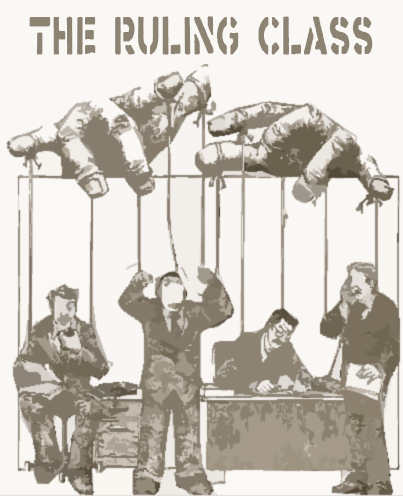
They are less than 1% in numbers but are the most powerful, control more than 50% national wealth while 99% people have to live in poverty at average income of 500 $ per year. It includes politicians, feudal, industrialists, business men, bankers, civil and military bureaucracy, media groups and other mafias controlling other sources of economic and social power. They consider religion as personal affair of an individual and that Islam should be restricted to the mosques for worship, it should have no say in the public affairs like law and social aspects.  Some times they display their religiosity just to get favours form public i.e. to get votes in elections or to change public opinion. They use power, wealth and coercion to crush any resistance to their interests. Here the term “elite” include their supporters, sympathisers and potential candidates form all segments of society to join this club.
The elite include some fascist liberals who consider all the religiously inclined people to be primitive hardliner, fundamentalist, rigid extremists, devoid of intellect, ignorant bigots. They think that religious people are the source of all the ills of society and impediment to progress.
Secondly the Silent Majority:  
“And thus have We made you to be a moderate community, so that (with your lives) you might bear witness to the truth before all mankind, and that the Apostle might bear witness to it before you.” (Quran;2:143).
This is the bulk of population, sandwiched between Elite and Religious Extremists. They are moderate religiously inclined but mostly non practicing Muslims. However they consider that implementation of Islam and Shari’a will provide them social and economic justice and save them for the tyranny of Elite and Extremists. They revere Islam but lack in practice, laying, deception, fraud corruption is rampant. Some practice Islam in rituals but lack in Haqooq-Al Ibad [service to fellow beings].
They are influenced by moderate Ulema inclined towards Sufi Islamic traditions. Since they are not influential, their voice is lost. They comprise people from all segments of society. Thousands have lost their lives in the terrorist attacks by extremist militants. 
Thirdly: The Muslim Militants & Their Supporters:
Majority of Muslims desire implementation of Shari’a peacefully through democratic system. However some extremist elements like Taliban has opted to for violence and terrorism as means to this end. They consider killing and terrorism as justified Islamic means, which has been rejected unanimously by all the eminent scholars. However there are people who provide tacit support either in reaction to the existing unjust system of rule or under influence of propaganda.
The Imams and Khateebs of mosques enjoy considerable influence in the society. They enjoy unrestricted freedom to talk what ever they like in the Friday sermons or in other religious gatherings. Since mostly they have limited understanding of the system of governance and politics, their influence has negative impact. No one dare question them while addressing form pulpit. Unlike Middle Eastern Arabs, Pakistan government has no control over them. 
Mostly they appear to be favouring the extremists and militants though tacitly. They do not openly condemn the killing of innocent people; use of general phrases is used to satisfy feelings of majority. In the supplications would pray for the success of all struggling in Jihad and for implementation of Shari’a, which no one can dare disagree. Though Islam does not have official clergy like Christianity and other religions, but these Imams think that they may also get a role or share in power once the Shari’a is implemented.
The military or civilians rulers have always been involved in exploitation and oppression of poor people. People deprived of good governance, social and economic justice are ready to welcome any one who promises to address their problems. Their expectations from people with religious overtones are high because of their apparent piety and outlook. They fail to comprehend that governance is beyond their capabilities, terror cannot solve all their problems.
Disjointed Society:
The society is disjointed intellectually, politically, socially and even physically to an extent due to yawning social and economic gap. Hence for the peace and progress, of the pole of Pakistan, there is dire need to at least close this gap with in acceptable limits if can’t be eliminated altogether.  
Thought can refer to the ideas or arrangements of ideas that result from thinking, the act of producing thoughts, or the process of producing thoughts. Despite the fact that thought is a fundamental human activity familiar to everyone, there is no generally accepted agreement as to what thought is or how it is created.
Because thought underlies many human actions and interactions, understanding its physical and metaphysical origins, processes, and effects has been a longstanding goal of many academic disciplines including artificial intelligence, biology, philosophy, psychology, and sociology. Thinking allows humans to make sense of, interpret, represent or model the world they experience, and to make predictions about that world. It is therefore helpful to an organism with needs, objectives, and desires as it makes plans or otherwise attempts to accomplish those goals.
On the other hand ‘social psychology’ is the study of how people and groups interact. The collective unconscious, sometimes known as collective subconscious, is a term of analytical psychology, coined by Carl Jung. It is a part of the unconscious mind, shared by a society, a people, or all humanity, in an interconnected system that is the product of all common experiences and contains such concepts as science, religion, and morality. While Freud did not distinguish between an "individual psychology" and a "collective psychology," Jung distinguished the collective unconscious from the personal subconscious particular to each human being. The collective unconscious is also known as "a reservoir of the experiences of our species."
In Pakistani society there is need to close the gap of three main groups in ‘thought’ to bring them at one platform for attainment of common goals, peace and progress.

 
The three broad categories of Muslims are mentioned in Qur’an:
“Then We conveyed the Book as an heritage to those of Our slaves whom We chose. Now, some of them are those who wrong their own selves, and some of them are mediocre, and some of them are those who outpace (others) in righteous deeds with Allah‘s permission. That is the great bounty”(Quran;35:32)
Broad based Trialogue for Peace, Unity & Progress:
In order to achieve, enduring peace, instead of infighting there is a need of “Trialogue” [discussion between three groups] to close the conceptual gap & eliminate differences in the light of intelligent application of Quran and Sunnah in the prevailing environments. Use of Ijtehad may be resorted to by the theologians, scholars, intellectuals & thinkers.
The Trialogue may be held at national and every possible level in which intellectuals, political thinkers, philosophers, theologians, academics, civil society, experts on foreign, defence, economy, law, media, social scientists, experts in other fields and the people should participate.
While people in power and authority formulate committees and use the existing or new institutions for this purpose, every Pakistani, every individual has a role to play at their level. The head of different organizations, governmental or private can organize informal or formal study sessions, workshops and discussions. A common man can do it within his/her social groups. The social media can be utilised as one of the tools. If our minds think on same lines, the straight path provided by Quran and Sunnah, discarding self made interpretations to achieve certain noble objectives, employing means contradictory to the teachings of Islam, common ground can be found.
To some it may appear to be an exercise in futility, but at least it will create awareness at all the levels, especially among the masses. People could not be befooled with rosy false promises and hopes. The real peaceful message of Islam, lost in the mist of extremist ideologies will be revealed to the unaware people.

A process of religious and political awareness and awakening will start which can partially fill the intellectual vacuum created by corrupted thought process, as a result of our impoverished education system and over all lack of education due to poor literacy rate. 
Issues and Topics for Trialogue:
Some basic topics/questions which need to be addressed and answered have been listed below, [answers can be found at the links given at the end or click here] the number is not final, there always room for improvement:
  1. What is the purpose of existence of humanity?
  2. What is the purpose of creation of Pakistan?
  3. Does Islam specify some form of government like Khilafah, kingship, or it only gives broad principles?
  4. Is Islamic democracy closer to Islamic concept of Shura [consultation]?
  5. The present constitution of Pakistan which declares sovereignty of Allah and that no law can be formulated repugnant to Quran and Sunnah is un Islamic?
  6. The “Objective Resolution” preamble to the constitution make it Islamic in theory only?
  7. If the elected democratic governments fail to implement Shari’a, is it justified to blame the constitution not the politicians elected by people again and again?
  8. The recommendations of “Islamic Ideological Council” are not implemented,  should it be revamped and made powerful?
  9. Will the Shari’a be based upon the madhab of majority? If so how to satisfy the Shia’a, Deobandi, Salafi, Takfiri and other groups?
  10. Is it justified to wage armed rebellion, terrorism in the name of Jihad for Shari’a?
  11. Pakistan is signatory of UN Charter, it has international commitments and obligations. The orthodox doctrine of House of Peace [Darul Aman], House of War [Darul Harb] still remain applicable?
  12. Respect of international borders and treaties?
  13. Will Pakistan fight with all the world to impose Islam by force? What will be implications for such policy?
  14. Is it fair to establish friendly relations with non Muslim countries for education, science, technology, trade, defence for mutual benefit?
  15. What will be role of Muslims living as minorities in non Muslim countries?
  16. What are human rights, according to UN Charter or redefine?
  17. Treatment and rights of minorities according to Mesaq Medina or different?
  18. How it is justified to kill non Muslims and destruction of their places of worship?
  19. Who has the right to declare Jihad, in support of oppressed people, state or groups or scholars?
  20. How the ruling “Elite” can be made to change its attitude and behaviour to make it people friendly?
  21. Role of judiciary, military and other state institutions against corruption and misrule of government?
  22. Electoral reforms, lack of implementation of Section 62,63 in true spirit?
  23. Independence of Election Commission & reconstitution with more powers like in India?
  24. Use of electronic voting machines?
  25. Lack of local body elections to develop junior leadership and decentralization of powers?
  26. Most of the political leadership and rulers are accused of being puppets of US/ foreign powers, they refute it. How to determine truthfulness of these accusations?
  27. Is it justified to resort to armed rebellion against rulers on accusations?
  28. How to change corrupt, oppressor rulers?
  29. Is it justified to form private militias for Jihad?
  30. Society needs moral reformation. Who has authority to implement “Amir bil maroof, nahi anil munkir” “Order good works and prohibit evils” in society?
  31. Should government exercise some control on the religious education, construction of mosques and appointment of Imams/Khateebs, like Middle Eastern countries or it should be left open as now?
  32. Is it justified to kill innocent people in mosques public places, through suicide bombing and terrorist attacks to oppose government policies?
  33. Should military and security forces protect citizens or leave them at the mercy of terrorists, who claim to be opposed to USA or others?
Conclusion:
Jihad [struggle] though not part of six articles of faith or five pillars of Islam is an important part of faith, which has three broad categories. While majority scholars opine that armed Jihad [qital, warfare] can only declared by the legitimate & recognised ruler, the other two forms of Jihad i.e Jihad against selfish desires [Jihad bil nafs] and Greater Jihad [Jihad Akbar] preaching of Quran can be undertaken by any believer individually or collectively: “Therefore, do not yield to the unbelievers, and make Jihad (strive) against them with this (Qur'an), a mighty Jihad (Jihad Kabira).”(Qur’an;25:52). The Prophet (peace be upon him) said: The best fighting (Jihad) in the path of Allah is (to speak) a word of justice to an oppressive ruler. (Sunan of Abu Dawood:2040).
While extremist groups have shed enough blood of innocent people on the name of Jihad, there is dire need of Jihad against selfish desires [Jihad bil nafs] and Greater Jihad [Jihad Akbar] through Quran.  It is through these forms of Jihad that the negative thinking, minds of people could be changed and their energies utilised for constructive purpose to attain peace and prosperity.
Every Pakistani, men or women, rich or poor, educated or less educate, student or employed, old or young, religious or non religious, liberal or secular, rightist or leftist, extremist fundamentalist or moderate, has a role to play to conduct “TRIALOGUE” at their level. The head of different organizations, governmental or private can organize informal or formal study sessions, workshops and discussions. A common man can do it within social circles and groups. The social media can be utilised as one of the tools.
To some it may appear to be an exercise in futility, but at least it will create awareness at all the levels, especially among the masses. People could not be befooled with rosy unachievable false promises and hopes. The real peaceful message of Islam, lost in the mist of extremist ideologies will be revealed to the unaware people.
A process of religious and political awareness and awakening will start which can partially fill the intellectual vacuum created by our impoverished education system and over all lack of education due to poor literacy rate.

It is further hoped that as a result of logical, intellectual discourse a common ground would emerge. Once a consensus is reached, then it should be implemented with full zeal, to end mischief in land [fisad fil ardh] and establish peace:

مَّن يَشْفَعْ شَفَاعَةً حَسَنَةً يَكُن لَّهُ نَصِيبٌ مِّنْهَا ۖ وَمَن يَشْفَعْ شَفَاعَةً سَيِّئَةً يَكُن لَّهُ كِفْلٌ مِّنْهَا ۗ وَكَانَ اللَّـهُ عَلَىٰ كُلِّ شَيْءٍ مُّقِيتًا
جو بھلائی کی سفارش کریگا وہ اس میں سے حصہ پائے گا اور جو برائی کی سفارش کرے گا وہ اس میں سے حصہ پائے گا، اور اللہ ہر چیز پر نظر رکھنے والا ہ
Whoever recommends and helps a good cause becomes a partner therein: And whoever recommends and helps an evil cause, shares in its burden: And Allah hath power over all things.(Quran;4:85)
إِنَّ شَرَّ الدَّوَابِّ عِندَ اللَّـهِ الصُّمُّ الْبُكْمُ الَّذِينَ لَا يَعْقِلُونَ
 یقیناً خدا کے نزدیک بدترین قسم کے جانور وہ بہرے گونگے لوگ ہیں جو عقل سے کام نہیں لیتے
Verily, the worst of all creatures in the sight of God are those deaf, those dumb people who do not use their intellect.(Quran;8:22)
 لِّيَهْلِكَ مَنْ هَلَكَ عَن بَيِّنَةٍ وَيَحْيَىٰ مَنْ حَيَّ عَن بَيِّنَةٍ
جو ہلاک ہو، دلیل پر  ہلاک ہو اور جو زنده رہے، وه بھی دلیل پر زنده رہے
Who would perish might perish by clear proof, and he who would live might live by clear proof(Quran;8:42)
 قَالَ رَبِّ انصُرْنِي عَلَى الْقَوْمِ الْمُفْسِدِينَ
پروردگار! اس مفسد قوم پر میری مدد فرما
“My Lord, aid me against these mischievous people.(29:30)

إِنَّ اللَّهَ لَا يُغَيِّرُ مَا بِقَوْمٍ حَتَّىٰ يُغَيِّرُوا مَا بِأَنفُسِهِمْ وَإِذَا أَرَادَ اللَّهُ بِقَوْمٍ سُوءً
“… surely Allah does not change the condition of a people until they change their own condition”; (Quran;13:11)

Following links will help to find answers to most of issues raised above:
 <<<< Read online or download complete article >>>>
  1. http://freebookpark.blogspot.com/2012/06/creation.html
  2. http://pakistan-posts.blogspot.com/p/why-pakistan.html
  3. http://pakistan-posts.blogspot.com/2013/04/shariah-or-democracy-conflict-or.html
  4. http://pakistan-posts.blogspot.com/2013/04/blog-post.html
  5. http://quran-pedia.blogspot.com/2013/11/muslims-and-international-borders.html
  6. http://pakistan-posts.blogspot.com/2012/09/objectives-resolution-supremacy-of.html
  7. http://pakistan-posts.blogspot.com/2011/06/political-reforms-for-stable-democracy.html
  8. http://faithforum.wordpress.com/jihad-myth-and-reality/
  9. http://quran-pedia.blogspot.com/2013/11/muslim-non-muslim-relations.html
  10. http://takfiritaliban.blogspot.com/2012/08/illogical-logic-of-takfiri-taliban-to.html
  11. http://pakistan-posts.blogspot.com/2013/10/blog-post.html
  12. http://pakistan-posts.blogspot.com/2012/09/objectives-resolution-supremacy-of.html
  13. http://takfiritaliban.blogspot.com/2012/08/the-dreadful-doctrine-of-terror-takfeer.html
  14. http://takfiritaliban.blogspot.com/2012/09/rebellion-by-khawarij-takfiri-taliban_440.html
  15. http://takfiritaliban.blogspot.com/2012/08/learning-science-in-islam.html
  16. http://takfiritaliban.blogspot.com/2012/08/refutation-of-takfirirs-form-quran.html
  17. http://pakistan-posts.blogspot.com/2013/11/pakistan-basic-issues-need-immediate.html
  18. Trialogue: http://peace-forum.blogspot.com/p/blog-page.html
  19. Ideology of Pakistan - Fact or Fiction - An Analysis - نظریہ پاکستان - حقیقت یا افسانہ: تجزیہ 
  20. Caliphate: Relevant or Redundant: http://goo.gl/245yB  
  21. Islamic Society & Culture:https://t.co/HNUuOUuK  
  22. Islam: A General Introduction: By Sheikh Ali Tantawi
  23. Urdu Translation: "Islam: A General Introduction: By Sheikh Ali Tantawi"

Peace-Forum NetWork
Over half million visits
  1. http://aftabkhan.blog.com
  2. http://Peace-forum.blogspot.com 
  3. http://FaithForum.Wordpress.Com
  4. http://freebookpark.blogspot.com
  5. http://endeavour-peace.page.tl
  6. http://Quran-pedia.blogspot.com
  7. http://Bible-pedia.blogspot.com
  8. http://Islamphobia.Wordpress.com
  9. http://Pakistan-posts.blogspot.com
  10. http://rejectionists.blogspot.com
  11. http://Takfiritaliban.blogspot.com 
  12. http://twitter.com/Peace_Forum
  13. http://www.facebook.com/aftabkhaan
  14. http://www.facebook.com/pages/Peace-Forum/145301398882741
  15. https://flipboard.com/profile/aftabkhaan
  16. https://plus.google.com/s/Peace-Forum
  17. http://www.dailymotion.com/Peace-Forum
  18. http://www.youtube.com/Abbujak     
  19. http://www.wat.tv/PeaceForum
  20. https://plus.google.com/100843774849323942025/posts
  21. https://plus.google.com/u/0/b/111357847129902067679/
  22. Free eBooks Box: http://goo.gl/xmxPP
Read online or download:


Pakistan - One of the most beautiful countries with all the resources, and vibrant people deserves batter ..... 

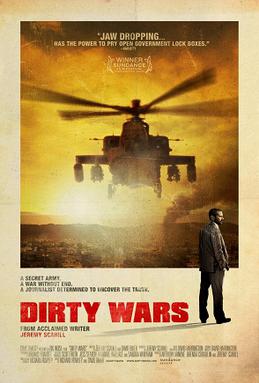
US Dirty Wars: The World is a Battlefield

File:Dirty Wars film poster.jpg
Dirty Wars describes how, in the words of author Jeremy Scahill, “the United States came to embrace assassination as a central part of its national security policy.” In Dirty Wars: The World is a Battlefield, Scahill, correspondent for The Nation magazine (US), and author of Blackwater: The Rise of the World’s Most Powerful Mercenary Army, provides a fresh perspective on the so-called ‘war on terror’ that rises above mainstream punditry.
Scahill tracks the dramatic rise of US covert operations without legislative oversight, kill lists that keep being added to, American support for the full gamut of mercenaries — Somali warlords, Yemeni tribal leaders, security contractors — and the escalation of wanton aerial strikes. These covert operations result in a de facto trashing of international law and the American Constitution by the very people tasked with upholding them; in Dirty Wars, the ‘war on terror’ appears less a mediated, measured multilateral effort to make the world a safer place, and more a reckless campaign by an international criminal syndicate whose grossly excessive use of violence creates a blowback against the United States and the people, institutions and states around the world seen to be allied with the US. Assassinations, civilian casualties, renditions, torture — all are reported in Dirty Wars by the spadefull. And it’s not a pretty picture.

But first, a disclaimer: For most, Dirty Wars shall not lead to entirely new insights (especially in Pakistan where drone attacks are rooted at the heart of the right-of-centre political discourse). Most readers shall already be familiar with many of the events in the book. Still, Scahill makes two contributions to reporting on the global wars since 9/11: (1) he shifts the emphasis from conventional military campaigns to covert operations run by the Central Intelligence Agency (CIA), and more ominously, the Joint Special Operations Command (JSOC) that is directly under the American presidency and not subject to political oversight like the CIA is in principle; and, (2) Scahill weaves together different stories that take the reader from the corridors of power in Washington to the mosques of suburban Virginia, to Afghanistan, Somalia, Yemen, and to a lesser extent, Pakistan. Indeed, besides personal interviews — wide-ranging as they are — Scahill’s sources are all in the public domain (there are 80 pages of endnotes for the skeptics). Dirty Wars is not without its share of shortcomings, both conceptual and stylistic — more on that later — but overall, it remains focused on extra-judicial killings and the exercise of power sans political oversight.

Amidst the carefully reconstructed processes detailing the empowerment of US special forces (including security contractors), and elaborate descriptions of US clientalism in Somalia, Yemen and Pakistan, Dirty Wars keeps returning to the thorny questions of whether the US president can order the assassination of an American citizen without trial. Scahill tracks three American-born citizens who were killed by drone strikes in Yemen in 2011: Anwar Awlaki, his 16-year-old son Abdulrahman Awlaki (killed in a separate drone strike some days later), and Samir Khan, who was killed with the elder Awlaki. Anwar Awlaki is, in fact, the central figure around which Dirty Wars moves (chapters on Awlaki are interspersed throughout the book). Scahill doesn’t so much take a categorical position on whether the strikes were or were not illegal; rather, his answer lies in the exposition of how assassination became standard operating procedure in the ‘war on terror’ after 9/11.

Broadly, the story goes like this: The 9/11 attacks gave neoconservatives in the Bush administration — Dick Cheney, Lewis “Scooter” Libby, Donald Rumsfeld, Paul Wolfowitz — the opportunity to finally pursue an assertive foreign policy that they had been wistfully dreaming of; indeed, all through the Clinton administration, right-wing think tanks had been bemoaning the lack of assertiveness in US foreign policy since the Cold War. Following the attacks on New York and Washington, the US Congress and Senate, reeling from the recent events, didn’t think twice about giving the US president unprecedented latitude to wage a global war. In a vote on September 14, 2001, the House and Senate passed the Authorisation for Use of Military Force (AUMF) that allowed the president to “use all necessary and appropriate force against those nations, persons, organisations he determines planned, authorised, committed or aided the terrorist attacks.” The one dissenting vote was of California Democrat Barbara Lee, whose concerns with granting the president unprecedented authority today appears prophetic. Calling for a need to “step back for a moment and think through the implications of our actions,” Lee cautioned that “we must be careful not to embark on an open-ended war with neither an exit strategy nor a focused target.” Lee’s caution was diametrically opposite to the view of Dick Cheney or Donald Rumsfeld who in their public statements after 9/11 relished the prospect of a shadowy war without exit strategies. The signing of the AUMF into law on September 17 undid the National Security Act of 1947, which had required the US president to issue a finding before undertaking covert action, and which had also demanded that such covert action be in compliance with the US law and Constitution. Such procedural matters could now be bypassed, especially in the “unleashing” of the deadly JSOC by Rumsfeld — described by Scahill as “America’s best killers” — and the “assumption of presidential power” by vice-president Dick Cheney, both of whom were against congressional oversight of covert operations.

The first clear indication of new directions in the global war was the assassination, in 2002, of Abu Ali al Harithi, identified as the mastermind behind the year-2000 USS Cole bombing. Killed in Yemen by a US Predator drone flown out of Djibouti, Harithi was the first confirmed citizen killed outside of a battlefield since Gerald Ford’s ban on political assassinations in 1976. This was also the first time that a Predator drone had been used to strike targets outside of Afghanistan and would pave the way for a sharp escalation in drone strikes under the presidency of Barack Obama.
By HASAN H. KARRAR: http://www.dawn.com/news/1056556/cover-story-dirty-wars-the-world-is-a-battlefield
http://en.wikipedia.org/wiki/Dirty_Wars
Videos >>>>
  1. Jeremy Scahill on Democracy Now! - Dirty Wars: The World Is a Battlefield [Both parts in one] - YouTube

    www.youtube.com/watch?v=FWqQNG03MhU‎
    Apr 29, 2013 - Uploaded by CryingWolf57
    Dirty Wars: The World Is a Battlefield [Both parts in one] ... The book is based on years of reporting on U.S. secret operations in Yemen, Somalia  ...
Related:
Free-eBooks: http://goo.gl/2xpiv
Peace-Forum Video Channel: http://goo.gl/GLh75

US drones in Pakistan may be war crime !

Lawyers for Pakistani man whose father was killed by drone strike seek to have sharing of UK intelligence declared unlawful. The British government's support for US drone operations over Pakistan may involve acts of assisting murder or even war crimes, the high court heard on Tuesday.

In the first serious legal challenge in the English courts to the drones campaign, lawyers for a young Pakistani man whose father was killed by a strike from an unmanned aircraft are seeking to have the sharing of UK locational intelligence declared unlawful.

Noor Khan, 27, is said to live in constant fear of a repeat of the attack in North Waziristan in March last year that killed more than 40 other people, who are said to have gathered to discuss a local mining dispute.

The British government has declined to state whether or not its signals intelligence agency GCHQ passes information in support of the CIA drone operations over Pakistan, although the court heard that media reports suggest that it does.

The case opened as the RAF confirmed that it is to double the number of its own drones flying combat and surveillance operations over Afghanistan. The five additional aircraft will be operated from the UK for the first time, rather than the US. The UK's existing Reaper drones, which are used to target suspected insurgents in Helmand province, have been operated from Creech air force base in Nevada because the RAF has not had the capability to fly them from Britain.

Martin Chamberlain, counsel for Khan, said that a newspaper article in 2010 had reported that GCHQ was using telephone intercepts to provide the US authorities with locational intelligence on leading militants in Afghanistan and Pakistan. The report suggested that the Cheltenham-based agency was proud of this work, which was said to be "in strict accordance with the law".

On the contrary, Chamberlain said, any GCHQ official who passed locational intelligence to the CIA knowing or believing that it could be used to facilitate a drone strike would be committing a serious criminal offence.

"The participation of a UK intelligence official in US drone strikes, by passing intelligence, may amount to the offence of encouraging or assisting murder," he said. Alternatively, it could amount to a war crime or a crime against humanity, he added.

Chamberlain said that no GCHQ official would be able to mount a defence of combat immunity, but added that there was no wish in this case to convict any individual of a criminal offence. Rather, Khan was seeking a declaration by the civil courts that such intelligence-sharing is unlawful.

Between June 2004 and September this year, according to research by the Bureau of Investigative Journalism, drone strikes killed between 2,562 and 3,325 people in Pakistan, of whom between 474 and 881 were civilians, including 176 children.

With the number of drone strikes increasing sharply under the Obama administration, the London case is one of several being brought by legal activists around the world in an attempt to challenge their legality of the programme.

In Pakistan, lawyers and human rights activists are mounting two separate court claims: one is intended to trigger a criminal investigation into the actions of two former CIA officials, while the second is seeking a declaration that the strikes amount to acts of war, in order to pressurise the Pakistani air force into shooting down drones operating in the country's airspace.

During the two-day hearing in London, lawyers for Khan are seeking permission for a full judicial review of the lawfulness of any British assistance for the US drone programme.

Lawyers for William Hague, the foreign secretary, say not only that they will neither confirm nor deny any intelligence-sharing activities in support of drone operations, but that it would be "prejudicial to the national interest" for them even to explain their understanding of the legal basis for any such activities.

For Khan and his lawyers to succeed, they say, the court would need to be satisfied that there is no international armed conflict in Pakistan, with the result that anyone involved in drone strikes was not immune from the criminal law, and that there had been no tacit approval for the strikes from the Pakistan government – another matter that the British government will neither confirm nor deny.

The court would also need to consider, and reject, the US government's own legal position: that drone strikes are acts of self-defence. It would also need to be satisfied that the handing over of intelligence amounted to participation in hostilities.

The government also says that Khan's claim would have a "significant impact" on the conduct of the UK's relations with both the US and Pakistan in an "acutely controversial, sensitive and important" area, and also impact on relations between the US and Pakistan.
http://www.theguardian.com/world/2012/oct/23/uk-support-us-drones-pakistan-war-crime
Related:
A new report from the Conflict Monitoring Centre (CMC) has reported that 2,043 Pakistanis have been slain in CIA drone strikes in the past 5 years, with the vast majority of them innocent civilians. The report notes that the ...
Free-eBooks: http://goo.gl/2xpiv
Peace-Forum Video Channel: http://goo.gl/GLh75