Featured Post

SalaamOne NetWork

SalaamOne سلام   is   a nonprofit e-Forum to promote peace among humanity, through understanding and tolerance of religions, cul...

Islamophobia and the Politics of Empire – Review

“Indeed, the success of American Muslims, and our determination to guard against any encroachments on their civil liberties, is the ultimate rebuke to those who say we are at war with Islam.” Obama made this pronouncement in his recent speech on the future of the ‘war on terror’ despite the abundance of evidence showing that the state, with Obama at the helm, has massively encroached upon the civil liberties of Muslim Americans, “our determination” to the contrary notwithstanding. Such state practices, shot through with Islamophobia, penalise people for being Muslim.

Take, for instance, the state’s monitoring of mosques inside the US. It marks mosques as places of danger for American Muslims, making it perilous for them to congregate. Similarly, the practice of sending informants into mosque-centered Muslim communities tears them apart from within as distrust of fellow Muslims sets in and discussions of the sociopolitical issues that directly affect Muslims become taboo. Such state measures make it all the more difficult for Muslims to be politically engaged and fight for their rights, especially as Muslims. The Islamophobia of such policing measures, however, is utterly lost on the “colour-blind” Obama-liberals. In their view, as a relic of the past, racism is the sole preserve of those Americans who’re not with the times — Conservatives, simple-minded country bumpkins, know-nothing mill workers. What emerges from Deepa Kumar’s trenchant critique of Islamophobia in her new book, Islamophobia and the Politics of Empire, is that Islamophobia as a potent imperial ideology is a bipartisan project. Kumar shines a bright light on liberal Islamophobia, and shows how the Obama administration’s emphasis on homegrown terrorism generated a lot of talk about ‘terrorists in our midst’ in the mainstream American media and presented right-wing Islamophobes with the opportunity they needed to (re-)popularise the old ‘Islamic peril’. As Kumar puts it, “The politics of liberal Islamophobia at the top of the society enabled the extreme Islamophobia of the right.” A feature of liberal Islamophobia is that you get to have a self-aggrandising guilty conscience about what you have had to do — which, nonetheless, had to be done for the greater good of humanity. Speaking of the civilian casualties from drone warfare, for example, Obama had this to say in the aforementioned speech: “For me, and those in my chain of command, these deaths will haunt us as long as we live.” In other words, ‘shoot and cry’. The racism at the heart of modern imperial violence operates on indifference as much as on explicit hatred. The indifference to the many that die “over there” in the “badlands,” that such brutal military assaults can only be launched at will on a non-Western population, that the blatant state surveillance of entire neighbourhoods inside the US based on ethnicity and religion can only happen to the ‘Little Pakistans’ — all of this requires rendering certain people as justified ‘collateral damage’ to the civilising imperial mission.
It is this imperial racism and the dehumanising Islamophobic rhetoric of the so-called ‘war on terror’ that Kumar brings into focus in this most valuable primer. “Drawing on my academic training as a cultural theorist,” Kumar writes, “I situate the rhetoric of Islamophobia within the broader political, historical, legal, and social context from which it emerges to show that anti-Muslim racism has been primarily a tool of the elite in various societies.” She demonstrates in elegant, accessible prose that Islamophobia is neither … Continue reading »

Related:
Free-eBooks: http://goo.gl/2xpiv
Peace-Forum Video Channel: http://goo.gl/GLh75

Egypt coup: the military has not just ousted Morsi. It has ousted democracy : مصر الانقلاب: وكان الجيش ليس المخلوع فقط مرسي. وقد أخرجه الديمقراطية


Future governments in Cairo will not now dare defy the army. A political-ideological clash could become a life-and-death one
والتحدي الآن هو تجنب تكرار أخطاء الماضي، مثل التدخل في ادق تفاصيل العملية السياسية من الأعلى إلى الأسفل، أو اضطهاد الإخوان مسلم واستبعادها من الساحة السياسية. مثل هذا المسار من شأنه أن يعزز فقط الشعور منذ فترة طويلة من الظلم والضحية بين الإسلاميين، وصفة لمزيد من الاستقطاب، وعدم الاستقرار، ويحتمل أن تكون نهاية عنيفة لهذه التجربة الديمقراطية في مصر.
While millions of Mohamed Morsi's opponents continue to celebrate his ousting, they ignore the long term fallout of the army's intervention on state and society.

The soft coup is fraught with risks and widens the ideological divide between Islamists and secularists. It does not resolve the fierce social and political struggles that have unfolded in Egypt in the two years since the removal of Mubarak. Instead, this latest turn is likely to further polarise Egyptians, already bitterly divided over the identity of the state and the role of the sacred in the political. And it undermines respect for both the peaceful transfer of power and for institutional procedures and rules. Trust among competing groups will be difficult to revive.

Furthermore, the successful coup returns the military to centre stage in Egyptian politics and consolidates its role as a kingmaker and powerbroker. One of the major challenges that faced Egypt and other Arab countries in the wake of their popular uprisings was to subordinate the will of military leaders to civilian rule. This has now been undone. Future governments in Cairo will not dare to defy the military nor try to limit its authority, a serious handicap to democratisation. Ironically, the same protesters who cheered Morsi's ouster by force were often the same ones who opposed the ruling generals (Scaf – the Supreme Council of the Armed Forces) in the post-Mubarak transition period.

The opposition asserts that the military had no choice but to respond to the popular will of millions of citizens, whose peaceful demands for Morsi to step down were met with defiance. The opposition ignores the fact, however, that there were other choices available to them. The military could have introduced political checks and balances that would have fettered Morsi's hands, using its immense influence to force the secular-leaning opposition and the Islamist-led administration to sit down and negotiate a peaceful compromise.

This could have included appointing a new competent prime minister palatable to the opposition; an independent attorney general to replace Morsi's loyalist; and redrafting the constitution to make it more inclusive and tolerant. In fact, these were the initial major demands of the opposition, which only later began to insist that Morsi had to go.

There is no denying that Morsi was his own worst enemy, deaf and blind to the gathering storm that ultimately swept him away. He mastered the art of making enemies and blunders, and turned millions of ordinary Egyptians who voted for him into bitter enemies. He was the wrong man to lead Egypt, the most populous Arab state, at this critical revolutionary juncture.

Morsi does not have the sensibility, the vision or the political acumen to tackle Egypt's complex structural challenges. Instead of delivering on his promises, such as more jobs, greater inclusiveness and al-nahda, or renaissance, he went to great lengths to monopolise power and to entrench his Islamist movement in state institutions. There exists a widespread belief among Egyptians of all walks of life that Morsi subordinated the presidency to the Muslim Brotherhood, a fatal error, to a proud nation that calls Egypt Umm al-Dunya (the mother of the world).

More than a year after they won commanding parliamentary and presidential victories, the Islamists have proved to be as incompetent as the old secular regime at managing the economy and society.

Morsi did indeed inherit a country that was politically polarised and financially bankrupt. These problems, however, grew under his watch; social and economic conditions worsened and political divisions deepened. Far from improving the economy, the Islamists' muddled style of governance has exacerbated a structural crisis and caused more hardship and suffering among the poor and the dwindling middle class.

What is unfolding in Egypt is a political-ideological struggle over the country's future. It is not about good and evil, as some would have it. Morsi was too ambitious for his own good, and his movement incompetent, but not evil-incarnate. There is a real danger though that the military's ousting of Morsi will transform this political-ideological clash into a life-and-death struggle.

The challenge now is to avoid a repeat of past errors, such as micromanaging the political process from the top down, or persecuting the Muslim Brothers and excluding them from the political arena.  Such a course will only reinforce a long-held sense of injustice and victimhood among the Islamists, a recipe for further polarisation, instability, and a potentially violent end to Egypt's democratic experiment.
والتحدي الآن هو تجنب تكرار أخطاء الماضي، مثل التدخل في ادق تفاصيل العملية السياسية من الأعلى إلى الأسفل، أو اضطهاد الإخوان مسلم واستبعادها من الساحة السياسية. مثل هذا المسار من شأنه أن يعزز فقط الشعور منذ فترة طويلة من الظلم والضحية بين الإسلاميين، وصفة لمزيد من الاستقطاب، وعدم الاستقرار، ويحتمل أن تكون نهاية عنيفة لهذه التجربة الديمقراطية في مصر.
By Fawaz Gerge - guardian.co.uk :
http://www.guardian.co.uk/commentisfree/2013/jul/04/egypt-coup-military-morsi-democracy?INTCMP=SRCH


Egypt Q and A: What does this mean for Arab Democratisation?
ماذا يعني هذا لالدمقرطة العربية؟
As the situation unfolds in Egypt, attention turns to the wider implications of military intervention. Jacob Powell speaks to Dr. Larbi Sadiki, a leading scholar in the field of Arab democratisation and a regular contributor to these pages. He has authored two critically acclaimed books on the issue: Arab Democratization: Elections without Democracy (Oxford University Press, 2009) and The Search for Arab Democracy: Discourses and Counter-Discourses (Columbia University Press, 2004).

Jacob Powell: Do you think Egypt is ready for democracy?

Larbi Sadiki: I think the question is not really answerable. The question should be: “where is the infrastructure in place to facilitate democracy?” Democracy is an open-ended game that gets developed over a long time. What we have seen since 2011, - the Egyptian people have the building blocks of democracy enacted through mostly peaceful people’s power displays. We should not engage the question through ‘exceptionalism’, relegating Egypt or Arabs to the realm of ‘non-democracy’, whatever that might be. For example, Chile had its setbacks and Pinochet toppled a democratically elected government in the mid 1970s – mostly with Western backing especially from the US. Several Latin American countries had similar experiences of democratic breakdown with the generals intervening to scupper democratic processes and purge democratic opposition. We cannot forget the Chavista and anti-Chavista In Venezuela. During 2002, Chavez was temporarily ousted by the army, and there were people protesting for and against him.

Closer to home, we cannot forget Algeria 1991-92 and the Palestinian elections of 2006. The common thread is that Islamists choosing the ballot box keep being toppled. The route to democracy is not linear. It is long, complex and fraught with obstacles, embracing both highs and lows. The journey to democracy, past and present, affirms this. I don’t really think Egyptians have something in their character that lends itself to inhospitality to democracy and democratisation. Definitely, what has happened in Egypt has stunted a fledgling democratisation process. I’m pretty sure that the Egyptian people have the means to reclaim their power and restore the democratisation process. However, we cannot massage words about what has happened: a coup is a coup is a coup – be it one which, for now, has been triggered by massive public backing. It is naïve to think Arab uprisings have been solely popular affairs – armies are very much part of the machinations driving ousters of unwanted regimes and presidents, especially in Egypt.

JP: When asked, many Egyptians claim that Morsi was ousted because he failed to fullfill his promises in state-building. As far as democratisation goes, do you see those promises being fulfilled under the interim and future civilian governments?

LS: As I mentioned earlier, you need time for the democratisation process to gain momentum. Also, for people to acquire attitudinal behaviour, a situation the Egyptian people are going through. This ‘learning curve’ involves discussions and toleration of difference, so that people can be led by someone that is not ideologically like-minded, or have an adversarial political party lead them for a limited term until periodic elections take place again – all of these are important steps in the right direction of democratisation. They are part and parcel of deepening and widening participation, contestation, confidence-building, the search for consensus, and for the ethical toolkit vital for the evolution of democracy and democratisation. Electoral processes, constitutional framing, or amendment processes, requires high-quality institutions and professionalism. For now, this is really problematic – not only in Egypt, but also in Tunisia and Libya. I guess what’s sad is that you wake up on July 4 and the world around you animated with ‘Arab Spring’ concepts, dreams, imagery, and actual gains completely turned topsy turvy! Indeed, on this unforgettable July 4, Arabs wake up to the shock that in their region, Israel is still the only democracy! And Iranians have just elected a new president and Arabs have toppled an elected president! The Orientalist imaginary and imagining of the Arab Middle East presents a dark spectre that will haunt the region and its peoples for some time. As the Arab world is struggling to handle democracy – there are questions and disappointments. However, we have to keep our wits about us and aver, in the face of adversity, that there is a silver lining in every cloud. For me, Tunisia is being given invaluable lessons –gratis – of how to stay the course and persist with democratisation.

JP: Some people claim the military’s decision to oust Morsi, scrap the constitution, and call for new elections was too extreme. Do you agree with that sentiment? What was the military’s rationale for their decision?

LS: I see it through the eyes of this political animal – we are faced in a cultist political sense with a classic contest between the two most powerful political machines in Egypt – the army and the Brotherhood. They have been at loggerheads, in constant rivalry, punctuated by confrontation, oppression and exclusion of the Ikhwan: this round is no different! However, the army is the most resourceful; it can expend the political process and summon them in motion. That competition has been there for a long time. I don’t think we’re seeing the end of this competition. This is just a footnote in this long-standing history of rivalry. And when I talked to some people from the Muslim Brotherhood two weeks ago, they said they saw this coming – they feared that the army was going to take the centre stage. The Ikhwan are used to calamity, adversity: they thrive on this. Anyone who dismisses them so easily, knows very little about the Ikhwan – especially when this time they have a degree of legitimacy on their side, having following, legal status, electoral kudos, and popularity. The army has taken the bull by the horns on this occasion and ousted an elected president: this is extreme, by any standards. The generals will live to regret this, especially if they proceed to purge their leaders, victimise them, and may be even write laws to ban religious parties – that would alarm all Islamists. The Ikhwan, by the same token, could have been savvier, more responsive, and less secretive. Rome is not built in days. They best bet now is to turn to the likes of Abdelomeneim Aboulfotouh, whom they excluded wrongly, Abu Alala Madi, Essam Soltan..etc – enlightened Ikhwan. Morsi has been a victim – with others leading him from behind. He should be released and regardless of how one feels about the events of the past 48 hours, freedom is freedom and values of liberty, sanctity of life, free speech, freedom from fear and oppression should apply to all regardless of creed, ideology, etc. El-Baradei should be the first to make the call for Morsi’s release. So far the musical chairs gathered around the army – minus the Islamist chair – would suggest approval of the anti-Ikhwan ‘purge’ if the freedoms El-Baradei, Sabbahi and Maher, among other champion, are not demanded as inviolable rights for detained Islamist leaders.

JP: Are Salafist groups, such as al Nour, compatible with democracy?

LS: I think we have to make sure that we do not label Salafists in the way some Orientalists have been propagating. I think we have to champion diversity is vital for democratisation. So long as all play by the rules of the game – peaceful engagement, legality, compromise, pluralism, acceptance of electoral defeat. It is not a question of compatibility or incompatibility – cliché lines of questioning,; there will always be degrees of compatibility with democracy if the right intellectual resources, concepts, practices and processes are mobilised and deployed. Even with established democracies, we have lacunae as democracy is a continuum, and always delayed be it in varying degrees. Elected leaders make mistakes, even when they actually engage politics through full adherence to the legal and democratic rules of engagement. Morsi falls in this category – inexperienced but well-meaning. Pity for him, intentions is not sufficient in politics in a stage of Egyptian politics when people are emboldened by people’s power and take matters into their own hands if leaders fail them. The other link in the chain of transition I that people have not really thought about democratisation – shared values are missing and the ‘cake of values’ is essential for entrenching civic virtue, democratic patriotism, fairness, power-sharing, and compromise. Had these civic traits been in abundance we would not have had the coup in Egypt or the bloodbath in Syria. Excluding opponents – through mal-distribution of power, discrimination or violence -- plays an important role in hindering democratisation – the Muslim Brotherhood has committed colossal mistakes, such as excluding other groups from confidence-building and coalition-building. It is a lesson for other Islamists. Tunisian Islamists must now absorb this lesson and without delay make compromises – whilst strong, popular, and resourceful – and I expect this is what Ghannouchi will do – he is up to this task, am sure.

JP: The June 30 Front has largely been characterised as a leftist opposition group – how valid is this claim?When elections come around, is fragmentation of this group inevitable?

LS: Definitely. The group is a hodge-podge. It is very diverse. While this is an incredible movement, opening wide-open the question of transition in Egypt, the revolt is partly a military movement, which was led by a single plan: to oust Morsi. There was no other grand vision. It is difficult to predict how well this bloc will do in the future civilian elections. It is a diffuse movement; there is no doubt about that. There are differences in leadership. El-Baradei, Sabbahi, or Maher belong to different brands of political schooling. They are united today – I doubt that they will remain united as the aftermath of the coup keeps on unfurling. Now they have to compete with one another – which is OK in politics so long as it is legal and peaceful. The significance of ‘Tammarrod’ lies in the potential for mobilisation around single-issue causes at a time of political fluidity and a great deal of disaffection. However, the army will have a say in whom it partners with even if – cosmetically – it returns to the barracks.

JP: In an op-ed you published in Al Jazeera immediately preceding the coup, you wrote “The age of grand leaders has passed…leaderless-ness is what captures the imagination of the masses more so than the presence of fallible mortals at the apex of power.” But during the 48 hour ultimatum, Mohamed El-Baradei was nominated as the opposition spokesman, appeared with General Sisi on TV, and seems to be the leader of the opposition movement. Do these developments conflict with your statements?

LS: Definitely. Neither El-Baradei nor Sabbahi will be iconic leaders. One year in politics was too long for Morsi, and this could prove the same for succeeding politicians in Egypt and the Arab World at large. It is no longer about Who rules; rather, it is How people are ruled that matters in this midst of this most revolutionary moment. This is an age where people are perpetually dissatisfied with the status quo. The public mood, especially in Egypt, is too volatile. I’m definitely sticking to my guns – the age of iconic leaders has passed.The public square ethos is today the only force that drives change – in whatever direction – that has the last word, even I ephemerally, in the Arab Middle East…I guess, it is a question of ‘stay tuned for more’.
The views expressed in this article are the author's own and do not necessarily reflect Al Jazeera's editorial policy.
http://www.aljazeera.com/indepth/opinion/2013/07/2013759105248478.html

Failure poses a danger beyond Egypt >>>>

Related:
Free-eBooks: http://goo.gl/2xpiv
Peace-Forum Video Channel: http://goo.gl/GLh75

Intolerance Breeds hatred

Every society consists of various groups following different faiths, ideologies, sectarian beliefs and social and political adherences. In some cases, there is a majority which dominates the society and makes attempts, either by force or by persuasion, to integrate these different groups into its fold. In such a scenario the majority believes that only by uniting all groups can society grow strong and defend itself from internal and external dangers. This creates conflict and instead of uniting, the society further fragments and breaks into pieces. This is what is called tyranny of the majority and its intolerance toward differences and diverse opinions. Keep reading >>>>


Related:
Free-eBooks: http://goo.gl/2xpiv
Peace-Forum Video Channel: http://goo.gl/GLh75

Sahelistan: the beginning of a new war


Inside Story - Berbers in North Africa by aljazeeraenglish
ARE the Western powers blindly plunging head on into a new war against forces more determined, better organised and higher equipped than those they faced in Iraq and Afghanistan? The talk of the town here these days is a newly published book, `Sahelistan` by a writer who, according to his own admission, is essentially an `adviser` to investors in the most inaccessible regions of the world. 
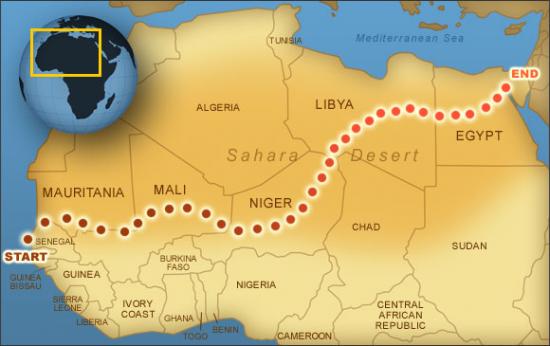
Samuel Laurent says his visits between early 2012 and early this year into the very heart of Sahelistan was supposed to be top secret. But the things he witnessed and the people he met there convinced him that Western leaders are making fatal blunders at the risk of paying enormous prices sooner or later; so it became incumbent upon him to talk about the matter publicly. But, before we proceed any further, let`s make sure we agree on what we mean by Sahelistan; we`re talking here of a 7,500 kilo-metre-wide ocean of sand and bare rocks in the central Sahara, with Morocco, Algeria, Tunisia and Libya in the north, and Mali, Niger, Chad and Sudan in the south. 

This is a desolate no man`s land where drugs and weapons traffickers and armed bandits have ruled for centuries. 
The southern Libyan side of the Sahara plays a major role in the shaping of Sahelistan as a refuge as well as training ground for extremist forces. In his final days in 2011, when the French air force planes were heavily bombarding Libya, the late Col Muammar Qadhafi had spokenrather prophetically: `Once I am gone, Libya will turn into the headquarters of a new war against Europe and America.

Today, affirms the book, the truth about the Libyan version of the `Arab Spring` amounts tragically to vengeful killings, arbitrary arrests, tortures, rapes and genocide as the order of the day. Nobody rules the country and thousands of armed men, including nomad Tuareg rebels, are rapidly settling down in different parts of Sahelistan and posing resistance to Western influence.

Even after the Egyptian, Tunisian and Libyan revolutions, says the book, the fast spreading power of AlQaeda was never fully grasped by the West and the media merely started taking a somewhat half-hearted interest in the subject following the assassination of US ambassador Christopher Stevens in Benghazi on the wellchosen, symbolic date of Sept 11 last year.Adamantlyrefusing to learn a lesson from the Libyan disaster, the French forces carried out vast military operations in northern Mali early this year. Although President François Hollande resisted the temptation of declaring `mission accomplished` à  la George Bush, the French media celebrated the killing of Mokhtar Belmokhtar, an Al Qaeda-linked military leader who had lost an eye during the Afghan war.

Barely a month ago, on May 23, an army base and a uranium treatment plant run by the French Areva enterprise in Niger were hit by forces close to Al Qaeda, causing the death of at least 12 soldiers. The supposedly `eliminated` Mokhtar Belmokhtar reappeared and claimed responsibility, promising to hit again at a time and place of his choice along the length and breadth of Sahelistan.

This hardly is an empty threat; the militants, rapidly forging alliances with local insurgentsand extremist groups like Ansar al Deen and Al Qaeda in Islamic Maghreb (AQIM), are today much deeply entrenched than ever.

Their ample resources come from arms and drugs trafficking ofcourse, but also considerably from cash ransoms paid by Europeans and Americans themselves for the release of their secret agents kidnapped while gathering intelligence in the guise of human rights workers.

In a region where young men are desperate to make a living, the masters of Sahelistan are using their easily earned money to offer relatively comfortable salaries to recruits, together with military training and Kalashnikov rifles.

The most surprising feature of Samuel Laurent`s book are the interviews of the jihadists themselves. Contrary to the widely accepted cliché of their being stubborn, blind fanatics, one is surprised by the lucid reasoning of their arguments. `Libya is neither Iraq nor Afghanistan,` says Mohammad el Gharabi, head of a clandestine military training camp not far from Benghazi, `and no Western powers are going to appoint a Noori alMaliki or a Hamid Karzai here.

As one digs deeper, one discovers a patient, wide-ranging plan projected far into the future for gaining power north and east of Sahelistan through political and military means (this already seems to be a reality in Tunisia, Libya and Egypt); then cross the Mediterranean to conquer Europe.

Does this sound crazy? Count André de la Roche, a retired diplomat who has spent a number of years in the Middle East, takes Samuel Laurent`s book seriously. He says the mighty Roman empire was brought to its knees by Christians coming from south of the Mediterranean and, should one need another proof, the Arabs conquered Spain in 711 to rule there for the next eight centuries.

The writer is a journalist base i in Paris. ZafMasud@gmail.com 


Free-eBooks: http://goo.gl/2xpiv
Peace-Forum Video Channel: http://goo.gl/GLh75

Scrapping equipment key to Afghan drawdown


KANDAHAR AIRFIELD, Afghanistan — Facing a tight withdrawal deadline and tough terrain, the U.S. military has destroyed more than 170 million pounds worth of vehicles and other military equipment as it rushes to wind down its role in the Afghanistan war by the end of 2014.
The massive disposal effort, which U.S. military officials call unprecedented, has unfolded largely out of sight amid an ongoing debate inside the Pentagon about what to do with the heaps of equipment that won’t be returning home. Military planners have determined that they will not ship back more than $7 billion worth of equipment — about 20 percent of what the U.S. military has in Afghanistan — because it is no longer needed or would be too costly to ship back home.


That has left the Pentagon in a quandary about what to do with the items. Bequeathing a large share to the Afghan government would be challenging because of complicated rules governing equipment donations to other countries, and there is concern that Afghanistan’s fledgling forces would be unable to maintain it. Some gear may be sold or donated to allied nations, but few are likely to be able to retrieve it from the war zone.
Therefore, much of it will continue to be shredded, cut and crushed to be sold for pennies per pound on the Afghan scrap market — a process that reflects a presumptive end to an era of protracted ground wars. The destruction of tons of equipment is all but certain to raise sharp questions in Afghanistan and the United States about whether the Pentagon’s approach is fiscally responsible and whether it should find ways to leave a greater share to the Afghans.
“We’re making history doing what we’re doing here,” said Maj. Gen. Kurt J. Stein, head of the 1st Sustainment Command, who is overseeing the drawdown in Afghanistan. “This is the largest retrograde mission in history.”
The most contentious and closely watched part of the effort involves the disposal of Mine-Resistant Ambush Protected vehicles, the hulking beige personnel carriers that the Pentagonraced to build starting in 2007 to counter the threat of roadside bombs in Iraq and Afghanistan. The massive trucks, known as MRAPs, came to symbolize the bloody evolution of wars that were meant to be short conflicts but turned into quagmires.
The Pentagon has determined that it will no longer have use for about 12,300 of its 25,500 MRAPs scattered at bases worldwide, officials said. In Afghanistan, the military has labeled about 2,000 of its roughly 11,000 MRAPs “excess.” About 9,000 will be shipped to the United States and U.S. military bases in Kuwait and elsewhere, but the majority of the unwanted vehicles — which cost about $1 million each — will probably be shredded, officials said, because they are unlikely to find clients willing to come pick them up.
“MRAPs have served us well in the current war, but we will not need all that we bought for Iraq and Afghanistan in the future,” Alan Estevez, the assistant secretary of defense for logistics and materiel readiness, said in a statement. “It is cost prohibitive to retrograde and reset MRAPs that we do not need for the future.”


‘Gold dust’
Those MRAPs that the Pentagon has deemed unnecessary have been arriving by the dozen at scrap yards at four U.S. military bases in Afghanistan in recent months. Toiling under the searing sun last week at this vast base in southern Kandahar province, contract workers from Nepal and other countries in the region wore fireproof suits and masks as they used special blowtorches to dismantle vehicles built to withstand deadly blasts. It takes about 12 hours to tear apart each MRAP.

In another section of the scrap yard, a massive grinder gobbled slabs of steel, turning them into small scraps. The debris is packed into U.S.-owned shipping containers that also have been deemed unfit to return home.
Last month, the Kandahar yard produced 11 million pounds of scrap that was sold to Afghan contractors for a few cents per pound, said Morgan Gunn, a Defense Logistics Agency employee who runs the site. Afghans use the scrap mainly for construction and as makeshift spare parts.
“Gold dust is what they call it,” Gunn said.
Military officials have drawn little attention to the scrapping operations, mindful that the endeavor might appear wasteful in an era of contracting defense budgets and misguided at a time when Afghan troops are being killed at a record rate. But officials argue that the effort is part of a withdrawal operation that is being carried out in a fiscally responsible, carefully planned manner.
“One might ask: Why not give it to the Afghans?” Stein said as he toured the Kandahar yard. “It’s such a fast-paced operation, and most of it is trash. We don’t want to leave this in the battlefield.”
As they have debated how much excess equipment to shred or sell, officials have considered whether the defense industry would suffer if the Pentagon unloaded tons of used equipment on the market at vastly reduced prices. Additionally, Pentagon policy requires that allied nations seeking to take ownership of excess U.S. equipment travel to Afghanistan to pick it up — an onerous task that few nations are likely to take on.
When the U.S. military withdrew from Iraq, it donated much of its equipment to the Iraqis, who had access to cheap fuel, a robust defense budget and more sophisticated mechanics. The Pentagon also shipped a significant share to Afghanistan, where a troop surge was underway. But donating MRAPs to the Afghans would be more complicated and potentially counterproductive, military officials said.
“Frankly, in a lot of ways, the Afghan economy and military can’t absorb some of the things the Iraqis did,” said Lt. Gen. Raymond V. Mason, the Army deputy chief of staff for logistics. “We don’t want to give [the Afghans] a lot of equipment that they can’t handle and could compound their challenges.”
Military officials said they have spent billions of dollars equipping and building up Afghanistan’s security forces over the past decade, outfitting them with lighter tactical vehicles that are a better fit for the country’s rudimentary road networks.
A situation unlike in Iraq
The U.S. Army owns the lion’s share of the military equipment currently in Afghanistan. As of May, Mason said, $25 billion worth of equipment was deployed with Army personnel. After an analysis of needs and costs, it has decided to ship back no more than 76 percent. Transporting that much will cost $2 billion to $3 billion, the Army estimates. And repairing the gear that comes back will cost $8 billion to $9 billion.
“Kuwait was a lifesaver,” Stein said, noting that there are no neighboring U.S. bases where equipment leaving Afghanistan could be easily stored. “It’s very hard to get our stuff out of Afghanistan. In Iraq, we could drive it out to Kuwait, and it sat there for a year or two until the Army decided its disposition.”
As the U.S. military reduces its footprint in Afghanistan from 150 bases to 50 by February, Stein’s teams are ramping up their efforts, finding more efficient ways of sorting through equipment to be shipped and drawing from lessons learned in Iraq.
Until a few months ago, the military flew out the vast majority of the equipment it was sending back to the United States.
In recent months, after Pakistan, a neighbor of landlocked Afghanistan, agreed to let the U.S. military use its roads to ship materiel out through its ports, most containers that don’t include sensitive materials or weapons are being trucked out by land. Shipping through Pakistan is by no means trouble-free — and officials recognize that the route could get shut down in the event of a new spat between Islamabad and Washington.
“We continue to get delays. There’s still corruption, taxes, tariffs,” Stein said. “But our equipment is getting through.”
By Ernesto Londoño:
http://www.washingtonpost.com/world/asia_pacific/scrapping-equipment-key-to-afghan-drawdown/2013/06/19/9d435258-d83f-11e2-b418-9dfa095e125d_story.html
$7 billion in gear U.S. sent to war will not return
About 20 percent of the equipment sent to Afghanistan will be disposed of because it is not needed or too costly to ship back, and it’s too complicated to donate or sell.

Related:
Free-eBooks: http://goo.gl/2xpiv
Peace-Forum Video Channel: http://goo.gl/GLh75

The Greeks who worship the ancient gods


The summer solstice, 21 June, is one of the most important dates in the calendar for many followers of ancient religions, and it's a special time for people in Greece who worship the country's pre-Christian gods.

"I love the energy this place has," says Exsekias Trivoulides who has pitched his tent on what he considers to be the holy site of Mount Olympus.
Trivoulides is a sculptor who studied art history and classics, and these days, he is living his passion.
Along with a few thousand others he is taking part in the Prometheia festival, which celebrates the ancient Greek hero Prometheus, who helped humans by stealing fire from the gods.
It's the most important annual festival for followers of The Return of the Hellenes - a movement trying to bring back the religion, values, philosophy and way of life of ancient Greece, more than 16 centuries after it was replaced by Christianity.
These people consider Greece to be a country under Christian occupation.
Tryphon Olympios leads many of the ceremonies
"People want to identify with something in the past - where they came from - so as to know where they are going," says Trivoulides. "If you don't know your past, you don't have a future.
"It's going back to the roots. It makes me feel the continuation through the millennia."
The festival begins with six runners - in full Greek battle gear - racing the six miles (10 km) up Mount Olympus, home of the gods, their shields and long spears clanking as they go.
But as they set out from the small village of Dion at the base of the mountain, passersby hardly seem to notice - they are used to them.
It's a telling sign of how far they have come already, in a nation where 98% of the public are said to identify themselves as Orthodox Christian.
In 2007, an official of the Orthodox Church described them as, "a handful of miserable resuscitators of a degenerate dead religion".
These days, relations have improved, according to Tryphon Olympios, the philosophy professor who founded the Return of the Hellenes movement in 1996.
"They have understood that we are not dangerous and we are not pagans and Satanists," he says.
"We are peaceful people and come with ideas that are useful for society."
The economic crisis in Greece should be a time of reflection about the values that should govern a society, he says.
The Return of the Hellenes focus on the 12 main gods of ancient Greece - the dodecatheon.
They don't actually pray to Zeus, Hera and the others. They see them as representations of values such as beauty, health or wisdom.
The followers are an odd mix. There are New Age types who revere ancient traditions, leftists who resent the power of the Orthodox Church, and Greek nationalists who see Christianity as having destroyed everything that was truly Greek.
As the modern-day ancients relax in their camp at the base of the mountain, a few sell philosophy books, CDs, food and jewellery. Some wear modern clothes, others tunics, and a few sport a wreath.
Over the course of the three-day event, there are public prayers, two marriages, and a naming ceremony, where followers choose an ancient name - like Calisto, Hermis or Orpheus - and "cleanse" themselves of their modern Christian ones.
None of these rituals is officially recognised by the Greek state. The biggest bone of contention for those involved is that they are prevented from praying at ancient temples, and struggle to get permission to build their own temples, which in Greece requires the approval of the local Orthodox bishop.
In an attempt to formalise their status, the umbrella group the Supreme Council of Ethnikoi Hellenes is campaigning to get their form of ancient worship classed as an "ethnic religion" of Greece.
But it's an idea few Greeks would support, says Victor Roudometof, a professor of sociology at the University of Cyprus, and an expert on religion in Greece.
Although many Greeks only actually attend church a few times a year, the Orthodox religion is a "cornerstone" of Greek identity, he says.
Those who worship the ancient Greek gods are widely regarded as no more than "interesting curiosities", he adds.
Experts in the study of the ancient world also tend to be dismissive.
"I don't think you can roll the clock back," says Robert Parker, a professor of ancient history at the University of Oxford.
"You can't import an ancient religion into a completely different environment and social system."
He has two words to describe those who attempt to do so - the first is "kooky", the second, "ridiculous".
Parker points to historical inconsistencies. Prometheus, for example, was only a relatively minor figure in ancient Greek religion, he says, and never had a major festival dedicated to him.
Other historians say these groups are idealising an ancient religion that had little to do with ethics or morality.
"The whole point of it is that you keep the gods sweet - you scratch their back, they will scratch yours," says Peter Jones, co-founder of Friends of Classics.
"You establish a quid pro quo relationship... It is simply an acknowledgement of the gods, in the hope that the gods will help you," he says. "Values and virtues are entirely meaningless in ancient terms."
Animal sacrifice was by far the most important part of any ancient Greek religious ritual, with the throat of a live bull slit with a knife at the altar outside the temple.
But most of the revivalists make simple offerings of flowers, fruit, milk and honey.
The ancient Greeks were also famed for drama and tragedy, and a night-time torch-lit theatrical production Prometheia is the main event at the Mount Olympus festival.
The performance combines classic drama with lessons about what the ancients have to teach us, all these centuries later.
Followers are all too aware they are seen as outsiders by some in society, but insist that attitudes in Greece are changing.
"In the beginning, they were making jokes, then they were ignoring us, now they are interested," says tax manager Persis Argyros, who has been involved since the start of the movement. "We became too big to ignore."
No-one has accurate figures for the number of followers, but numbers have swelled since their first gathering on the mountain 17 years ago, and the movement claims to have hundreds of thousands of supporters.
It's clear they are in their element here on Olympus. After the show closes, the Hellenes dance and frolic under the moonlight.

The 12 Olympians

A statue of Artemis
In Greek mythology there were 12 deities who lived on Mount Olympus
Gods - Apollo, Ares, Dionysus, Hermes, Hephaestus, Poseidon, and Zeus
Goddesses - Aphrodite, Athena, Artemis (above), Demeter, and Hera
Matthew Brunwasser was reporting for The World, which is a co-production of the BBC World Service, PRI and WGBH . Additional reporting Cordelia Hebblethwaite: http://www.bbc.co.uk
Related:
Free-eBooks: http://goo.gl/2xpiv
Peace-Forum Video Channel: http://goo.gl/GLh75

Anti-virus for the mind

“A spoonful of sugar makes the medicine go down” is a concept familiar to many parents - and manufacturers of medicine. In contrast, some medicines with potential to be harmful have a purposely bitter taste. Nobody wants their toddler to swallow the “sweeties” unintentionally left within reach. Similarly, a portion of nutritious food, say a pellet of wheat meal, may very effectively carry a small but fatal payload of poison for killing a rodent pest.
The mental hop from comparing the effect of poisons and antidotes on the health of the body, to health of the human mind, requires a conceptual ‘model’. There are risks of over-simplifying or over-complicating any model. One convenience of a model is that, if it appears inadequate, you can apply your intellect to revise the model. So useful is the analogy of a model, that in the majority of mind’s association with reality, models are essential to understanding. Nobody has seen an atom. We use a frequently-revised model of what an atom could be. Some models are very accurate in behaving like the real thing that they demonstrate. Others are not so close to perfection.
A respected spokesman for evolution, Richard Dawkins, authored a publication titled “Viruses of the Mind”. In that article, Dawkins models the faith and activities of religion as if religion was a viral infection of the human mind. Dawkins’ model environment is presented as the mind of a beautiful, six year old girl that he knows. This innocent mind accepts the existence of Thomas the Tank Engine and Father Christmas - and has ambitions to be a Tooth Fairy one day.
The narrative reveals that this vulnerable mind is being subjected, without the consent of her father, to Roman Catholic religious instruction. While the locomotive and jolly fat man pose no threat, all is not so well when it comes to absorbing the notion that all bad children will roast in hell, as Dawkins explains. A brief description then follows, of how DNA can be corrupted and passed on.
Next, a lengthier description, with examples, explains how computer viruses propagate. Dawkins underlines that an important characteristic of a virus is to remain undetected. It also requires two qualities in its host; a readiness to replicate information and a readiness to obey instructions.
To develop his conceptual model, Dawkins proceeds to describe how a meme, (his concept of a unit of human behavioural, conceptual or cultural traits) is replicated among human minds. He expounds how negative the religious memes are, giving examples. He notes that some of the examples are trivial or extreme and some readers may notice that some examples are not fully informed. Criticism of these deficiencies is unnecessary here.
Ultimately these religious memes are replicated virally to the detriment of numbers of human hosts - and one would infer, also to the detriment of uninfected humans who are collaterally disadvantaged.
“Viruses of the Mind” is sometimes invoked by other atheists to affirm criticisms of religious memes. Malicious or not, a mind-virus is merely an agent of intent, not the source. The article itself manifests several viral memes. Expansion on those themes is for another time.
Now, Dawkins’ viral model is also useful in the hands of the Christian believer. It can be applied intelligently to the fall of man. Adam and Eve were created with flawless DNA. Yet they chose to believe the outright lie of Satan (“You will certainly not die but be as gods”), vehemently contradicting the statement made by God (“Enjoy everything else I have given you but do not eat of the fruit of knowledge of good and evil, or you will die”). As a result, the whole of creation was cursed and the perfectly made human couple came under a death sentence.
The curse can easily be conceptualised as a viral infection of all DNA/RNA (as applicable) on earth. Aging, death, mutations into thorns and weeds, pests, animal predation - and all the other ills of living organisms appeared as a result of the now-degenerating, coded-for-life, double helix. Ever since then the defects have slowly multiplied. DNA started devolving, having lost the capability to auto-correct flawlessly with every replication.
Having three billion DNA base-pairs in the haploid genome and six billion in the diploid genome meant it would take a significant time before some defective genes became a concern. For example, ageing was very slow to begin with. Similarly, reproduction between relatives would be successful, with near-perfect genes. As these genes continued to devolve, a few at a time, it became undesirable for closely-related couples to reproduce and incest became intolerable. Aging accelerated very gradually. Remember that this is only a model and I am not a geneticist, so don’t get too caught up.
Along with the physical deterioration that came with this viral infection, came a deterioration of the mind. Where is the mind? “Fallen” man will say that the mind is in the brain but it is not the brain per se. We cannot be entirely specific but we know that memory, emotion and reasoning can be affected by trauma or disease in various areas of the brain. So the mind, at a conceptually higher level than the physical brain, having functions of intelligence, is in there somewhere.
A reasoning mind would conclude that the lower level (the physical body) should be subservient to the higher level (the mind). A viral infection can reverse this hierarchy and the mind becomes subservient to an ill body, particularly if the ill part is brain tissue.
Christians postulate that there is a third and higher level to being human; the soul (or spirit).
Christians can postulate the soul being undesirably dominated by the virally-influenced mind. It is not a physical problem, unless the mind is being dominated by the body. But it is a mental problem if the soul is being dominated by the mind. The infected mind is not able to detect a mind virus, in the concept of our model. So an infected mind would be unable to detect that it is infected. It could compare itself to other minds and decide that similar minds were uninfected - and that dissimilar minds were infected and thus, defective. It may even attempt to treat those ‘defects’, for self-preservation. Failed treatment may call for elimination of what it thinks is the ‘defective’ mind.
In the meme model of a mind virus, an anti-virus was introduced via a momentous action on the part of the creator of the mind. Flawless DNA was sacrificed to make this anti-virus. It was injected into a small population, over two thousand years ago. The anti-virus continues to replicate as responsive minds begin restoration. A recovering mind gradually submits to the soul’s authority. It takes time – but eventually the soul is asserted and takes on its purpose. We beings, thinking previously that we were a mind, discover that we are more than that. We are spirits, companions of God, with an eternal existence. We are purposed for a perfect makeover in a new creation. Even the elements then will be different - and current models will no longer be relevant.
One of the attributes of the anti-virus is that it is designed to replicate. Scant surprise then; that an inoculated mind is driven to spread it, long before it understands why.
http://www.news24.com/MyNews24/Anti-virus-for-the-mind-20130618
Related:
Free-eBooks: http://goo.gl/2xpiv
Peace-Forum Video Channel: http://goo.gl/GLh75