Featured Post

SalaamOne NetWork

SalaamOne سلام   is   a nonprofit e-Forum to promote peace among humanity, through understanding and tolerance of religions, cul...

Showing posts with label Trump. Show all posts

’ خلافت عثمانیہ۔اسرائیل اور صدی کی سب سے بڑی ڈیل Ottomans Caliphate، Israel and The ‘deal of the century


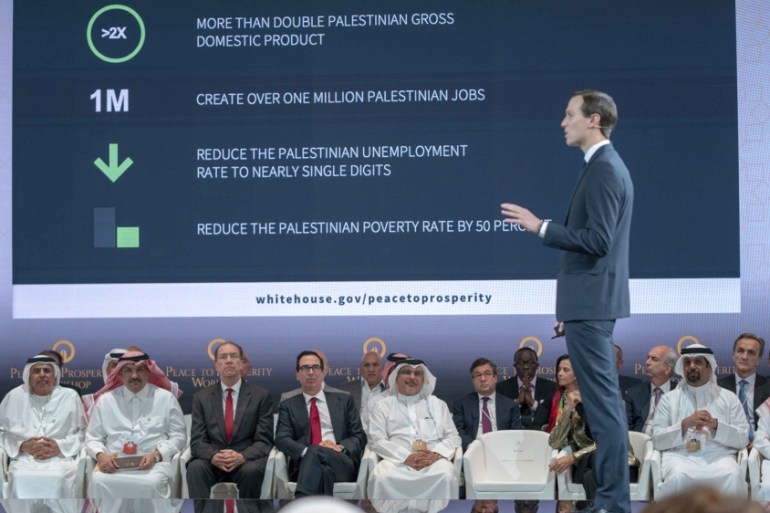
The “deal of the century” is a waste of time and paying attention to Kushner’s theatrics means falling into his trap set up to distract the public from what is really going on. All those who care for the Palestinian cause should mobilize now and prevent Kushner, Trump and their Israeli partners from establishing irreversible “facts on the ground” that could see Palestinian hopes for self-determination destroyed…….[…….]
خلافت عثمانیہ۔اسرائیل اور صدی کی سب سے بڑی ڈیل 
عثمانیوں نے معلوم وجوہات کی بنا پہ عیسائیوں کی نسبت یہودیوں پہ بھروسہ کیا اور انہیں اپنے دربار تک رسائی دی۔ اس وقت جب سارا یورپ یہودیوں کے لئے مقتل بنا ہوا تھا اور انہیں نہایت حقارت کے ساتھ غیطوز میں محدود رکھا جاتا تھا ، یہ سلطنت عثمانیہ ہی تھی جس نے انہیں مقدونیہ میں شہر سلونیکا میں آبادکاری کی سہولت اور اجازت دی۔ غالبا ًاسی دن کے لئے مسلمانوں کی آخری مرکزی سلطنت خلافت عثمانیہ کے ٹکڑے ٹکڑے کر کے اسے وفاداروں اور کاسہ لیسوں میں تقسیم کیا گیا تھا کہ جب فیصلہ کن جنگ کا مرحلہ سر پہ آن پہنچے تو امت مسلمہ ، اگر وہ کہیں ہے ، تو اپنے ہی مسائل میں الجھی ہو،باہم دست و گریبان ہو یا عظیم منصوبہ سازوں کے ہاتھ میں کٹھ پتلیوں کی طرح کھیل رہی ہو۔ خلافت عثمانیہ کے زوال کے اسباب میں ایک اہم سبب اس کا یہودیوں کو سلونیکا میں آباد کاری کی اجازت دینا تھا۔.........[.......]

Trump summons Muslim nations to confront ‘Islamic terror of all kinds’


RIYADH, Saudi Arabia — President Trump delivered a forceful address here Sunday summoning the Muslim world to confront “the crisis of Islamic extremism” as he seeks to create new partnerships to unite against global terrorism.
Speaking from Saudi Arabia, the birthplace of Islam and home to several of the religion’s holiest sites, Trump implored the leaders of dozens of Muslim nations to take their own destinies in hand and, together with the United States, stop the killing of innocent people in the name of religion.
“This is not a battle between different faiths, different sects or different civilizations,” Trump said. “This is a battle between barbaric criminals who seek to obliterate human life and decent people, all in the name of religion — people that want to protect life and want to protect their religion. This is a battle between good and evil.”
Trump implicitly rejected the aspirational goals and call for democracy and human rights of former president Barack Obama, who also delivered a major speech to the Islamic world early in his presidency. “We are adopting a principled realism,” Trump said.
“We are not here to lecture,” he said. “We are not here to tell other people how to live, what to do, who to be or how to worship. Instead, we are here to offer partnership, based on shared interests and values.”

President Trump, right, and Egyptian President Abdel Fatah al-Sissi share a laugh during a meeting in Riyadh, Saudi Arabia, on May 21, 2017.
Photo by: Evan Vucci/AP
Trump called for unity in confronting Iran over its funding of terrorists and promotion of a “craven ideology.” He called on the Muslim world to help isolate Iran and, just days after Iranians reelected moderate President Hassan Rouhani, to “pray for the day when the Iranian people have the just and righteous government they so richly deserve.”
[Trump campaigned against Muslims but will preach tolerance in Saudi speech]
In the run-up to Trump’s visit, there was considerable speculation about whether he would utter the phrase “radical Islamic terrorism” in his speech, the centerpiece of his Saudi trip.
On the campaign trail, Trump loudly criticized Obama for refusing to describe the terrorism threat in those terms. But some of Trump’s top aides, including national security adviser H.R. McMaster, have been urging him to soften his language. Many Muslim leaders consider broad denunciations of their faith insulting.
In his Riyadh address, Trump decided to use a substitute phrase: “Islamist extremism.” But he slightly veered off the prepared excerpts released earlier by the White House, saying “Islamic” instead of “Islamist” on several occasions.
Describing the fight against terrorism, Trump spoke of “honestly confronting the crisis of Islamic extremism and the Islamists and Islamic terror of all kinds.”
Lamenting the scourge of terrorism across the Middle East, Trump exhorted, “Drive them out! Drive them out of your places of worship. Drive them out of your communities. Drive them out of your holy land. And drive them out of this Earth.”

President Trump, second to the left left, shakes hands with Qatar's Emir Sheikh Tamim Bin Hamad Al-Thani, left, during a bilateral meeting on May 21, 2017, in Riyadh, Saudi Arabia. Seated with them are, from center to right, Secretary of State Rex Tillerson, White House senior adviser Jared Kushner and national security adviser H.R. McMaster.
Photo by: Evan Vucci/AP
Trump was addressing a rare gathering of leaders of about 50 Muslim nations at the Arab Islamic American Summit. It was his second day on a marathon foreign trip that will take him next to Israel, where he has ambitions to help negotiate peace, and then to the Vatican. The Middle East, he said, had long been home to “Arabs and Christians and Jews living side by side” and could again be a place for “every person, no matter their faith.”
[Trump mocked Obama for bowing to a Saudi king. And then he …]
By preaching tolerance and calling Islam “one of the world’s great faiths,” Trump departed from his previously stated views on Muslims. Anti-Muslim rhetoric and policies were hallmarks of his nationalist 2016 campaign; he proposed banning Muslims from entering the United States and proclaimed, “I think Islam hates us.”
Trump gave his remarks in an opulent hall of the King Abdulaziz International Conference Center, where crystal chandeliers hung from the gilded ceiling and attendees sat in plush armchairs. The president was seated at the front of the room, behind an ornate wooden desk and alongside the summit’s host, King Salman, before taking the lectern.
No final list of the leaders in attendance was initially released. Seen chatting in the chamber and then listening intently were kings, presidents and prime ministers from Jordan, Pakistan, the Palestinian Authority, as well as Egypt and numerous other African states with Muslim majorities. Some, including Turkey and Sudan, sent lower-level officials.
Speaking before Trump, Salman appeared to be gently admonishing the United States for its strict visa policies, saying that all in the room rejected “profiling religions and countries on a religious or sectarian basis.”
But he was effusive in his praise for Trump and the president’s decision to make Saudi Arabia the first stop on his first overseas trip. Trump, he said, “has many hopes and aspirations with the Arab and Muslim worlds.”
He said that his kingdom is committed to “fighting all forms of terrorism” and that “one of the most important goals of Islamic sharia is protecting life, and there is no honor in committing murder.”
The king directed much of his ire toward Iran, saying the Arab world had no problems with that country until its 1979 revolution brought a theocratic government that quickly turned to terrorism and regional ambitions. “These odious acts are the products of attempts to exploit Islam as a cover for political purposes to flame hatred, extremism, terrorism and religious and sectarian conflicts,” Salman said.
Trump was equally generous in his praise for Saudi Arabia, a Sunni Muslim state that considers Shiite Iran its principal rival for regional power.
He made proud reference to the $110 billion arms deal signed with the Saudis during his visit here and said the United States was willing to extend the same partnership to other nations that share its objectives.
Trump also highlighted, in terms reminiscent of his domestic boasting, what he said were the achievements of his first months in office, claiming the creation of nearly 1 million jobs.
[Ivanka Trump meets with Saudi women leaders as some activists remain critical]
The president wants to both profit from the sales and move partners in the Middle East to share more of what he has said is the unequal burden of defending them from both the Sunni terrorism of the Islamic State and al-Qaeda and from Iran.
“America is prepared to stand with you — in pursuit of shared interests and common security,” he said. “But the nations of the Middle East cannot wait for American power to crush this enemy for them. The nations of the Middle East will have to decide what kind of future they want for themselves, for their countries and, frankly, for their families and for their children.”
Overall, Trump delivered a dark decree to the leaders in attendance.
“Religious leaders must make this absolutely clear: Barbarism will deliver you no glory — piety to evil will bring you no dignity,” he said. “If you choose the path of terror, your life will be empty, your life will be brief, and your soul will be condemned.”
A few hours before his remarks, Trump and the leaders of six Persian Gulf states reached an agreement to crack down on terror financing, including the prosecution of individuals who continue sending money to militants.
The memorandum of understanding — between the United States and the Gulf Cooperation Council, comprising Saudi Arabia, Bahrain, Kuwait, Oman, Qatar and the United Arab Emirates — includes the creation of a center in Riyadh to fight extremism.
Dina Powell, Trump’s deputy national security adviser, called the agreement the “farthest-reaching commitment to not finance terrorist organizations” and said the Treasury Department would monitor it along with the gulf governments.
“The unique piece of it is that every single one of them are signatories on how they’re responsible and will actually prosecute the financing of terrorism, including individuals,” Powell told reporters.
[Trump signs ‘tremendous’ deals with Saudi Arabia on his first day overseas]
Outside funding for the Islamic State, al-Qaeda and other groups has come primarily from the Persian Gulf. U.S. officials in recent years have said that the gulf states have cracked down and virtually eliminated money coming from governments in the region. Instead, they believe certain wealthy individuals — primarily in Kuwait and, to a lesser degree, Qatar — remain funnels for money or are themselves financing the groups.
A Kuwaiti cabinet minister was forced to resign in 2014 after the United States complained about his activities, and regional governments have instituted legal crackdowns, with varying degrees of success, to stem the practice. All have signed agreements in the past to stop it.
The Islamic State, in particular, has largely funded itself through extortion and taxes in the areas it controls in Syria and Iraq, and through revenue for oil it sells clandestinely. But those sources, along with kidnapping for ransom, have diminished as the militants have lost territory.
The warm embrace of Trump that was on festive display on his first day in Riyadh continued during a trio of bilateral meetings the president held Sunday at the Ritz-Carlton hotel.
Egyptian President Abdel Fatah al-Sissi praised Trump and invited him to visit Egypt, which Trump said he intends to do. Through a translator, Sissi said, “You are a unique personality that is capable of doing the impossible.”
“I agree!” Trump replied, as his advisers and others looking on laughed.
Trump went on to compliment Sissi on his fashion, telling the Egyptian leader, “Love your shoes. Boy, those shoes. Man . . .”
Trump met with Sissi earlier this spring in Washington, breaking an Obama-era ban on receiving the Egyptian leader in the White House because of his crackdowns on political and civil expression since taking power in a 2014 coup.
Trump called Sissi “my friend” and thanked him for his help with the release of American aid worker Aya Hijazi, 30, who had been imprisoned in Cairo.
[Freed Egyptian American prisoner returns home following Trump intervention]
Trump also met with the emir of Qatar, Tamim bin Hamad al Thani, and noted the long friendship between the two countries and the prospect of future trade.
“One of the things that we will discuss is the purchase of lots of beautiful military equipment, because nobody makes it like the United States,” Trump told reporters ahead of his talks with the Qatari leader. “And for us that means jobs, and it also means, frankly, great security back here, which we want.”
Defeating radical Islam - by By Daniel Pipes , the Islamophobe


Who is the enemy? It’s been over 15 years since Sept. 11, 2001, and this fundamental question still rattles around. Prominent answers have included evildoers, violent extremists, terrorists, Muslims, and Islamists.
As an example of how not to answer this question, the Obama administration convened a Countering Violent Extremism (CVE) Working Group in 2010 and included participants who turned up such gems as: “Jihad as holy war is a European invention,” the caliphate’s return is “inevitable,” Shariah (Islamic law) is “misunderstood,” and “Islamic terrorism is a contradiction in terms because terrorism is not Islamic by definition.” The result? The group produced propaganda helpful to the (unnamed) enemy.
In contrast, then-candidate Donald Trump gave a robust speech in August 2016 on how he, as president, would “Make America Safe Again.” In it, he pledged that “one of my first acts as president will be to establish a commission on radical Islam.” Note: he said radical Islam, not some euphemism like violent extremism.
The goal of that commission, he said, “will be to identify and explain to the American public the core convictions and beliefs of radical Islam, to identify the warning signs of radicalization, and to expose the networks in our society that support radicalization.” The commission “will include reformist voices in the Muslim community” with the goal to “develop new protocols for local police officers, federal investigators, and immigration screeners.”
On Feb. 2, Reuters reported that, consistent with the August statement, the Trump administration “wants to revamp and rename” the Obama administration’s old CVE effort to focus solely on Islamism. Symbolic of this change, the name Countering Violent Extremism will be changed to “Countering Radical Islamic Extremism” (or a near equivalent).
To make the most of this historic opportunity, the Middle East Forum has crafted a comprehensive plan for a White House Commission on Radical Islam for the administration to use. Here’s a summary of how we see the commission working and having an impact:
Structure. To be successful, all its members must be selected by the president. Too many commissions have included contrasting ideologies and agendas, grinding out sausagelike self-conflicting reports that displease the administration and end up discarded. Also, learning from the struggles of the Tower Commission, which lacked sufficient powers, and the precedent of the Three Mile Island Commission, which actually had them, the commission needs the power to subpoena documents, compel testimony and grant immunity.
Personnel. The commission should include a mix of experts on political violence and radical Islam, as well as elected officials, representatives of law enforcement, the military, the intelligence and diplomatic communities, technology specialists, Muslim reformers (as the president insisted), and victims of radical Islam. It should also include liaisons to those who ultimately will implement the commission’s recommendations: secretaries of the departments of state, defense, and homeland security, the attorney general, and the CIA director.
Mandate. The commission should expand on President Trump’s commitment to explain the core convictions of Islamists (i.e., the full and severe application of Shariah) to expose their networks, and develop new protocols for law enforcement. In addition, it should examine where Islamists get their resources and how these can be cut off; figure out how to deny them use of the internet; offer changes to immigration practices; and assess how political correctness impedes an honest appraisal of radical Islam.
Implementation. For the commission’s work to be relevant, it must coordinate with federal agencies to gather data and craft recommendations, draft executive orders and legislation, provide supporting documents, prepare requests for proposals, outline memos to state and local governments, recommend personnel, and work out budgets. Finally, the commission should be prepared that its reports may be used as evidence in criminal proceedings, such as was the case several times in the past (e.g., the Warren, Rogers, and Tower commissions).
The overall goal of the White House Commission on Radical Islam should be to bring the American people together around a common understanding of the enemy’s nature, how that enemy can be defeated, and specifics to accomplish this objective.
Perhaps this will start the long-delayed process of winning a war that has already gone on far too long. The United States has all the economic and military advantages; it lacks only a policy and a strategy, which the new administration, relying on a first-rate commission, can finally supply.
 Daniel Pipes (@DanielPipes) is president of the Middle East Forum. Christopher C. Hull (@ChristopherHull) is president of Issue Management, Inc.
~ ~ ~ ~ ~ ~ ~ ~ ~ ~ ~ ~ ~ ~ ~ ~ ~  ~ ~ ~  ~


~ ~ ~ ~ ~ ~ ~ ~~ ~ ~ ~ ~ ~  ~ ~ ~  ~
Humanity, Knowledge, Religion, Culture, Tolerance, Peace
انسانیت ، علم ، اسلام ،معاشرہ ، برداشت ، سلامتی 
Books, Articles, Blogs, Magazines,  Videos, Social Media
بلاگز، ویب سائٹس،سوشل میڈیا، میگزین، ویڈیوز,کتب
سلام فورم نیٹ ورک  Peace Forum Network 
Join Millions of visitors: لاکھوں وزٹرز میں شامل ہوں 
Salaamforum.blogspot.com 
سوشل میڈیا پر جوائین کریں یا اپنا نام ، موبائل نمر923004443470+ پر"وہٹس اپپ"یا SMS کریں   
Join 'Peace-Forum' at Social Media, WhatsApp/SMS Name,Cell#at +923004443470
     
  
Facebook: fb.me/AftabKhan.page

The Trump Era Turmoils


Shooting wars by Munir Akram
LAST week, Steve Bannon, the `eminence gris`in the Trump White House, blithely observed that the US will soon be in a `shooting war` in the Middle East. He may be right. Donald Trump`s declared determination to eliminate `Islamic terrorism` implies intensification of several conflicts.

Syria:
Trump announced he will fight the militant Islamic State (IS) group, rather than Bashar alAssad, in Syria, and may commit US ground troops to this fight. This would have aligned US policy with Russia (and Iran). Trump has adjusted his position, endorsing the creation of `safe zones` in Syria. This will put the US at odds with Russia and Iran and erode the tenuous `ceasefire` they imposed after defeating the rebels in Aleppo. The Syrian war is likely to become further extended and more complex.

Iraq: 
Even if IS is ousted from Mosul and Raqqa, and mopped up in the Syrian-Iraq desert, it will spread elsewhere. Iraq is likely to witness renewed internal rivalry between Shia, Sunni and Kurdish parties and a contest between Iran and a US-GCC coalition for influence in Iraq.

Iran: 
A `shooting war` between the US and Iran is a real possibility. US Republicans and the military are hostile to Iran. Israel`s Benjamin Netanyahu sees Iran as an `existential` threat. America`s Arab allies oppose Iran`s growing influence and interventions in the region. These constituencies are convinced Obama`s nuclear deal with Iran has allowed it to retain nuclear weapons capability and expand its aggressive regional role. New US sanctions have now been placed on Iran after the latter`s missile test last week. Iran`s reactions will provide grounds to ratchet up sanctions and pressure. A US-Iran confrontation even if short of a shooting war would lead to intensiñcation of connicts in Syria, Iraq, Yemen, Lebanon, Afghanistan and elsewhere.

Israel-Palestine: 
Trump appears to have backed away from unconditional support for Netanyahu`s settlements expansion in occupied West Bank. The US embassy shift has also been put in slow motion.

Yet, prospects for a two-state solution are fast eroding; the likelihood is rising that Fatah, even Hamas, may be marginalised and replaced by more extremegroups aligned with IS or Al Qaeda.

There are other areas where shooting wars and crises may erupt or be exacerbated.

Ukraine: 
Fighting has recently resumed in Ukraine between government forces and the proRussian opposition in the east, perhaps to ensure the crisis is not ignored as Trump and Vladimir Putin seek to normalise ties. However, Trump has backed away from lifting anti-Russia sanctions unilaterally. The new US UN ambassador repeated US denunciation of Russia`s takeover of Crimea and role in Ukraine. The reset of US-Russia ties is likely to prove more complicated than Trump presumed.

Eastern Europe: 
Similarly, Nato, pressed by the Baltic states and Poland, has gone ahead with planned military deployments and exercises along Russia`s borders. Trump has stepped back from dismissing Nato as `obsolete`. His defence secretary staunchly supports the alliance. Thus, European concerns will have to be factored into the US-Russia `reset`. The main bone of contention may not be either Ukraine or the limited Nato military deployment in Eastern Europe but US plans to instal a strategic ballistic missile defence system in Poland.

North Korea: 
Trump`s claim he will neutralise North Korea`s nuclear and missile programmes is unlikely to be realised. China cannot be pressured to tighten sanctions against Pyongyang to a point that threatens North Korea`s political collapse.

Korean unification would bring US troops to China`s borders. A US military strike on North Korea would destroy prosperous South Korea. A regional crisis is, however, brewing due to planned US deployment of the THAAD ballistic missile defence system in South Korea which China and Russia believe would neutralise the strategic nuclear balance.

South and East China seas: 
From a neutral stance, the US has moved to challenge China`s claims in the South and East China seas. US `Freedom of Navigation` patrols have expanded and 70 per cent of the US navy is now deployed in the Pacific. The US Pacific commander has said his forces are `ready to fight tonight`. The incoming US secretary of state commented in Senate hearings that China`s access to the disputed South China Sea islands could be`blocked` by the US. This was casually endorsed by the White House spokesman. The Chinese responded that to do so the US should be prepared to go to war with China. The US posture may be moderated after sober reflection.

Taiwan: 
Trump has called into question US endorsement of the `One China` policy, the foundation of Sino-US relations for over four decades. Some Chinese officials have privately declared `the day Taiwan declares `independence` is the day Chinese troops will land on its beaches`. However, Taiwanese fully understand the danger and Trump`s posture is apparently designed to extract trade and other concessions from China rather than actually discard the policy. Still, a Sino-US crisis is possible over trade, missile defence and the South China Sea.

Pakistan-India: 
Blissfully, South Asia has not figured prominently in the Washington policy turmoil.

The US administration will persist in seeking to coopt India into its strategy to contain China but is likely to be less accommodative of India`s attempts to `hedge` its bets with China, Iran and Russia. India could face problems on trade and immigration.

Pakistan will be pressed for cooperation on Afghanistan and terrorism. The US administration is likely to be more decisive in rewarding cooperation and penalising non-cooperation. Trump`s ego may propel him to attempt a mediatory role between India and Pakistan. However, in the event of a PakIndia crisis, the US will side with India. A Sino-US confrontation could result in a knock-on crisis in Pakistan-US ties.

The strategic environment: Today, arms expenditures are rising; military rhetoric is rampant; global and regional cooperation is eroding. After Trump`s election, the Bulletin of Atomic Scientists moved up its `Doomsday Clock` to two and half minutes to midnight. The last Soviet leader Mikhail Gorbachev observed recently that it `looks as if the world is preparing for war`. He urged world leaders to focus on preventing war, phasing out the arms race and reducing weapons arsenals. Unfortunately, no one seems to be listening. • The writer is a former Pakistan ambassador to the UN.
Dawn. Com
More:


~ ~ ~ ~ ~ ~ ~ ~ ~ ~ ~ ~ ~ ~ ~ ~ ~  ~ ~ ~  ~


Humanity, Knowledge, Religion, Culture, Tolerance, Peace 


Visited by Millions
       
Facebook Page

Is this how democracy ends? David Runciman

Image result for us democracy end
On election night, almost as soon as it was clear that the unthinkable had become a cold reality, Paul Krugman asked in the New York Times whether the US was now a failed state. Political scientists who normally study American democracy in splendid isolation are starting to turn their attention to Africa and Latin America. They want to know what happens when authoritarians win elections and democracy morphs into something else. The demagogue who promised to kill terrorists along with their families is moving his own family into the presidential palace. Even before he has taken up occupation his children are being seeded into positions of power. There he is on television, shiny and golden, his wife beside him and three of his children lined up behind, ready to take up what daddy has to offer. Here he is back on Twitter, unshackled by victory, rounding on his opponents in the free press. His ten-year-old son is still too young to join in, but he was by his father’s side on election night, looking hardly less bemused than the rest of us, as Trump delivered his notably conciliatory victory speech. Words of conciliation followed by the ruthless personal appropriation of the machinery of government, children in tow. Isn’t this how democracy ends?

It is not to belittle the crisis facing the American republic, and indeed the world, to say that these are the wrong questions. The US is not a failed state. How do we know? Because that’s what Trump said it was during the election campaign and he was lying. He portrayed his country as a place of failed institutions and widespread corruption, its inner cities racked with violence and its political class interested only in enriching itself. It would be a big mistake to think that he won because people believed him. Had they believed him they would hardly have voted for him: putting a man like Trump in charge really would spell the end for American democracy, because it would have left him free to do his worst. People voted for him because they didn’t believe him. They wanted change but they also had confidence in the basic durability and decency of America’s political institutions to protect them from the worst effects of that change. They wanted Trump to shake up a system that they also expected to shield them from the recklessness of a man like Trump. How else to explain that many people who reported themselves alarmed by the idea of a Trump presidency also voted for him? The Clinton camp made a basic error in choosing to target Trump’s obvious character flaws as the reason to keep him out of the White House. It’s not as if those flaws were hidden. For his supporters they were already baked in: harping on them did nothing except make it sound like the Democrats were crying wolf. If this guy were as dangerous as they say, would he really be a serious candidate for president? Yet he must be a serious candidate for president for them to be saying he’s so dangerous. QED he’s not as dangerous as they say.

This is the crisis facing Western democracies: we don’t know what failure looks like anymore and we have no idea how much danger we are in. The language of failed states doesn’t fit the present moment because it conjures up images that are completely inappropriate for a society like the contemporary United States. There will be no widespread civil conflict, no tanks in the streets, no generals on television announcing that order has been restored. Trump’s victory has been greeted with some haphazard protests around the country, accompanied by sporadic violence. Had he been narrowly defeated, and then refused to concede, the story might have been different. But even then I find it hard to believe that civic order in the US would have broken down. The violence would doubtless have been greater and much of it would have been hateful. But widespread armed resistance to the regime is still very difficult to imagine. The US is nothing like the societies where we know what happens when politics falls apart, including Europe in the 1930s, which is often held up as a warning for what might be around the corner. Contemporary America is far more prosperous than other states where democracy has failed in the past, however unequally that prosperity is distributed. Its population is much older. Civil disorder tends to happen in societies where the median age is in the low twenties; in the US it is close to forty. Its young people are far better educated, or at least educated for much longer. Its levels of violence, though high by 21st-century European standards, are low by any historical measure. Its frustrations are those of a country where all this is true and yet still things are going badly wrong. These are First World problems. That doesn’t make them any less serious. It just makes it much harder to find historical precedents for what comes next.
http://www.lrb.co.uk/v38/n23/david-runciman/is-this-how-democracy-ends
Related:
~ ~ ~ ~ ~ ~ ~ ~ ~ ~ ~ ~ ~ ~ ~ ~ ~  ~ ~ ~  ~
Humanity, ReligionCultureSciencePeace

 For Trump, Pakistan And Afghanistan Pose Challenges Without Easy Solutions


When Donald Trump finally has his feet under the desk in the Oval Office and opens the files marked "Afghanistan" and "Pakistan," he will find much to worry about.

Relations between Pakistan and India, which both have big nuclear arsenals, are in crisis. These days, their armies regularly trade shots along the Line of Control, the de facto border in disputed Kashmir — sometimes with fatal consequences.

Fears abound that Afghanistan could melt down into violent chaos that could spill beyond its boundaries.

Islamist militant groups that pose a global threat are establishing fresh roots in the region, despite a crackdown following the al-Qaida attacks of Sept. 11, 2001.

Pakistan's army has driven out the local Taliban from the mountains bordering Afghanistan, but other homegrown militants whom it uses as proxies in neighborhood conflicts are allowed to move freely.

This is not a region can safely be ignored by the world's biggest superpower. Yet tackling this long list of problems (and there are others) is a mammoth task.

Policymakers in the region have little idea how the inexperienced Trump and his team will approach this, and are anxiously rooting around for clues.

Article continues after sponsorship
Within Afghanistan's government, concern is now sure to focus on whether Trump's generally isolationist outlook will prompt him to withdraw the remaining U.S. troops now supporting Afghan security forces in their widening fight against the Taliban.

U.S. troops remain

President Obama has said he intends to keep 8,400 forces there until his term ends. If Trump pulls these out, many Afghans worry their government will collapse.

Although Trump has not said much in detail about foreign policy, he has made clear that he objects to American taxpayers' money being squandered in faraway lands. He will find the record of massive, endemic corruption in Afghanistan particularly hard to swallow.

Pakistanis are bracing themselves for a rough ride. There is speculation that Trump, backed by a Republican-led Congress, will take a tougher line with the civilian and military leadership, focusing narrowly on U.S. security interests, and demanding tangible results in curbing jihadist activity if aid dollars are to continue to flow.

Trump may well demand that Pakistan finally acts decisively against all Islamist militant organizations operating from its soil, including the Haqqani network in Afghanistan and the anti-India jihadist groups Lashkar-e-Taiba and Jaish-e-Mohammed.

This will likely go down badly within Pakistan's powerful military and intelligence establishment. However, the country's progressive minority has long been calling for these groups to be shut down.

"A blessing in disguise for Pakistan?" asked a front-page headline in the English daily Express Tribune over an article speculating that dealings with Donald Trump will be more transparent.

Pakistan tries to assess Trump

Once he gets down to work, Trump will swiftly discover that words matter greatly on the global stage and can easily backfire if they are not selected with care. Trump's campaign threat to ban Muslims from entering the United States, albeit temporarily, will not be forgotten anywhere in the Islamic world.

"Very few would argue that Trump's success is because of the overt racism present in his speeches or the misogynistic remarks that were uncovered later," said an editorial in Thursday's Daily Times. However, the paper described his election as "a commentary...on the tolerance for intolerance in the U.S. nation."

Trump's recent expressions of friendship with India also caused disapproving frowns in Pakistan. The U.S. has been tilting towards New Delhi for a long time — not least because it sees India as a counterweight to China. But any sign that this friendship is getting even cozier will stir alarm in Islamabad.

However, Pakistanis will have also taken note that Trump said in his acceptance speech that he wants to "get along with all other nations willing to get along with us."

Pragmatism and self-interest defines everything. Pakistan's Prime Minister Nawaz Sharif sent Trump an enthusiastic message of congratulation, saying his "momentous success" is a testimony to the confidence Americans have in his "leadership and vision," and inviting him to Pakistan at the earliest opportunity.

This was further evidence that Islamabad's relations with Washington, though marred by squabbles and suspicion, are remarkably durable. They survive because they have to.

U.S. concerns about key security issues — Afghanistan, Islamist groups, Pakistan's nuclear arsenal, the risk of an India-Pakistan war — mean that it must remain engaged. So, too, must Pakistan. While Islamabad attaches great importance to its deepening economic ties with neighboring China, it also fears being cold-shouldered and ignored by the West, and is reluctant to lose U.S. aid dollars. The U.S. has given billions to Pakistan, one of Washington's top recipients of military aid and economic assistance.

Managing this relationship requires skill and guile on both sides. Can Trump do it? Michael Kugelman, senior associate for South Asia at the Woodrow Wilson Center, thinks Trump's inexperience in foreign affairs could work in the relationship's favor, though "with troubling implications for U.S. interests," he said.

"Trump may well take at face value the Pakistan military's constant reassurances that the country is acting against all terror groups, even though we know this is untrue. Pakistan has been known to talk a big game with American interlocutors, and only the more seasoned U.S. diplomats and officials can separate the fiction from the reality," he said.

"In effect, Pakistan knows how to play the Americans, and they really could play Trump well, to the point that he concludes Pakistan is doing all the right things on terror. This is why it's critical that the Trump White House has knowledgeable foreign policy officials."
By Philip Reeves, npr.org

Related:
~ ~ ~ ~ ~ ~ ~ ~ ~ ~ ~ ~ ~ ~ ~ ~ ~  ~ ~ ~  ~
Humanity, ReligionCultureSciencePeace

View from US: Pulpits and lies


Hillary Clinton and Donald Trump will take the stage at the first general election presidential debate this year
The world watches while America loses its moral compass. It stands at a crossroads — one that leads in one direction to an unknown place (Donald Trump) and in the other to the same old place (Hillary Clinton). Both candidates are rated negatively at historic levels. The greatest casualty is truth, character and transparency. In the first presidential debate on September 26, both will likely resort to falsehood and braggadocio instead of focusing on substantive issues of terrorism, foreign policy, national security, healthcare, economy and employment.

The bigger bully in the room will win.

For 18 months we’ve watched Trump and Clinton slug it out. With just a few weeks left to the elections, Trump incites his voters towards ugly confrontations. Never before has America been so divided, so polarised, so disgusted. As the oldest candidates ever to run for president (Clinton would be the second oldest president in history, Trump would be the oldest), both hide the real state of their health. Trump and his supporters insist Hillary is very sick physically, while Hillary and her camp assert Trump is sick mentally and therefore unfit to be the leader of the ‘free world.’

The lady in the pantsuit has put “half of Donald Trumps’s supporters” in a “basket of deplorables”, calling them “racist, sexist, homophobic, xenophobic, Islamaphobic, you name it”. Hillary Clinton is absolutely correct. Yes, it’s a fact: half (or more) of Trump’s supporters are rabid racists. He has spearheaded and activated dormant white supremacy groups gunning for people who don’t share their religion or look like them. On September 11, an arsonist set fire to the Islamic Center at a Florida mosque that the Pulse nightclub shooter, Omar Mateen, attended. The same day, in New York, a Muslim woman in hijab walking on Fifth Avenue was set on fire by a man with a lighter. More hate crimes are expected. The 70-year-old billionaire has successfully poisoned the well by targeting American -Muslims as his object of hate and loathing. If he is elected president, his supporters will have just one message: “You Muslims need to get back to your country.” And 69 per cent of these bigots are convinced that Obama is a Muslim born in Kenya.

The first presidential debate on Sept 26 between Clinton and Trump could be the most watched event on US television history but will it go beyond rhetoric?
On the flip side … Section 60, Grave 7986 is the most frequented site at Arlington cemetery in Washington this summer. With its Islamic crescent and Purple Heart inscription, it has attracted scores of visitors who leave behind messages of support and sympathy for parents of the slain Captain Humayun Khan. Pakistan-born Khizr and Ghazala Khan have received more than 4,000 and counting handwritten letters about their son. A woman whose father lies buried a few feet away from Humayun writes: “I’ve been thinking about the ways politics and bureaucracy has tainted my love for this country. But seeing your parents, learning about you — has shown and reminded me of the dignity, love and blessings stitched into the diverse fabric of the United States.”

It is a universal truth that almost all politicians around the world are inveterate liars. If you had to choose between the huckster and conman Donald Trump and Hillary Clinton’s secretiveness, whom would you choose? Or, if you had to choose between Nawaz Sharif’s gobbledygook on offshore accounts that his children hold and Asif Zardari’s alleged corruption earning him the title of ‘Mr 90 per cent’ whom would you choose? The problem with this sort of question is what you call a ‘binary choice’, meaning there are only two things to choose from.

What is the ideal yardstick for judging leaders? This is a tough one! Exercising our individual right to choose, we can often stumble. Our subjective judgement can be flawed, biased, slanted or warped. We can be small-minded, dogmatic or chauvinistic depending on who we judge. The worst specimens, according to many, are the pundits. David Brooks, who writes in the op-ed pages of the New York Times, is honest enough to admit: “I’m paid to be a narcissistic blowhard, to volley my opinions, to appear more confident about them than I really am, to appear smarter than I really am, to appear better and more authoritative than I really am.” He says he tries hard to keep away from a “life of smug superficiality”. Still, he can flounder at times, like most of his colleagues in the media.

Do opinion writers, columnists and television anchors really suffer from a delusional sense of infallibility, the same way politicians do both in America and in Pakistan? The answer is a resounding ‘Yes’. But here’s the big difference: while politicians win elections by lying to their electorates with tall promises, media persons merely succeed in preaching to the converted. The rest of the populace turns to social media for news, especially in an election season though social media is not immune to this problem either. The deranged Donald Trump is a master tweeter, pulling in millions of followers who swallow every word he tweets.

So who can check facts on both Trump and Clinton for their lack of accuracy? It’s the media, stupid, says the Los Angeles Times in its editorial. It blames the journalists for giving airtime to lies spewed out by Trump’s and Clinton’s surrogates without contradicting them. Some of these surrogates are paid by candidates to defend them on television, which in itself is a very dishonest practice by TV channels. It’s like an infomercial paid by the candidate to pitch for him and mislead viewers. According to the Los Angeles Times, there has been little sober public analysis of where the candidates stand and where their policy positions would bring the world. Instead the media, especially talk show hosts, have been “thrashing about over relative trivialities.”

Recently at a back-to-back ‘Commander-In-Chief Forum’ with Hillary Clinton and Donald Trump, the moderator Matt Lauer failed to dispute the latter’s outright lies. The New York Times censured Lauer for his lack of preparation in its editorial ‘A debate disaster waiting to happen.’ The moderator of the first presidential debate owes it to American people to challenge both candidates, especially their lies. If he fails, he’d have done the country a grave disservice.
View from US: Pulpits and lies
by Anjum Niaz, Dawn.Com

~ ~ ~ ~ ~ ~ ~ ~ ~ ~ ~ ~ ~ ~ ~ ~ ~  ~ ~ ~  ~
Humanity, ReligionCultureSciencePeace

London's Muslim mayor invites Trump to 'educate' him on Islam

London’s Muslim Mayor Sadiq Khan has invited Donald Trump to England's capital city to “educate” the bombastic US presidential candidate about Islam.

Khan rejected the notion that Islam was incompatible with modern Western values and said Trump’s “ignorant” views on Islam were “playing into the hands of extremists.”

“I want Donald Trump to come to London so I can introduce myself to him as a mainstream Muslim, very, very comfortable with Western liberal values, but also introduce him to hundreds of thousands, dare I say millions of Muslims in this country, who love being British, love being Western,” the new mayor said in an interview with NBC News on Friday.

In December, Trump called for a “total and complete” ban on Muslims entering the United States after a deadly mass shooting in San Bernardino, California, which was inspired by the Daesh (ISIL) terrorist group.

The proposal triggered widespread criticism and condemnation in the US and around the world.

Protesters gather outside of the Republican National Committee where Donald Trump was about to meet party leaders on Capitol Hill in Washington, DC on May 12, 2016. (AFP photo)
“I want to educate Donald Trump. I want to show him that you can be Muslim and be Western,” said Khan.

Khan, the son of a Pakistani bus driver scored a resounding victory in last week's London mayoral election over his billionaire Conservative rival Zac Goldsmith, who was accused of running a “dog whistle” campaign of drawing attention to Khan’s Muslim faith and trying to link him to extremist groups.

Khan condemned Goldsmith's campaign as coming “straight out of the Donald Trump playbook,” and said he would help Democratic presidential candidate Hillary Clinton beat the billionaire businessman.

Trump, the presumptive Republican nominee, told the New York Times this week that he was “happy” about Khan's election and that the Muslim mayor could be an exception to his proposed ban.

Khan rejected Trump's exemption, and said he will try to visit the United States before the November presidential election.
http://www.presstv.ir/Detail/2016/05/14/465528/Khan-wants-to-educate-Trump-on-Islam-

Trump Presidency Is a Global Threat, Economist Intelligence Unit Warns

A British research organization has warned that a Donald Trump presidency could have a dangerous impact on the world economy, increasing the potential of Islamic terror attacks and of a trade war with Mexico and China.
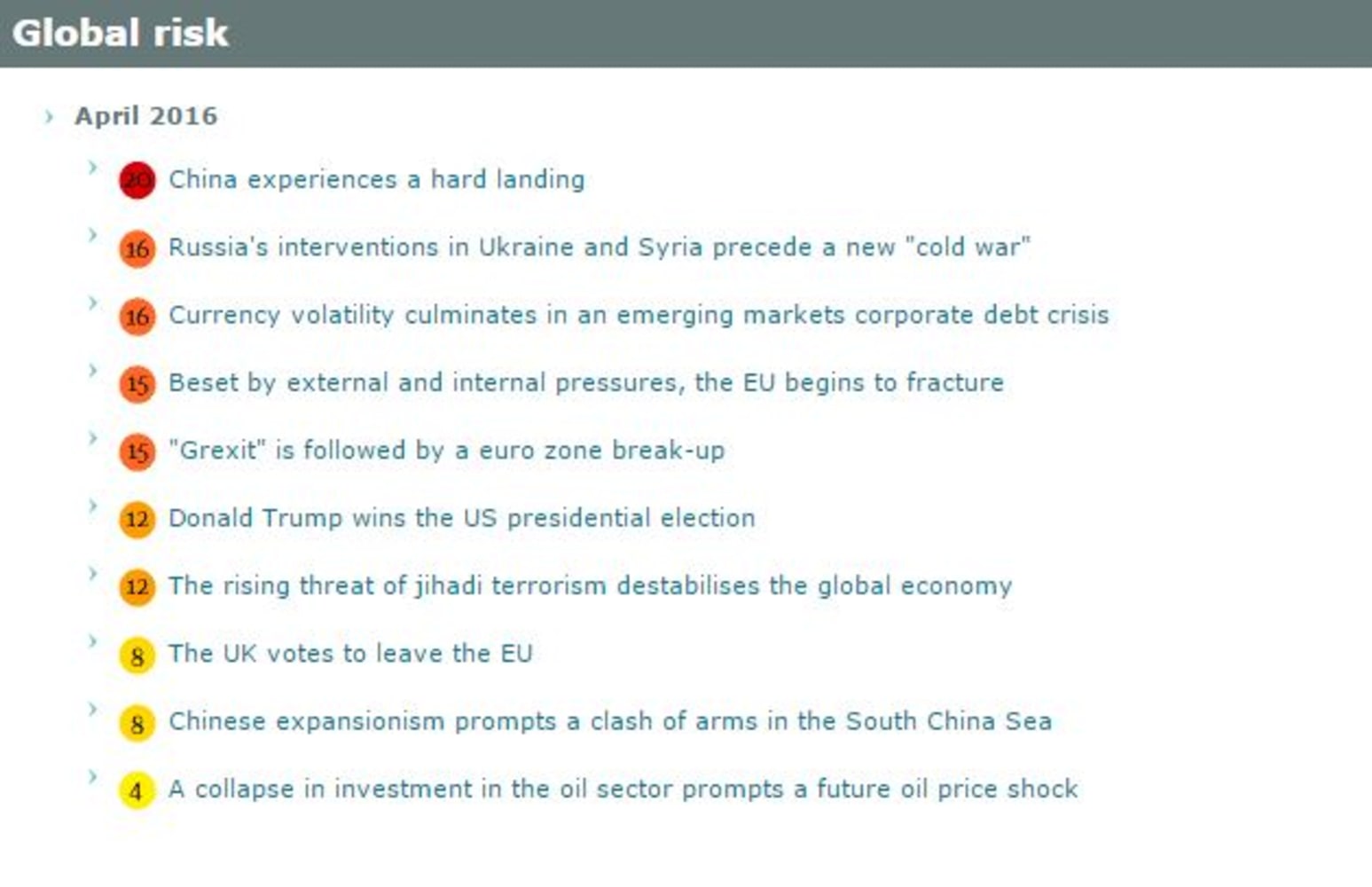
The Economist Intelligence Unit released its updated global risk assessment, ranking the election of Trump a 12 on a scale of one to 25 — the same number it assigned to the possibility that jihadi terrorism would destabilize the global economy.
The firm pointed to a number of reasons, including Trump's hostility toward free trade, his accusing China of being a "currency manipulator, his advocating the killing of terrorists' families, and his proposal to move troops into Syria to fight ISIS and take its oil.


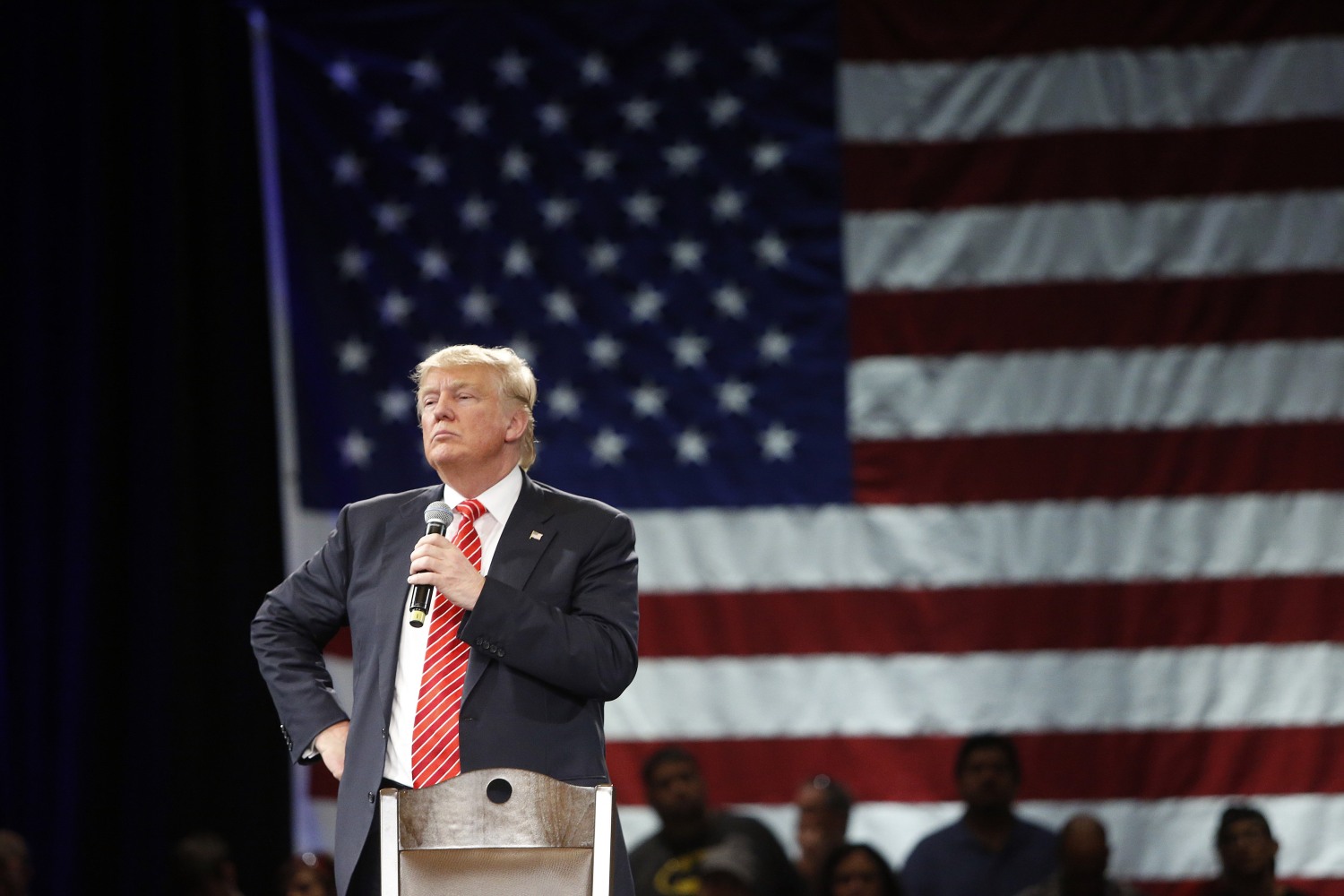
Image: Donald Trump Holds Campaign Town Hall In Tampa


Republican presidential candidate Donald Trump speaks to supporters 

This appeared to be the first time the EIU had rated a presidential candidate's election as a global risk, the firm told Politico.
"His militaristic tendencies towards the Middle East (and ban on all Muslim travel to the U.S.) would be a potent recruitment tool for jihadi groups, increasing their threat both within the region and beyond," the EIU said.
The organization ranks risks by impact and probability. A Trump presidency bore high impact, but moderate probability, the EIU said.


The threat list. Economist Intelligence Unit

"Although we do not expect Mr. Trump to defeat his most likely Democratic contender, Hillary Clinton, there are risks to this forecast, especially in the event of a terrorist attack on U.S. soil or a sudden economic downturn," the authors wrote.
Trump also will likely face stiff opposition in Congress, both from Democrats and Republicans, the EIU said.
That "internal bickering," however, could weaken the country's policymaking, the firm said.
Other global threats on the list included a "sharp economic slowdown in China," a collapse of investment in the oil sector, the break up of the European Union, the further rise of jihadi terrorism, and Russian actions in Ukraine and Syria leading to "a new 'cold war.'"
The Trump campaign did not immediately respond to requests for comment.
Also Wednesday, the Washington Post editorial board called for the Republican Party to aim for as brokered convention to prevent a Trump nomination, arguing that Trump "presents a threat to American democracy."
"Mr. Trump resembles other strongmen throughout history who have achieved power by manipulating democratic processes," the editorial board wrote. "Their playbook includes a casual embrace of violence; a willingness to wield government powers against personal enemies; contempt for a free press; demonization of anyone who is not white and Christian; intimations of dark conspiracies; and the propagation of sweeping, ugly lies." 
Related:
~ ~ ~ ~ ~ ~ ~ ~ ~ ~ ~ ~ ~ ~ ~ ~ ~  ~ ~ ~  ~
Humanity, ReligionCultureSciencePeace
 A Project of 
Peace Forum Network
Peace Forum Network Mags
BooksArticles, BlogsMagazines,  VideosSocial Media
Overall 2 Million visits/hits