A Project of 'SalaamOne NetWork" for Knowledge, Humanity, Religion, Culture, Tolerance, Peace
Pages
- Home
- Front Page
- Top Posts
- One God
- Atheism
- Why Religion?
- Universe Science & God
- Islam
- Why Islam?
- Muslim Only مسلمان صرف
- Abraham To Muhammad (pbut)
- Christianity
- Judaism & Zionism
- 1 God, 3 Faiths
- Trialogue
- Jihad & Terrorim
- Indian Muslims
- Reconstruction of Religious Thought
- Islam & Secularism
- Islamophobia
- Links
- e-Books
- Videos
- FAQs
- Islamic Revival
- سلام انڈکس
- رساله تجديد الاسلام
- Translator /ترجمة
Featured Post
SalaamOne NetWork
SalaamOne سلام is a nonprofit e-Forum to promote peace among humanity, through understanding and tolerance of religions, cul...
’ خلافت عثمانیہ۔اسرائیل اور صدی کی سب سے بڑی ڈیل Ottomans Caliphate، Israel and The ‘deal of the century
الخلافة Al Khilafah
Pakistan was created in the name of Islam, [Two Nation Theory] so that the people in this country could live according to the principles of Islam. [ <<اردو میں پڑھیں >> ] According to the Constitution of Pakistan, “All existing laws shall be brought in conformity with the Injunctions of Islam as laid down in the Holy Quran and Sunnah, in this Part referred to as the Injunctions of Islam, and no law shall be enacted which is repugnant to such Injunctions.”. However these constitutional provisions are not implemented in later and spirit. In order to implement ideology of Pakistan, the appropriate methodology is to establish the Al-Khilafah system in a peaceful, constitutional manner. By misusing the term “Khilafah” for their nefarious agenda, the terrorists have tarnished the image of the Khilafah. The Khilafah is not an absolute dictatorship or monarchy, it is based upon Shura (consultation) is an Islamic state. According to a survey by PEW Research Center it was found that 84% of Pakistani Muslims support Islamic law as their official law. The Western propaganda machine by exploiting the corrupted model of Khilafah displayed by the ISIS/ Daesh terrorists [which has been rejected by scholars thorough Fatwa/Decree] most of the people (even Muslims) have been made to believe that “Al-Khilafah” (Caliphate) is a primitive, brutal , outdated concept which has no relevance in the modern world, hence Al-Khilafah is not possible !
Keep reading >>>>>
“Al-Khilafah Possible” is a research response by Brigadier Aftab Ahmad Khan (Retired): A freelance writer, researcher, and blogger, holds Masters in Political Science, Business Admin, Strategic Studies, spent over two decades in exploration of The Holy Quran, other Scriptures, teachings & followers. He writes for “The Defence Journal” since 2006. His work is available at https://SalaamOne.com/About accessed by over 4.5 Millions. He can be reached at: abbu.jak@gmail.com
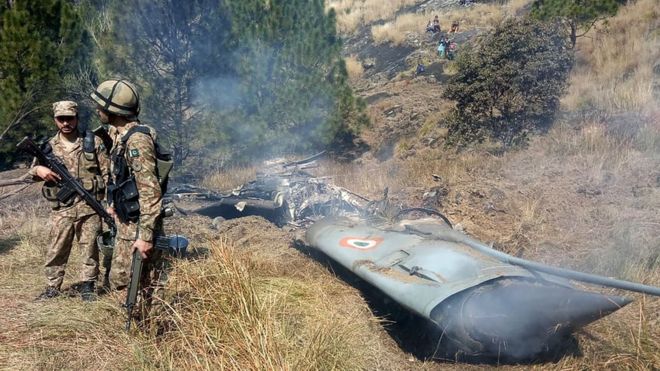
Our Captured, Wounded Hearts: Arundhati Roy On Balakot, Kashmir And India
Pakistan , India Conflict 2019 – Indian Islamophobia , Pakphobia
Islamic Revival رساله تجديد الاسلام An in-depth study of the Qur’an and Islamic religious history reveals startling facts. “Risala-e-Tajdeed-ul-Islam” is a message to develop positive change in the thought and practices of Muslims.قرآن اور اسلام کے گہرے مطالعه سےحیران کن حقائق کا انکشاف ہوا، "رساله تجديد الاسلام" مسلمانوں کے انداز فکروعمل میں مثبت تبدیلی کا پیغام ہے:
US government misleading Americans on Afghanistan: New York Times report • Salaam One سلام
Saudi Religious Diplomacy Targets Jerusalem • Salaam One سلام
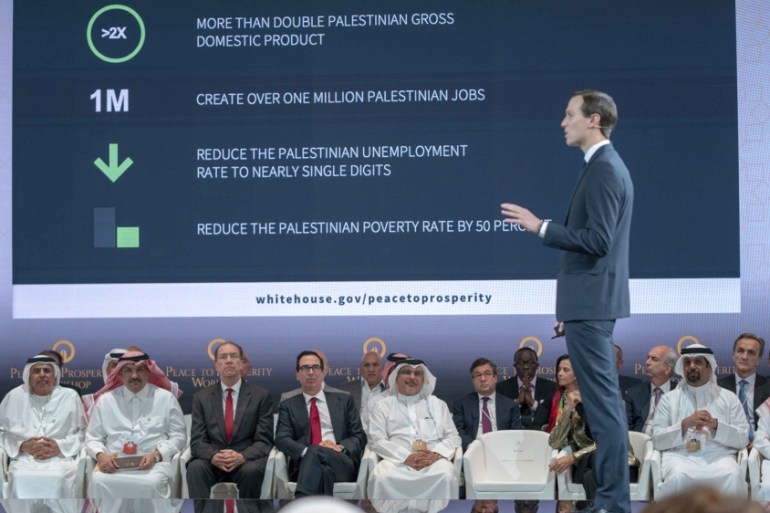
The Saudi effort to take control of Islam’s holy places in Jerusalem serves, among other things, to support President Donald Trump’s plan for a resolution of the Israeli-Palestinian conflict – a plan that has split the Muslim world even before it has officially been made public, and that has been clouded by Trump’s recognition of Jerusalem as the capital of Israel.
A United Arab Emirates-backed Saudi effort to wrest control from Jordan of Islam’s holy places in Jerusalem signals a sharper, more overt edge to Saudi religious diplomacy. The kingdom’s quest for regional hegemony risks deepening divides in the Muslim world.
At the very least, Saudi Arabia hopes – at the risk of destabilizing Jordan, where Palestinians account for at least half the country’s almost ten million people – to drop its resistance to the Trump initiative. keep reading ... https://salaamone.com/jerusalem-saudi/ ..
Zionism- God’s Land Grant to the Jewish People – Conditional or Unconditional?
Christian Zionism : The Real Threat to The World Peace
The Idea of Israel: A History of Power and Knowledge by Ilan Pappe: A Summary by Colin Chapman
The Zionist Cuckoos in Christianity’s Nest
Christian Zionism: The New Heresy that Undermines Middle East Peace
Unholy Alliance: Christian Zionists and the Israeli/Palestinian Conflict : By Micheal Welton
To Whom Does the Land of Palestine Belong?
God’s Land Grant to the Jewish People – Conditional or Unconditional? By Thomas Williamson
Jerusalem latest: Europe rejects Netanyahu’s wish for Europe to follow Trump’s lead on Israel’s capital | The Independent
Jerusalem Is (Is Not) the Capital of Israel — Global Justice in the 21st Century
Zionist Christians: Useful tool for Zionist Jews

The contradiction at the heart of Christian Zionism
Follow @RevMarkWoods on Twitter.
christiantoday.com
Trump’s decision to shift US embassy to Jerusalem points to that he could be Zionist Christian. Christian Zionism is a belief among some Christians that the return of the Jews to the Holy Land, and the establishment of the State of… [Continue reading…]
The contradiction at the heart of Christian Zionism
USA - The Dragon in Afghanistan
A SOUTH ASIAN crisis is still brewing after US Secretary Rex Tillerson’s speed visits to Afghanistan, Pakistan and India. The brief encounter in Islamabad confirmed the gulf in Pakistan-US positions.
What the US and India want from Pakistan is impossible for it to deliver.
The US has decided to ‘stay on’ indefinitely in Afghanistan. It knows it cannot defeat the Afghan Taliban. It is unwilling to accept an equitable political settlement. It wants to utilise Afghanistan as a base to contain China, resist Russia, push back Iran and coerce Pakistan to target the Afghan Taliban, in particular the Haqqanis, in order to make its ‘stay’ in Afghanistan as ‘comfortable’ as possible. The US also wants Pakistan to suppress the Kashmiri militants and restrain its nuclear and missile programmes. These latter aims are, of course, fully shared by India.
In his public remarks, Tillerson cloaked US demands in the garb of concern for Pakistan’s stability. In fact, Pakistan is most certain to be destabilised if it accepts the US and Indian demands.
In the Zarb-i-Azb and subsequent operations, Pakistan expelled the Afghan Taliban and Haqqani fighters from its soil. Some Taliban leaders periodically cross into Pakistan, Iran and other neighbouring countries. In the past, Washington encouraged Pakistan to maintain contacts with Taliban leaders to promote a political settlement in Afghanistan. Now, however, it wants Pakistan to kill or capture them.
In the crisis unfolding, China could do several things to support Pakistan.
If Pakistan does start doing so, it would produce two outcomes: one, the Afghan Taliban would join the Pakistani Taliban, Jamaatul Ahrar and the militant Islamic State group in perpetrating terrorism against Pakistan; and two, it would foreclose the possibility of a political settlement in Afghanistan since there would be no one left in the insurgency with the authority or stature to negotiate such a settlement. This will prolong Afghanistan’s civil war, the suffering of its people and instability in the region.
The consequences of forcibly suppressing the Kashmiri militant groups are similarly predictable. Two of these organisations, Lashkar-e-Taiba and Jaish-e-Mohammed, were placed on the Security Council’s terrorism list when the previous government in Islamabad agreed to this under US pressure. But these groups and others, like the Hizbul Mujahideen, enjoy considerable popular support in Pakistan. Military and police action against members of these pro-Kashmiri groups who have not committed any crime will produce a public outcry and possibly a violent reaction and intensify, not restrict, extremism. A programme for deradicalisation of extremist groups through job creation and social reintegration is the best option. This would be easier if India halts its oppression in held Kashmir and agrees to a peaceful resolution of the dispute.
Unfortunately, Pakistan’s reasonable concerns fall on deaf ears in Washington and, of course, in New Delhi. Encouraged by US patronage, the Modi government is brutally suppressing the latest revolt of the Kashmiri people. It has also adopted an aggressive posture towards Pakistan: sponsoring anti-Pakistan terrorism from Afghanistan; intensifying ceasefire violations along the Line of Control; and issuing repeated threats of ‘surgical strikes’, ‘limited war’ and a ‘Cold Start’ attack against Pakistan.
Not only has the US not opposed Indian brutality in held Kashmir and aggression and threats against Pakistan, it has itself threatened Pakistan with sanctions, drone strikes and military intervention unless it complies with US demands. American drone strikes appear to be already under way. If Pakistan does not respond to unilateral US strikes, India may feel emboldened to carry out its threats of military incursion. A South Asian conflict could be ignited by miscalculation if not design.
To twist an idiom, it is time for the dragon in the room (China) to make an appearance.
America’s new alliance with India, its intention to arm India to the teeth, and its endorsement of New Delhi’s aim to kill the Kashmiri freedom movement, are designed to secure India’s collaboration to contain China’s rising power across Asia. Tillerson made no bones in spelling this out in his CSIS speech before visiting the region.
Likewise, the US decision to ‘stay on’ in Afghanistan is designed in large measure to restrict China’s growing influence in South and Central Asia and, more specifically, to challenge, if not disrupt, President Xi Jinping’s Belt and Road Initiative. Defence Secretary Mattis objected that the Belt and Road passed through ‘disputed territory’. Tillerson last week criticised the conditions of Chinese financing for the Belt and Road projects.
So far, China has responded somewhat passively to the US-India strategy. After Trump’s Aug 21 speech, the Chinese foreign minister defended Pakistan’s counterterrorism credentials. The Chinese foreign ministry refuted Mattis’s comment against CPEC. However, given the anti-Chinese genesis of the two-front threat which Pakistan faces today, and China’s strategic stake in the success of CPEC, it appears essential that Beijing extend strong political support to its oldest ‘strategic partner’ and ‘do more’ to equalise the South Asian equation that is presently tilted against Pakistan.
During all previous Pakistan-India crises, especially the 1965 and 1971 wars, China extended diplomatic, material and military support to Pakistan.
In the crisis now unfolding in South Asia, China could do several things to support Pakistan:
- — strongly endorse Pakistan and the UN’s demand for a negotiated settlement in Afghanistan and help build a regional coalition in favour of such a settlement;
- — call for a just and peaceful resolution of the Jammu and Kashmir dispute in accordance with international law and denounce India’s brutal repression of the Kashmiri people;
- — oppose all threats of use of force against Pakistan from any quarter and declare that any aggression against Pakistan will evoke an appropriate Chinese response;
- — affirm that CPEC’s security is the common and joint responsibility of Pakistan and China;
- — offer Pakistan advanced and appropriate weapons systems to defend and deter aggression from the east or the west.
The forthcoming visit of President Trump to China offers the opportunity for a powerful President Xi Jinping to convey China’s opposition to America’s India-centric policies and destabilising demands on Pakistan, and to propose a plan for comprehensive Sino-US cooperation to advance security and prosperity across Asia, including South Asia and the developing world.
"The dragon in the room" by Munir Akram, a former Pakistan ambassador to the UN.
https://www.dawn.com/news/1366998/the-dragon-in-the-room
بلاگز، ویب سائٹس،سوشل میڈیا، میگزین، ویڈیوز,کتب
Saudi promise of ‘moderate Islam’ shifts power سعودی عرب میں تبدیلی
FOLLOWING the rapid ascent of Mohammed bin Salman to the second-most powerful position in Saudi Arabia, a series of unprecedented changes have occurred in the desert kingdom. The young crown prince — seen as the actual power behind the throne — had earlier announced that resort islands off the Red Sea coast would be developed, where the strict religious laws of the kingdom would not apply. He had also recently said that the ban on women drivers would soon be phased out. And the latest in this series of declarations came on Oct 24, when the prince announced the launch of NEOM, a $500bn mega project on Saudi Arabia’s north-western tip. Bin Salman has dubbed this bizarre dream “the first capitalist city in the world. ...” where Saudi law will, again, not be applicable. Along with these futuristic visions, the crown prince has talked of returning his country to ‘moderate Islam’.
From these pronouncements, it appears that bin Salman is embarking on a nation-building project, using a mix of social engineering and authoritarianism to fashion a new, ‘liberal’ Saudi Arabia. However, some things must be considered if the Saudi establishment is serious about changing direction. Firstly, opening nightclubs, beach resorts and allowing concerts, yet at the same time smothering all dissent and criticism, does not translate to a liberal setup. While the prince has announced these ambitious projects, his government has also intensified repression of critics, real and imagined. Over the past few months, clerics, activists and members of civil society have been rounded up by the security apparatus. Even some dissenting members of the royal family have reportedly been detained. For a truly pluralistic sociopolitical setup, people must be allowed to criticise their government, assemble peacefully and discuss ideas openly without fear. Secondly, it is a fact that at its core Saudi Arabia remains a tribal, conservative society. Therefore, any attempts at change must be incremental and, most importantly, should take the population on board. It should be remembered that the 1979 seizure of Makkah’s Masjid al-Haram by religious zealots was triggered by their apprehensions that the House of Saud was not ‘pious’ enough. Much of Saudi society — mainly because of the royal family’s patronage of hard-line clerics and their influence on the education system — may resist high-speed changes that threaten to undo social and religious structures. Therefore, for the sake of stability, the Saudi rulers need to progress steadily but carefully. [Editorial Dawn ]
Opposition to the changes has so far been muted, but some critics of the prince have been detained. When social openings in the kingdom were taking place four decades ago, Sunni extremists opposed to the monarchy laid siege to Islam’s holiest site in Makkah.
Prince Mohammed’s agenda is upending the ruling Al Saud’s long-standing alliance with the kingdom’s clerical establishment in favour of synchronising with a more cosmopolitan, global capitalism that appeals to international investors and maybe even non-Muslim tourists.
The prince grabbed headlines in recent days by vowing a return to “moderate Islam”. He also suggested that his father’s generation had steered the country down a problematic path and that it was time to “get rid of it”.
In his sweeping “Vision 2030” plan to wean Saudi Arabia off of its near total dependence on petrodollars, Prince Mohammed laid out a vision for “a tolerant country with Islam as its constitution and moderation as its method”.
Prince Mohammed, or MBS as he is widely known, used a rare public appearance on stage at a major investor conference in the capital, Riyadh, this week to drive home that message to a global audience.
“We only want to go back to what we were: moderate Islam that is open to the world, open to all religions,” he said in the ornate grand hall of the Ritz-Carlton. “We will not waste 30 years of our lives in dealing with extremist ideas. We will destroy them today.”
His remarks were met with applause and a front-page article in the Britain’s Guardian newspaper. In expanded remarks to the paper, the 32-year-old prince said that successive Saudi monarchs “didn’t know how to deal with” Iran’s 1979 revolution that brought to power a clerical Shia leadership still in place today.
That same year Saudi rulers weathered a stunning blow: Sunni extremists laid siege to Islam’s holiest site in Makkah for 15 days. The attack was carried out by militants opposed to social openings taking place at the time, seeing them as Western and un-Islamic.
Indeed, Sunni extremists have used the intolerant views propagated by the ideology known as Wahhabism to justify violence against others. Wahhabism has governed life in Saudi Arabia since its foundation 85 years ago.
The ruling Al Saud responded to the events of 1979 by empowering the state’s ultraconservatives. To hedge the international appeal of Iran’s Shia revolution, the government backed efforts to export the kingdom’s foundational Wahhabi ideology abroad.
To appease a sizeable conservative segment of the population at home, cinemas were shuttered, women were banned from appearing on state television and the religious police were emboldened.
Much is now changing under the crown prince as he consolidates greater powers and prepares to inherit the throne.
There are plans to build a Six Flags theme park and a semi-autonomous Red Sea tourist destination where the strict rules on women’s dress will likely not apply. Females have greater access to sports, the powers of the once-feared religious police have been curtailed and restrictions on gender segregation are being eased.
Unlike previous Saudi monarchs, such as King Abdullah who backed gradual and cautious openings, Prince Mohammed is moving quickly.
More than half of Saudi Arabia’s 20 million citizens are below the age of 25, meaning millions of young Saudis will be entering the workforce in the coming decade. The government is urgently trying to create more jobs and ward off the kinds of grievances that sparked uprisings in other Arab countries where unemployment is rampant and citizens have little say in government.
The prince has to find solutions now for the problems he is set to inherit as monarch.
“What MBS is doing is a must requirement for any kind of economic reform. Economic reform requires a new Protestant ethic if you will, a new brand of Islam,” said Maamoun Fandy, director of the London Global Strategy Institute.
This new Saudi version of “moderate Islam” can be understood as one that is amenable to economic reforms; it does not close shops at prayer time or banish women from public life, Fandy said.
In other words, Saudi Arabia’s economic reforms require social reforms to succeed.
Buzz words like “reform”, “transparency” and “accountability” all used by the prince in his promotion of Vision 2030 do not, however, mean that Saudi Arabia is moving toward greater liberalism, democracy, pluralism or freedom of speech.
The government does not grant licences to non-Muslim houses of worship, and limits those of its Shia Muslim citizens.
The prince has also made no mention of human rights concerns. If anything, dozens of the prince’s perceived critics have been detained in a warning to others who dare to speak out.
Some of those arrested were seen as critics of his foreign policies, which include severing ties with Qatar, increasing tensions with Iran and overseeing air strikes in Yemen that have killed scores of civilians and drawn sharp condemnation from rights groups and some in Washington.
Meanwhile, Prince Mohammed faces a Saudi public that remains religiously conservative. That means he still needs public support from the state’s top clerics in order to position his reforms as Islamic and religiously permissible.
These clerics, many of whom had spoken out in the past against women working and driving, appear unwilling or unable to publicly criticise the moves. In this absolute monarchy, the king holds final say on most matters and the public has shown it is welcoming the changes.—AP
Read .. Wahabism
https://en.m.wikipedia.org/wiki/Wahhabism By Aya Batrawy, www.dawn.com
https://www.dawn.com/news/1366867/saudi-promise-of-moderate-islam-shifts-power
What are the differences between Ottoman Islam and Arabic Islam?
Saudi Arabia wants to return to 'moderate Islam.' Skeptics say it's a ...
Saudi Arabia's crown prince promises country will return to 'moderate ...
Saudi Arabia Wants To Return To 'Moderate Islam.' Skeptics Say It's A ...
Saudi crown prince promises 'a more moderate Islam' - CNN
SalaamOne سلام
-
------------------ "كما ثورة ديمقراطية بقيادة الشباب التكنولوجيا ذات صلاحيات تجتاح العالم العربي ، وضاح خنفر ، الجزيرة المدير ...
-
SalaamOne سلام is a nonprofit e-Forum to promote peace among humanity, through understanding and tolerance of religions, cul...
-
Reading remains a gateway to learning and personal development, making the study of books indispensable in contemporary society. “Are t...